

How the first orders shaped the business
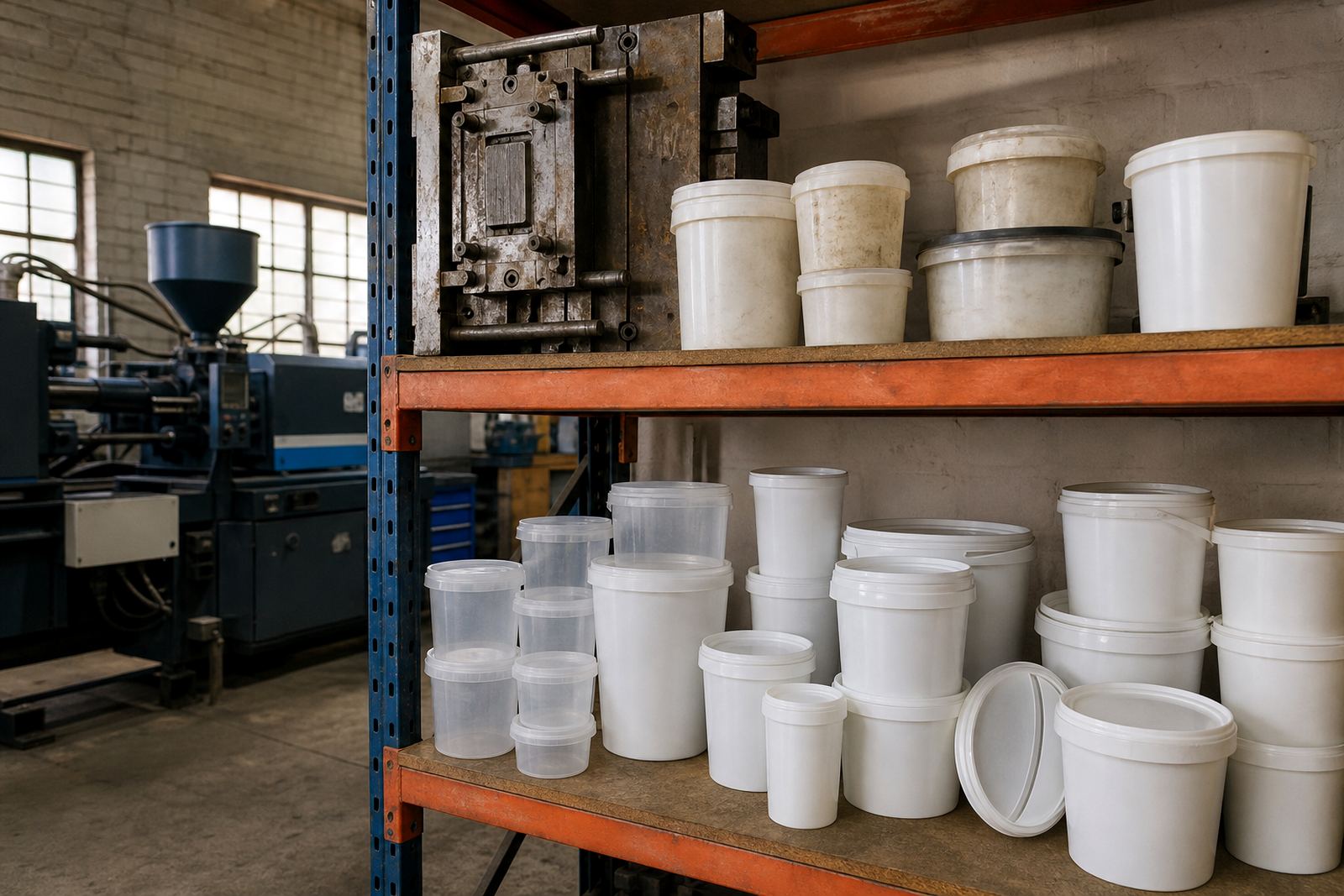
Plastic Factory grew out of the everyday needs of packers who wanted containers that would hold up on the line, stack neatly in storage and travel well across the country. In the early days, the work centred on making injection-moulded tubs and containers in sizes that made sense for food, pharmaceutical and cosmetic goods. The brief was rarely fancy. It was usually about fit, sealing, handling and getting a clean finish that could move through a filling line without trouble.
That starting point still matters. Injection moulding gives a repeatable shape, consistent wall thickness and tidy finishes, which helps when a packer needs dozens of units to behave the same way. Polypropylene and HDPE are often part of that conversation because both materials are widely used for practical packaging, each with its own handling traits. For a business in South Africa shipping product from Alberton to other provinces, that kind of consistency is not a luxury, it is part of daily trading.
The growth of a packaging craft
As the customer base widened, the work grew beyond standard tubs. Food packers wanted options for dry ingredients, spreads and chilled goods. Pharmaceutical customers needed containers that could support careful handling and neat closure. Cosmetic packers often looked for smaller packs, better presentation and lids that felt right in the hand. The craft developed around those uses, with more attention given to material choice, seal behaviour and how each pack would sit on a shelf or on a packing line.
That growth brought more than variety. It meant learning how mould design affects the final pack, how colour can support product ranges and how a lid must match the container without forcing the line to slow down. It also meant knowing when a standard tub is enough and when a custom shape makes better sense. There was no one-size answer. The work moved forward by listening carefully and testing what each product needed in real conditions.
- Injection-moulded containers for food, pharma and cosmetic packers
- Polypropylene and HDPE options for different product requirements
- Lids, tamper seals and closure matching for practical use
- Trial production runs to check fit and finish before full supply
What the customers needed changed the work
The customer base has always been a mix of packers and production teams who need packaging to do a job without drama. Some operate large filling lines in Johannesburg or Pretoria, others run smaller packing rooms in Durban, Cape Town, Port Elizabeth or Alberton itself. The common thread is that the container must suit the product, the process and the route to market. A good pack for one business may be a poor choice for another, even if the contents look similar on paper.
That is why the conversation often starts with use, not just size. Does the product need tamper evidence, a tight lid, a clearer stack profile or a specific pack count for distribution? Does the fill process call for a different neck finish or a wider opening? These are the practical details that shape the right outcome, and they have guided the business for many years. The work is not just about moulding plastic, it is about helping a packing line do its job with fewer interruptions.
- Food packers needing clean handling and pack consistency
- Pharmaceutical users looking for careful closure and tidy presentation
- Cosmetic packers wanting attractive forms and colour guidance
- Businesses planning stock runs for local distribution and export orders
How the team carries the work today
Today the business is run by a team that works closely across sales, production, quality, dispatch and support. Thabo Letsoalo leads the business as Managing Director, while Naledi Sauls handles sales, Johan Kekana oversees production, Ayesha Oosthuizen manages quality, Sibusiso Hartnick looks after dispatch and Carla Naidoo supports customers through the day to day details. Each role matters because packaging jobs move through several hands before they leave Alrode.
The way the team works is practical and direct. Material selection, mould development, line fit checks, colour matching guidance and pack size planning are handled with the realities of local production in mind. A packer in coastal humidity faces different storage and handling conditions from one inland, and a product that travels through multiple depots needs packaging that stays stable along the way. Small details matter here, and they are part of the normal working conversation.
The local base in Alrode and the reach beyond Gauteng
Being based in Alrode, Alberton gives the business a strong place in the southern industrial belt of Gauteng. That position has helped the team serve nearby customers in Germiston, Boksburg and Johannesburg, while also supporting packers further afield in Durban, Cape Town, Pretoria and Port Elizabeth. South African businesses often need packaging that can move across long distances and still arrive in usable condition, so supply planning is part of the story too.
Dispatch, stock run planning and secondary packing advice matter when orders need to travel. It is one thing to make a sound tub, and another to make sure it reaches the packer in a form that is easy to store, count and use. The business has grown around that understanding. The product may be moulded in one place, but its value is proven when it fits neatly into the customer’s own operation.
- Alberton Supply for local production and collection support
- Johannesburg Delivery for city and industrial users
- Durban Delivery for coastal packers and distributors
- Cape Town Delivery, Pretoria Delivery and Port Elizabeth Delivery for wider national reach
- Germiston Supply and Boksburg Supply for nearby industrial areas
What has stayed central in the way the business works
What remains central is a practical respect for packaging that works in the real world. Whether the brief calls for a standard tub, a custom lid, a tamper seal concept or a run planned around existing filling equipment, the approach is still grounded in usefulness. The team keeps the focus on material choice, mould quality and the fit between product and packing line. That approach has carried the business through changing customer needs and different market pressures.
There is also a steady preference for clear communication and careful follow-through. A customer may need help with trial production runs, ongoing product updates or advice on how a pack will behave in storage. The aim is to keep the work straightforward and accurate, not overcomplicated. That is part of what gives the company its place in the South African packaging trade, and it is the reason many businesses continue to treat Plastic Factory as a practical partner for injection-moulded containers and tubs.