

Packaging Guidance That Fits Real Fill Lines
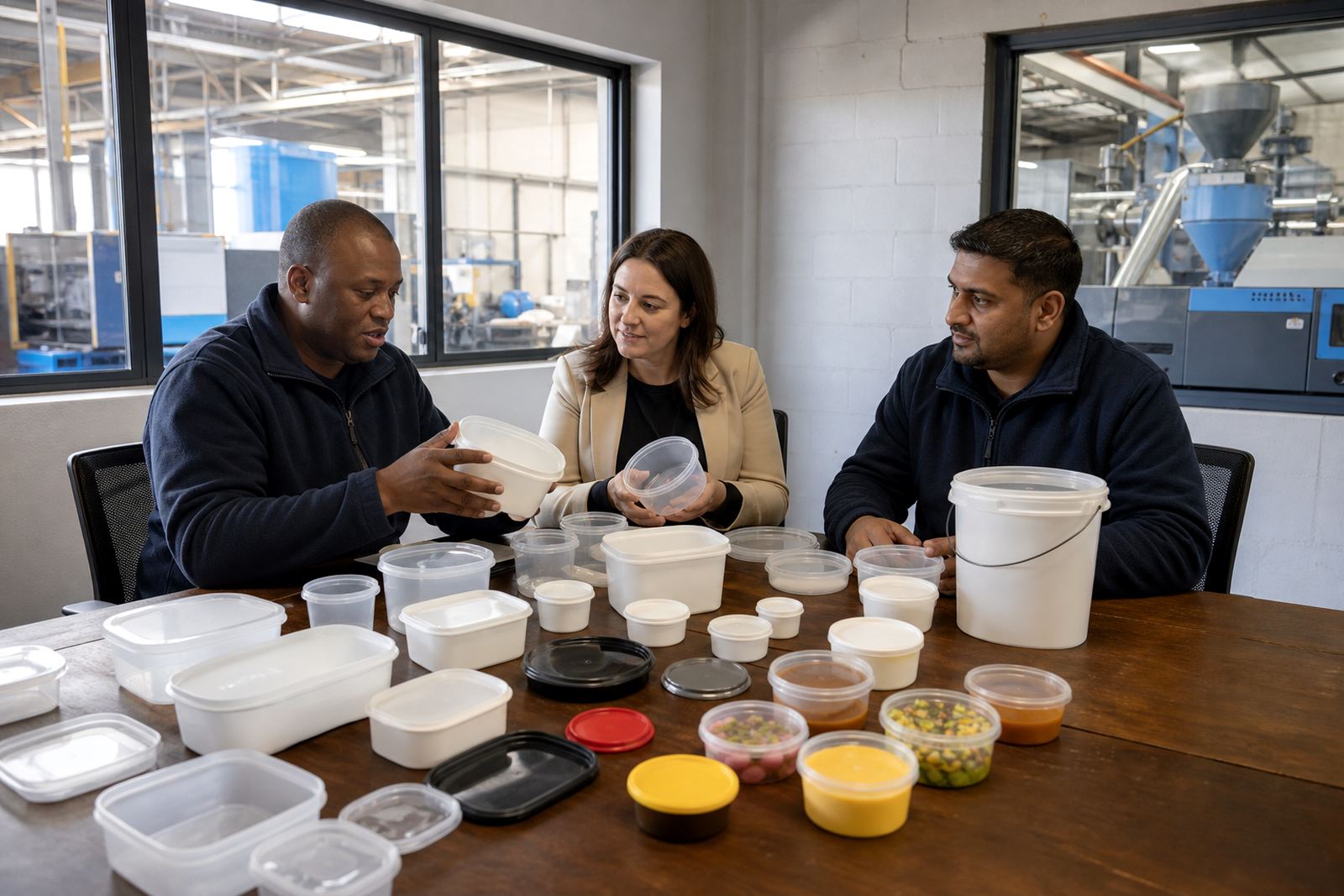
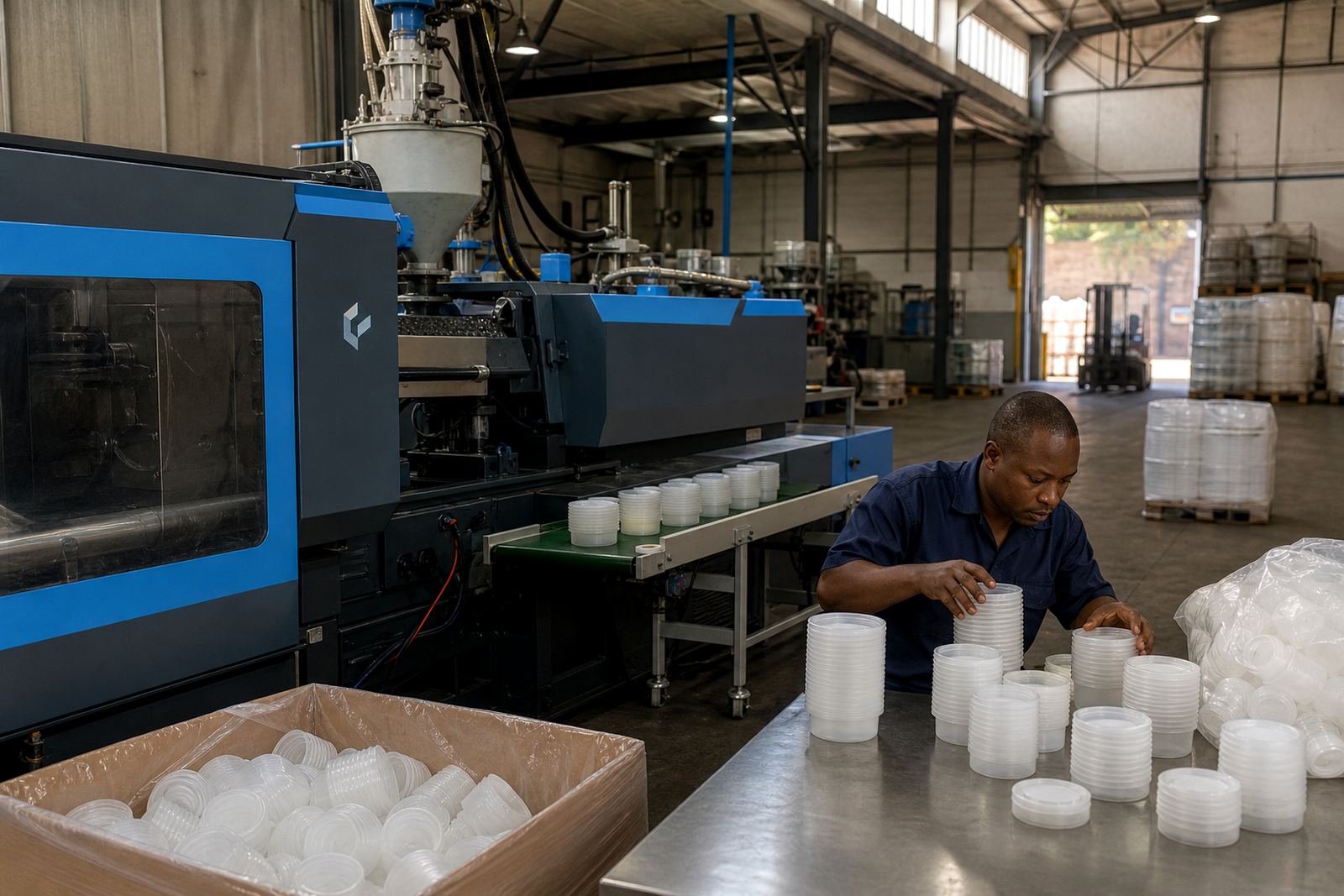
Support often starts with the pack line itself. A tub that looks right on paper can sit too loose in a carton, bridge at filling, or feel awkward during capping, so we look at the container, lid and sealing method together. That keeps the pack format usable on the floor, not just on a sample table.
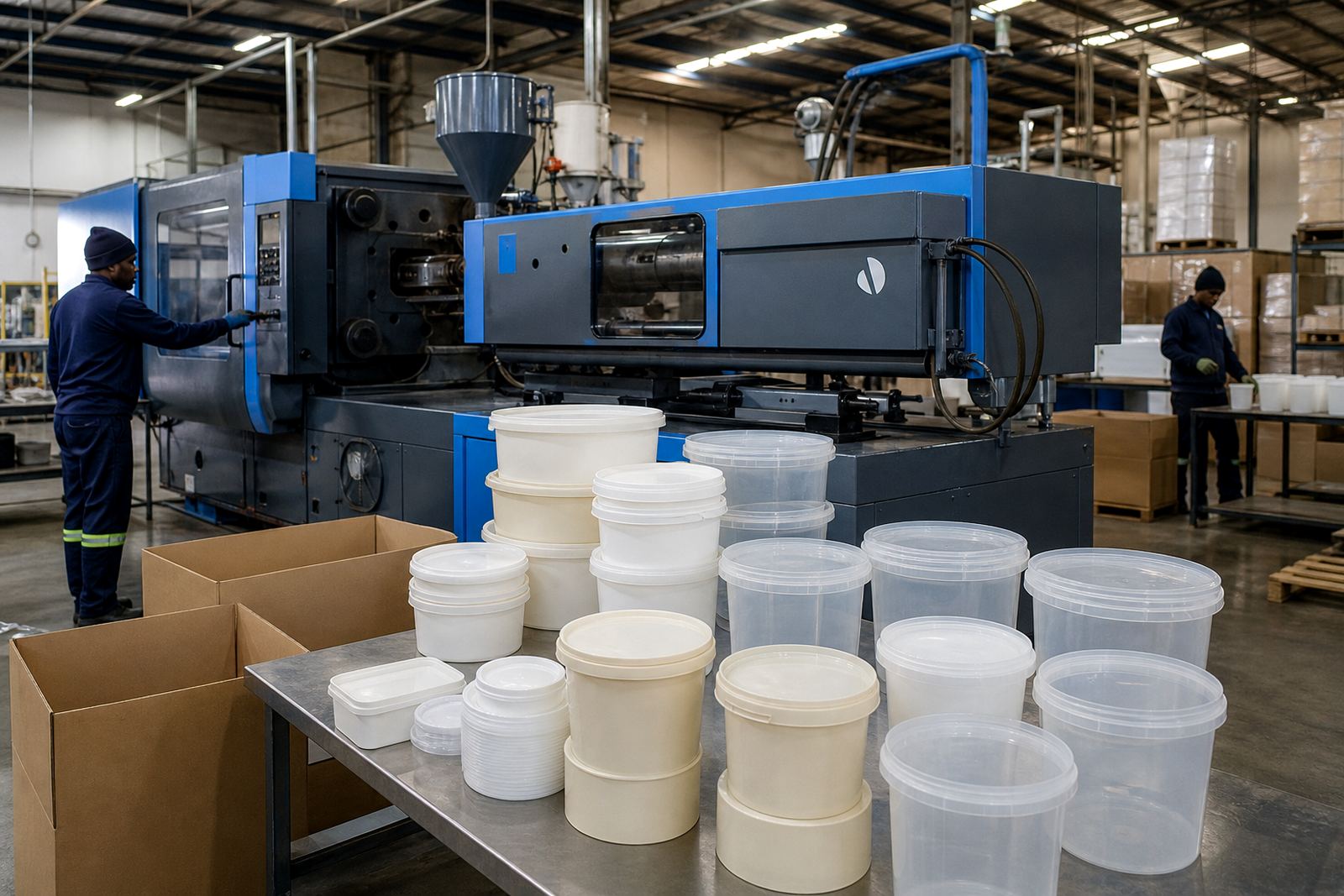
For food, pharmaceutical and cosmetic packs, the small details matter: neck finish, wall thickness, stackability, label space and how the lid settles after filling. If the product is oily, dry, chilled or moisture sensitive, the material and closure need to suit that handling too.
Material Choice For Food, Pharma And Beauty Packs
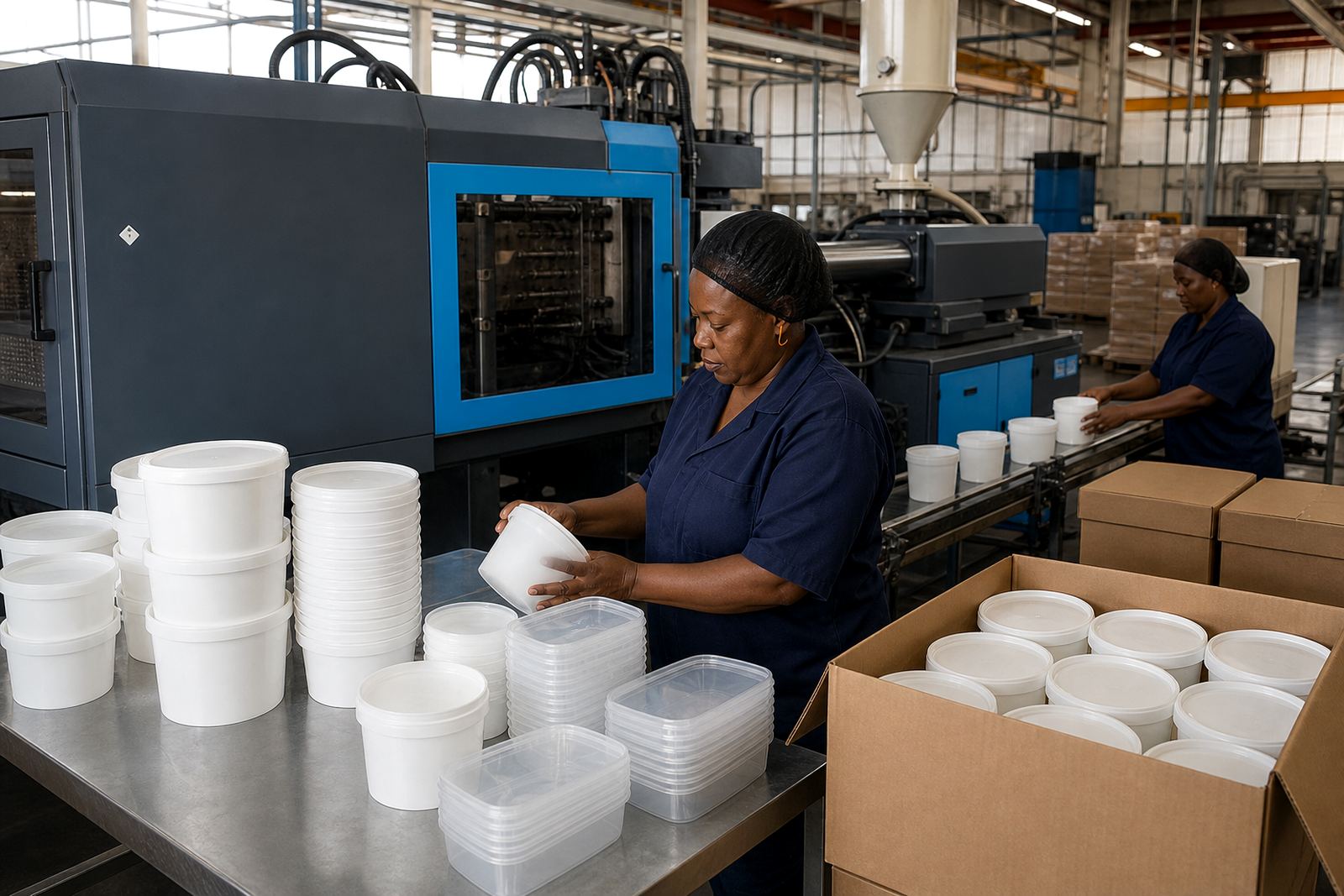
Injection-moulded polypropylene and HDPE are common choices for tubs and containers because they are light, durable and well suited to repeat handling. Polypropylene is often used where heat tolerance and a cleaner finish are helpful, while HDPE is valued for toughness and chemical resistance in many pack types.
- Food-safe material selection for dry goods, sauces, powders and prepared products
- Container wall and base design to suit stacking, transit and shelf presentation
- Colour matching guidance for house ranges, seasonal runs or coded pack sizes
- Advice on clarity, opacity and surface finish where the product presentation matters
Trial Runs Before Full Production
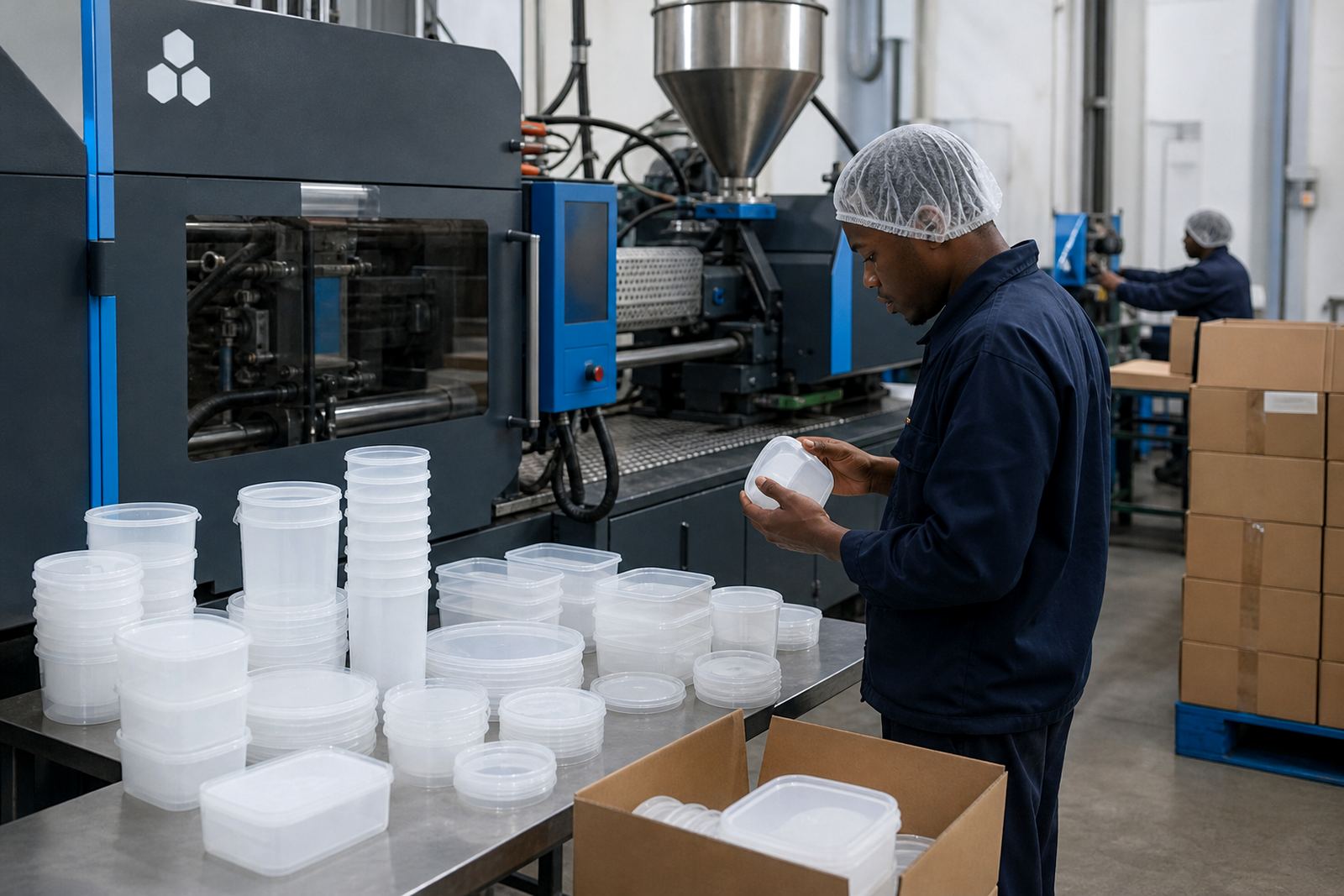
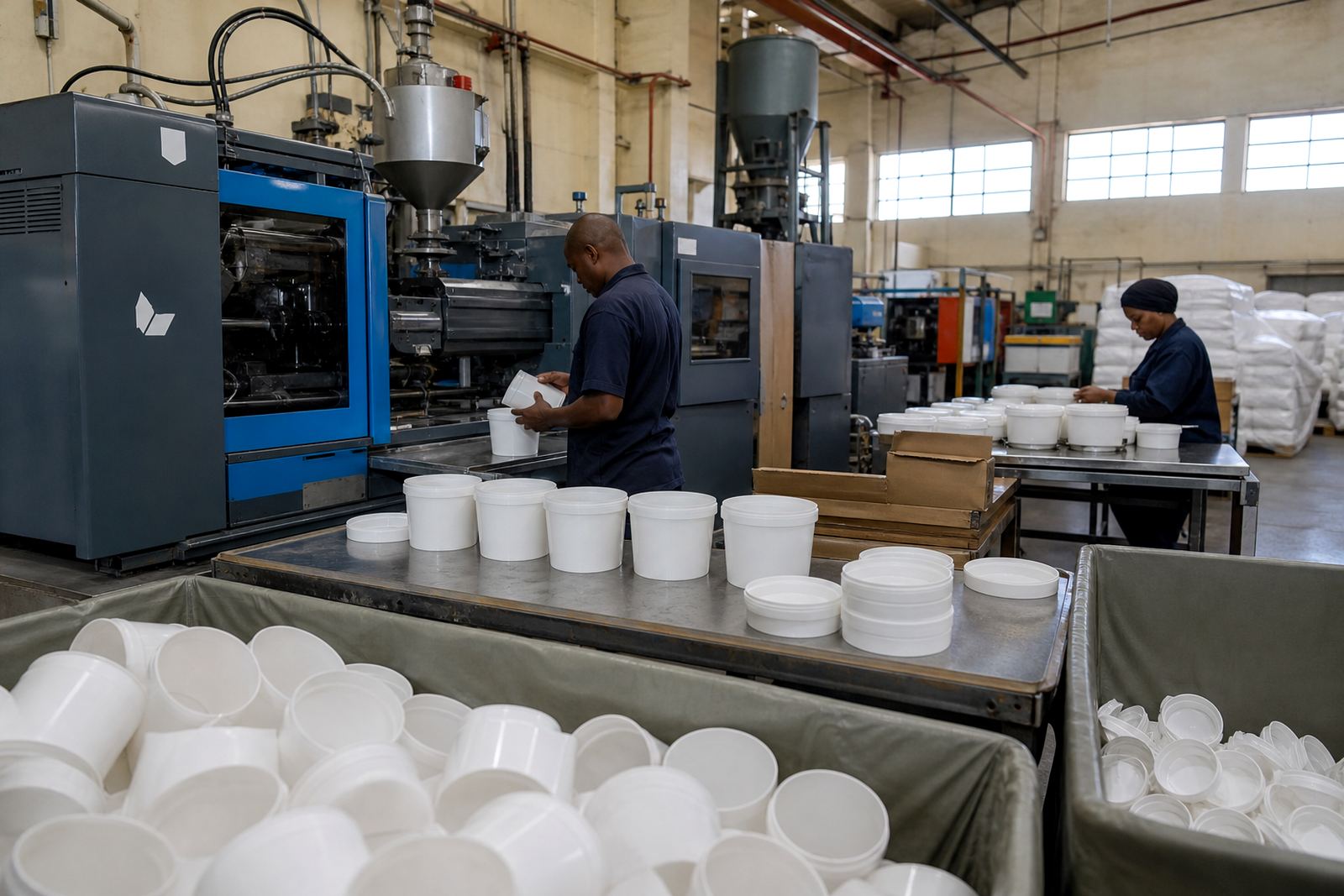
Trial production runs help confirm that the mould, lid and seal work together before larger quantities are released. Small changes in fit can affect line speed, tamper evidence and pack appearance, so a trial run gives useful proof without locking in the wrong format.
This is also where any handling issues show up early. If a lid is too tight for staff to close comfortably, or too loose for steady transit, it is far easier to adjust before stock is moved into regular packing.
Tamper Seals, Lids And Closing Method
Tamper seals are used when a pack needs visible evidence that it has not been opened. They can work with lids, bands or other closure systems, depending on the product and the filling line. The right choice depends on how the pack is opened, resealed and stored after first use.
- Lid development for snap fit, press fit and repeat closure use
- Tamper seal design that suits the container rim and product form
- Secondary packing advice for cartons, sleeves and transit packs
- Pack size planning for retail units, bulk units and refill options
Stock Planning For Busy Packing Schedules
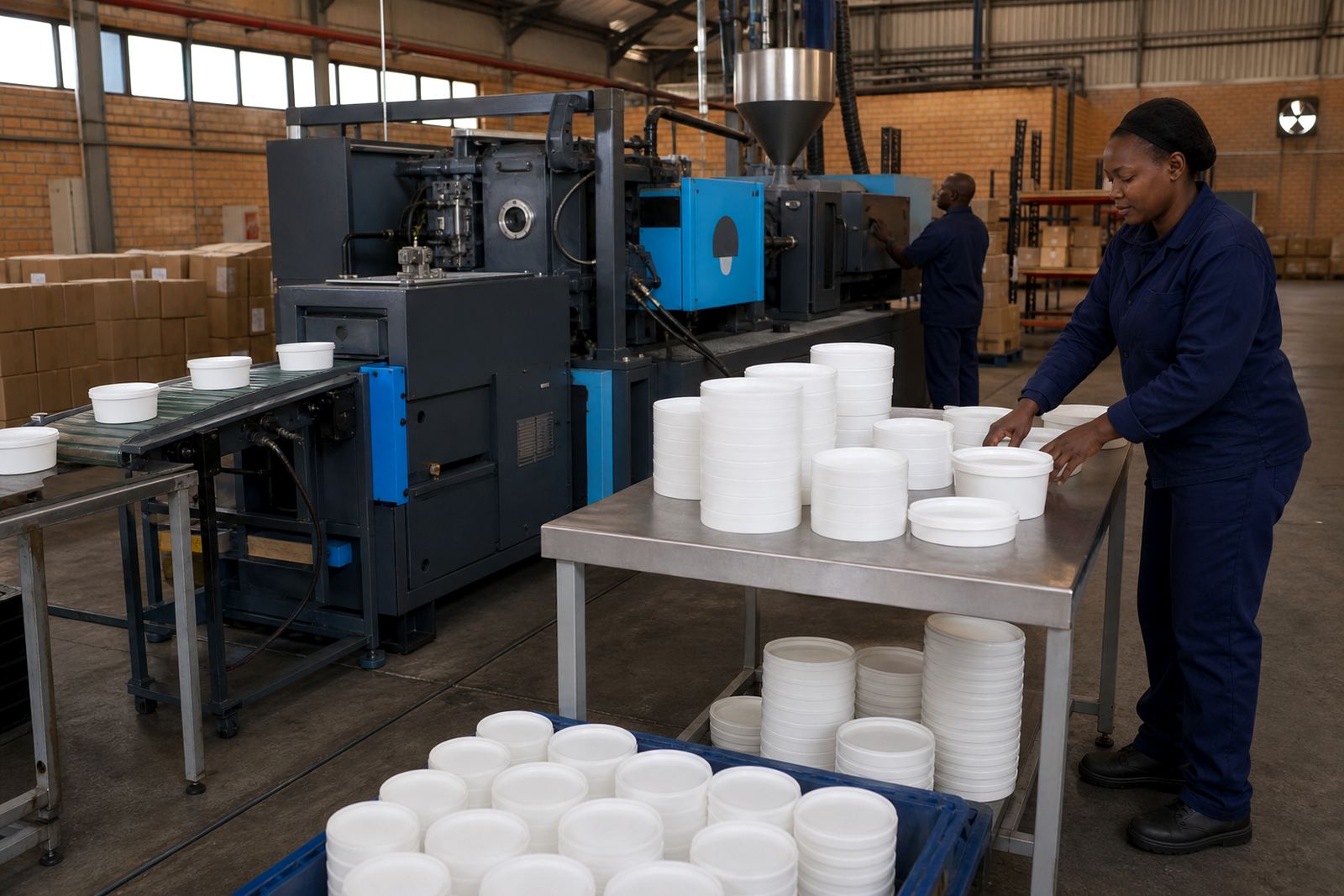
Many packers need steadier stock movement than a one-off supply run. Support here can include stock run planning, product updates and guidance around the way containers move through filling, warehousing and despatch. That helps reduce the strain of running short on a key tub size during a busy stretch.
In humid coastal areas such as Durban and Port Elizabeth, storage and sealing practices matter even more, especially where cartons and finished packs sit for longer before dispatch. Across Johannesburg, Pretoria and Cape Town, different pack formats may also suit different routes, pallet heights and handling routines.
Local Help From Alrode For South African Packers
From our base in Alrode, Alberton, support reaches clients in Johannesburg, Germiston, Boksburg and further afield across South Africa. The work is practical and hands-on, whether the need is a new mould, a lid change or a line fit check for a container already in use.
Clients use the enquiry form on our contact page to start the process with product details, pack size and the type of goods being filled. That gives space to assess the container, closure and production route against the actual packing job.