Set the receiving window before the load leaves Alrode
Good delivery planning starts with the receiving side, not the road. If a site in Johannesburg, Durban, Cape Town, Pretoria or Port Elizabeth has set dock times, security sign-in rules or pallet limits, those details should be clear before dispatch is booked. In busy plants, even a short delay at the gate can affect line loading and stock movement inside the warehouse.
For packers in Alberton, Germiston and Boksburg, local deliveries are often easier to align with stock checks and shift handovers. Coastal and inland routes need different planning too, especially where traffic, weather or port-side delays can shift an arrival by hours. We work with the pack format, carton count and pallet build so receiving staff know what to expect before the truck arrives.
- Confirm the site name, gate access and loading bay details.
- Share any time restrictions for forklift use or offloading.
- Let the receiving team know if the order includes mixed sizes or colours.
- Keep the order reference with the person signing for the goods.
Packing lines need the right carton mix
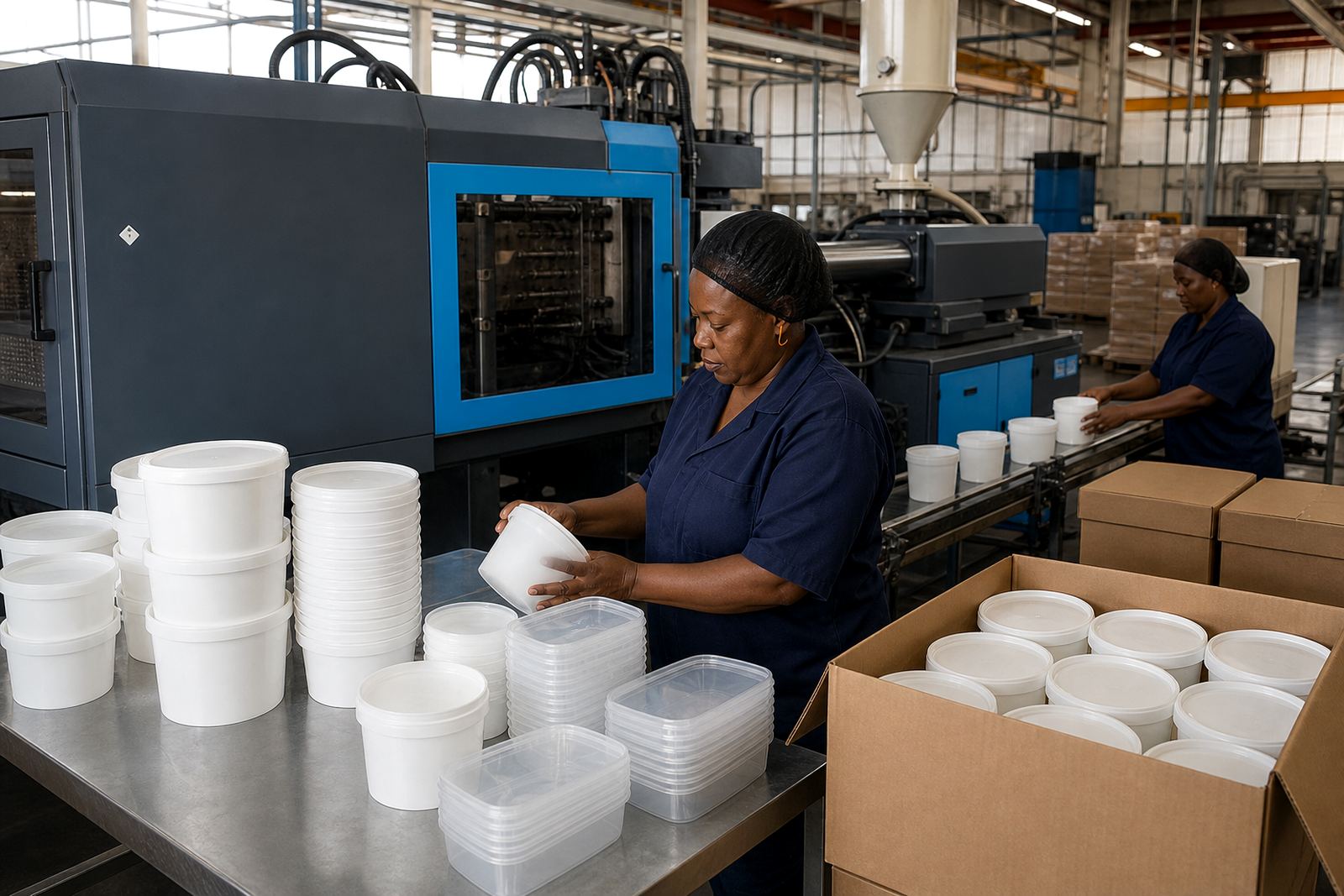
Plastic containers and tubs travel best when the carton mix fits the packing line at the other end. A food packer may want tubs, lids and tamper seals kept together in the same consignment, while a cosmetic packer may prefer outer cartons split by size so the most-used pack comes off the top first. That kind of planning saves time at unpacking and reduces handling inside the store room.
Polypropylene and HDPE containers each behave differently in transit and on a line. Lid fit, stack stability and surface scuffing matter more when goods are moved through several hands. If a site uses narrow racking or smaller stores, pallet height and carton weight need a practical check before the load is built.
- Keep matching tubs and lids grouped where possible.
- Use pallet builds that suit the unpacking point.
- Flag any fragile label areas or printed finishes.
- Plan for the stock room space available on arrival.
Route planning for inland and coastal deliveries
Delivery routes across South Africa do not all work the same way. Johannesburg and Pretoria collections may move through heavy traffic and higher warehouse activity, while Durban and Port Elizabeth loads need extra attention for humidity and coastal handling. Cape Town routes can also change with wind, roadworks and port movement. When a load is planned for several branches, the route and sequence should match the receiving order at each site.
For longer trips, cartons should be packed so they hold their shape through shifting, braking and re-stacking where needed. Injection-moulded tubs are hard-wearing, but the outer pack still needs care so lids stay seated and tamper seals remain in place. If a consignment is going to more than one branch, split instructions help the driver and the warehouse team keep the right quantities in the right place.
- Match delivery sequence to the order each branch needs.
- Note any site that can only receive during set hours.
- Check if the receiving area can handle palletised goods.
- Allow for weather and traffic where the route runs long.
Receiving checks that prevent mix-ups
Once the goods reach site, the receiving process should be straightforward. A count against the delivery note, a quick look at carton condition and a check that the correct tub or lid size has arrived is usually enough to catch most issues early. For food, pharma and cosmetic packers, this matters because one wrong carton can hold up a packing run or create sorting work in the store room.
It helps if the people receiving the delivery know the product code, carton quantity and colour variant before the truck arrives. Where stock is stored in several areas, the goods should be marked for the right zone so they do not sit in the wrong bay. Clear receiving habits also help where secondary packing or repacking happens after delivery.
- Count cartons and pallet pieces before signing off.
- Check that lids, seals and tubs match the order line.
- Look for damaged outer cartons before offloading ends.
- Separate mixed stock into the correct store locations straight away.
Planning stock runs for steady packing lines
Some packers need a once-off dispatch, while others need repeat stock runs to keep production moving. Stock run planning is useful where tubs are used in regular quantities and the line cannot stop for a shortage. In those cases, dispatch timing should line up with warehouse space, monthly consumption and the rate at which finished goods leave the site.
Plastic Factory can plan around trial production runs, line fit checks and pack size changes so the stock pattern suits the actual packing line. If a customer is moving from one tub size to another, the dispatch pattern may need a short overlap period so the old stock is used up without holding the line back. That kind of planning is plain work, but it saves a lot of sorting later on.
- Build dispatches around the site’s real usage pattern.
- Allow space for overlap during pack size changes.
- Keep one person responsible for sign-off on each delivery.
- Review the next run before the current stock gets tight.
How to prepare your order details
When an enquiry is sent through the contact page, the clearest orders include the product type, size, colour, quantity and destination. If the site needs a particular lid or tamper seal pair, that should be named in the same note. It also helps to mention whether the goods are going to a main warehouse, a branch supply point or a production floor where cartons must move straight into use.
For branches in Alberton, Germiston and Boksburg, local drop-offs may follow different gate routines from larger city deliveries. For Johannesburg, Durban, Cape Town, Pretoria and Port Elizabeth, the receiving note should include the exact site contact on duty at the time of arrival. That avoids confusion when several teams share one delivery point.
- List the exact product, size and colour.
- State whether lids and seals must ship together.
- Add the delivery town and the receiving site name.
- Note any gate, security or offload limits.