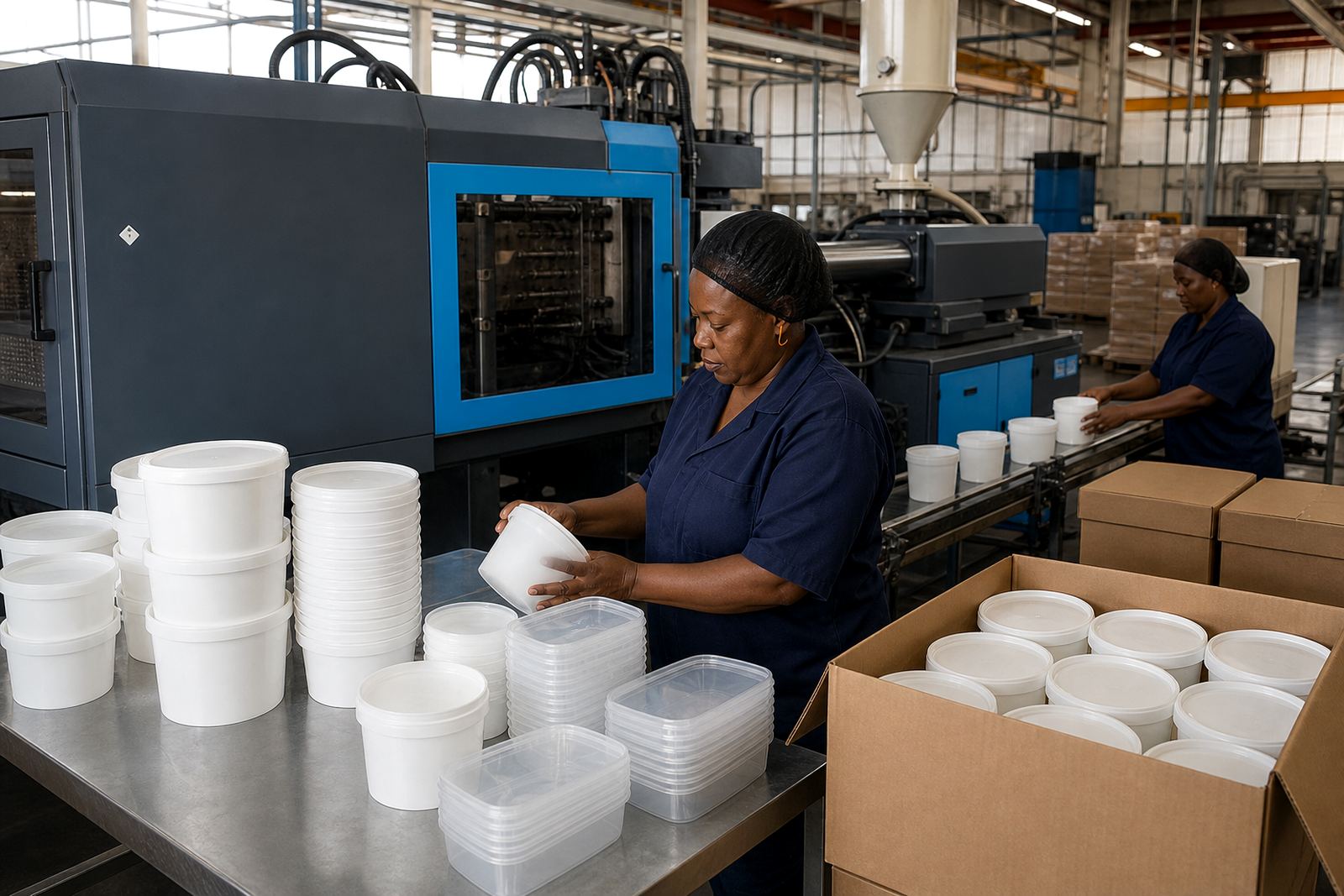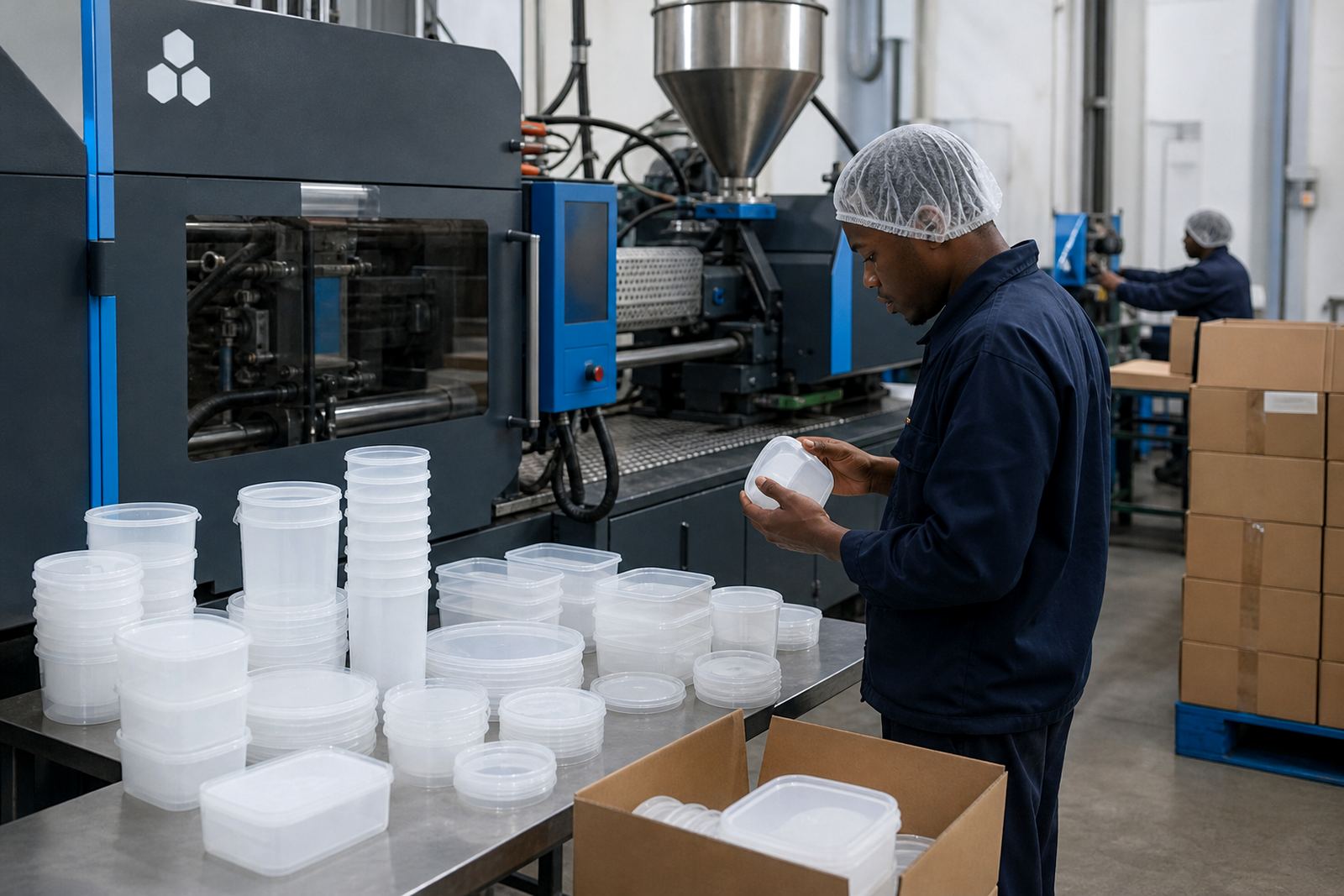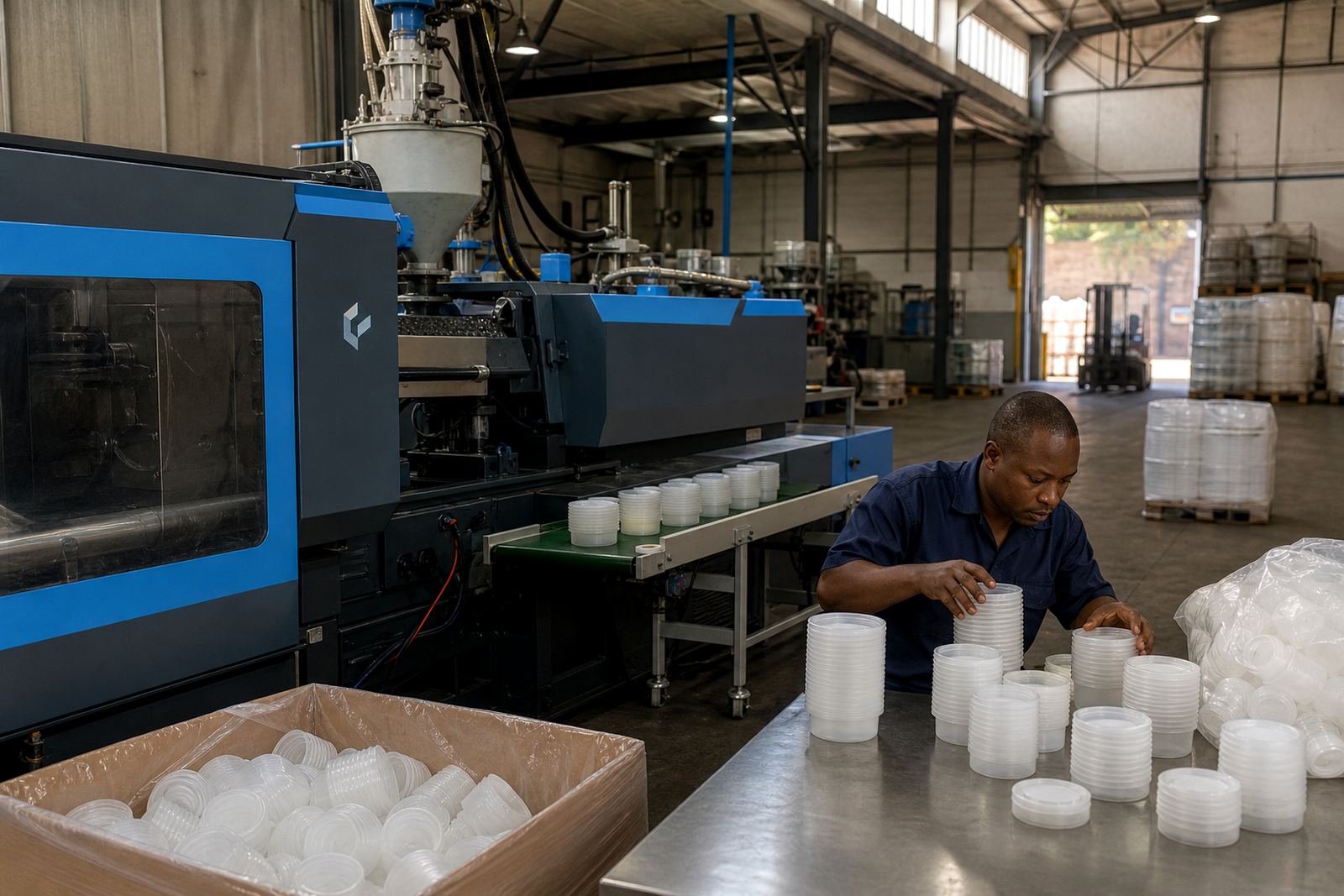

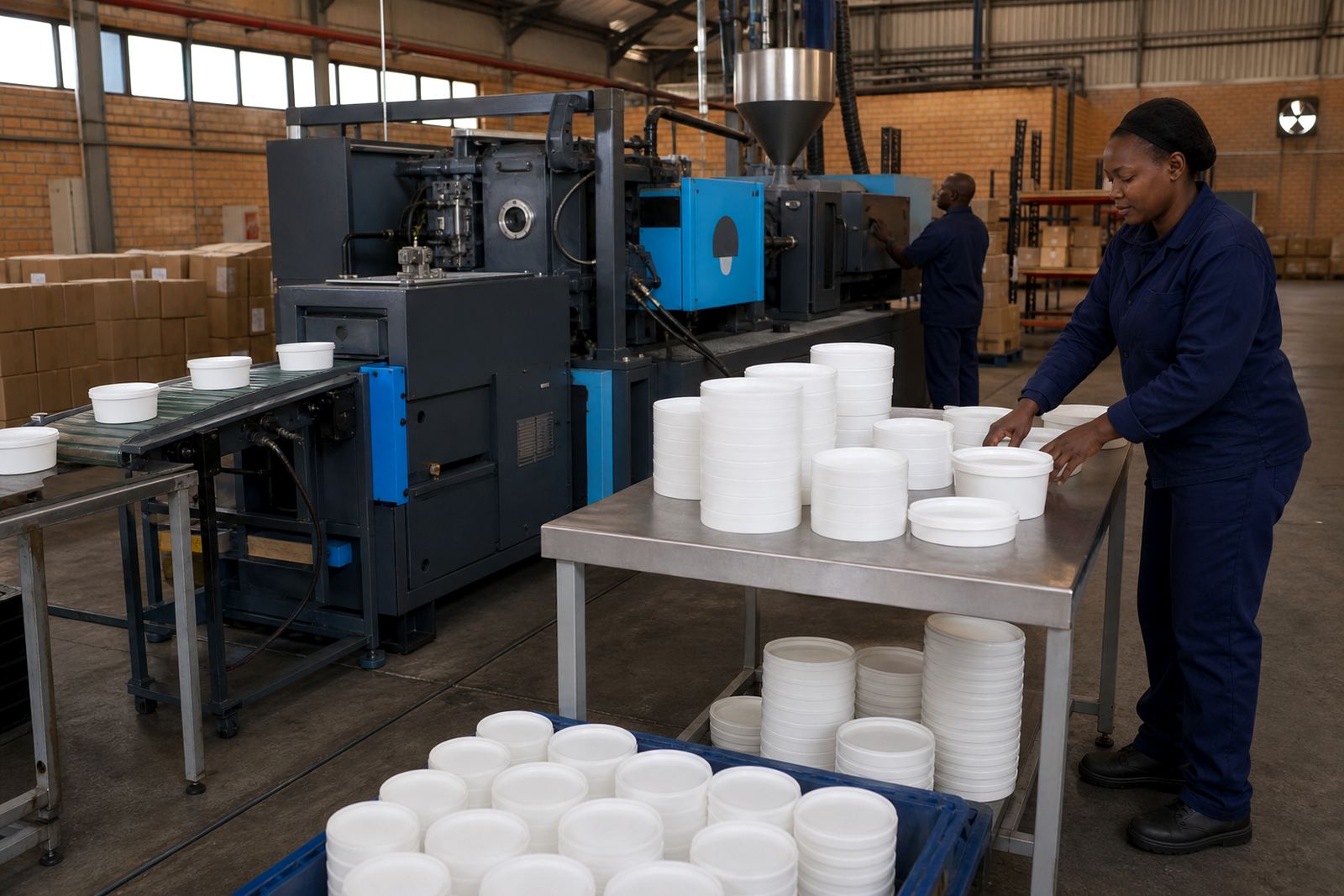
Match the tub to the filling rhythm
Injection-moulded polypropylene and HDPE containers behave differently on a line, so the first check is how your product moves through filling. A thicker sauce, a cream, a powdered blend or a tablet batch each puts a different demand on the opening, rim shape and sidewall stiffness. If the tub flexes too much, the fill point can wander and the line starts to lose consistency.
We look at the container geometry against the actual fill method, whether that means volumetric dosing, weight-based filling or hand filling at a smaller packing table. The aim is to keep the product flow steady and the pack weight within your working tolerance. On busy shifts in Alberton or Germiston, that consistency matters just as much as the container size itself.
- Check the brimful and usable fill volume against your target pack size.
- Confirm that the opening suits the nozzle, scoop or dosing head.
- Look at wall rigidity, especially where the pack is lifted often.
- Review how the empty tub stacks before it reaches the line.
Lid fit that keeps pace with the line
Lidding needs to match the speed and pressure of the packing line. A lid that sits well by hand may still give trouble when the line closes fast or when the pack is passed to a secondary seal step. The rim profile, lid depth and closure style all need to work together, otherwise you get uneven sealing or lids that sit proud.
For food, pharmaceutical and cosmetic packs, the lid should close without forcing the rim out of shape. That matters when product residue is present at the edge, or when the line is running in warm conditions in Durban and the material is seeing more movement. We check the tub, lid and seal as one working set rather than separate parts.
- Match the lid type to hand closing or machine closing.
- Allow for rim cleanliness at the moment of closure.
- Check that the lid does not distort during pressing.
- Confirm whether the pack needs a snap fit, overcap or seal layer.
Tamper seals and secondary packing need a clean handover
Many packs move straight from sealing into cartoning, sleeving or shrink wrapping, so the container shape must suit the next stage too. A tamper seal can protect the pack and give a clear sign of opening, but only if the neck and lid design can hold it properly. If the seal path is awkward, the crew ends up fighting the pack instead of moving it along.
Secondary packing also depends on how the tubs nest, stack and travel in trays or cartons. A tall tub with a narrow base may need extra support, while a short, broad tub may fit better for shelf packs. For Pretoria, Johannesburg and Cape Town deliveries, we often think about how the pack leaves the line and arrives ready for distribution, not just how it looks at fill stage.
- Review seal placement so it sits square and visible.
- Check carton counts against the packed tub footprint.
- Test tray movement where packs are grouped before dispatch.
- Allow for label space if tamper evidence must remain visible.
Material choice affects handling on the floor
Polypropylene is often selected where a lighter, firmer pack is needed, while HDPE is used where toughness and impact resistance matter more. The right choice depends on the product weight, the line speed and how the pack is handled after filling. A tub for cosmetic cream may need a different balance from a pharmaceutical powder container or a food pack used in chilled distribution.
Colour also plays a role, especially where your line uses visual sorting or where product separation matters in the store room. Opaque natural, white or tinted packs can help with handling, but the wall finish and mould detail still need to suit the fill and closing process. In coastal areas like Port Elizabeth and Durban, material choice also has to stand up to the local storage conditions without becoming brittle or misshapen.
Trial runs show where the line slows down
Trial production runs help reveal the small issues that only show up under working conditions. A tub may clear the filler but catch on a conveyor guide, or a lid may sit well on the sample table yet misalign once the line is moving faster. That is where trial packs and line fit checks earn their place.
During a trial, we look at how the pack behaves from the first fill to the final carton. The check includes hand grip, lid closure, seal placement, stacking and the way empty containers separate in a feed system. Small changes in ribbing, shoulder shape or lid depth can make a useful difference on a real shift.
- Run a small batch before committing to a larger order.
- Watch for scuffing, tipping or lid lift during handling.
- Check whether the pack nests too tightly or too loosely.
- Note any points where operators need extra force or correction.
A practical path through line compatibility checks
Start with the product itself, then move to the filling method, the lid, the seal and the final packed carton. That sequence keeps the work grounded in what the line must actually do. It also helps avoid choosing a container that looks suitable but slows the crew once production begins.
For packers across South Africa, the useful questions are steady ones: does the tub fill cleanly, does the lid close securely, and does the packed unit travel well through the next stage. Once those points are clear, colour matching guidance and stock run planning can support a more settled production schedule. The result is a pack that fits the process instead of forcing the process to adapt around it.