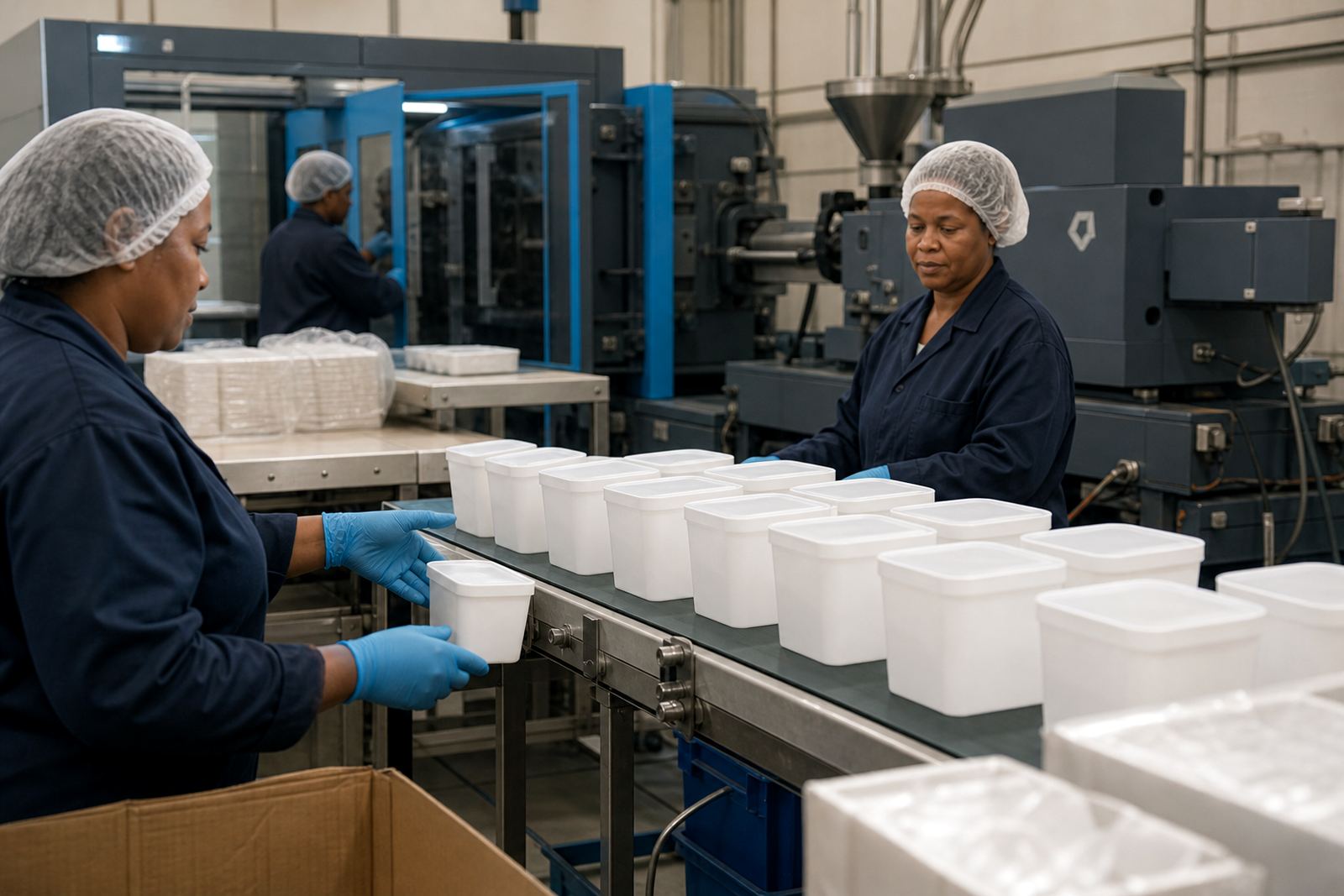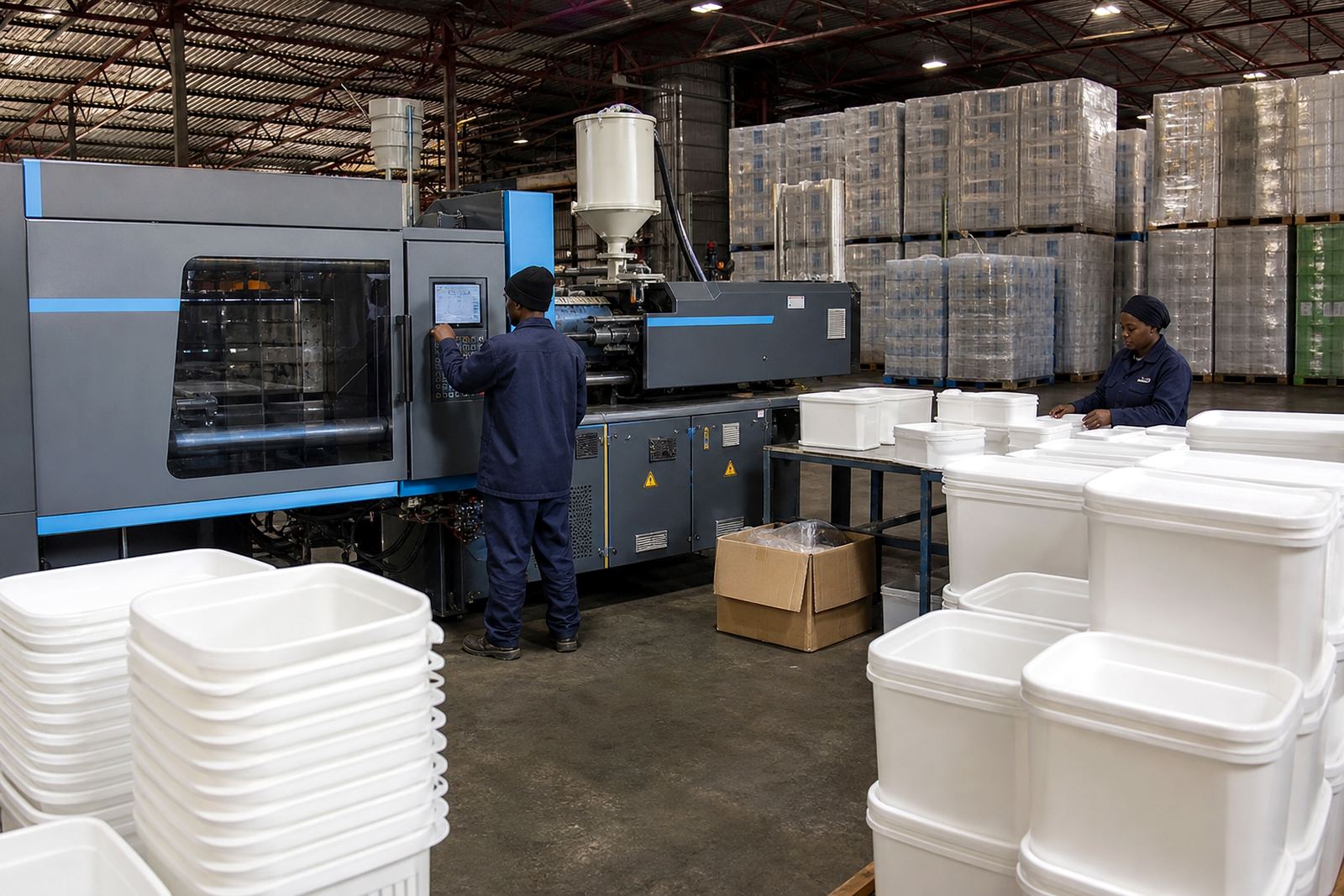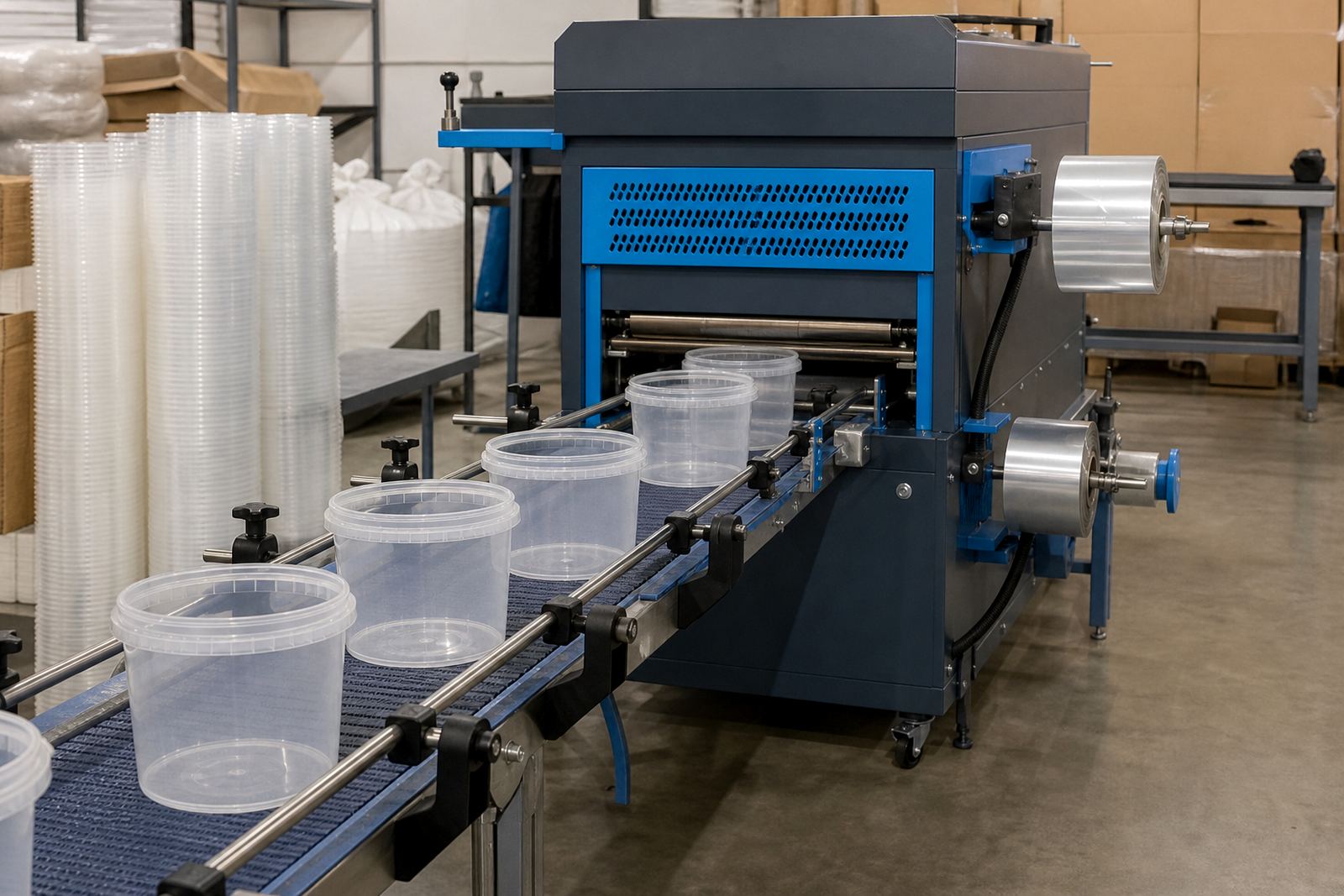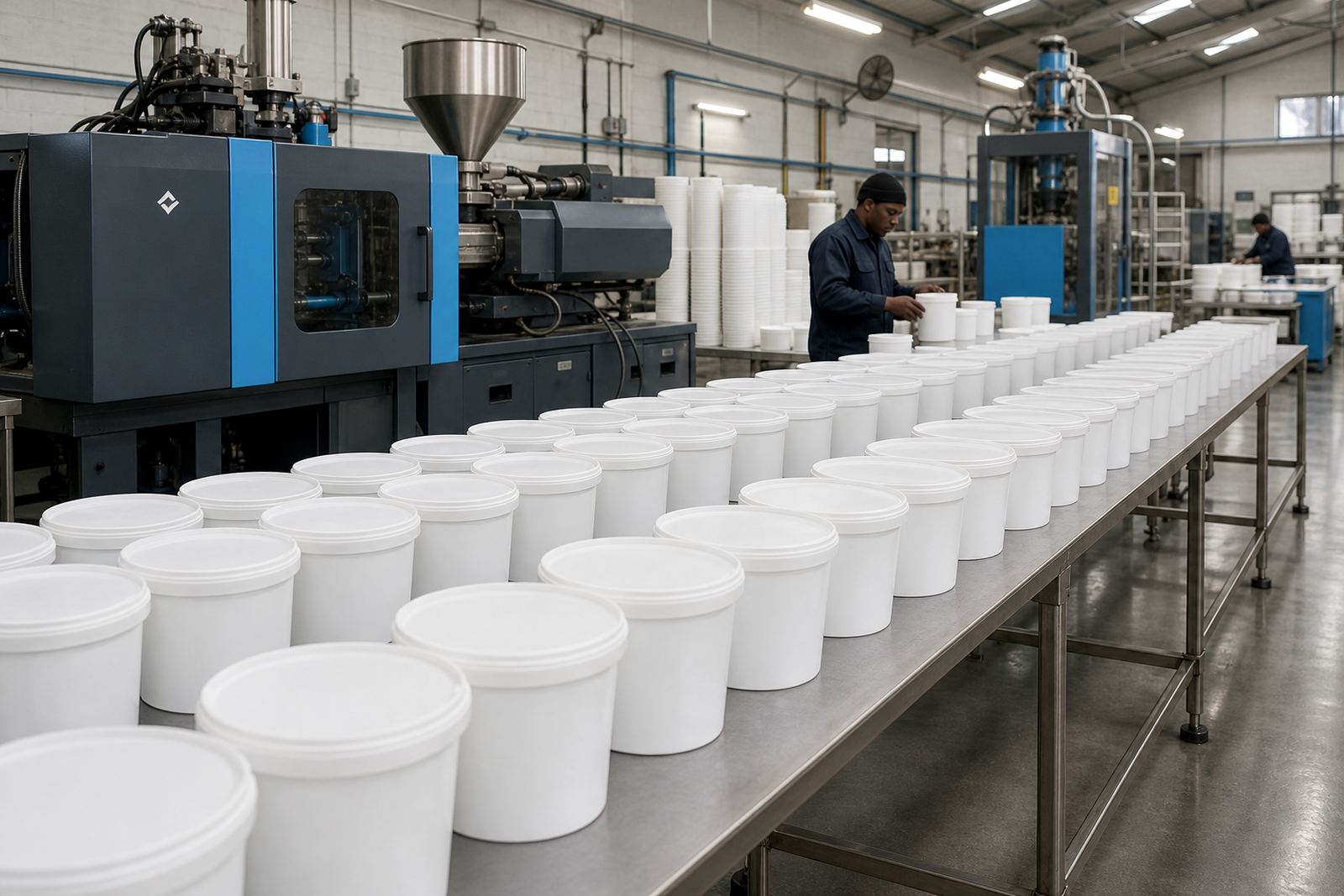
A plain white pack that sits neatly on the shelf
This range suits packers who want a white container that looks orderly, carries labels well and keeps the focus on the product inside. The moulded finish is even across the body and lid areas, with a shape that stacks neatly in storage and moves cleanly through packing lines in Alberton, Johannesburg and further afield. White also gives a useful base when you need one pack style across several product lines, with different print, sleeve or label treatments.
Our white containers are generally supplied in polypropylene or HDPE, depending on the handling, rigidity and product exposure you need. Polypropylene is often used where a firmer feel and good heat tolerance matter on filling and sealing lines. HDPE is valued for its toughness and its steady performance in a range of packaging environments. Both materials are commonly used for food-safe packaging applications, with sizing and lid choice matched to the product.
- Injection-moulded tubs and containers in white
- Polypropylene and HDPE options
- Compatible lid and tamper seal choices
- Neutral finish for labels, sleeves and date coding
Sizes and formats that suit different pack weights
The white range can be set up in a spread of round or rectangular formats, with common pack sizes from small sample tubs through to larger bulk containers. Typical volumes can include 250 ml, 500 ml, 1 litre, 2 litre and larger pack sizes, depending on the mould and the product run. Wall thickness, rim detail and stacking profile are matched to the packing method and the load the container carries during storage and transport.
For products that travel through secondary packing, the footprint matters as much as the volume. A wider tub may sit better in a tray or display carton, while a tall container can help when shelf height is limited. We also look at lid engagement, nesting depth and whether the pack must fit a particular filler head or sealing ring. Small changes in diameter or neck finish can make a real difference on the line.
- Round, square and rectangular formats where the mould allows
- Common pack sizes from 250 ml to 5 litre and above
- Stackable profiles for warehouse and dispatch use
- Options for shallow tubs, deep tubs and wider pack bodies
Where the white range earns its place
White containers are used by food packers, pharmaceutical packers and cosmetic brands that want a tidy neutral appearance. In food lines, the white finish works well for spreads, powders, dry ingredients, ready-to-pack ingredients and chilled products that move through cold rooms and distribution stores. In cosmetic work, the same base suits creams, balms, bath products and personal care items that need a clean shelf presence. For pharmaceutical and healthcare-related packing, white is often preferred where clear batch marking and neat presentation matter.
The range is also practical for contract packers handling several customer lines in one facility. When labels, tamper seals or overcaps change between products, the white base keeps stockholding simple and helps line crews separate variants with less fuss. In humid coastal towns such as Durban or Port Elizabeth, the material choice and seal fit need a bit more attention, especially where packs move through chilled storage or repeated handling. A stable lid fit and consistent moulding help keep the presentation tidy.
- Food packing, including chilled and dry products
- Cosmetic creams, lotions and personal care items
- Pharmaceutical and healthcare-related packaging
- Contract packing where one base pack serves several lines
Lids, tamper seals and line fit checks
The container is only part of the pack. Lid development, tamper seal design and line fit checks matter when the product must reach the shelf without loose closures or awkward handling at the filler. Depending on the application, the lid may be plain, snap-fit or paired with a tamper-evident feature that supports product integrity in transit. The seal detail needs to match the rim profile, otherwise you can end up with poor closure feel or a fit that slows down packing.
We look at how the container sits on the line, how the lid feeds, and whether the pack needs a tighter or looser engagement for the intended use. Trial production runs are useful when a customer is changing from one pack style to another, or when the product volume has shifted and the headspace has to be checked. The same applies to secondary packing, where the container must fit a tray, carton or shrink-wrapped bundle without rubbing or collapsing under load.
- Matching lids for storage, display and transport use
- Tamper-evident options where the pack needs a visible seal
- Trial production runs for fit and handling checks
- Line fit checks for filling, capping and packing flow
Material selection and mould development on the job
Material selection starts with what the product needs to do in the pack. Polypropylene is commonly chosen for its stiffness and clean finish, while HDPE is often selected for durability and a slightly different feel in the hand. The mould design must support the wall thickness, base form, stack behaviour and lid engagement, with careful attention to shrinkage and the final look of the container once it has cooled. Injection moulding gives a controlled way to produce repeated packs with steady dimensions and a consistent moulded edge.
When a new size is needed, mould development and pack size planning usually go together. A pack that looks fine on a sketch may not sit well on a pallet or in a retail tray until the measurements are checked in real terms. Colour matching guidance can also matter even for a white range, because not every white behaves the same under light. Some customers want a bright clean white, others need a softer tone that works better beside printed labels or a coloured lid.
- Injection-moulded production for repeatable sizing
- Polypropylene or HDPE based on the pack duty
- Mould development for new shapes and closures
- Colour matching guidance where the shade must stay consistent
Ordering details that keep the pack line steady
When ordering the white container range, the main details to confirm are the pack volume, material, lid style and the product type it will hold. It also helps to note the filling temperature, whether the pack is for hot-fill, cold-fill or ambient use, and whether the container must travel through cold storage or long-distance distribution. If the product has a thick, sticky or oily character, that affects both the neck finish and the lid choice. For cosmetics and food products, label area and tamper seal position matter too.
Stock run planning is useful where a business needs regular supply in the same format across Johannesburg, Pretoria, Cape Town, Durban, Port Elizabeth, Alberton, Germiston and Boksburg. Some customers want a fixed pack size with scheduled replenishment, while others need a changeable arrangement for seasonal lines. Secondary packing advice can also help if the packs need to land in cartons, display sleeves or wrapped bundles for dispatch. The more exact the brief, the cleaner the result on the production floor.
- Container volume and shape
- Polypropylene or HDPE material choice
- Lid type and tamper seal requirement
- Filling method, product temperature and line speed
- Label area, colour tone and any secondary packing needs
Key facts
| Product type | Injection-moulded white containers and tubs |
|---|---|
| Materials | Polypropylene and HDPE |
| Typical sizes | 250 ml, 500 ml, 1 litre, 2 litre and larger formats |
| Closure options | Matching lids and tamper-evident seals |
| Main uses | Food, pharmaceutical and cosmetic packing |
| Supply area | Alberton, Johannesburg, Durban, Cape Town, Pretoria, Port Elizabeth |