Square walls make better use of cartons
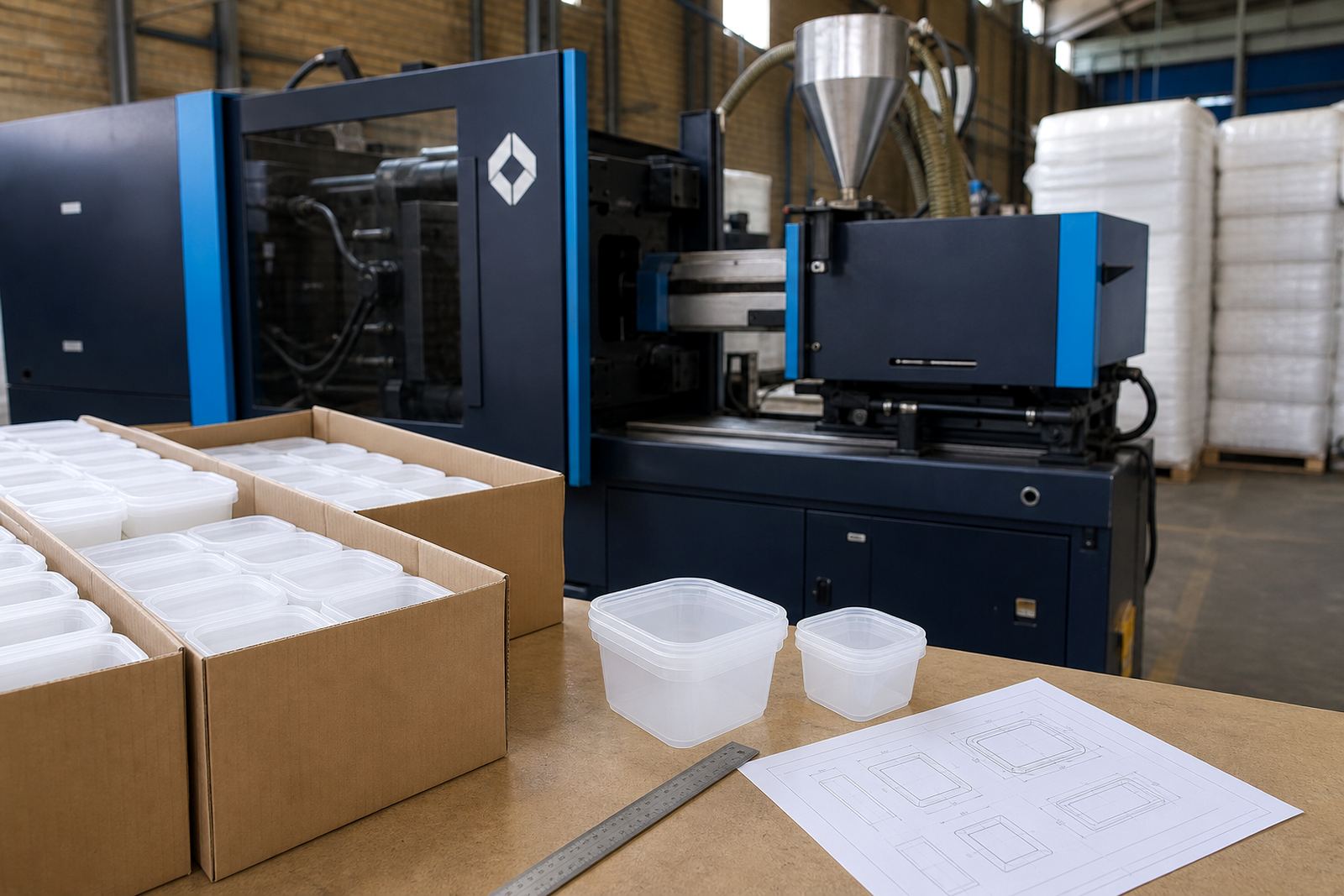
Square tubs are often the better choice when carton fill matters. Their straight sides let packers place more units across a carton face, with fewer gaps than round formats usually leave. That matters in storage rooms, distribution centres and on retail shelves where every centimetre has a cost attached to it.
When the outer carton is filled more evenly, the load feels steadier too. Boxes stack with less shifting, and the pack line spends less time dealing with odd spaces, loose inserts or crushed corners. For businesses moving goods between Alberton, Johannesburg and coastal centres, that extra order makes a difference in day-to-day handling.
Square tubs also help when products are grouped by size. A standard footprint is easier to count, stack and label. Staff can see what belongs where, and the packing table stays neater during busy runs.
Materials that suit food, pharma and cosmetic packing
Injection-moulded tubs are widely used because they can be made with consistent wall thickness, clean edges and repeatable dimensions. Polypropylene is commonly chosen for light weight, good rigidity and useful resistance to many everyday filling conditions. HDPE is often selected where toughness and moisture handling matter more, especially in busy storage areas or where tubs are opened and closed often.
For food packers, food-safe materials are important because the container must suit direct contact with packed goods. Pharmaceutical and cosmetic packers often look for smooth internal surfaces, secure lids and a shape that works well on a line. The right material choice depends on product weight, handling, stacking height and whether the tub will sit in warm rooms or cooler storage areas.
Colour matching can also play a practical part. A clear or natural tub suits some ranges, while stronger colours help with batch separation or department sorting. In practice, the material choice should fit the product, the filling line and the way stock moves through the building.
- Polypropylene suits many light to medium-duty pack applications.
- HDPE is useful where toughness and handling matter more.
- Food-safe options are important for direct contact products.
- Colour can support sorting, branding and batch control.
Lids, tamper seals and the small details that hold the line together
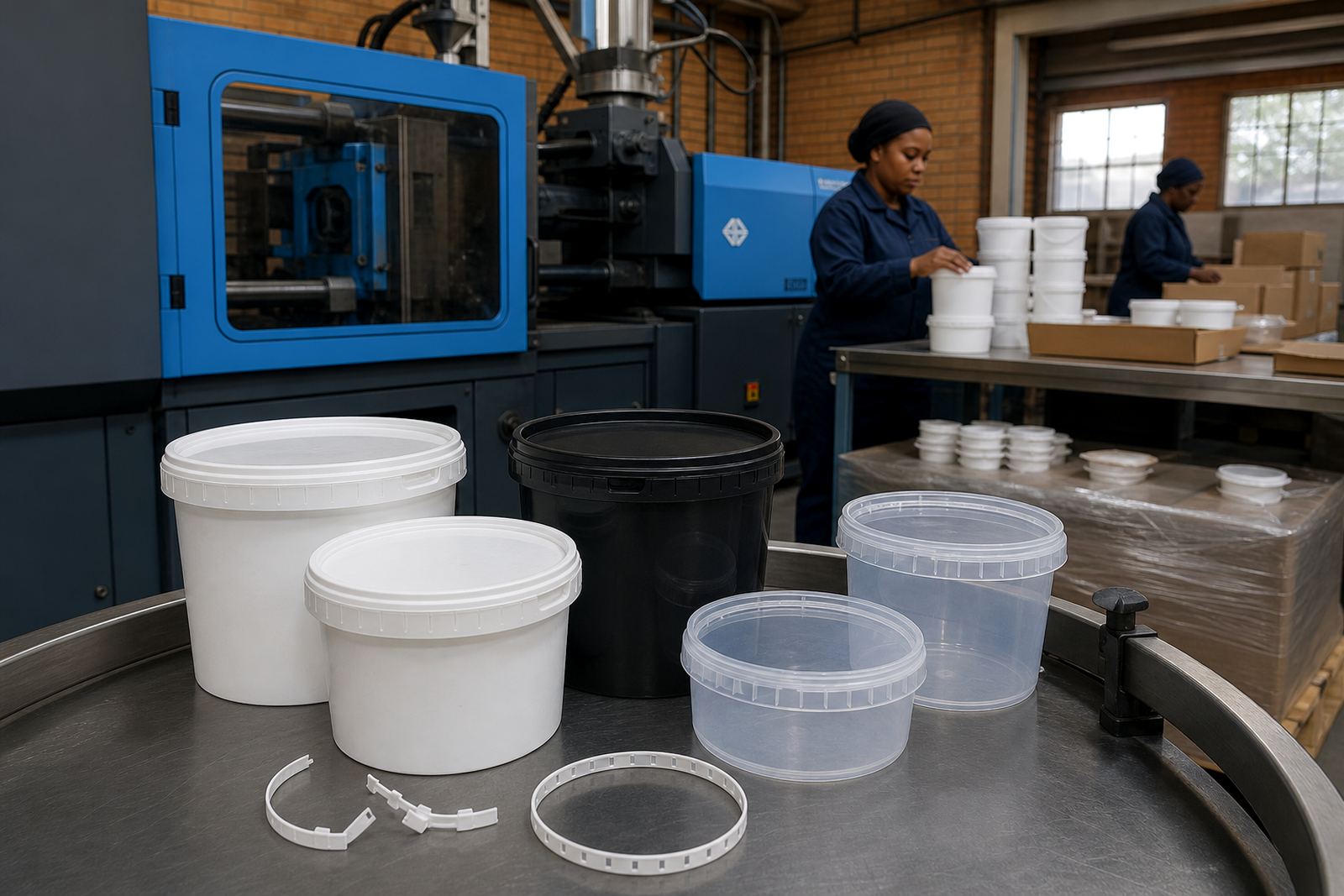
A good tub is only half the story. The lid must close evenly, sit flat and stay in place through picking, stacking and courier movement. Tamper seals add another layer of control where a packer wants visible evidence that the container has not been opened after sealing. For food, cosmetic and pharmaceutical packers, that extra control can reduce disputes at dispatch and improve confidence on the receiving side.
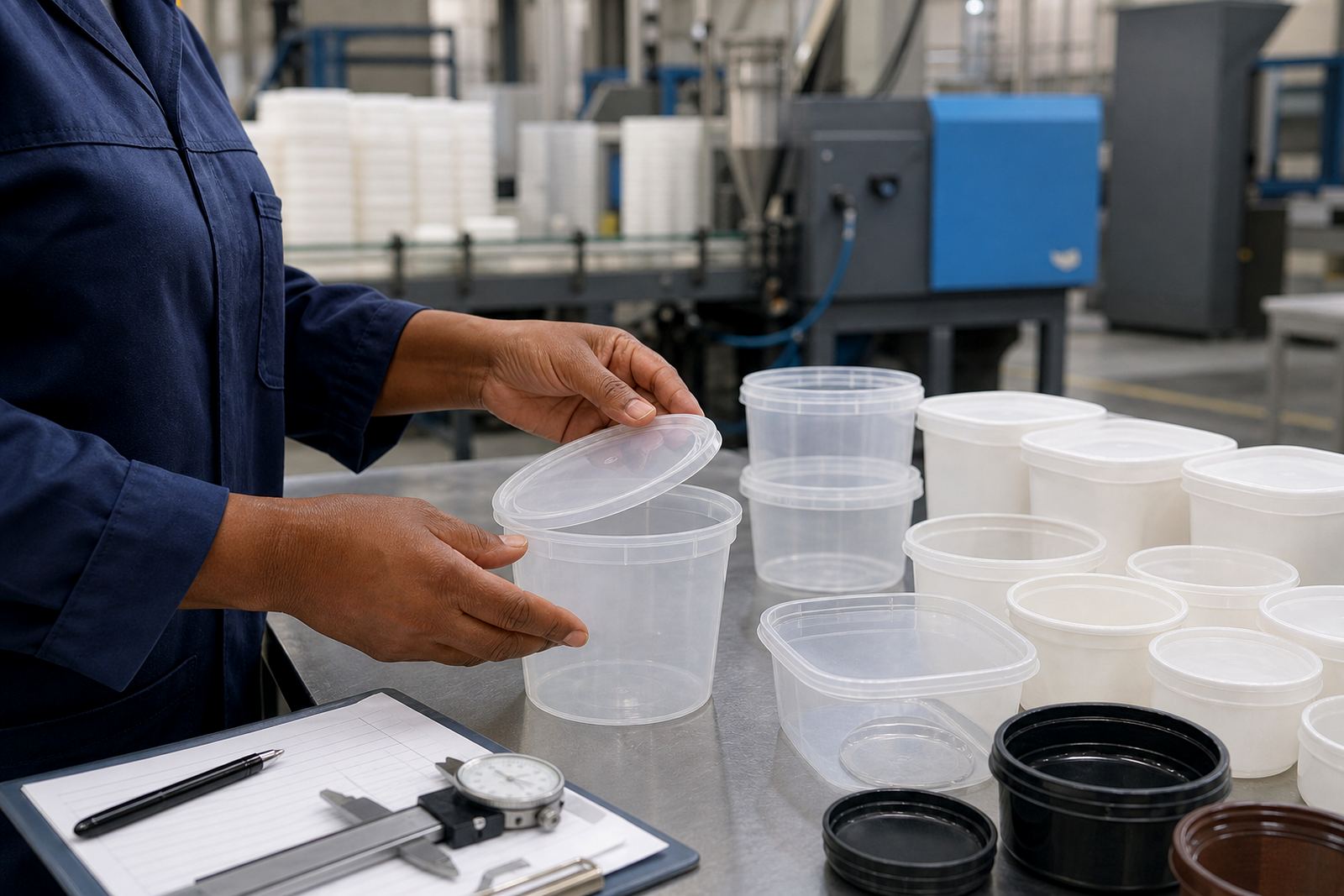
Line fit checks matter here. A lid that feels fine by hand may behave differently once it passes through a packing line, a capping station or a secondary wrap process. Minor differences in lip height or seal profile can slow a line or create waste. That is why trial production runs and fit checks are worth doing before a larger stock run is approved.
Secondary packing also needs attention. A square tub may fit the primary carton well, but the outer shipper, divider or shrink arrangement still has to work neatly. Small adjustments at the tub stage often save a great deal of handling later.
Shelf space, pallet edges and carton fill in real terms
Square tubs help when shelf width is fixed and every row has to count. On a retail shelf, a square footprint can sit flush against the next tub without wasting narrow gaps at the ends. In a storeroom, that same shape lets staff line up rows more cleanly and read labels without lifting half the stack first.
On pallets, squared corners are useful because they make the load easier to build into a stable block. Cartons with straight edges usually sit better against each other, and the pallet face stays tidier. That matters in warehouses around Gauteng, where goods may move from local storage into national distribution, and a rough pallet can cause delays during loading or checking.
For packers watching carton fill, the benefit is straightforward. Better use of the carton means less wasted air, fewer filler materials and more predictable outer pack sizes. It can also help when freight rates depend on space used rather than only on weight.
- Square footprints reduce wasted space inside cartons.
- Cleaner stacking helps shelf presentation and warehouse order.
- Stable pallet faces are easier to handle and inspect.
- More even carton fill can support better freight planning.
A local packing line example from Alrode
A cosmetic packer in Alrode may need tubs that move neatly from filling table to shelf unit without taking up more room than necessary. If the range includes creams, balms or powders in several pack sizes, square tubs help standardise the outer carton while keeping the product range flexible. That kind of setup is useful where stock turns through Johannesburg, Pretoria and Durban, and the same pack has to travel well across different routes.
In one such setup, a square tub can reduce awkward voids inside the carton and make counting easier for dispatch. Staff can group 12, 24 or 48 units more cleanly depending on the line plan. The result is not dramatic, but it is practical: tidier stock, less handling and fewer damaged corners during movement.
For local packers, that practicality matters more than glossy claims. A container that fits the packing rhythm, the shelf width and the delivery box is usually the one that stays in use.
Choosing the right tub for your pack size planning
Square tubs should be matched to the product, not only to the shelf. A heavier fill may need a stronger base, a different lid style or a wall profile that sits well under stacking pressure. Smaller packs may benefit from a compact footprint that maximises carton count without creating awkward handling.
Material selection, mould development and trial runs all help define the right fit. If a line uses hand packing, the tub shape should be easy to grip and close. If the process is faster and more mechanical, the rim and lid profile need more attention. For businesses in South Africa that supply supermarkets, pharmacies or cosmetic stores, that planning helps avoid costly changeovers later.
Stock run planning also plays a part. When a tub works across several pack sizes, the range can be managed with fewer layout changes and simpler storage. That can help a business keep supply organised while still offering a range of container sizes for different products.
What to look at before moving a square tub into production
Before a new square tub is released for regular use, the practical checks should be simple and direct. The container has to suit the product weight, the lid must seat correctly, and the outer carton should close without forcing corners. If a tamper seal is used, it should be easy to apply and easy to inspect.
It also helps to review the full packing path. From fill point to dispatch area, each step should keep the tub safe and readable. In humid coastal conditions, or in warm inland stores, the container should still hold its shape and stack neatly. That is where a sensible material choice and a well-made mould support day-to-day use.
Square tubs are not about fancy presentation. They are about making storage, packing and transport easier to manage, with fewer wasted gaps and fewer handling problems along the way.