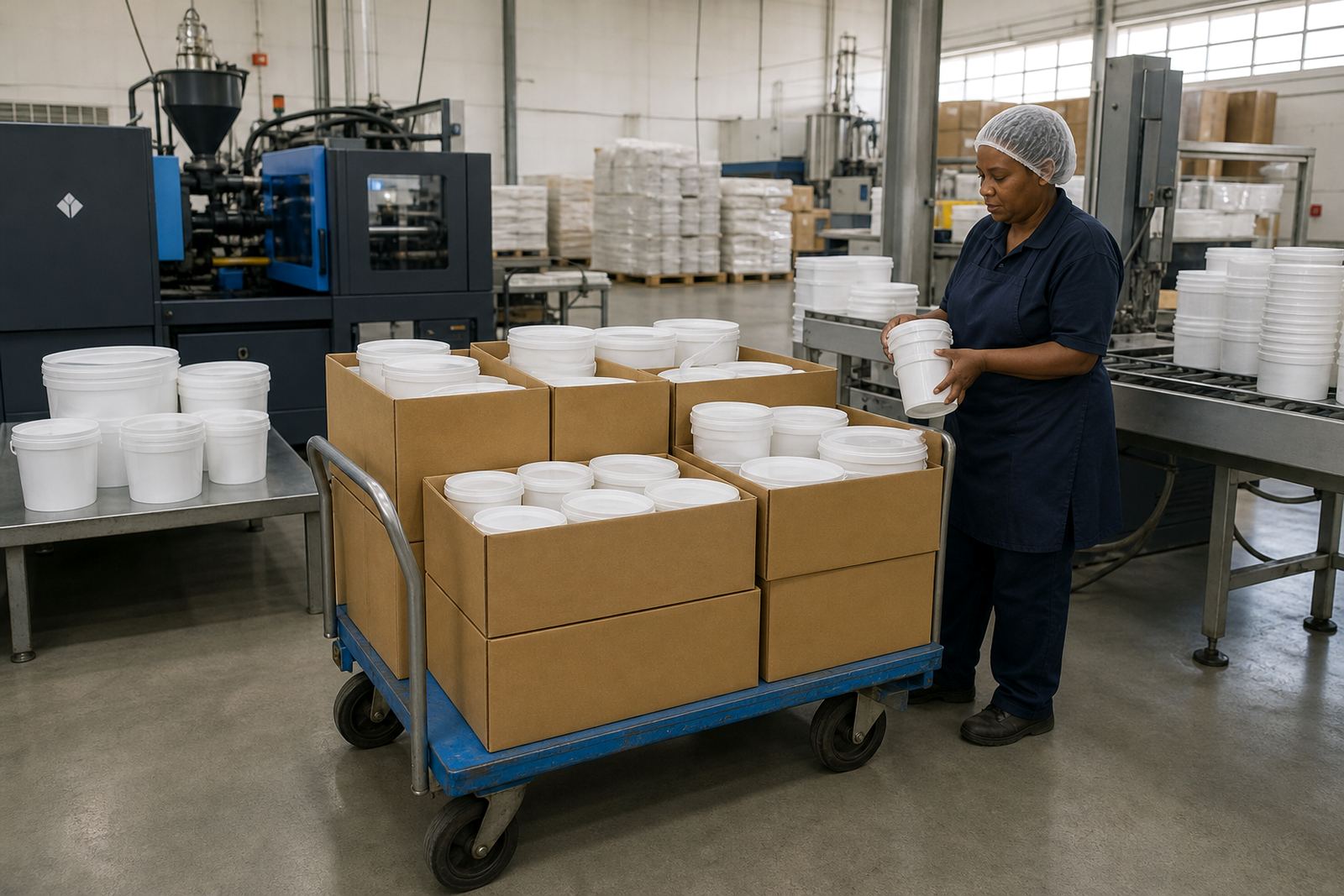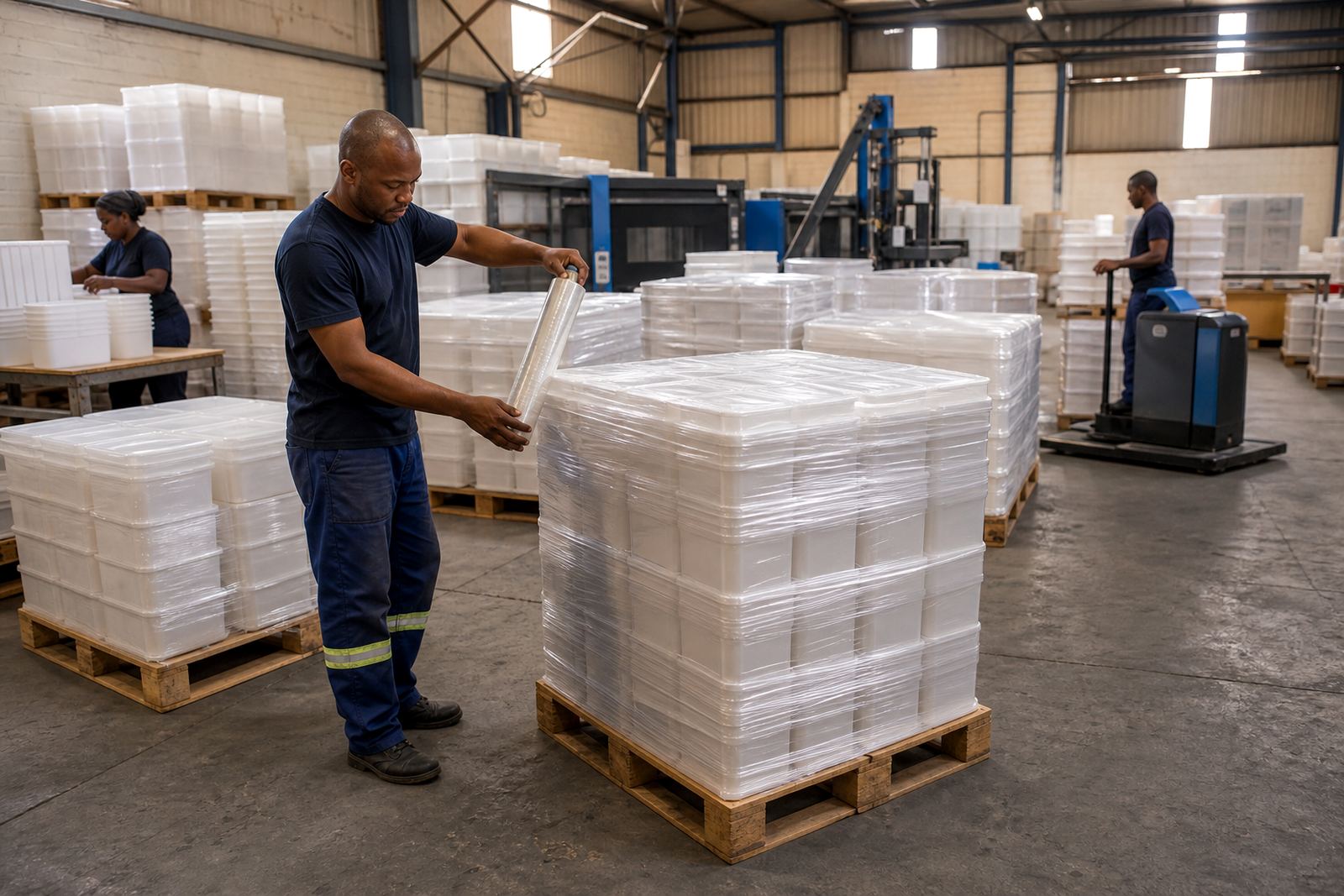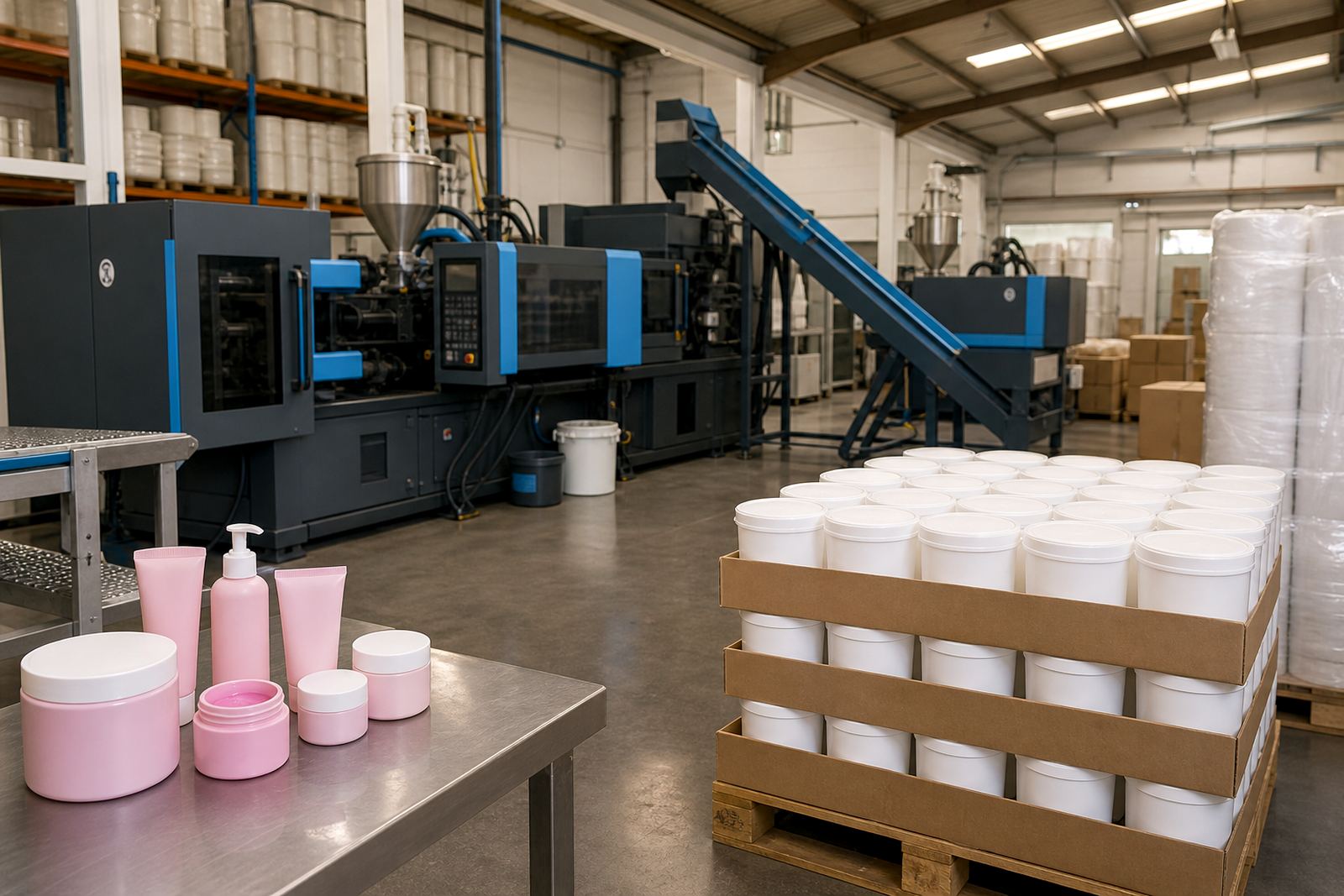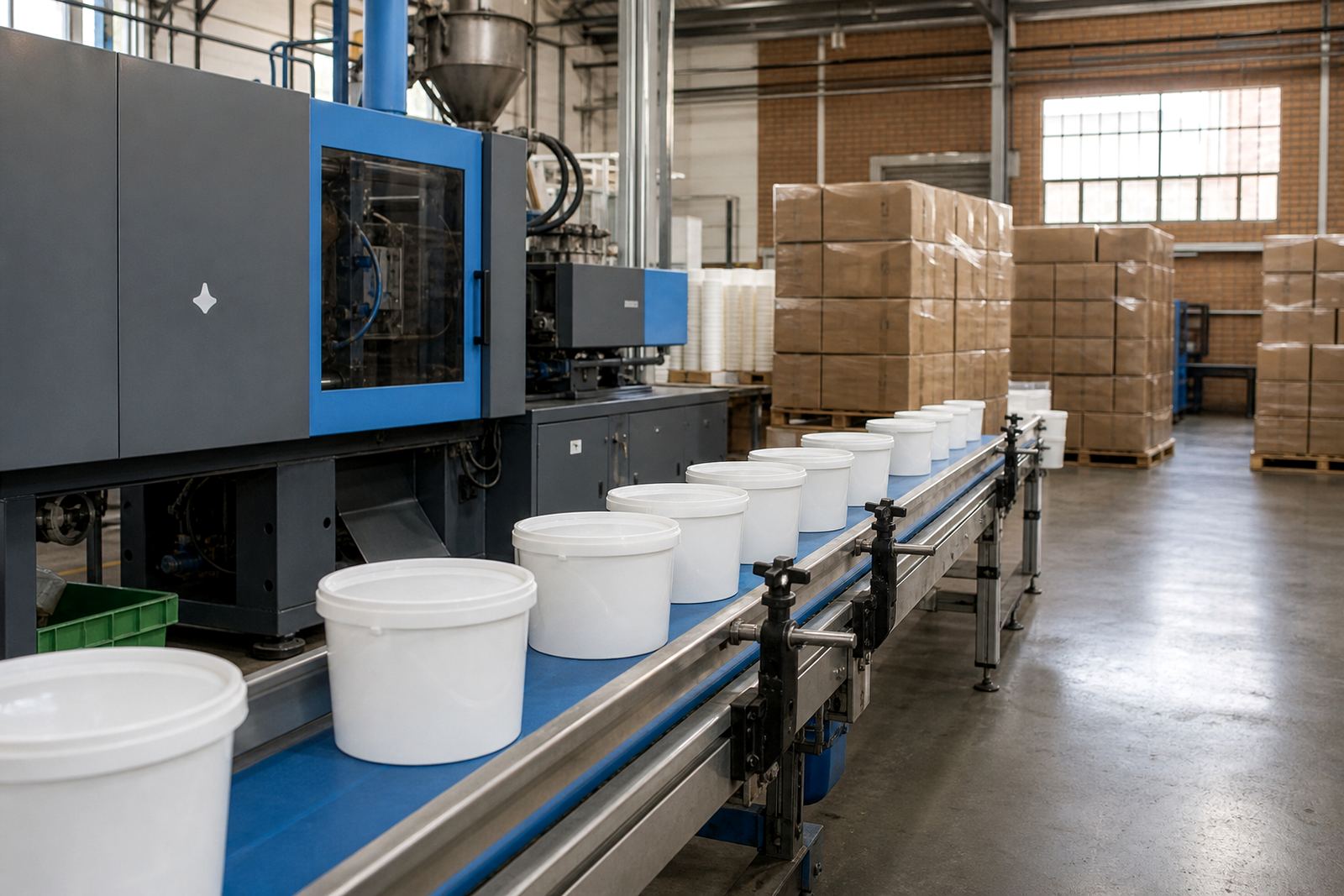
A filling line that had to stay tidy
The brief came from a sauce producer in Alberton working on a fast-moving packing line for chilled and shelf-stable products. Their team wanted a container shape that sat square under the filler, stacked neatly in cartons, and held up during transport between Alberton, Johannesburg and wider Gauteng distribution.
The pack was for a family of easy-fill tubs in polypropylene, with lid closure that stayed dependable after repeated handling. The product had to suit sticky sauces, wet caps and the pace of a line where small delays can throw off the whole shift. The client also needed a clear tamper-evident feature for retail presentation, plus practical secondary packing advice for cartons and shrink-wrapped bundles.
- Easy-fill tub profile for cleaner dispensing
- Rigid rim for consistent lid engagement
- Tamper seal detail for shelf presentation
- Carton packing suited to transport and stacking
Material and format choices for sauce packaging
We worked with polypropylene for the main tub range because it suits many food packaging uses and handles regular packing line contact well. HDPE was also discussed for certain secondary formats where a different rigidity and feel was useful, especially for wider-mouth tubs and utility packs. The decision came down to fill behaviour, lid fit, stacking strength and the way the pack would move through the depalletising and cartoning stages.
For the Alberton project, the final direction used injection-moulded tubs with matching lids and a tamper seal arrangement that kept the closure neat. The walls were set for reliable mould release and good surface finish, while the rim profile was kept even to reduce scuffing during packing. Colour matching guidance was included for the brand's cap and tub combination, with attention to visibility on retail shelves and within mixed pallets.
- Injection-moulded tub bodies with even wall thickness
- Matched lids for tight and repeatable fit
- Tamper seal design for visible opening control
- Food-safe material selection for sauce packing duties
Trial runs that showed where the fit needed work
The first stage ran over two weeks and focused on mould development checks, trial production runs and line fit checks. We used sample tubs to test how the fill level sat against the headspace, whether the lid snapped on cleanly and how the seal behaved after a short transport cycle. Small changes were made to the rim geometry and lid flex so the closure did not feel tight in one batch and loose in the next.
There was also a check on label space and pack size planning, because the client wanted one format for a few sauce variants. That meant balancing shelf presence with carton count and not making the tub too tall for the packing line. A short note on secondary packing helped the team set carton dividers and settle the load better inside the outer case.
- Week 1: sample tooling review and format checks
- Week 2: trial runs and lid fit corrections
- Final stage: pack size planning and carton review
Practical details from the job
The finished range was set around everyday production realities rather than fancy packaging language. The tubs were specified for easy filling, clear tamper indication and stable stacking when the cases moved by road. As the site serves Gauteng packing work and sends product across South Africa, the pack also needed to hold shape in warm conditions and during the humidity that can affect stored cartons near coastal routes.
We also looked at stock run planning, because sauce lines often need a sensible balance between regular sizes and shorter promotional runs. That way the client could hold core formats in steady supply while keeping room for seasonal or flavour-specific batches. The result was a cleaner handover to the filling team and a pack that behaved well in dispatch, without constant adjustment at the end of the line.
- Core format planned for repeat packing runs
- Carton layout set for road transport stability
- Closure tested for handling after dispatch
- Storage behaviour checked for warm pack rooms
Delivery across Gauteng and the coast
From the Alrode base in Alberton, the order moved into normal supply for Johannesburg, Pretoria and Germiston, with dispatch support for Durban, Cape Town and Port Elizabeth as required. The container family suited a client shipping into multiple provinces, where each route places different strain on cartons, seals and pallet edges. Sibusiso in dispatch handled the packing pattern so the loads left in a tidy, countable format.
For the customer team, the main value lay in having one packaging format that could serve several product lines without awkward changes on the filling side. Naledi handled the commercial coordination, Johan checked the production flow, Ayesha signed off quality points, and Thabo kept the project on track from the production floor side. That mix mattered because sauce packing is rarely about one isolated part, it is about how the tub, lid and line behave together.
- Johannesburg Delivery for local food packers
- Durban Delivery for humid coastal shipping lanes
- Cape Town Delivery for mixed pallet movement
- Pretoria Delivery and Port Elizabeth Delivery for wider supply
What the packers gained from the final format
The finished tubs gave the filling team a smoother pack cycle and fewer lid seating issues. The closure sat evenly, the tamper seal read clearly on shelf, and the carton pattern travelled well in mixed transport. That meant less handling at the packing table and less sorting at dispatch, which is usually where weak pack design shows itself.
On a similar job, we would begin by checking line fit before settling on the final lid profile. That sequence matters when a product is wet, sticky or filled at speed. For sauces, the gap between a sample that looks fine on the table and one that runs cleanly on the line can come down to a few millimetres in the rim or a small change in lid flex.
- Cleaner fill movement at the packing head
- More even lid engagement across batches
- Clearer tamper evidence for retail handling
- Better stack stability in transport cartons
Key facts
| Client type | Sauce producer in Alberton |
|---|---|
| Project focus | Easy-fill tubs with dependable lid fit |
| Materials | Polypropylene and HDPE options |
| Pack features | Lids, tamper seals and carton planning |
| Project timeline | 2 weeks for trials and fit checks |
| Supply areas | Johannesburg, Durban, Cape Town, Pretoria and Port Elizabeth |