Cape Town spread lines do not forgive wasted space
The brief came from a Cape Town packer working with spread products that had to sit well on retail shelves and travel without crushed corners. Their current round tub format was using more carton space than needed, and the pack line team wanted a square shape that would pack tighter, hold its form in transit, and look orderly on shelf.
The product sat in a chilled supply chain, with handling through secondary packing before pallet dispatch. They needed a container that suited food use, worked with existing filling heads, and accepted a tight lid fit without slowing the line. The team also wanted a clear tamper seal option, because the pack would move through wholesale and retail channels with regular handling.
- Square tub format for carton efficiency
- Food contact use for spread products
- Lid fit that stayed consistent on line
- Tamper evident closure for retail handling
Material choice and format decisions
We worked with polypropylene and HDPE options, then matched the final pack to the product behaviour, line handling and shelf presentation. Polypropylene suited the required stiffness and clarity of form, while HDPE was reviewed where impact resistance and a softer container wall would have helped. The packer wanted a square body with clean corners, and that meant careful wall design so the tub would release well from the mould and still hold shape under stacking pressure.
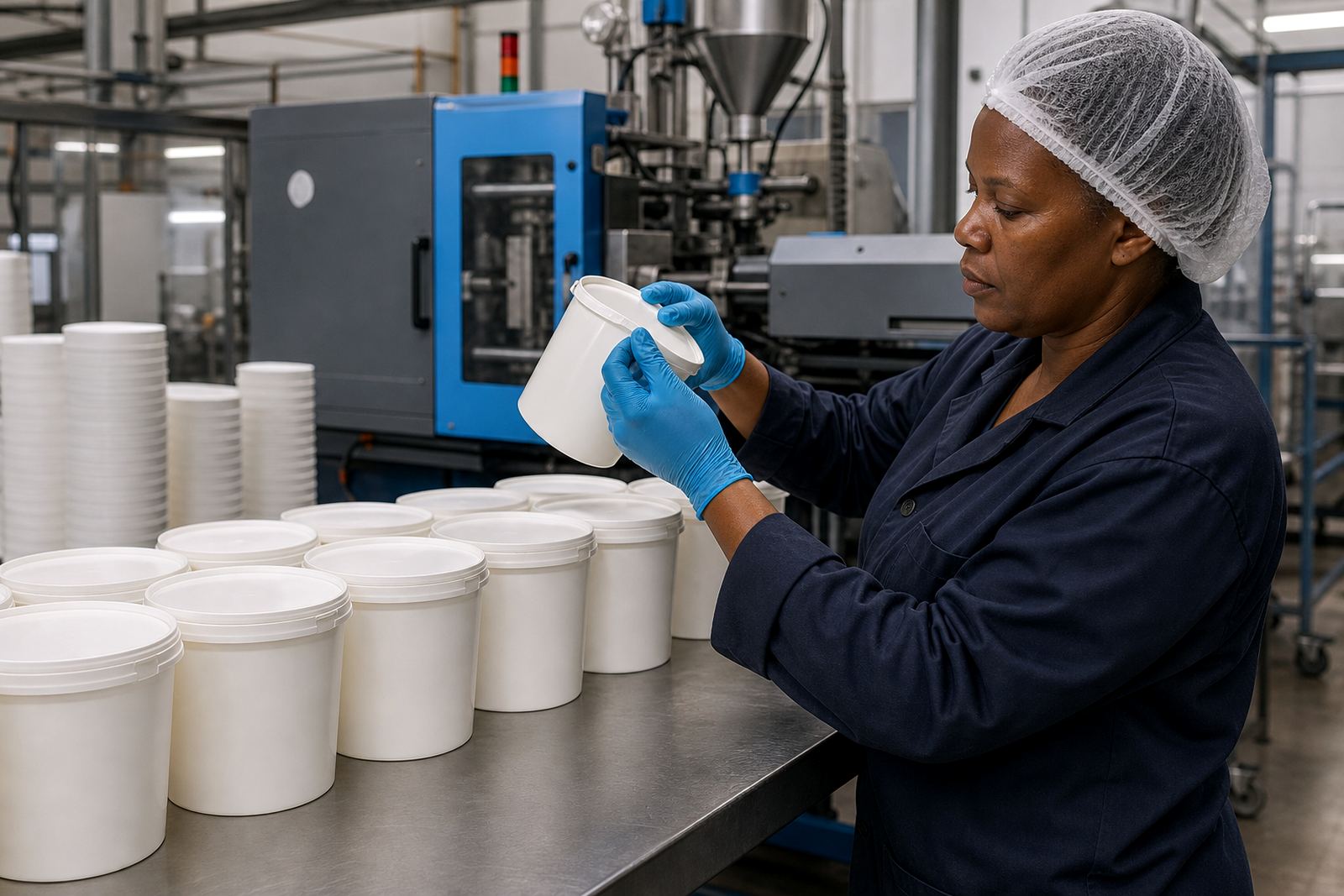
Injection moulding gave the control needed for repeatable dimensions. The side walls, base profile and rim all had to stay within a narrow band, because a slight change at the rim can affect lid seating on a fast moving packing line. We kept the specification practical, with the shape tuned for filling, closing and downstream carton packing.
- Square cross section with straight stacking edges
- Rim made for repeatable lid engagement
- Wall thickness balanced for rigidity and release
- Material choice guided by product texture and handling
Trial runs in three weeks, not guesswork
The project moved through trial production runs over three weeks. The first stage confirmed the overall tub volume, the second stage checked line fit on the filler, and the third stage dealt with lid engagement, tamper seal placement and carton nesting. That sequence gave the packer enough room to make handling notes before the full stock run was set.
During trials, we checked how the square tubs sat in cartons with minimal movement and whether the lid flange stayed even around all four sides. Small adjustments were made to the rim profile and the corner radius. Those changes improved closing consistency and cut down on manual correction at packing tables. The result was a more settled run on the line, with fewer awkward packs and a neater pallet profile.
- Week 1: sample tubs and volume check
- Week 2: line fit checks and lid seating review
- Week 3: tamper seal checks and carton packing test
What we supplied for the spread run
We supplied a square injection-moulded tub with matching lids, tamper seals and a packing plan for the secondary pack stage. The pack size was set to suit the client’s carton layout, so the tubs could sit tightly without wasted voids. The pack line team also received notes on fill level and handling order, which helped keep the finished packs consistent through the day.
The work included colour matching guidance for a clean shelf appearance, plus material selection support to keep the product suitable for food use. The container surface was kept smooth enough for labelling and readable print application, while still leaving enough grip for handling. For this run, the focus stayed on practical production details rather than decorative changes.
- Square tub and matching lid set
- Tamper seal design for retail supply
- Pack size planning for carton efficiency
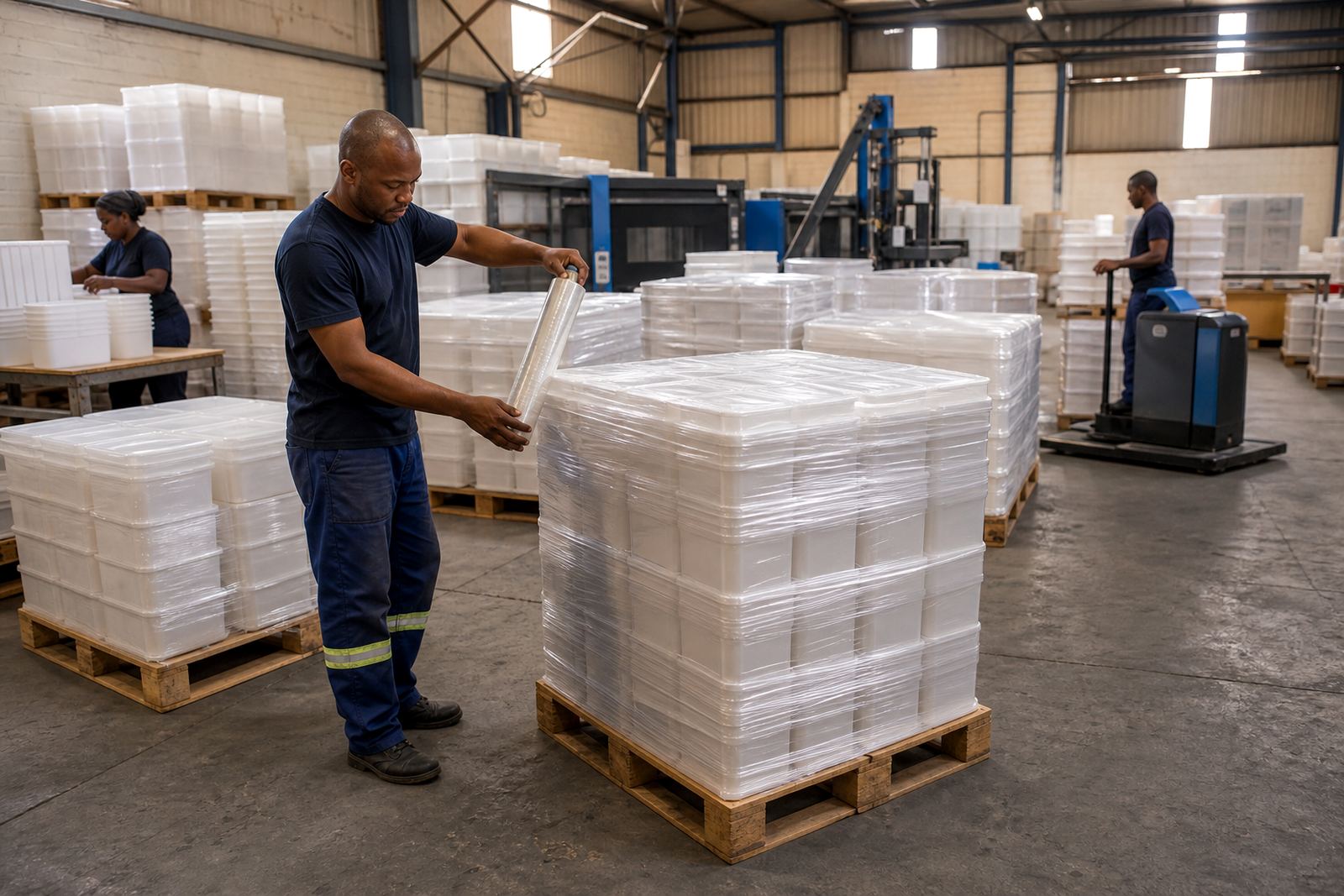
- Secondary packing advice for orderly pallet building
Line handling and carton efficiency in practice
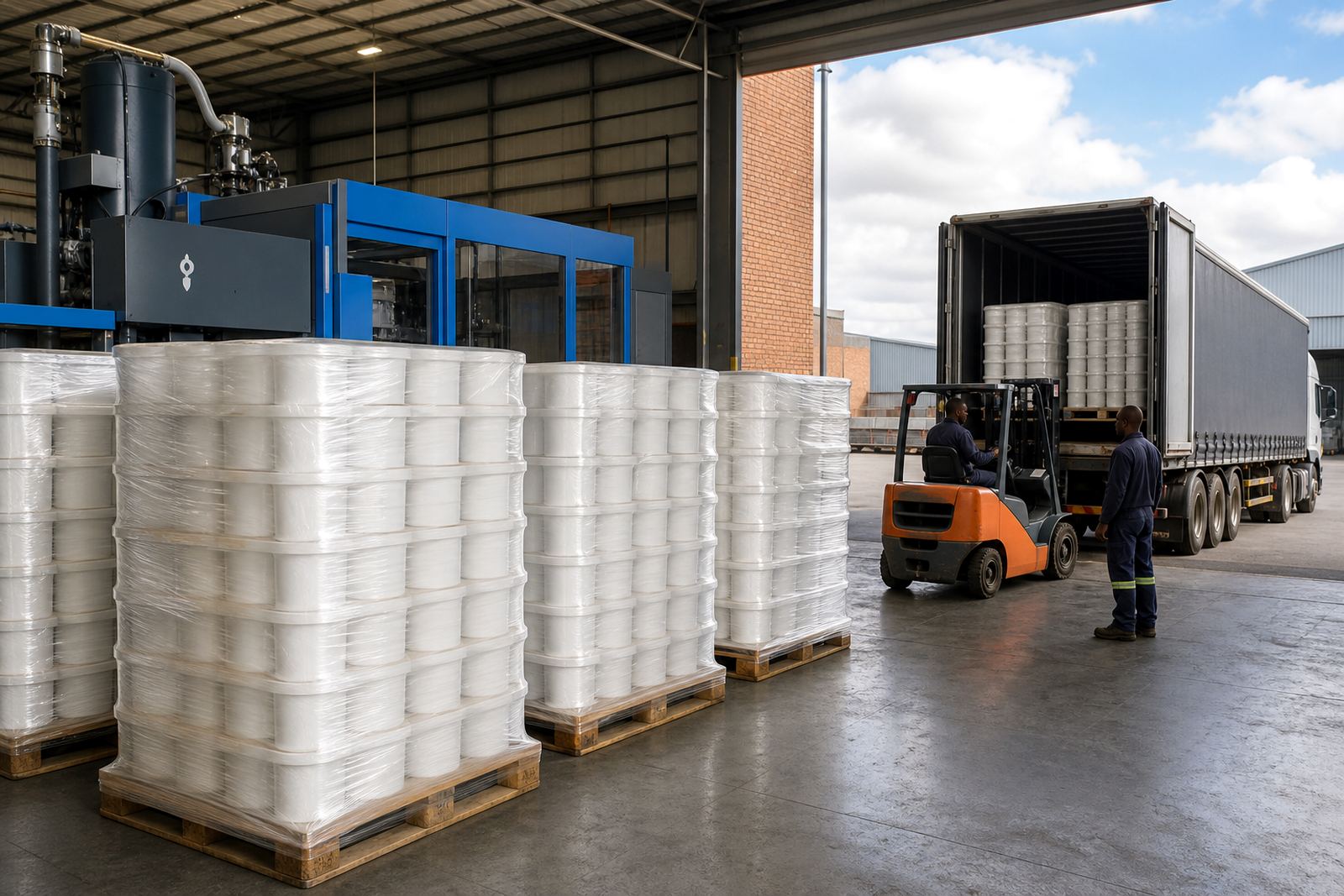
Once the run settled, the packer saw better carton use and a more regular stack on pallets. The square footprint let them fit more neatly into shipping cartons, which reduced loose movement during transport and helped the team keep the outer pack tidy. That mattered on the Cape Town side, where cartons often travel through mixed freight handling before final retail movement.
The lid and tamper seal combination stayed practical for a busy packing floor. Operators could close the packs without fighting the rim, and the seal broke cleanly during testing. The packer also noted that the square shape sat better in chilled storage, where stable stacking matters when the goods move through colder rooms and then back into dispatch flow. There was less wasted shelf space too, which helped the final presentation in stores.
- Improved carton fill with less dead space
- Cleaner pallet stacking for dispatch
- Stable shelf presentation for retail use
- Smoother closing on the packing line
Cape Town delivery and stock planning from Alrode
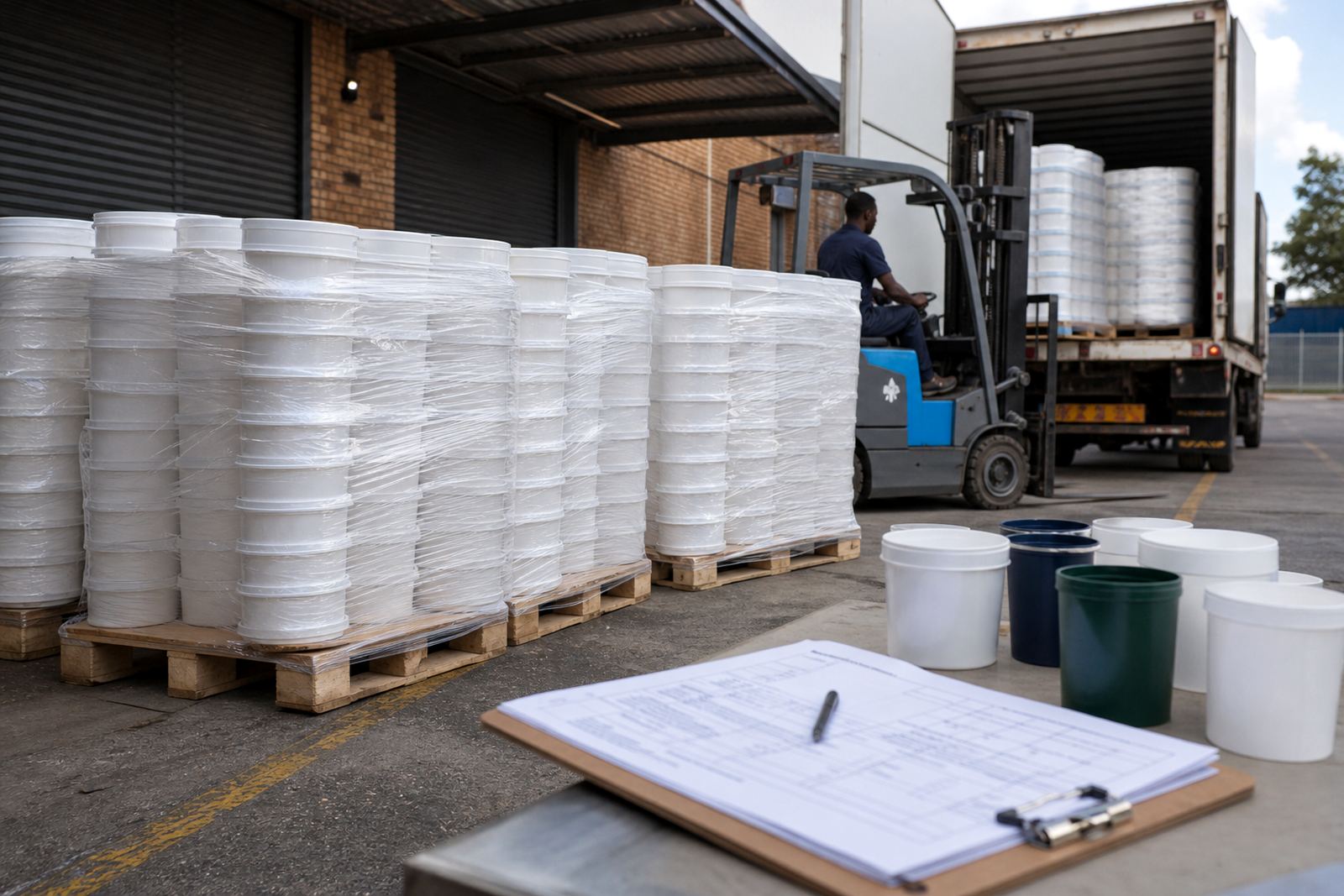
This project moved from our Alrode base into Cape Town through planned delivery, with stock run timing shaped around the client’s filling schedule. The supply arrangement also left room for future pack updates if the client changes fill weight or wants a different pack size later. That sort of planning matters when a spread line serves more than one channel, because the same tub has to behave well in wholesale cartons and in retail display.
For similar work, we would keep the same approach on the mould, lid and seal interface, then review colour, pack count and carton dimensions against the exact line setup. The most useful part of the project was not one single change, but the way each small detail supported the next stage. A neat container means little if the lid does not seat, and a good lid means little if the carton wastes half its space.
- Delivery planned from Alrode to Cape Town
- Stock run matched to packing needs
- Future format changes kept open
- Line, carton and shelf factors checked together
Key facts
| Container type | Square injection-moulded tub |
|---|---|
| Material options | Polypropylene and HDPE |
| Closure | Matching lid with tamper seal option |
| Use | Food spread packaging |
| Project area | Cape Town supply run |
| Key benefit | Better carton use and shelf fit |