The Pretoria Brief: Clean Fill, Solid Stack, Less Trouble in Transit
The job came from a powder packing operation in Pretoria that was working with dry blends on a busy line and needed containers that would sit neatly in crates, pack well on pallets, and hold their shape through warehouse handling. The client did not want a heavy tub or a thin one that flexed at the rim. They wanted something practical for repeated movement between filling, capping, sorting and dispatch.
The brief called for a stackable tub in a size that suited dry powder packs, with a lid that seated properly and a tamper seal that gave a clear sign if a pack had been opened. Colour had to stay consistent across the run, and the container wall needed enough strength for handling without adding needless weight. We also had to check that the pack format would fit the client’s existing cartons and shrink-wrap pattern.
- Product type: stackable injection-moulded tub
- Use: dry powder filling and warehouse handling
- Closure: fitted lid with tamper-evident sealing
- Supply area: Pretoria with delivery into Gauteng and other main centres
Material Choice for a Dry Powder Line
For this project we worked through polypropylene and HDPE options, because both materials are widely used for food-safe tubs, pharma pack formats and cosmetic pack lines. Polypropylene gives a firm feel, tidy stacking and good day-to-day handling for many dry goods. HDPE is often favoured where impact resistance and slightly tougher sidewalls matter. The final choice came down to the client’s filling method, pallet movement and storage pattern in Pretoria’s warmer conditions.
The packer was running dry powders, so moisture resistance and clean internal finish were important. The tubs needed to keep their shape after filling, without rocking on the line or opening the stack in the warehouse. We also looked at colour matching guidance, because the client wanted a plain commercial finish that worked with stock control and batch separation. The spec was kept clear and the production team could set the line without wasted trialing.
- Material options reviewed: polypropylene and HDPE
- Key considerations: stackability, wall strength, moisture resistance
- Finish: plain commercial colour for stock handling
- Fit: matched to the client’s filling and pallet pattern
Tooling Checks, Trial Run and Line Fit
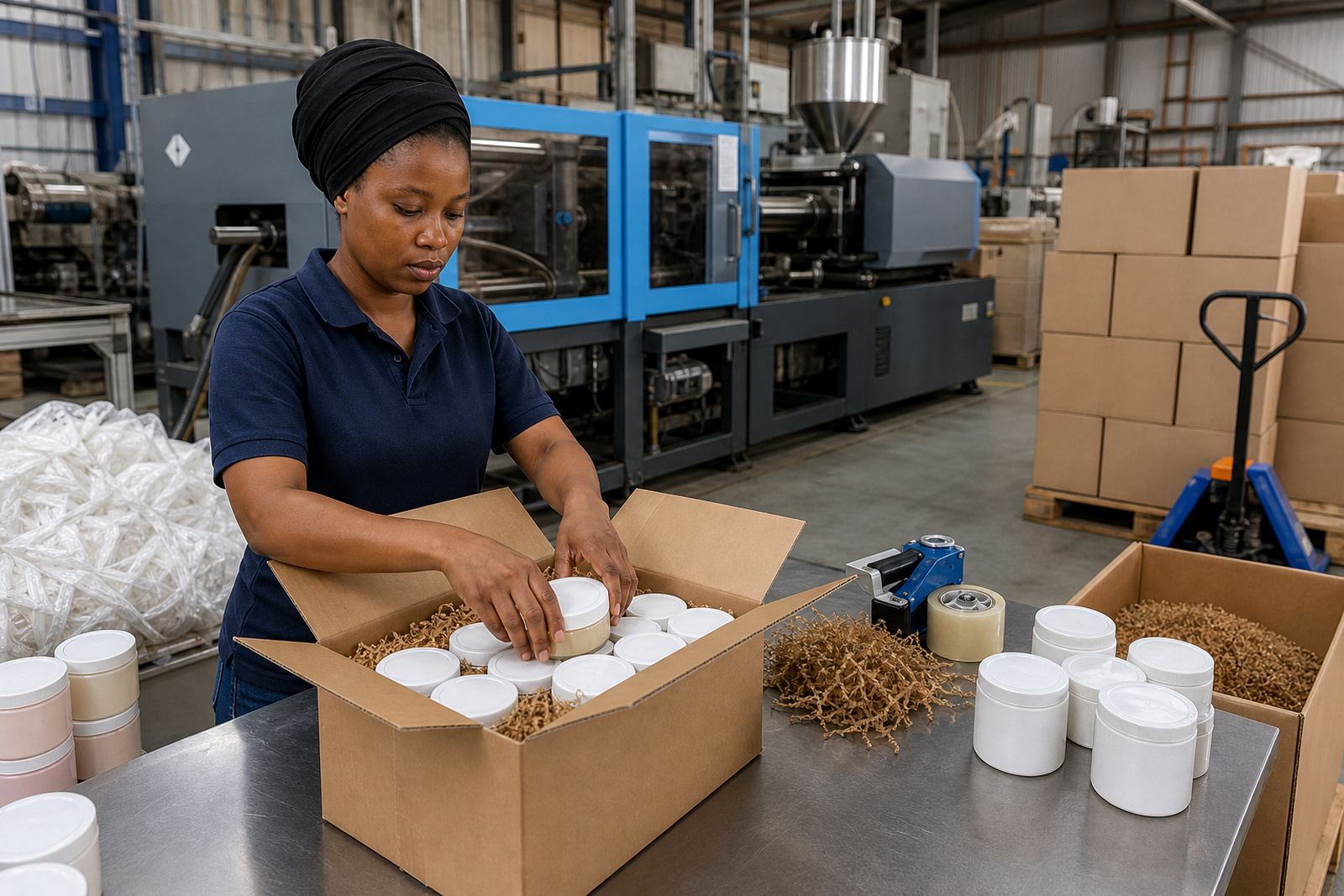
Before full production, we used mould development notes and line fit checks to make sure the tub, lid and tamper seal would work together as a set. The client’s packing line needed containers that arrived consistent in height, rim shape and closure fit, because even a small variation can slow a fill head or cause a loose lid at the sealing stage. We ran a trial production batch and checked how the packs behaved when stacked in full sleeves and cartons.
That stage picked up a small issue with how the lid sat under pressure, so the closure profile was adjusted before the main run. Nothing dramatic, just the kind of detail that saves the plant from sorting problems later. Once the fit was corrected, the stack held neatly and the tamper seal tore in a predictable line. The packer could move straight from fill to secondary packing with fewer interruptions.
- Trial work included fit testing for rim, lid and seal
- Stacking was checked in cartons and on pallets
- Closure detail was adjusted after the first test run
- Final packs held shape during handling and dispatch
What Went Out to Pretoria
We supplied a container set built around the client’s dry powder format, with tubs sized for stable handling and lids made to seat securely. Tamper seals were included so the finished pack had a clear first-open indicator. The tubs were made for practical warehouse work, not showpiece display, and that suited the line. The pack size planning also helped the dispatch team work with the existing cartons instead of changing the whole packing layout.
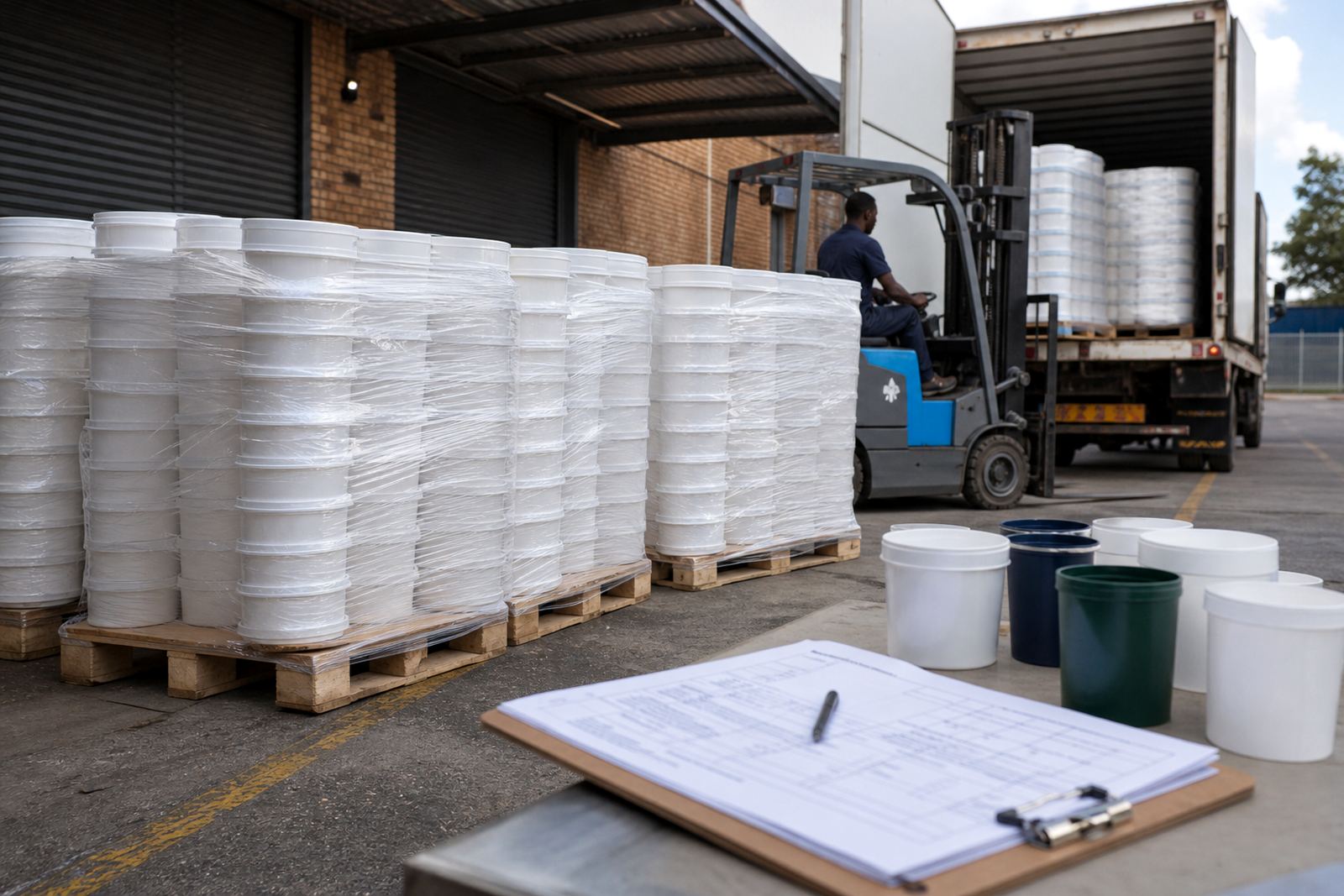
The order was planned in weekly stages over three weeks. The first week covered sample review and line fit checking. The second week went into trial production and closure confirmation. The third week was used for the main delivery run and pallet preparation. By the end of the run the client had a workable pack format that could be used across repeated batches without having to reset the whole filling room.
- Supplied items: tubs, fitted lids and tamper seals
- Project length: three weeks
- Pack planning: matched to cartons and warehouse handling
- Use case: dry powder filling in Pretoria
Warehouse Movement and Dispatch Results
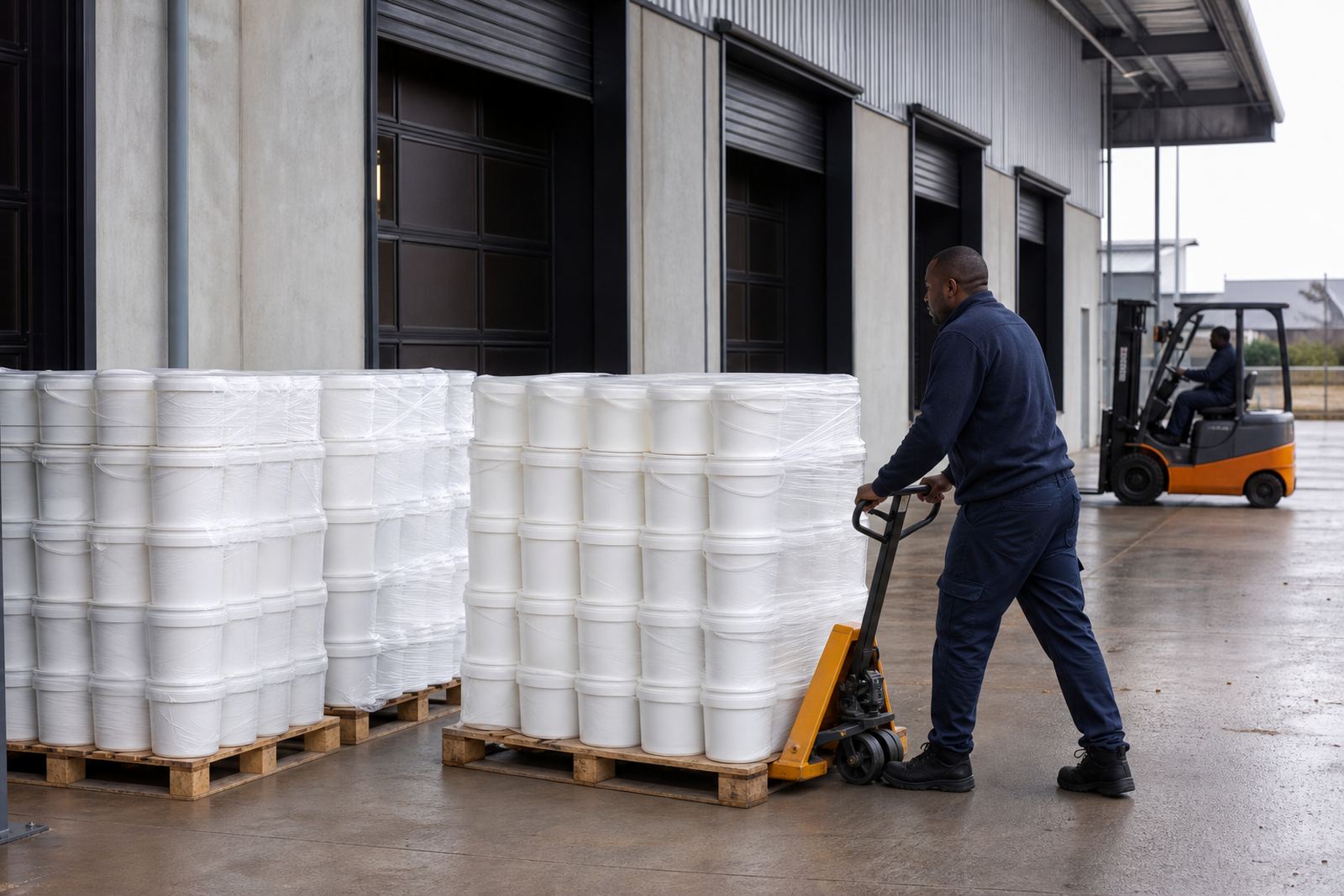
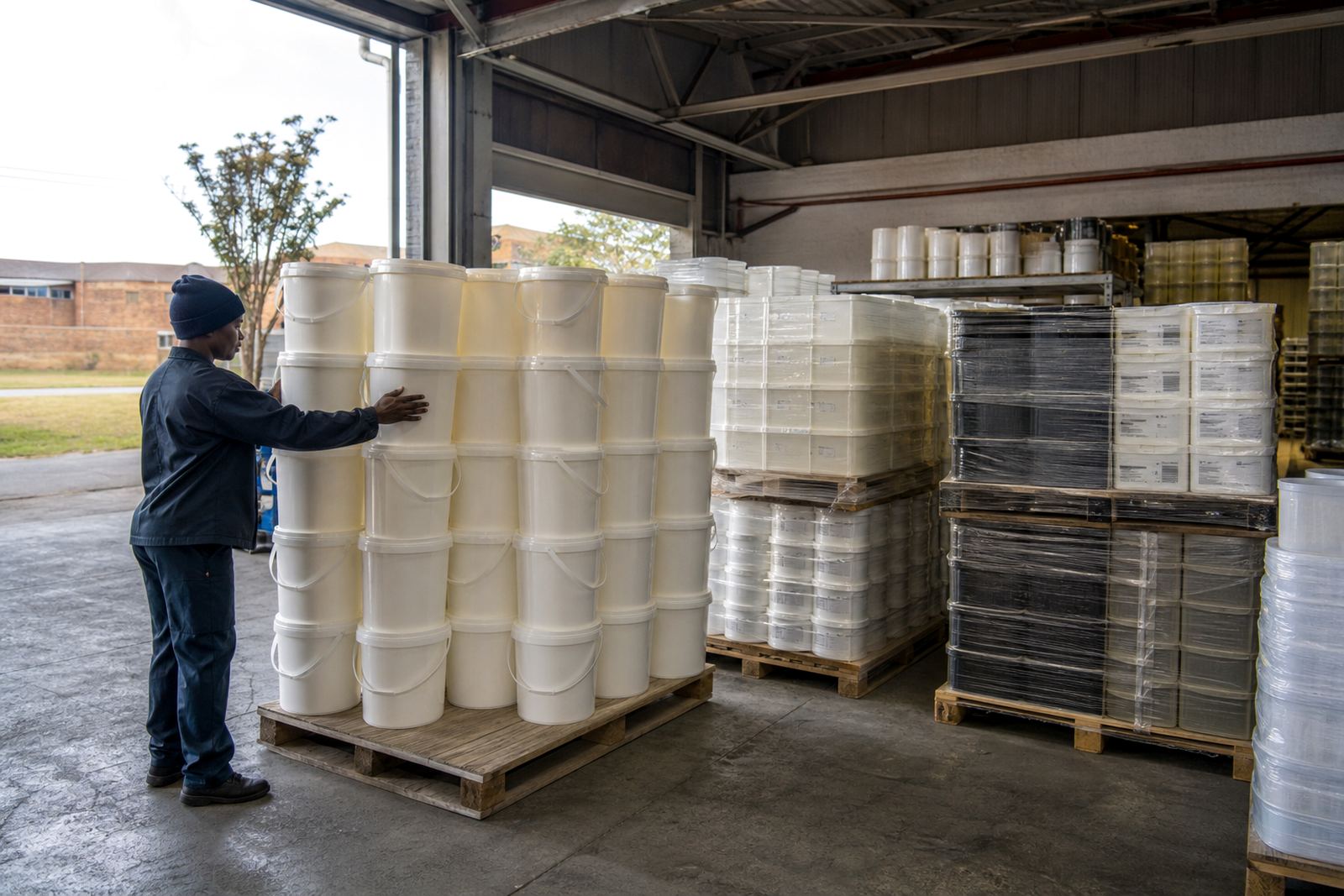
The end result was a pack that moved better through the warehouse and held its shape under normal handling. The stack pattern stayed neat, so pallet loads sat more evenly and cartons were easier to count. The client reported fewer niggles at the packing bench, especially around lid seating and seal placement, which helped keep the line moving at a steadier pace. It also made stock sorting simpler when different powder batches had to be kept apart.
For a dry product line, that matters. Powder packs are often handled more than people expect, from filling to checking to pallet wrapping and onward freight. A tub that stacks properly, seals cleanly and stays tidy in transit reduces extra sorting at the end of the day. That is where the value sat on this job, not in fancy extras but in a pack that did the ordinary work properly.
- Better stack stability in cartons and pallets
- Cleaner lid fit at the packing bench
- More orderly batch handling in the warehouse
- Less rework around closure checks
What to carry through on a similar Pretoria order
On a similar powder packing job, we would follow the same sequence: material selection first, then line fit checks, then a small trial run before the main supply. That order keeps the pack format grounded in the way the plant actually works. It also gives room to adjust the closure profile or stack height before a full batch goes out. On a custome run, the details at the rim and lid usually matter more than the overall shape.
We would also keep the pack-size planning close to the client’s carton layout and secondary packing method. If the tub sits right in the box, everything else becomes easier for the team loading and moving stock. For Pretoria and surrounding Gauteng dispatch points, that kind of planning helps keep the run tidy from production through to delivery.
- Repeat the line fit check before full production
- Keep carton and pallet sizing in the loop
- Use a trial batch to confirm lid and seal behaviour
- Set the final pack size around the filling room, not the other way round
Key facts
| Project type | Pretoria powder packer |
|---|---|
| Container style | Stackable injection-moulded tubs |
| Materials reviewed | Polypropylene and HDPE |
| Closures | Fitted lids with tamper seals |
| Timeline | 3 weeks from fit check to main supply |
| Delivery scope | Pretoria with wider South African delivery |