
A coastal fill line needed a better fit
The client was a dip packer in Durban working with chilled products for retail and foodservice supply. Their line needed a container that could move from filling to sealing to cold storage without warping, leaking or slowing the packers down. They also wanted a format that handled a generous opening for thick dips, chutneys and spreadable products, while still looking neat in mixed pallet loads.
The brief was practical. We were asked for a wide-mouth tub with a matching lid, a tamper evident seal, and a wall profile that would sit properly on an automated packing line. The tubs had to travel through Durban humidity, then continue by road to inland and coastal depots. The client also wanted a container size that worked for standard retail units and larger foodservice packs, without awkward gaps in secondary packing.
Material choice for chilled handling and shelf life
For this project we worked with polypropylene and HDPE options, then matched the material to the product weight, filling temperature and required stiffness. Polypropylene suits many food pack formats because it holds its shape well and gives a clean moulded finish. HDPE is often useful where extra impact resistance or a different feel is needed in handling.
Food safe material selection mattered because the packer handled chilled dips that were sealed soon after filling. We kept the material discussion tied to line behaviour, product contact and stacking performance, rather than overcomplicating the spec. The final choice needed to be compatible with the lid fit, tamper seal design and the label panel area. That balance helped the packers avoid unnecessary movement in the tray pack, and the containers did not slump when stored in cold rooms.
There was also a colour point to manage. The client wanted a clean, recognisable shelf presence, but not a high gloss finish that made scuffs too obvious. We guided the colour matching and sheen level so the tubs read well under supermarket lighting and still looked consistent after handling.
Tooling and trial runs that matched the line
The project moved into mould development and trial production runs over a measured stretch of time. First came the container profile, then the lid engagement, then the tamper seal detail around the neck. The tooling had to produce repeatable dimensions because the line used a straightforward seal placement system and relied on stable closure geometry.
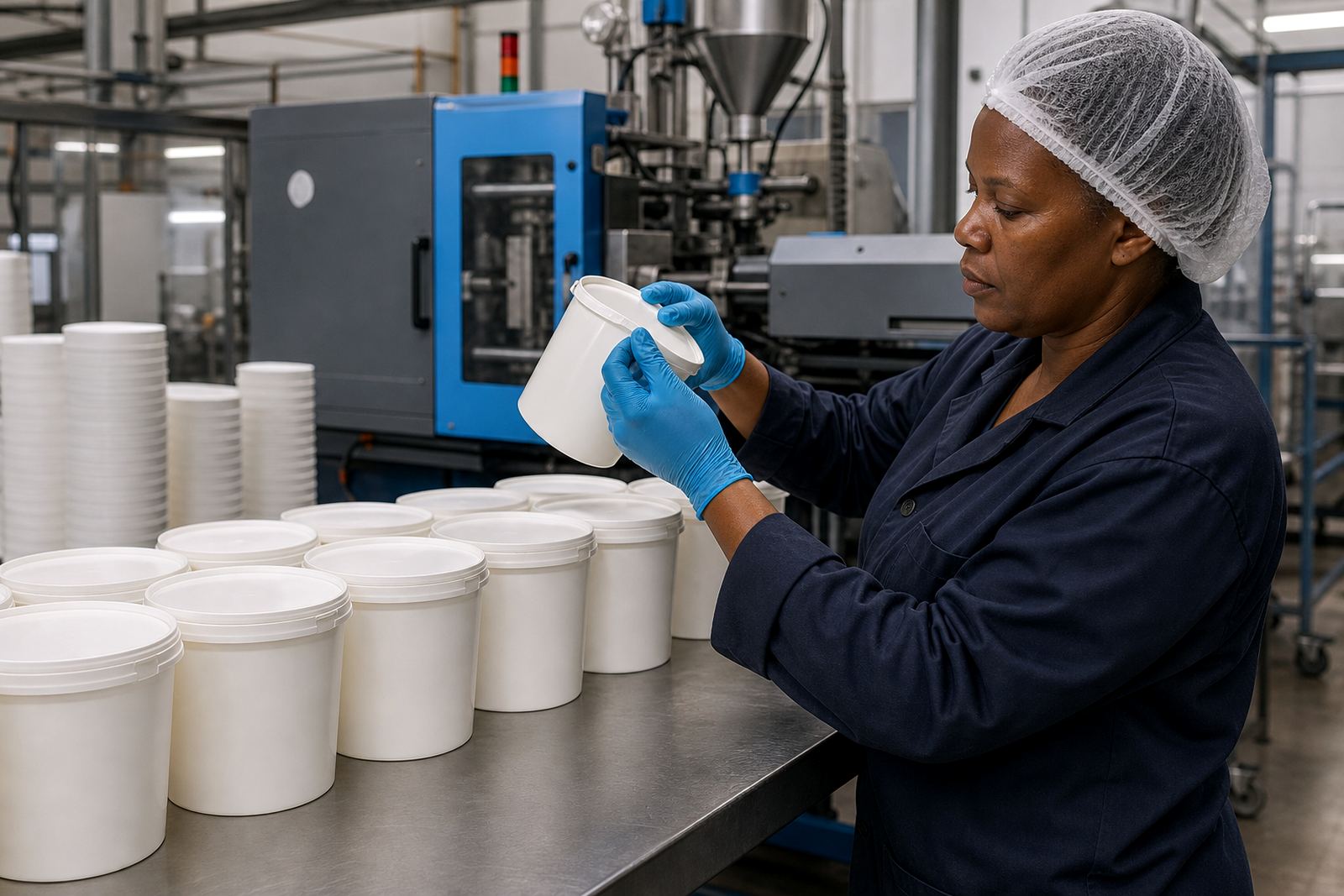
We checked the pack against the filling equipment, the lid press, and the secondary packaging format. That line fit work showed up a few small points early, including where the rim needed a firmer lead in and where the lid snap fit could be tuned for easier closure. The result was a tighter process, less fumbling at the end of the line and a cleaner pack appearance.
- Wide-mouth tub format for thick chilled dips
- Matched lid with tamper evident seal feature
- Injection-moulded container walls for stacking strength
- Line fit checks for filling, capping and packing
- Trial runs to confirm lid engagement and seal consistency
Container sizes, lid fit and packing detail
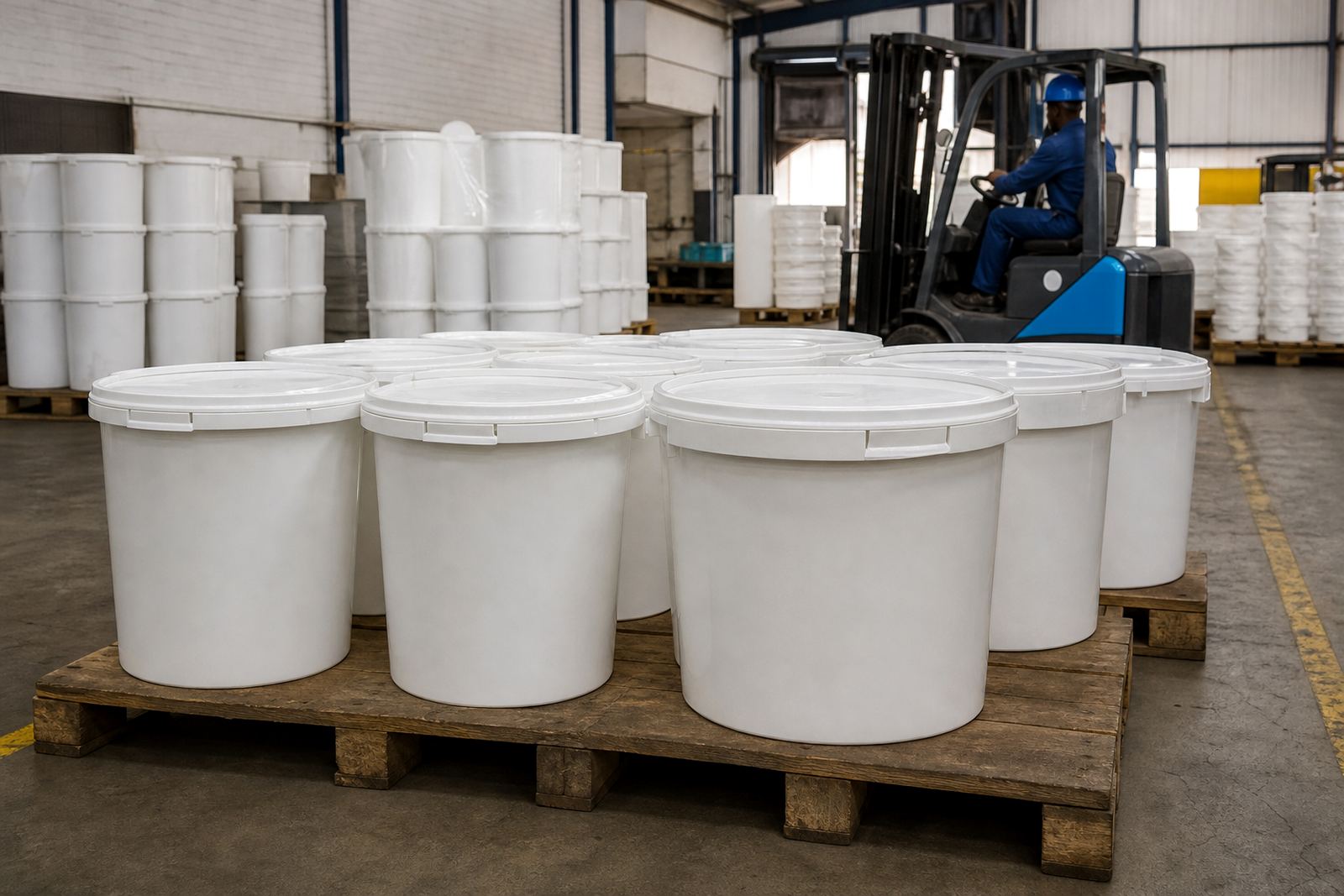
The final format centred on tub sizes that suited both retail and foodservice volumes. We worked around common pack sizes, including smaller individual portions and larger family or bulk units. The wall thickness was set to support stack loads in cold rooms and on delivery pallets, with enough rigidity to reduce crush points along the rim.
Dimensions were planned for practical handling rather than showpiece styling. The neck finish needed to accept the lid cleanly, while the tamper seal stayed visible enough for shelf inspection. A simple, dependable mould line was better than an overworked profile, because the packing team needed consistency over long shifts. There was no room for fiddly closure issues when cartons were moving through a busy Durban dispatch area.
- Various tub sizes for portion packs and foodservice packs
- Rim and neck geometry tuned for secure lid seating
- Tamper seal break point kept clear and visible
- Label area planned for product information and batch codes
- Secondary packing advice for cartons and transit stability
What the Durban shipment had to survive
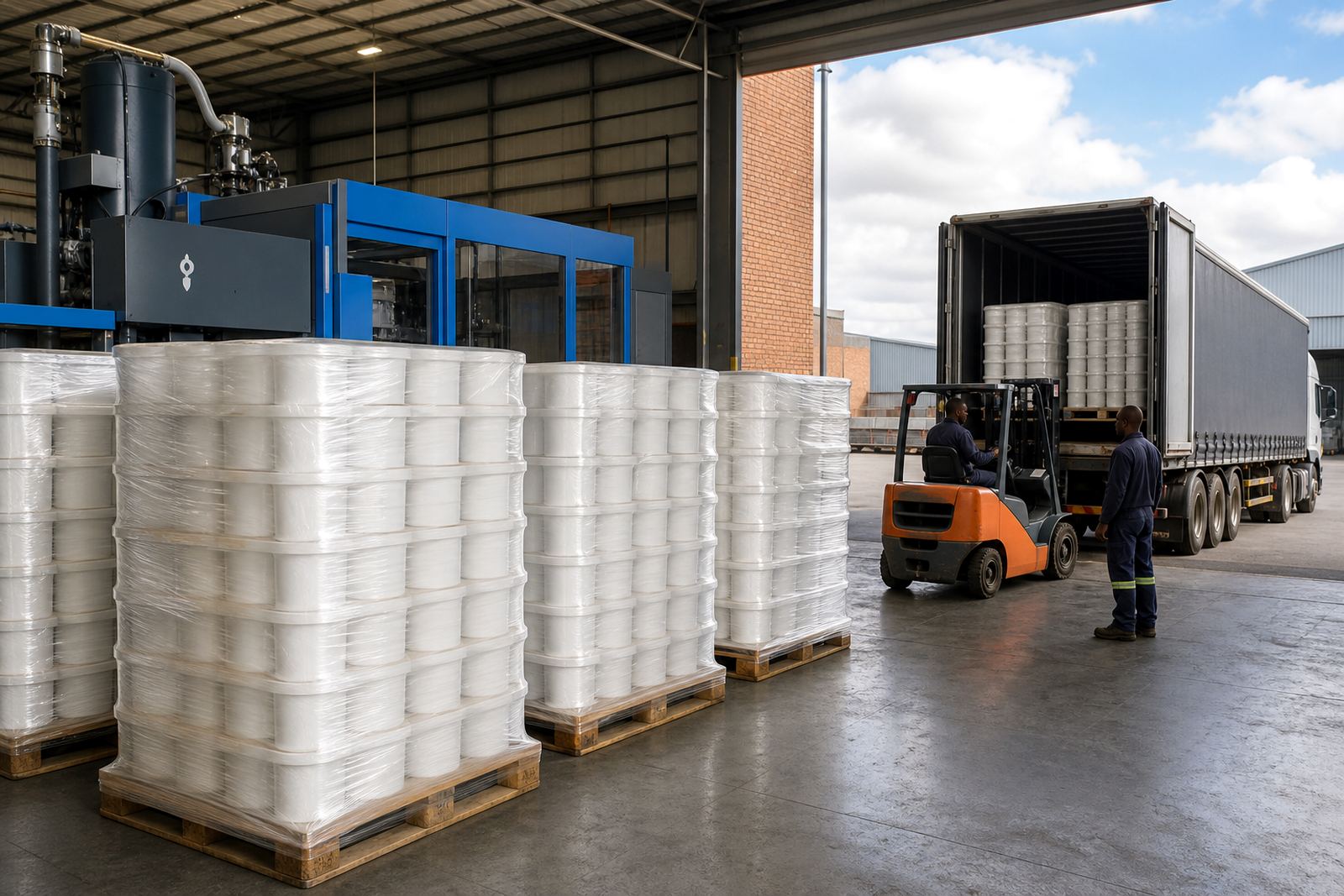
Coastal conditions shaped the delivery plan as much as the moulding spec. Durban humidity, warm loading bays and chilled storage cycles can expose weak closure design very quickly. The tubs had to survive lift handling, pallet wrap pressure and the temperature shift between pack line and cold distribution.
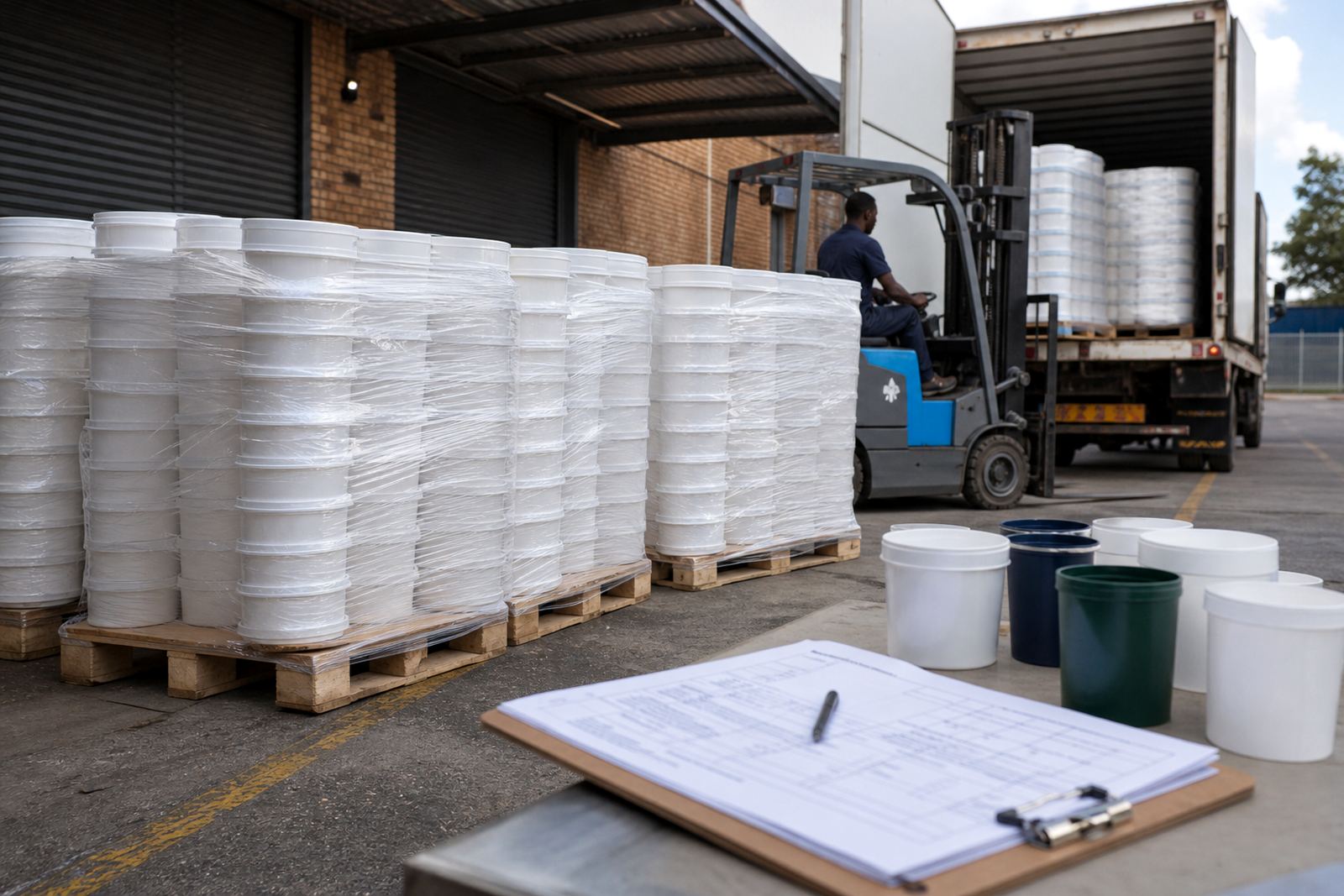
The production run was scheduled in stages, with the first trial material followed by a larger stock run once the fit had been confirmed. That approach kept the line moving while still giving room for small adjustments. The dispatch team packed the finished tubs so the rims stayed protected in transit, and the pallets were arranged to reduce side pressure on the top layer.
The client needed a format that would not telegraph minor handling marks as the load moved through Durban and onwards to Johannesburg, Pretoria, Cape Town and Port Elizabeth. The container had to look tidy after transport, not only when it left the factory. That was a key part of the outcome.
Results after the first production cycle
Once the project settled into full production, the packer had a better container for the product and a more predictable line flow. Lids sat properly, tamper seals stayed clear, and the tubs stacked more evenly in cold store. The client also gained a format that was easier to brief to distributors because the size and closure details were consistent from batch to batch.
The line team reported less handling fuss at the filling stage, and the dispatch side had fewer issues with crushed rims or loose lids. For a coastal dip packer, that is not a small matter. A neat closure can save time in the warehouse and reduce avoidable spoilage risk in transit.
From our side, the project reinforced a familiar point: for chilled food packs, the container, lid and packing method all need to work together. If one part drifts, the rest of the system feels it.
Key facts
| Project type | Injection-moulded wide-mouth tubs for a Durban dip packer |
|---|---|
| Primary materials | Polypropylene and HDPE container options |
| Closure system | Matching lids with tamper evident seal feature |
| Use case | Dip filling, chilled storage and distribution |
| Key sizes | Retail and foodservice tub formats |
| Delivery coverage | Durban with supply to Johannesburg, Cape Town, Pretoria and Port Elizabeth |