The pack format the line needed
The customer was a dry goods packer serving retail and trade channels in Uitenhage, with product moving into refill tubs and larger family packs. The products were powdered and free-flowing, so the container had to keep its shape on the line, stack neatly in cartons and close with a lid that sat flat.
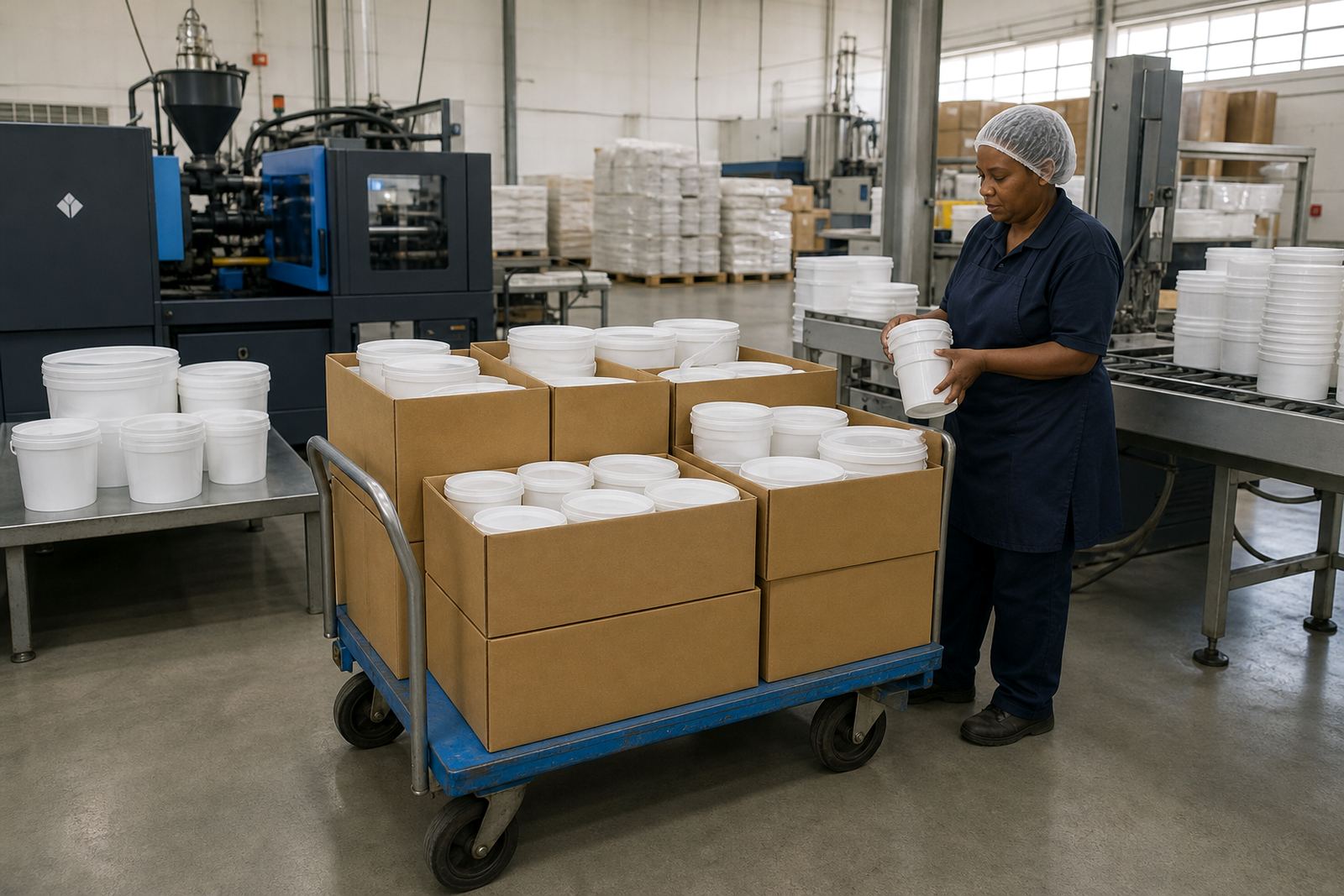
We worked around the way their packing room already ran. The tub had to suit manual filling and semi-automated packing, with a wide opening for fast loading and enough wall strength to handle nesting, pallet movement and store-room stacking. The final format used injection-moulded polypropylene tubs for dry goods, with matching lids and tamper-evident sealing points for extra pack integrity.
Size, wall strength and lid fit
The job asked for a larger container than the packer was using before, because the refill and value pack ranges needed more fill volume without making the cartons awkward to handle. We tested a few capacities, then settled on a tub profile that balanced fill weight, headspace and shelf presence.
- Injection-moulded tubs in food-safe polypropylene for dry goods
- Lids with a firm snap fit for storage and transport
- Tamper seal points to support retail packs
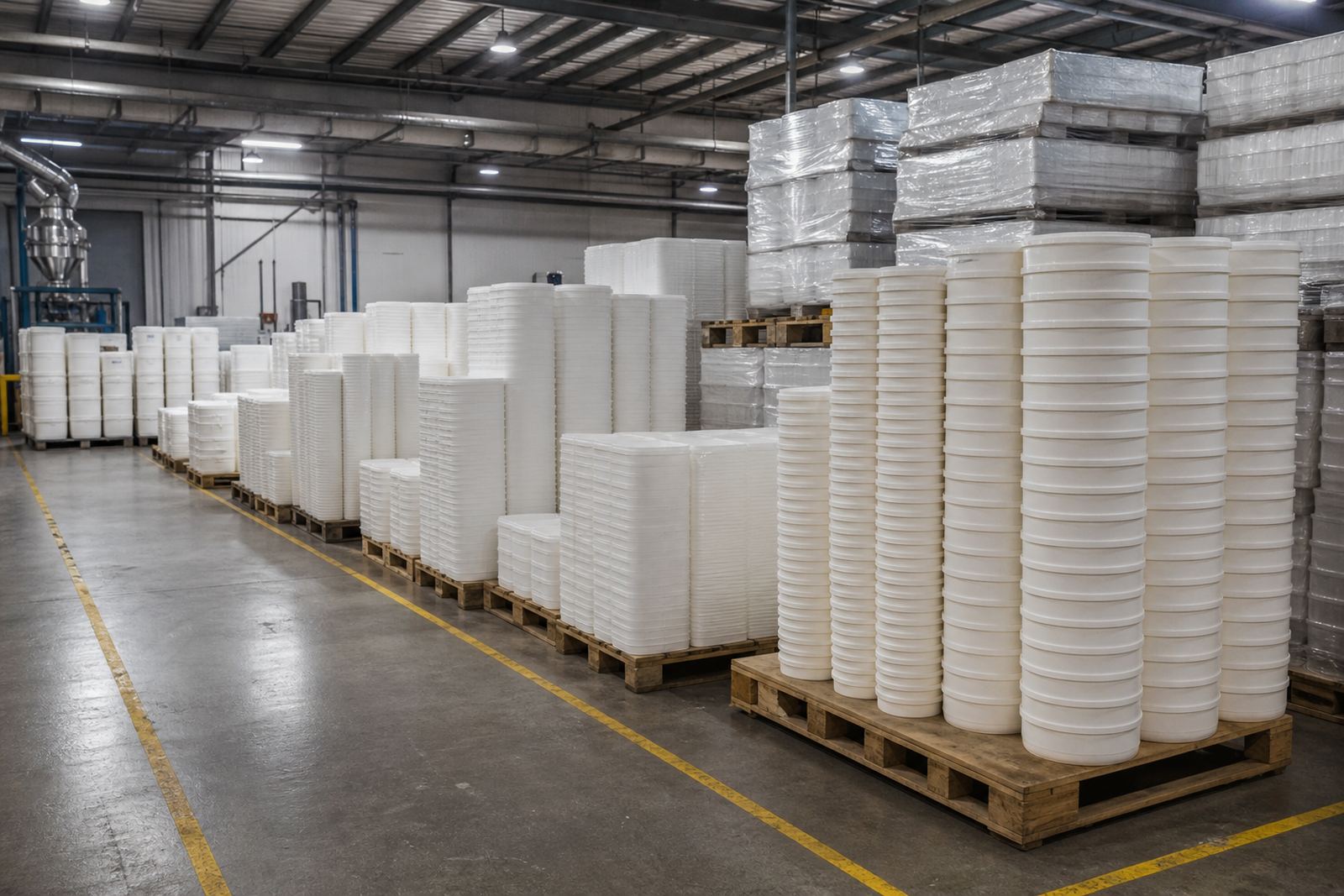
- Wall and rim detail suited to stacking and nesting
- Size planned around the filling line and carton layout
The larger format also helped reduce handling on the packing floor. Fewer small packs meant fewer carton inserts and less chance of a lid being knocked off during packing, which matters when a line is running all morning in a warm room, and the product has to stay clean.
Material choice for dry powder handling
For this run, material choice was central. Polypropylene was the main option because it suits rigid tubs, handles repeated stacking well and works neatly with injection moulding. It also gives a clean finish for labels and printed sleeves, which is useful where product identity has to stay clear on a shelf or in a distribution centre.
We also discussed HDPE as an alternative for a separate range where a softer feel and different rigidity might suit the pack weight. In this project, the packer needed a container that stayed true in shape, so polypropylene was the better match. The tubs were intended for dry powders, so food-safe material selection and clean moulding detail were essential from the start.
Trial runs and line fit in three weeks
The work moved through trial production runs over three weeks. The first phase checked tool behaviour and fill presentation, then we adjusted the lid fit and rim finish before the packer ran a fuller batch on their line. That let us confirm the tubs loaded properly and did not pinch or deform when stacked in cartons.
- Week 1: brief review, pack size planning and mould discussion
- Week 2: trial production runs and fill line checks
- Week 3: lid fit review, secondary packing checks and stock run planning
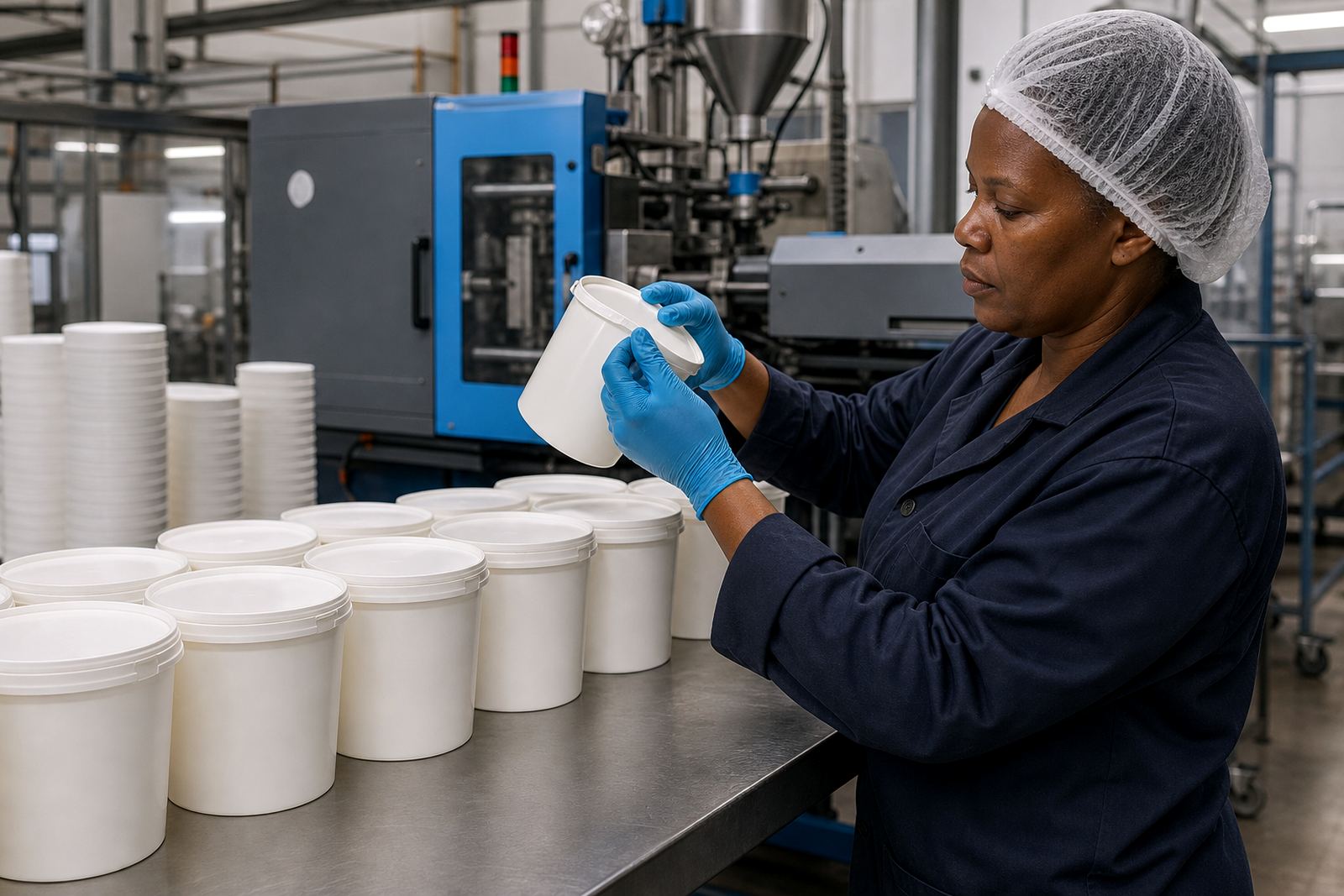
During the trials, the team checked how the tub sat under the fill nozzle, how it moved down the line and whether the lid could be applied without forcing the rim. Small changes to pack height and lid profile made a clear difference to handling, especially where operators were filling a lot of units in a row.
What we supplied from Alrode
From our Alrode base in Alberton, we supplied the project as a mix of design support and production planning. The packer needed practical guidance rather than a complicated spec, so the work stayed focused on container shape, lid detail and how the finished unit would behave in cartons and on pallets.
What we supplied included:
- Custom tub design for the refill and value pack range
- Lid development with a secure closure profile
- Tamper seal design for retail presentation
- Material selection guidance between polypropylene and HDPE
- Pack size planning for the packing room and outer cartons
- Secondary packing advice for safe dispatch
The result was a tidy pack that suited both the production crew and the store team. It moved cleanly through packing, and the outer cases held shape without crushing the tubs inside.
Dispatch to the Eastern Cape and follow-on work
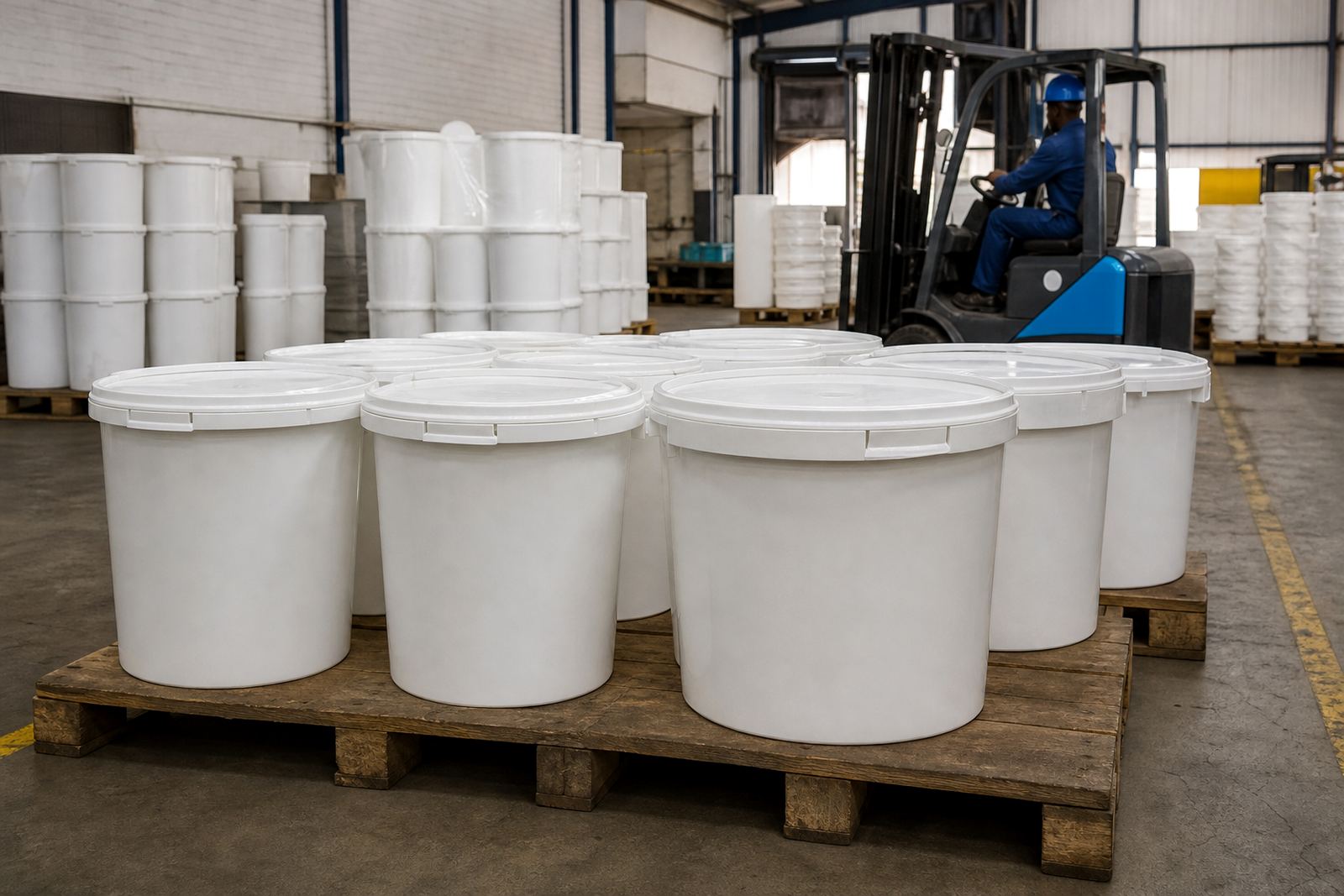
The completed packs were set up for delivery into Uitenhage and wider Eastern Cape distribution, with the container format also suited to movement into Johannesburg, Durban, Cape Town, Pretoria and Port Elizabeth routes when needed. Because the pack was for dry goods, the emphasis stayed on stable stacking, clean closure and consistent appearance across batches.
After the first run, the packer wanted a small update to the label panel area so their product name sat straighter on shelf. That led to an adjusted mould note and a cleaner face on the tub, without changing the overall pack size. The line team also wanted a simpler way to spot filled units during secondary packing, so we kept the lid colour contrast clear enough for quick visual checking.
What this project proved on the floor
The project showed that larger tubs can work well for dry powder packs when the rim, lid and carton size are planned together. A pack that looks good on a sample table can still fail in the packing room if the closure is awkward or the case size forces too much movement, so the fit-up matters just as much as the appearance.
For a similar job, we would keep the same order of work: lock the pack size early, test the lid on the actual line and confirm carton layout before committing to a full stock run. That approach keeps the pack practical for the operators and steady for distribution, even when the product is moving through warm coastal conditions and longer transport routes.
Key facts
| Project location | Uitenhage, Eastern Cape |
|---|---|
| Client type | Dry goods powder packer |
| Pack format | Larger refill and value pack tubs |
| Materials | Injection-moulded polypropylene tubs and matching lids |
| Key features | Tamper seal points, stacking profile, clean fill opening |
| Timeline | 3 weeks from brief to trial-approved format |