A brief built around trial packs, not full production
The project came from a contract packer in Sandton handling food and personal care products for local retail and promotional use. Their team needed sample pots that could move neatly from testing into small promotional runs without forcing them to change their filling routine or rework labelling every time the pack size shifted.
The brief was straightforward on paper, but the packing room had a few tight limits. The containers had to suit a short run, stack well in cartons, and carry a clear tamper-evident closure for goods that might sit on shelves, counters or in courier parcels. The pots also needed a shape that suited hand filling and semi-automatic lines, because the same pack was likely to be used in more than one setting.
We worked with polypropylene sample pots and matching lids, then kept the wall thickness consistent enough for a steady moulding cycle. For the product team, that meant the pot held its form without feeling overbuilt, and the lid sat square with a clean edge. A small thing, but it matters when a pack is going out in front of buyers.
- Client type: contract packer serving food, cosmetics and promotional supply
- Town: Sandton, Johannesburg
- Pack use: trials, demonstrations and short promotional fills
- Material family: polypropylene containers with tamper seal options
Container shape and sealing that stayed practical on the line
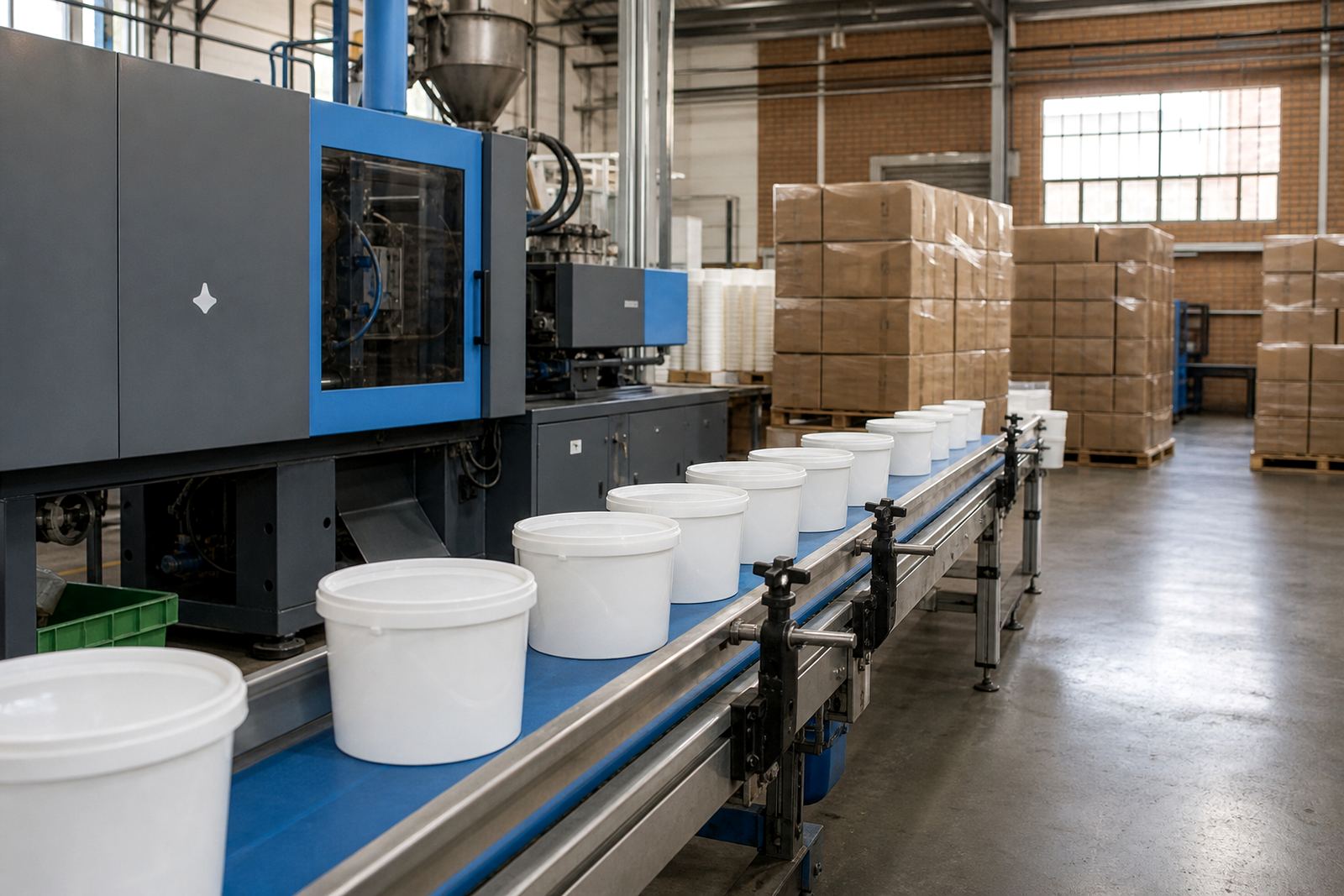
The pot profile was chosen for easy filling and stable handling. We kept the base broad enough for tray loading, and the shoulder gentle enough to suit a lid that could be applied without fuss. On a short run, that sort of detail saves a lot of hand sorting later on, especially when staff are moving between pack sizes and product flavours.
For closure, the client needed a lid that would stay true under transport and still allow a tamper seal to show if the pack had been opened. We supplied matching lids and designed the seal area so it could be fitted without slowing the pack line. The lid finish was kept plain, which helped with label placement and gave the client room to use their own branding without fighting mould lines.
We also discussed colour matching guidance for the pot body, as sample packs often need a clean appearance that still carries the product colour well. In this case the client chose a neutral tone, which worked across several product types and made stock control easier.
- Pot style: short, straight-sided sample tub
- Closure: matching lid with tamper seal option
- Pack handling: hand fill and semi-automatic application
- Finish: plain body suited to label wrap and top sealing
Material selection for food, pharma and cosmetic packers
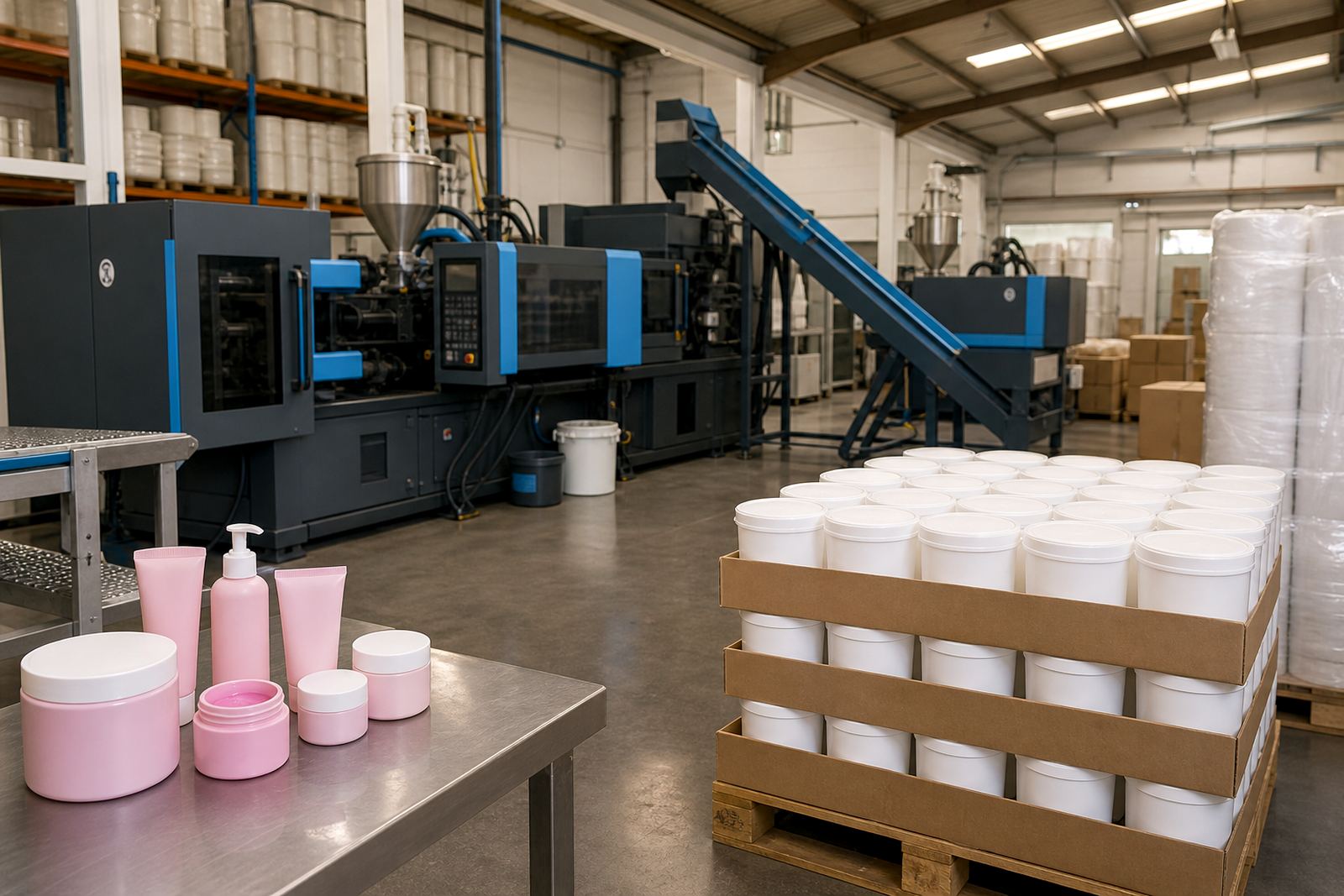
The packing room wanted one format that could sit across different product groups without looking out of place. That meant keeping the material choice focused on common packing needs, with a clean moulded surface, good rigidity and a lid fit that remained dependable through stacking and transport. Polypropylene suited that role well because it is widely used for food-safe style packs, cosmetic tubs and general sample containers.
For certain trial products the team also asked about HDPE containers and tubs, mainly where a slightly different feel or chemical resistance was needed. We discussed both materials in plain terms, then matched the container style to the fill requirements rather than forcing one resin across every pack. That matters when a business handles creams one week and dry goods the next.
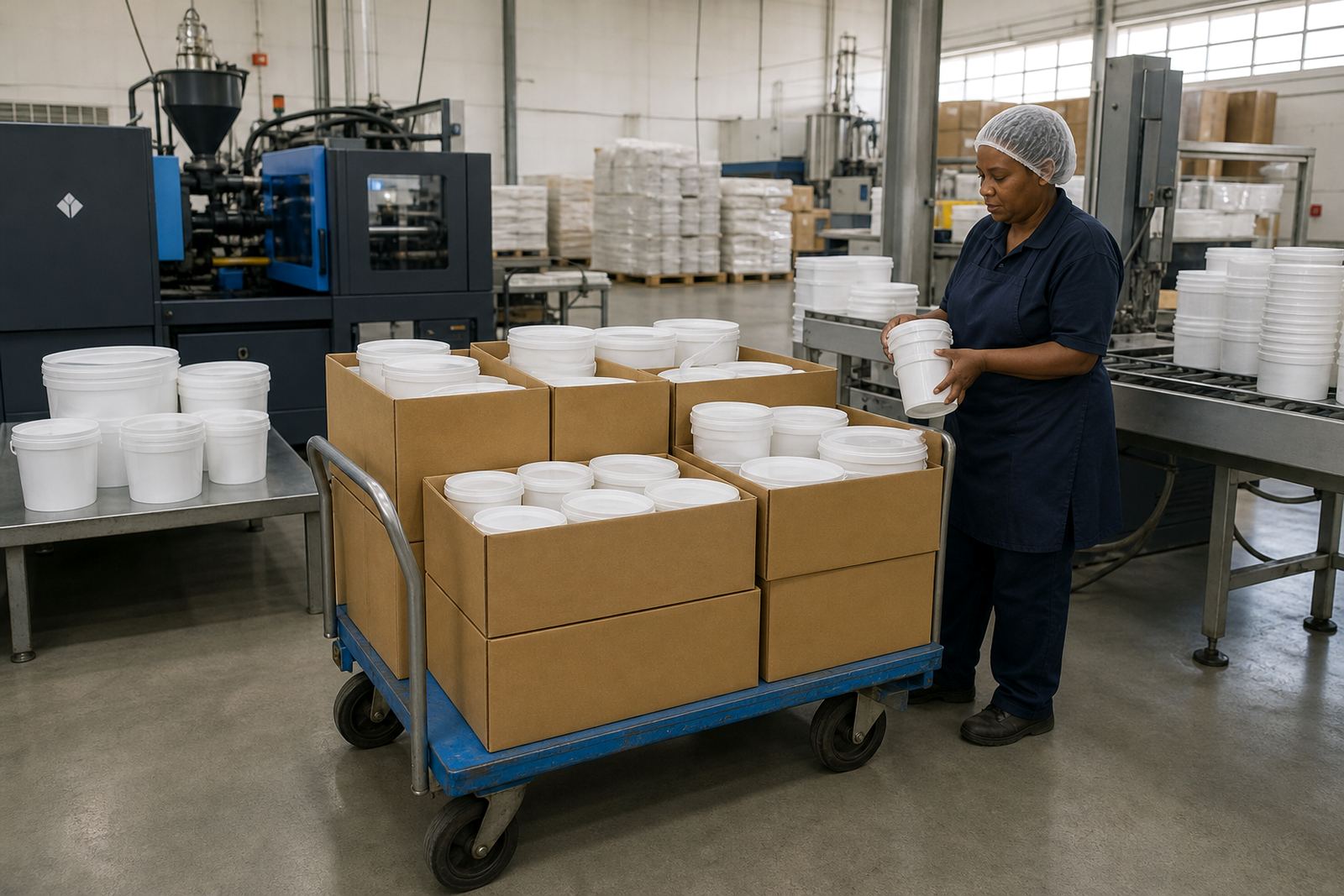
The team also asked about secondary packing advice, because the sample packs had to be grouped for dispatch in mixed cartons. We suggested pack size planning that kept the carton count tidy and reduced loose movement. In a short-run setting, that is often as important as the pot itself, since damaged samples do not help anyone.
- Polypropylene used for clean, light sample tubs
- HDPE discussed for selected pack types and fill behaviour
- Material choice linked to product feel, closure fit and handling
- Secondary packing planned for mixed cartons and sample dispatch
Trial production runs and line fit checks over four weeks
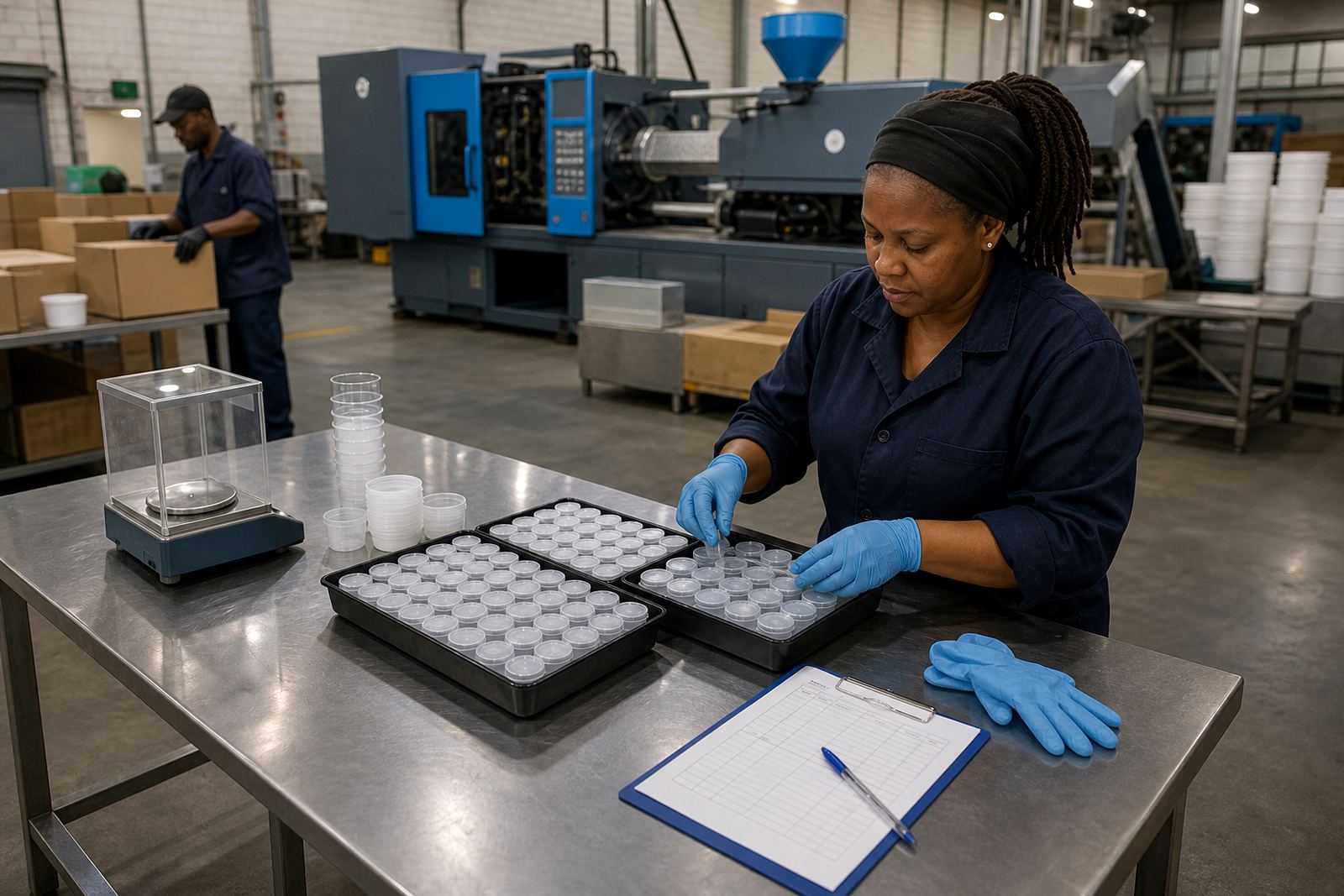
The work moved through a four week sequence. Week one covered the pack brief, sample dimensions and lid fit. Week two moved into mould development adjustments and first sample moulding. Week three focused on trial production runs and line fit checks, where the client tested fill speed, lid application and tamper seal seating. Week four was used for pack size planning and stock run planning so the format could be repeated in sensible batch sizes later.
A few production points had to be balanced. First was steady seal pressure, because a sample pack with a weak closure looks poor on a counter. Second was storage height, as the client needed the filled pots to stack safely in existing cartons without crushing the top row. Third was label space, which had to stay open enough for batch detail, product name and use instructions.
Our production and quality team checked each stage with the packing line in mind. Johan handled the production side, Ayesha checked the fit and finish, and Sibusiso kept the dispatch flow organised once the trial packs were ready. The result was a neat short-run format that did not need extra handling tricks to behave on the line.
- Week 1: brief, dimensions and lid fit
- Week 2: mould development and first samples
- Week 3: trial production runs and line fit checks
- Week 4: pack size planning and stock run planning
What the sample run changed in the packing room
The finished sample pack gave the Sandton team a cleaner route for short promotional fills. Their staff could fill, close and carton the pots without stopping to rework the layout for each batch. That reduced wasted motion in the packing room and gave them a repeatable format for product trials, trade demonstrations and small client handovers.
The tamper seal detail also helped with presentation. Buyers could see at a glance whether the pack had been opened, and that gave the samples a more finished feel. For product testing, that small signal matters more than people expect because it sets the tone before the lid is even lifted.
The client also gained a better starting point for future pack development. Because the pot shape, closure style and fill volume were already checked on the line, later updates could focus on label changes or slight capacity shifts rather than starting from scratch. A small typo in the production notes aside, the overall setup stayed neat and repeatable.
- Cleaner short-run filling and carton loading
- More consistent lid closure and tamper evidence
- Better presentation for demonstrations and sample handovers
- Clear base for later product updates and pack changes
A second pass for similar sample jobs
If a similar brief comes in from Sandton, Midrand or anywhere else on the Johannesburg side, we would keep the same order of work: container shape first, then lid fit, then the seal detail, then line checks. That sequence saves time in the packing room because each part is checked against the real fill method, not just on paper.
We would also keep the sample pack honest to the product. If the fill is a cream, gel or dry blend, the tub needs to suit that specific material and the closure needs to hold during handling and courier movement. The good result here came from matching the pot to the use, not from chasing an oversized format that looked clever and caused trouble later.
For short-run supply, the best outcome is usually the one that behaves well in small numbers first. That is what this job did, and it gave the client a workable sample pack for trials and promotional use without cluttering their line with extra steps.
- Start with the fill method, then the container size
- Keep closure and tamper seal aligned to the actual pack use
- Plan cartons around the filled pot, not only the empty one
Key facts
| Project type | Short-run sample pots for trials and promotional packs |
|---|---|
| Client location | Sandton, Johannesburg |
| Container material | Polypropylene sample pots, with HDPE discussed for related pack types |
| Closure | Matching lids with tamper seal option |
| Run length | Four weeks from brief to trial packs |
| Service focus | Mould development, trial runs, line fit checks and pack size planning |