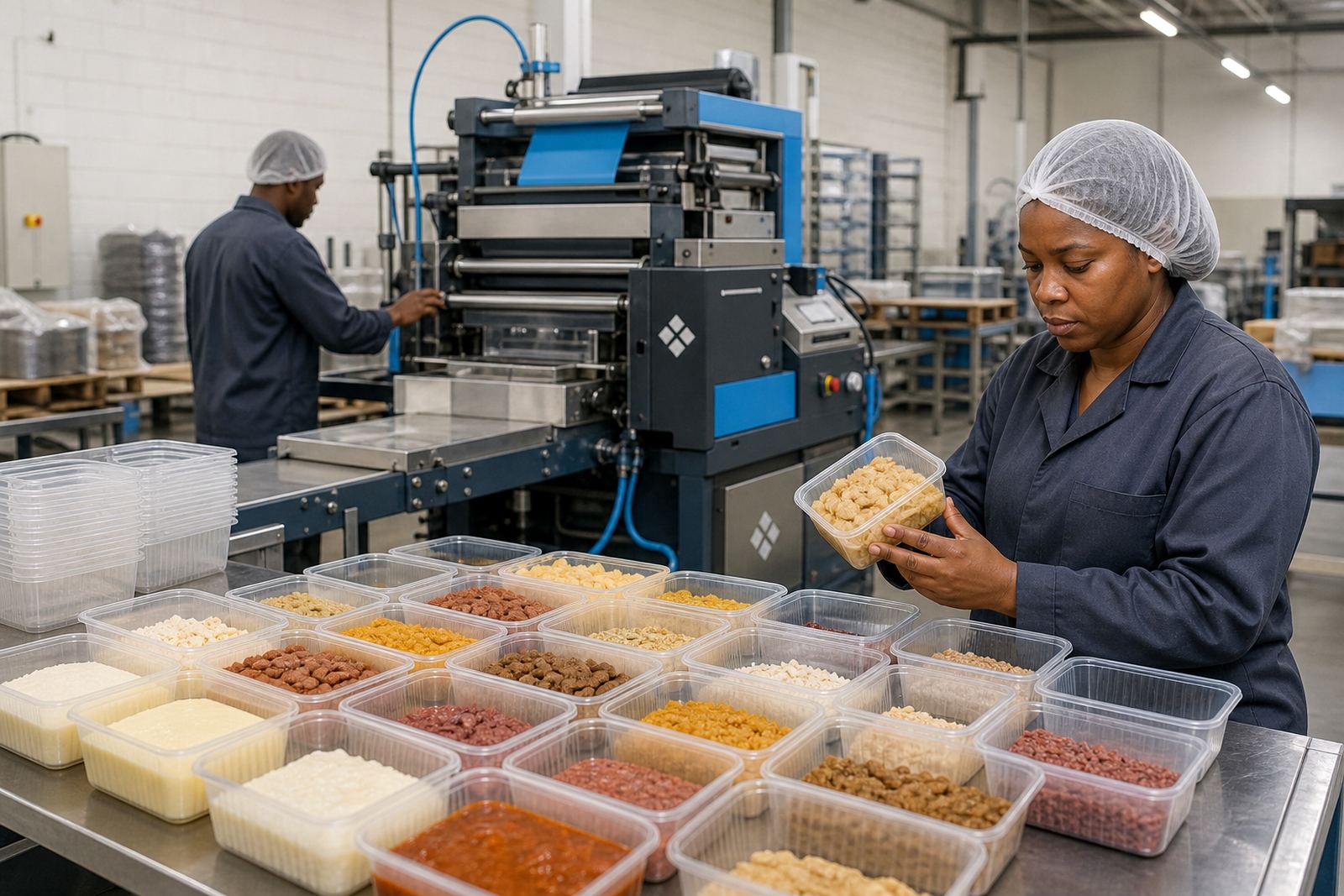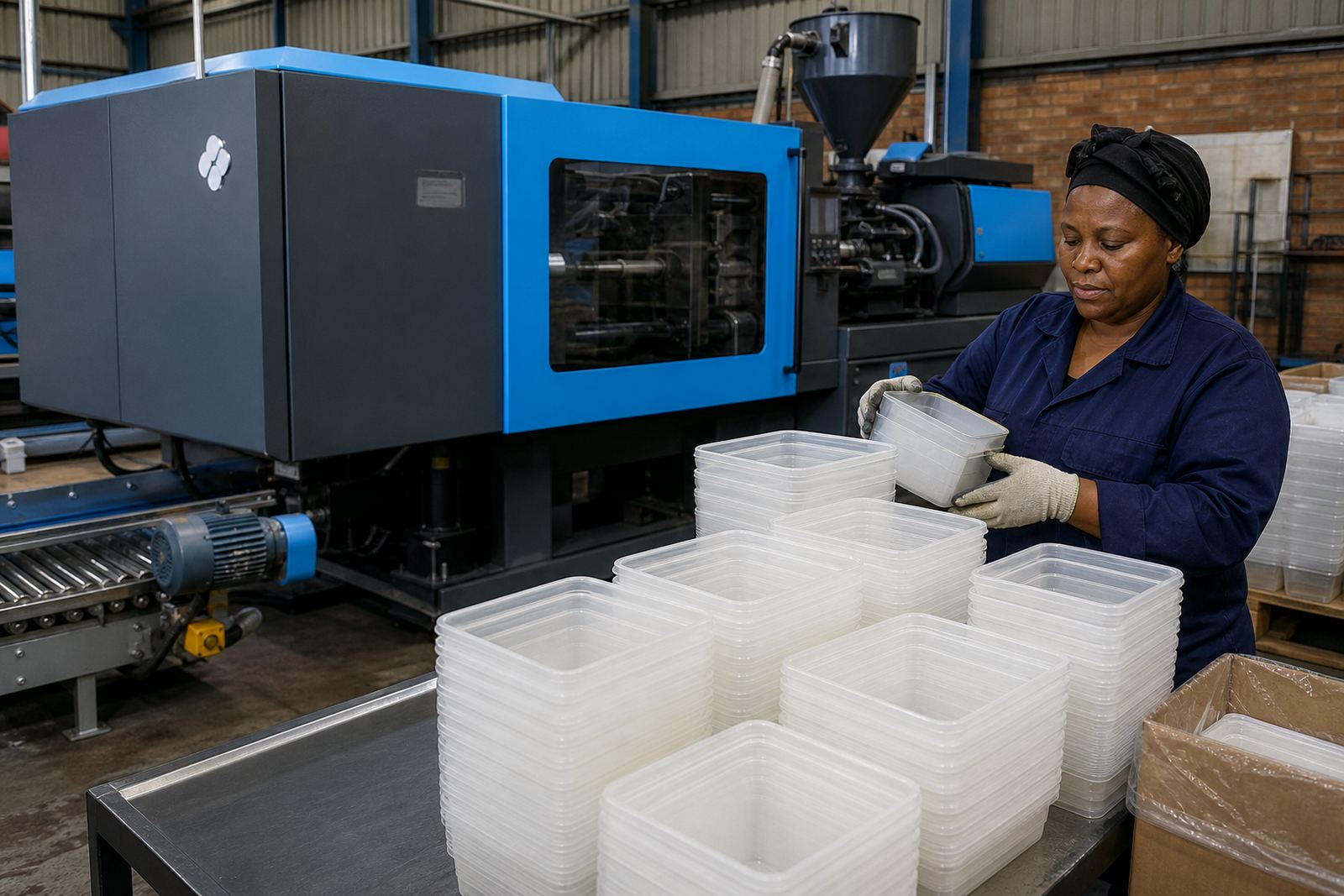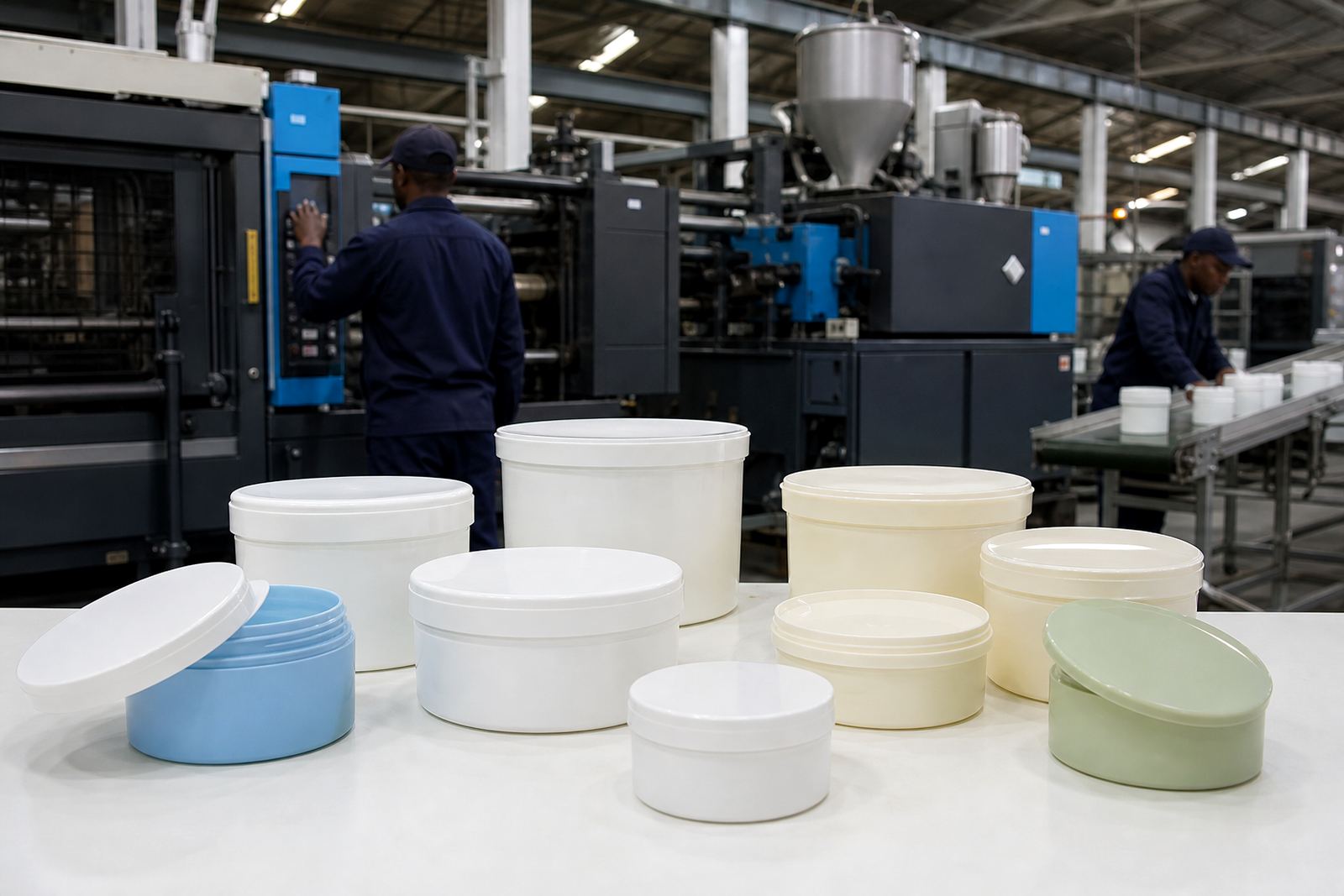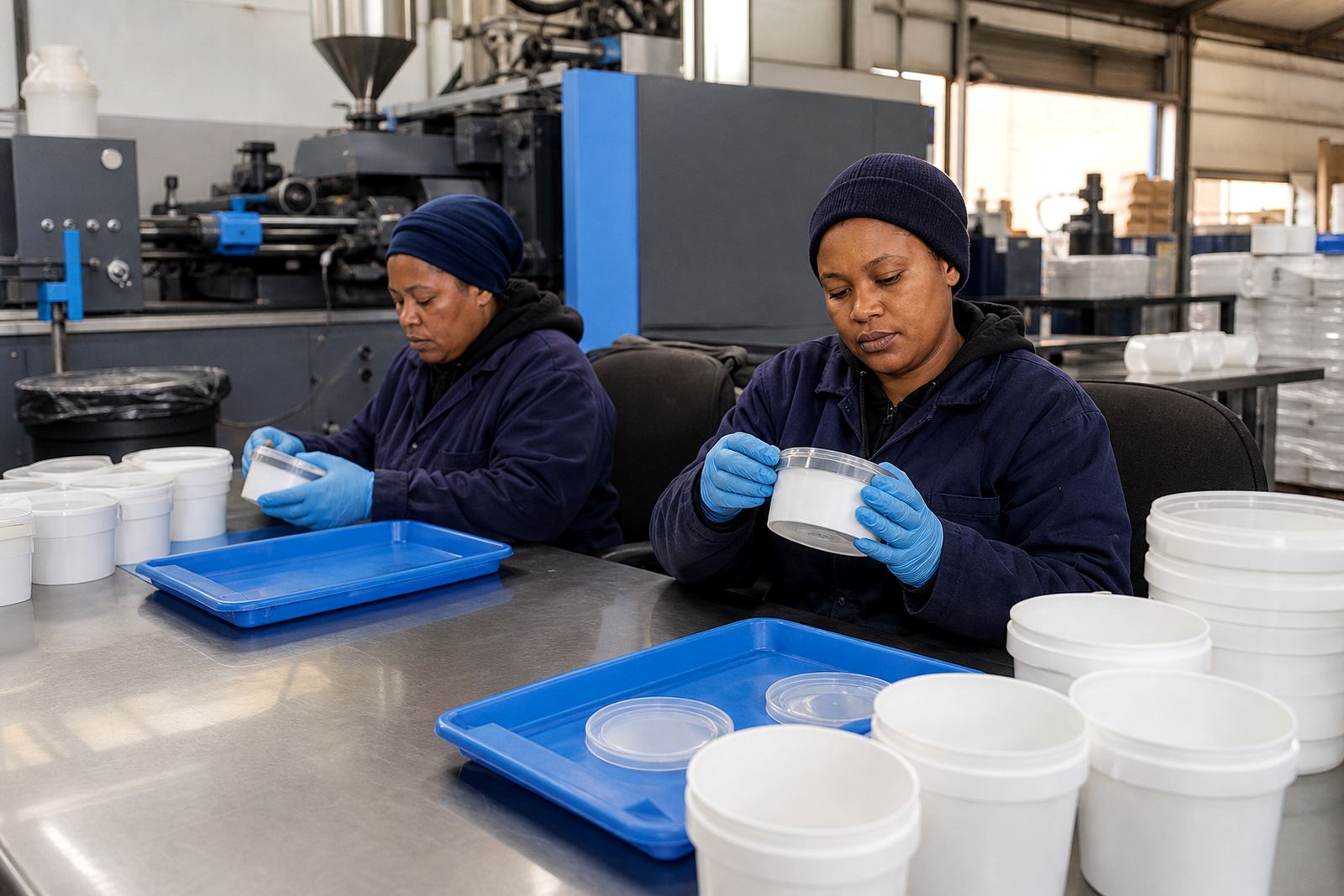
A firmer lid for packs that are opened often
A clip lock lid is a closing style that grips the rim of a matching tub with a positive snap fit. It is chosen where the contents are handled more than once, whether the pack holds deli portions, refill products, powders, creams or small parts for controlled filling lines. The lid is formed to sit cleanly on the tub bead, giving a tighter hold than a loose overcap and a neater finish on shelf.
In plastic packaging work, the fit matters as much as the material. A lid that sits evenly helps the packers on the line, keeps the stack stable in cartons and gives the end user a clear opening and closing action. For many local businesses, that balance between handling and presentation is what makes the clip lock style practical for daily packing.
- Injection-moulded lid shape for repeat closing
- Matched to tubs with a defined rim profile
- Suitable for manual, semi-automatic and hand packing lines
- Works across food, pharma and cosmetic pack formats
Materials and build choices that suit local packing lines
Clip lock lids are commonly made in polypropylene or HDPE, depending on the product, fill method and the look required. Polypropylene is often used where a clean moulded finish and a lighter feel suit the pack. HDPE is often selected where a tougher wall and a slightly different flex profile are preferred. Both materials are widely used in food-safe packaging systems, with the final choice linked to the product, closure style and filling process.
For packers working in Gauteng, KwaZulu-Natal and the coastal metros, the material choice also needs to suit storage conditions. Heat in dispatch areas, humidity near Durban and long transport legs can all affect how a lid performs if the rim design is too light. A good clip lock lid keeps its shape, clicks home properly and still opens with controlled force when the end user needs access.
- Polypropylene options for light, neat presentation
- HDPE options for a firmer, heavier-feel pack
- Food-safe grades selected for packaging use
- Colour matching guidance for branded product ranges
Sizes, diameters and pack volumes that fit the job
Clip lock lids are usually matched to round tubs, and the size range must follow the tub mouth exactly. Common pack formats cover small sample sizes, medium retail tubs and larger bulk packs for kitchen ingredients, creams, gels or refill stock. The closure profile, rim depth and lid height all need to suit the tub design so the lid clips on evenly and stays seated through handling.
Plastic Factory works on practical sizing for South African packers, including line fit checks and pack size planning where the container must suit the carton, the shelf and the storage bay. If a product is filled hot, chilled, thick or sensitive to air contact, the closure needs to be checked against the real fill condition and the way the pack moves through the line.
- Small tubs for samples and travel packs
- Mid-range retail sizes for food and personal care products
- Larger tubs for bulk refills and kitchen use
- Round profiles with matching clip lock bead design
Where this lid style works best
This lid suits products that are opened, checked and closed several times before the tub is empty. That makes it useful for portioned food packs, powdered products, body care items, pet care mixes and selected pharmaceutical pack formats where the closure must stay neat through repeated handling. It is also useful where a stronger closing feel helps the pack give a better user impression on retail shelves.
For packers in Johannesburg, Pretoria, Alberton, Germiston and Boksburg, the format works well on production lines that move from filling to lidding to carton packing without much handling between steps. For Durban, Cape Town and Port Elizabeth, the lid must also stand up to transport, warehouse stacking and the extra movement that comes with longer routes and coastal conditions.
- Food products that are portioned and reopened often
- Pharmaceutical and health care pack formats
- Cosmetic tubs for creams, balms and scrubs
- Refill containers for household and personal care use
Fitting checks for a clean closing action
A clip lock lid needs the right tub rim, the right bead depth and a consistent mould finish to close properly. If the rim is too thin or the lid profile is not matched to the tub, the closure can feel loose on one section and tight on another. That is why mould development, trial production runs and line fit checks matter before stock moves into routine packing.
On the line, the fitting process should allow the lid to seat evenly without forcing the rim. If tamper features are added, the packer needs a setup that keeps the seal tidy and easy to inspect. Secondary packing also matters, especially when tubs are nested, sleeved or cartoned for distribution to multiple provinces.
- Check tub rim size and bead profile
- Confirm whether the lid is hand applied or machine applied
- Allow for tamper seal design if the product needs it
- Test stack stability in cartons and transit trays
Care, handling and ordering details to confirm
Clip lock lids should be kept clean, dry and protected from crushing before use. If packs are stored in warm depots or near busy loading areas, the tub and lid stacks should remain square so the clip points do not deform. On production floors, good handling prevents dust on the sealing edge and keeps the closing action consistent from one batch to the next.
When ordering, confirm the tub diameter, height, wall style, colour, finish, closure feel and whether you need a plain lid or one paired with a tamper seal. It also helps to confirm the product being packed, the fill weight, the line speed, carton count and whether the range is for Johannesburg, Durban, Cape Town, Pretoria, Port Elizabeth or local supply in Alberton, Germiston and Boksburg. Those details shape the mould choice and the packing plan.
- Tub opening diameter and height
- Material choice: polypropylene or HDPE
- Colour, finish and closure strength
- Need for tamper seal, secondary packing or trial production
Key facts
| Product type | Clip lock lid for injection-moulded tubs |
|---|---|
| Materials | Polypropylene or HDPE, food-safe grades on request |
| Closure style | Snap fit closure for repeated opening and closing |
| Common formats | Round tubs in small, medium and bulk pack sizes |
| Use sectors | Food, pharmaceutical and cosmetic packing |
| Supply areas | Alrode, Alberton, Johannesburg, Durban, Cape Town, Pretoria and Port Elizabeth |