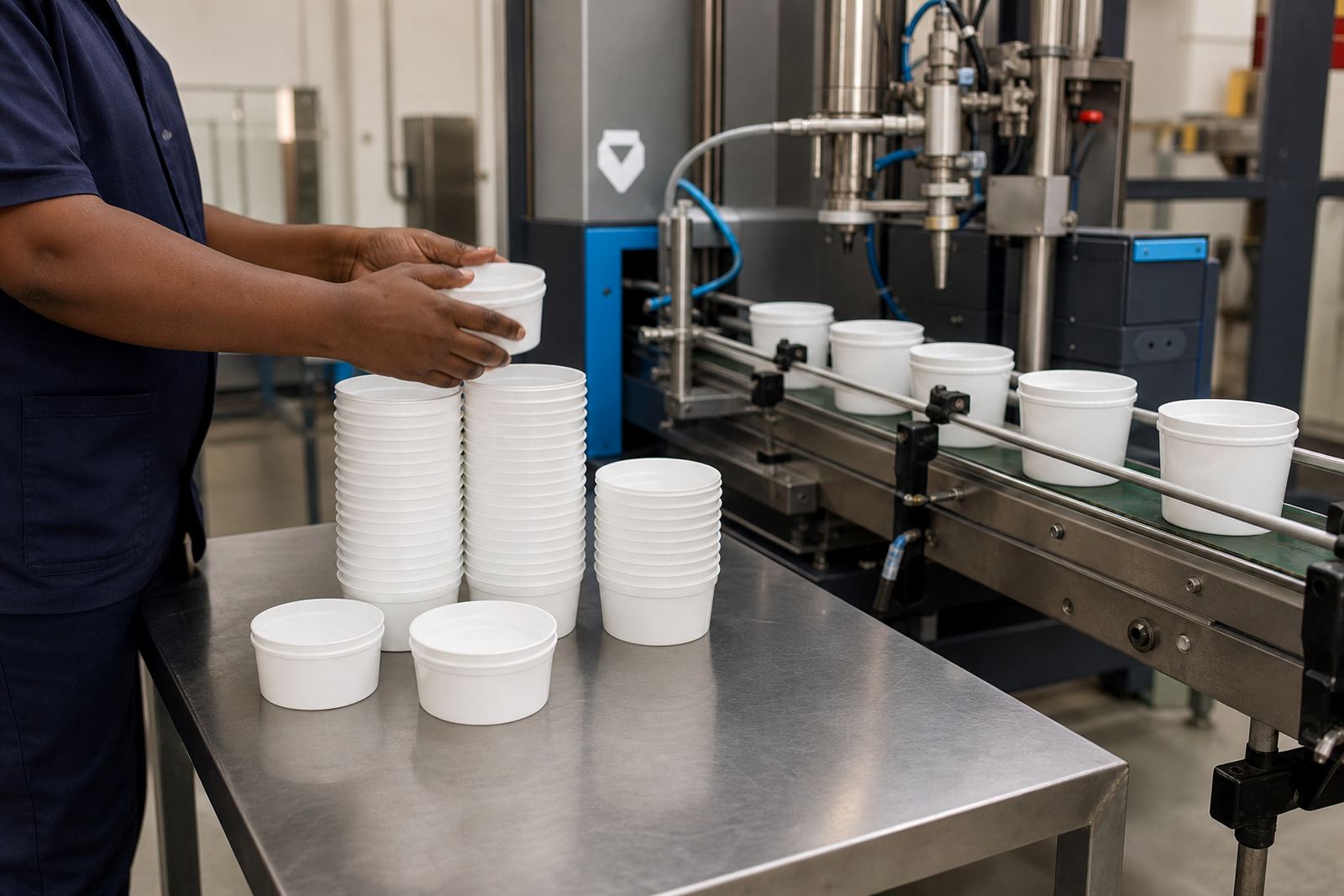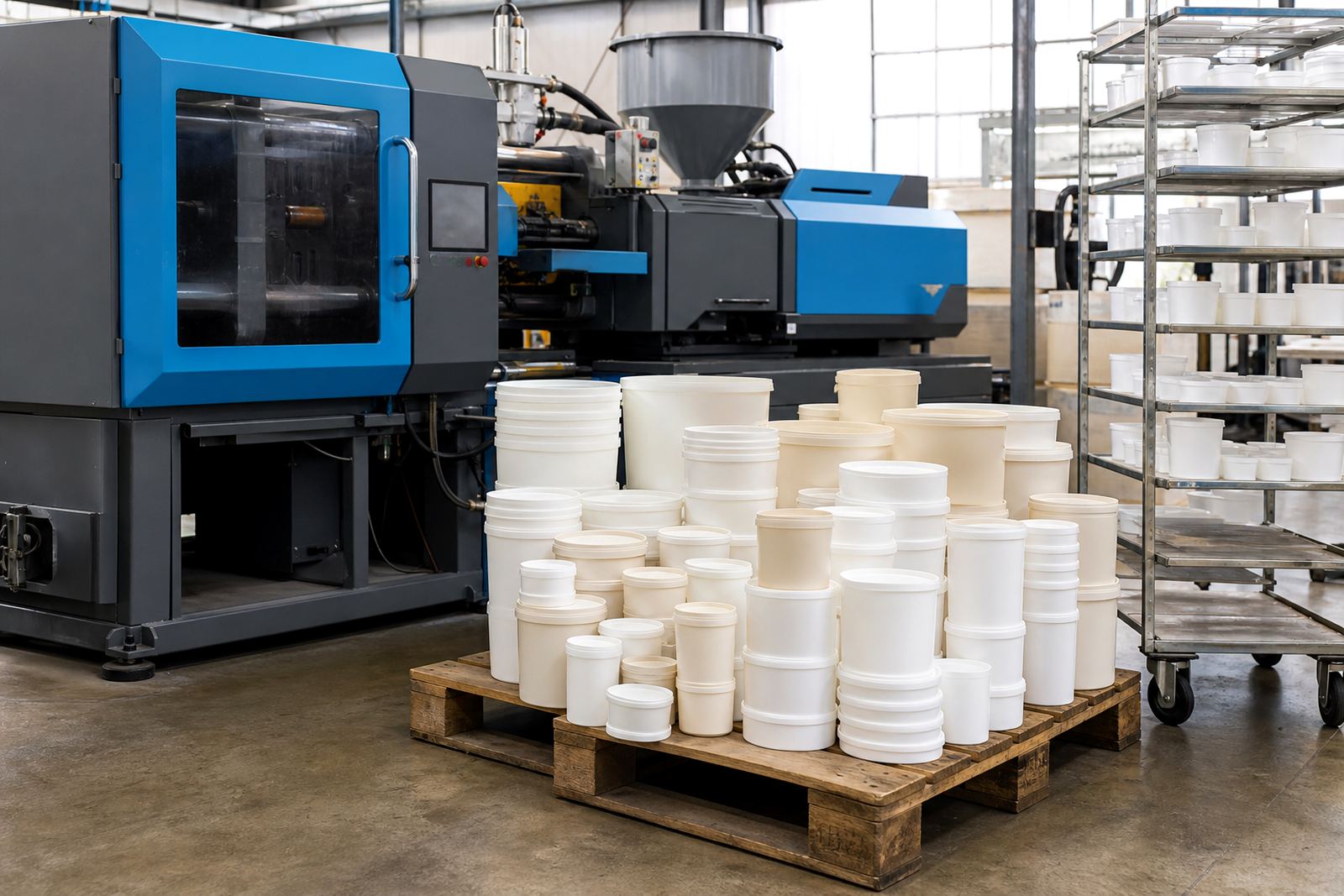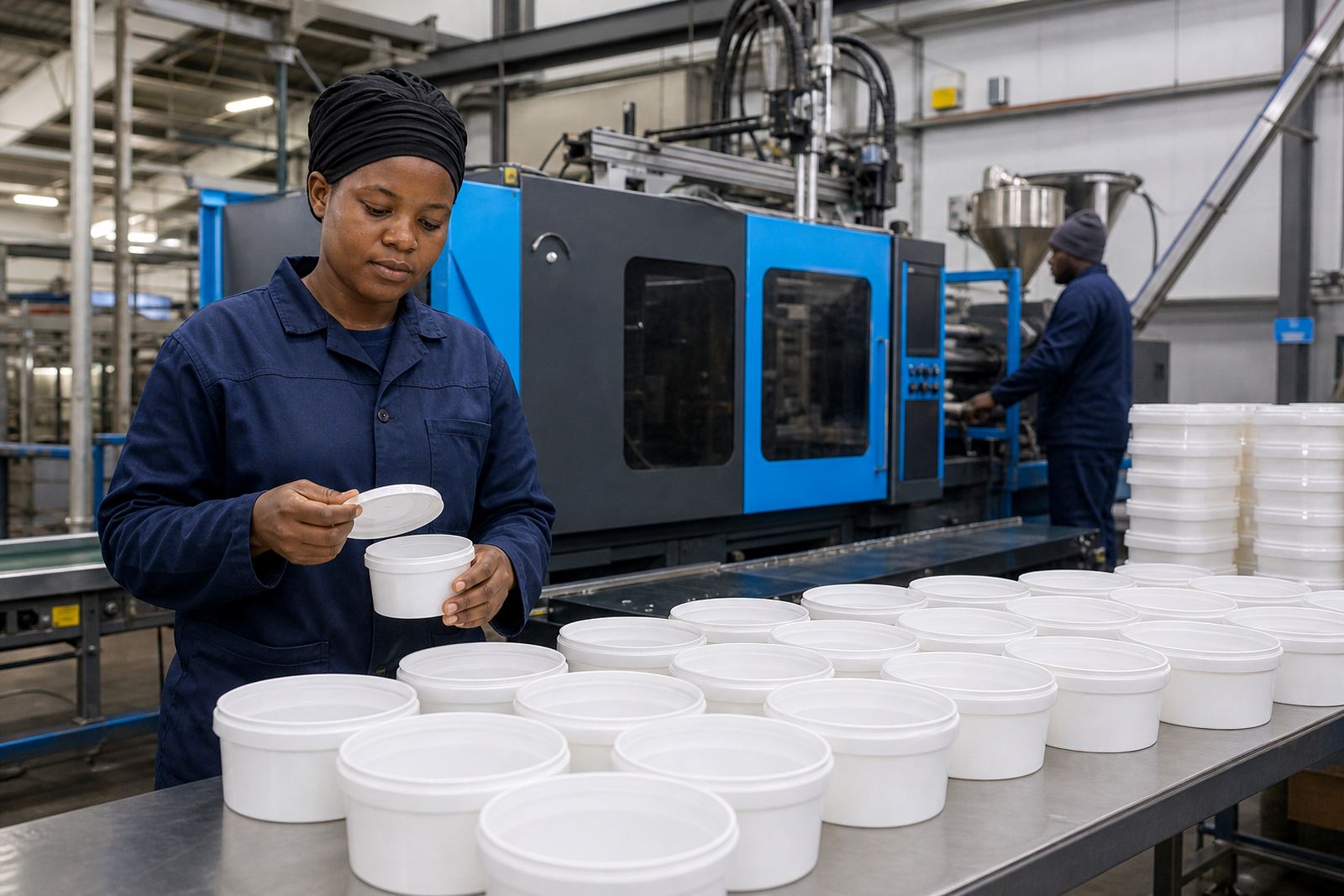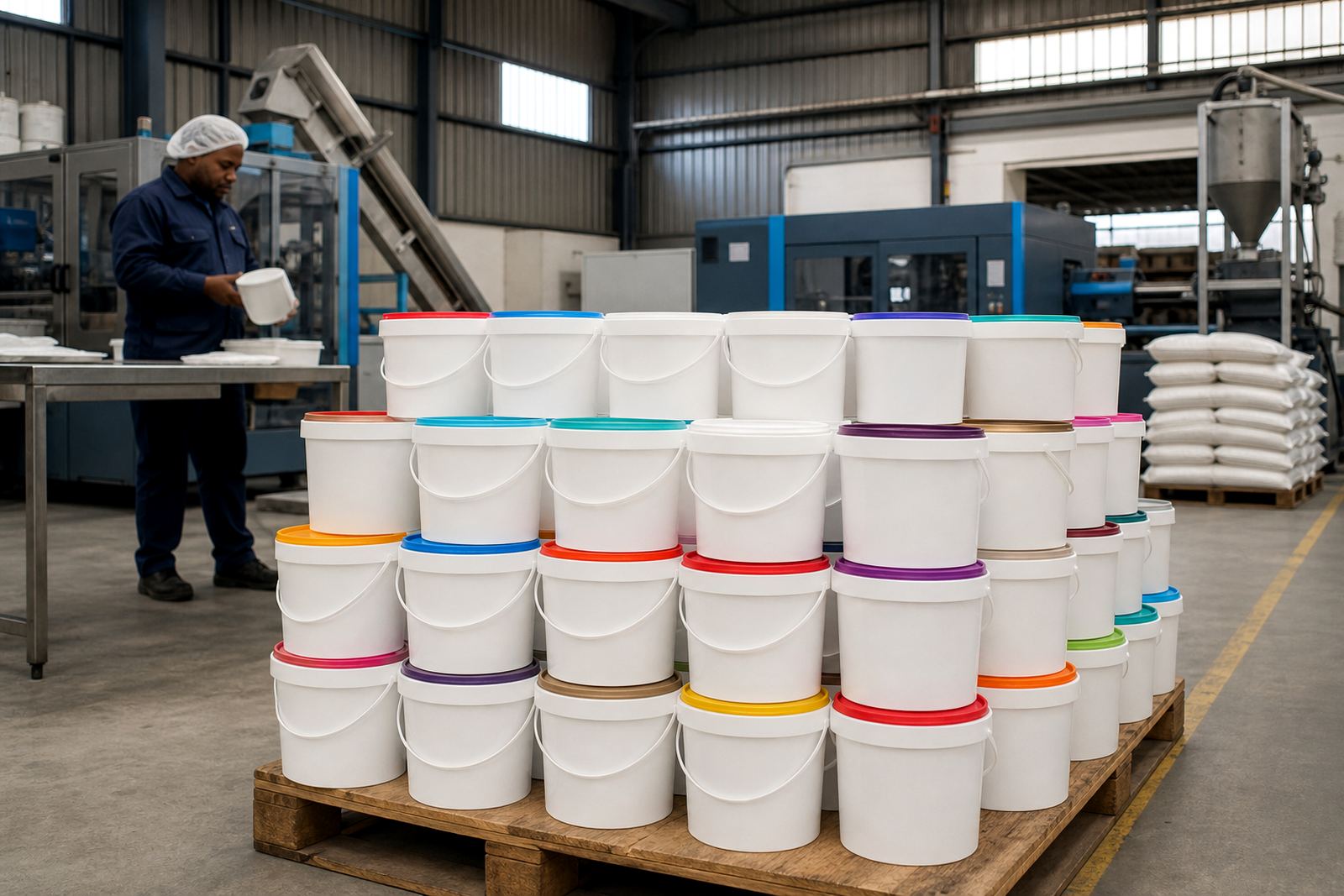
A tub shape made for frozen dessert filling
An ice cream tub has to hold its form in the freezer, stack neatly in cartons, and seal cleanly after filling. Our tubs are injection-moulded for repeatable wall thickness and dependable rim dimensions, which matters when a line is filling soft scoop, dairy dessert, frozen yoghurt or layered products. The shape is practical for hand packing and machine packing alike, with straight sides or gently tapered walls depending on the pack style.
For frozen dessert work, the rim and lid landings need to stay true after cold storage and handling in cold rooms. A tub that closes squarely helps reduce lid lift, product spill and label damage when cases move through local distribution. That is especially useful where packs travel from Gauteng into humid coastal routes, then into retail cold stores and freezer cabinets.
- Injection-moulded tub body for consistent pack geometry
- Freezer-friendly shape for frozen dessert filling and storage
- Options for plain, printed or label-ready surfaces
- Designed for stacking in outer cartons and display trays
Polypropylene and HDPE choices for the pack room
Plastic Factory works with polypropylene and HDPE containers and tubs, each suited to different product behaviour and packing conditions. Polypropylene is widely used for food tubs because it gives a neat finish, good stiffness and reliable moulding detail on the rim and base. HDPE is often selected where toughness and impact handling matter, especially when packs are moved in cold rooms or in busier dispatch areas.
The right material depends on the fill, the temperature profile, and how the tub is handled after sealing. Ice cream packs usually need a material that behaves well in deep chill and keeps its shape when stacked in bulk or placed into sleeves, trays or cartons. Colour matching can also be planned for flavour ranges, promotional runs or house-style packs, though the finish still needs to suit the sealing method and storage conditions.
- Polypropylene for crisp moulding and food pack presentation
- HDPE for tougher handling and practical bulk movement
- Food-safe material options for frozen dessert lines
- Colour guidance for flavour coding or brand grouping
Lids, tamper seals and the lid line on the filler
The tub is only part of the pack. The lid profile, seal detail and tamper feature must all work together, otherwise the line becomes slower and product safety is harder to manage. We supply lid development and tamper seal design for packers who need a closure that presses down evenly, shows first-open evidence, and sits properly after the tub has been filled and wiped clean at the rim.
Depending on the product and the packing method, a tub can be matched with a snap-fit lid, a tamper evident band or a seal feature that supports secondary packing. Some packers also need a version that nests and denests neatly on the filler, so the tub feed remains steady and the line operator does not have to keep correcting jams by hand. Those details matter when the filling room is working against a moving schedule and different flavours are being packed in the same shift.
- Lid development for close, repeatable closure fit
- Tamper seal options for visible pack security
- Rim and lid checks for manual and automated lines
- Secondary packing advice for cartons, sleeves and trays
Sizes and pack styles that suit frozen dessert ranges
Ice cream tubs are usually planned around the product weight, the retail pack size and the way the pack travels through the cold chain. Small tubs may suit single-flavour servings and sampling packs, while larger tubs work better for family formats and food service supply. The exact dimension, height and fill volume need to fit the full pack line, not only the shelf pack, because the tub still has to travel from filling through lidding, boxing and freezing without distortion.
We can help with custom tub design, mould development and trial production runs where the packer wants a new profile or a cleaner stack. Pack size planning also matters for cases and pallets, because a tub that looks good on paper can still waste space in outer cartons if the footprint is not thought through properly. For frozen dessert producers, a tidy pack count per case often makes the cold store easier to manage.
- Small, medium and family-size formats available by project
- Straight-sided and lightly tapered body options
- Pack counts planned around carton and pallet use
- Trial runs for fit, filling and stacking checks
Fitting the tub to your filler and cold store
A tub has to suit the line before it suits the shelf. Line fit checks are worth doing where the filler, capper or denesting set-up uses a specific grip, drop height or spacing. Even a neat tub can struggle if the base profile is wrong for the machine magazine or if the lid needs too much force to close cleanly. That is why mould development and trial runs are useful before larger stock runs are committed.
Frozen dessert packers also need to think about storage and dispatch. Cold rooms can make some plastics feel more brittle, while condensation on a busy packing floor can affect grip and label adhesion. If the packs are going through coastal distribution to Durban, Cape Town or Port Elizabeth, the pack style should hold its shape through temperature shifts and handling between vehicles and warehouses. That planning keeps the line practical, not just tidy on a sample table.
- Line fit checks for fillers, denesters and lidders
- Trial production runs for shape and closure testing
- Cold-room handling considered in the pack design
- Dispatch-friendly pack counts for local delivery planning
Care, storage and day-to-day handling
Injection-moulded tubs should be stored flat, clean and away from dust before filling. In a food packing room, it helps to keep lids and tubs separated in their own cartons until the line needs them, especially where shifts move between products and flavour variants. If the tubs are being printed or labelled, the surface should stay free from oil, loose powder and condensation before packout.
For frozen dessert use, the filled pack should be sealed with a consistent rim press and moved into freezing or cold storage without rough stacking. That protects the closure and helps the tub keep its shape. Where a producer runs frequent stock changes, ongoing product updates can keep the pack aligned to new weights, new lid styles or changes in outer carton format. The care point is simple: keep the pack clean, keep the closure even and keep the dimensions consistent.
The details to confirm before the mould is set
When ordering an ice cream tub, the most useful details are the fill volume, the product temperature, the lid style and the way the pack will move through your line. It also helps to know whether the pack will be held in cold stores for long periods, whether it needs a tamper feature, and whether the outer carton size is already fixed. A small change in rim width or wall angle can affect how the whole pack behaves in the freezer.
- Target fill weight or volume in millilitres or grams
- Preferred material: polypropylene or HDPE
- Lid type, tamper feature and sealing method
- Pack height, footprint and carton count
- Colour, finish and label or print requirements
- Line details for filling, closing and stacking
For food, pharmaceutical and cosmetic packers in Johannesburg, Pretoria, Durban, Cape Town, Port Elizabeth, Alberton, Germiston and Boksburg, the same careful planning applies. The tub has to suit the product, the room conditions and the packing line, not just the sample in hand.
Key facts
| Product type | Injection-moulded ice cream tub |
|---|---|
| Materials | Polypropylene and HDPE |
| Use | Frozen dessert and ice cream packing |
| Closure options | Matching lids with tamper seal choices |
| Pack formats | Small, medium and family-size by project |
| Supply areas | Alrode, Alberton and delivery across South Africa |