Stacking that holds its line in the store room
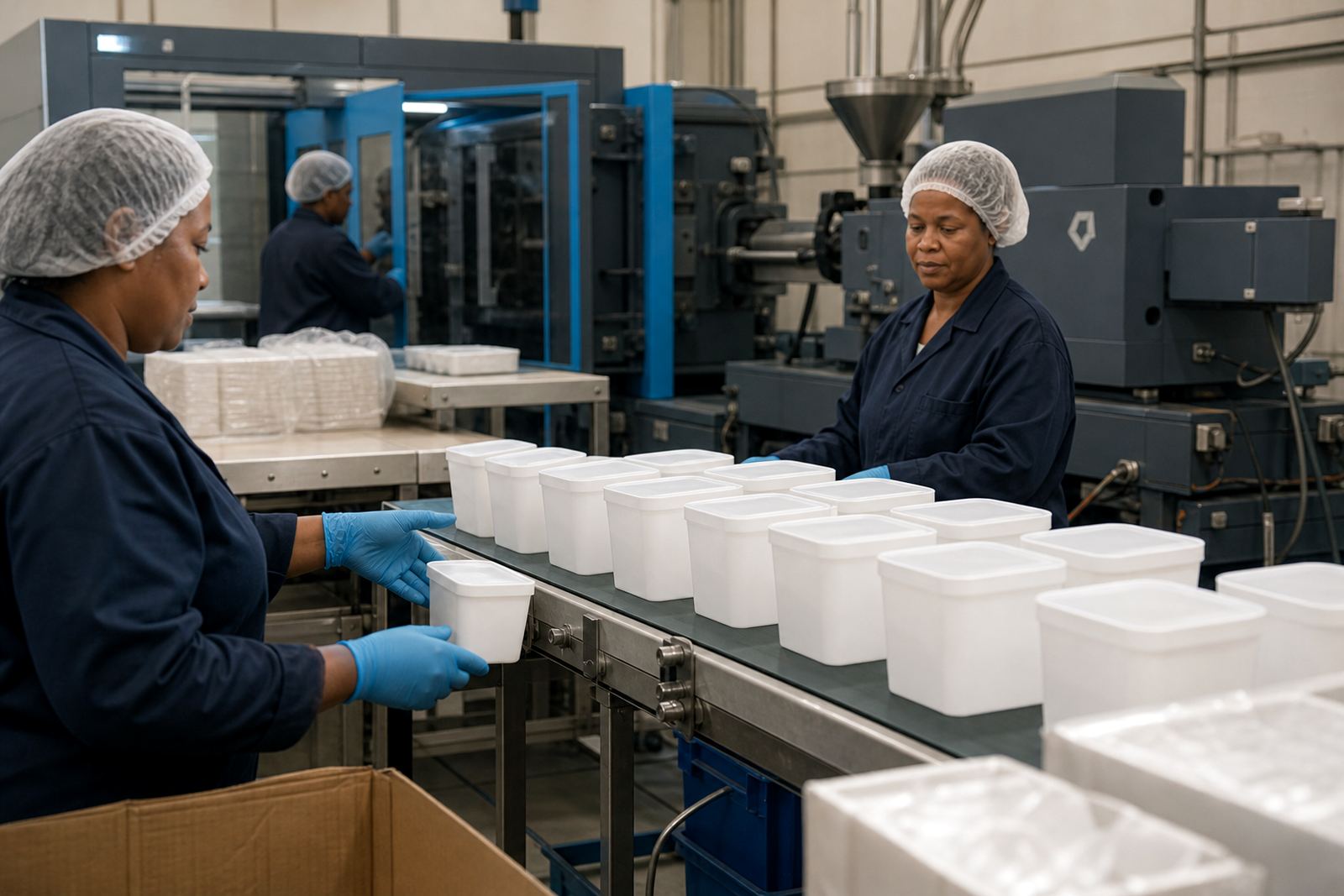
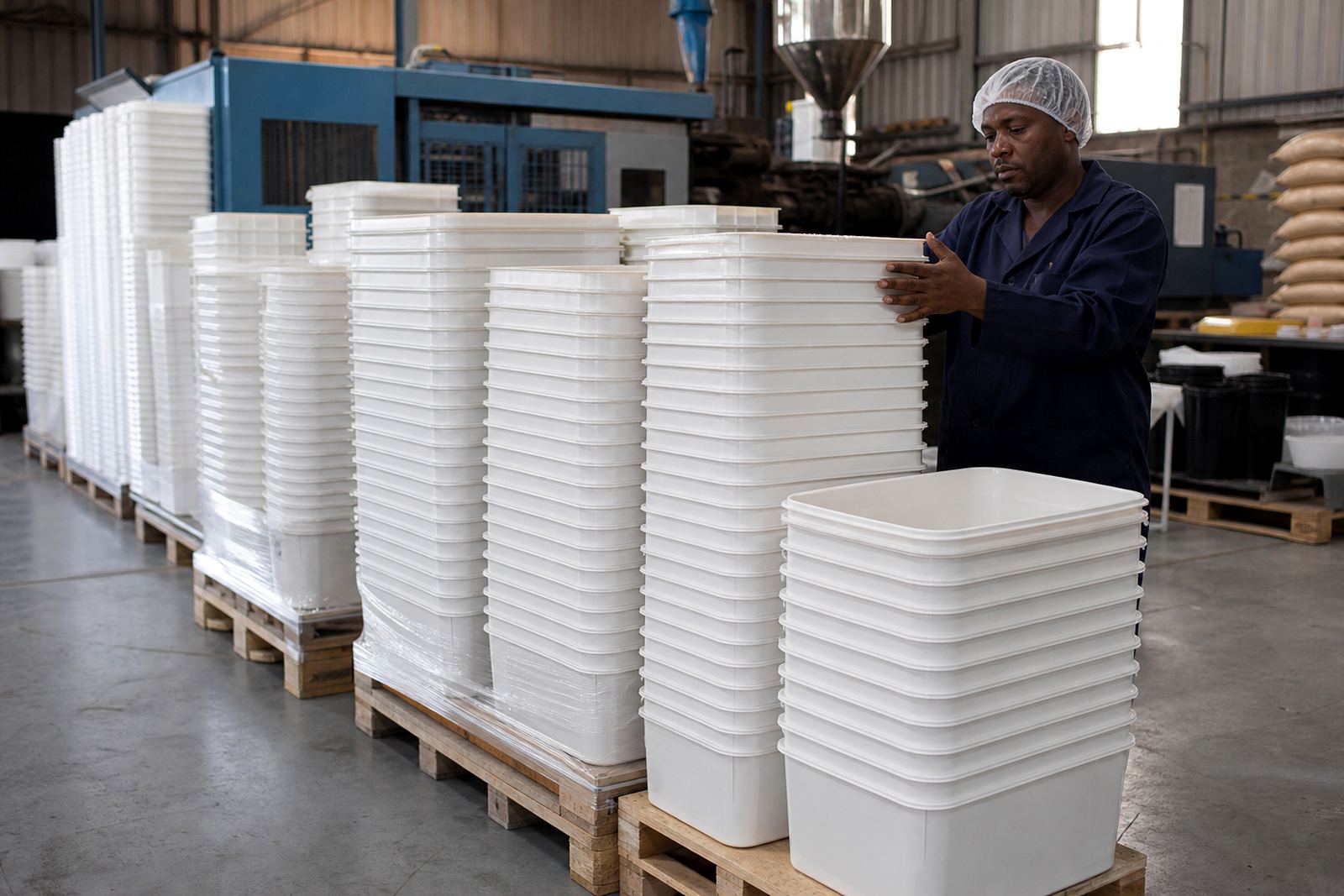
A stackable tub is moulded so one unit sits securely on the next, which helps on warehouse racking, in cold rooms and on delivery pallets. The shape is planned around handling efficiency, with straight walls or light taper where needed, so tubs travel well and settle neatly under lids. For packers in Johannesburg, Durban, Cape Town, Pretoria and Port Elizabeth, that kind of form makes a difference when stock turns fast and space is tight.
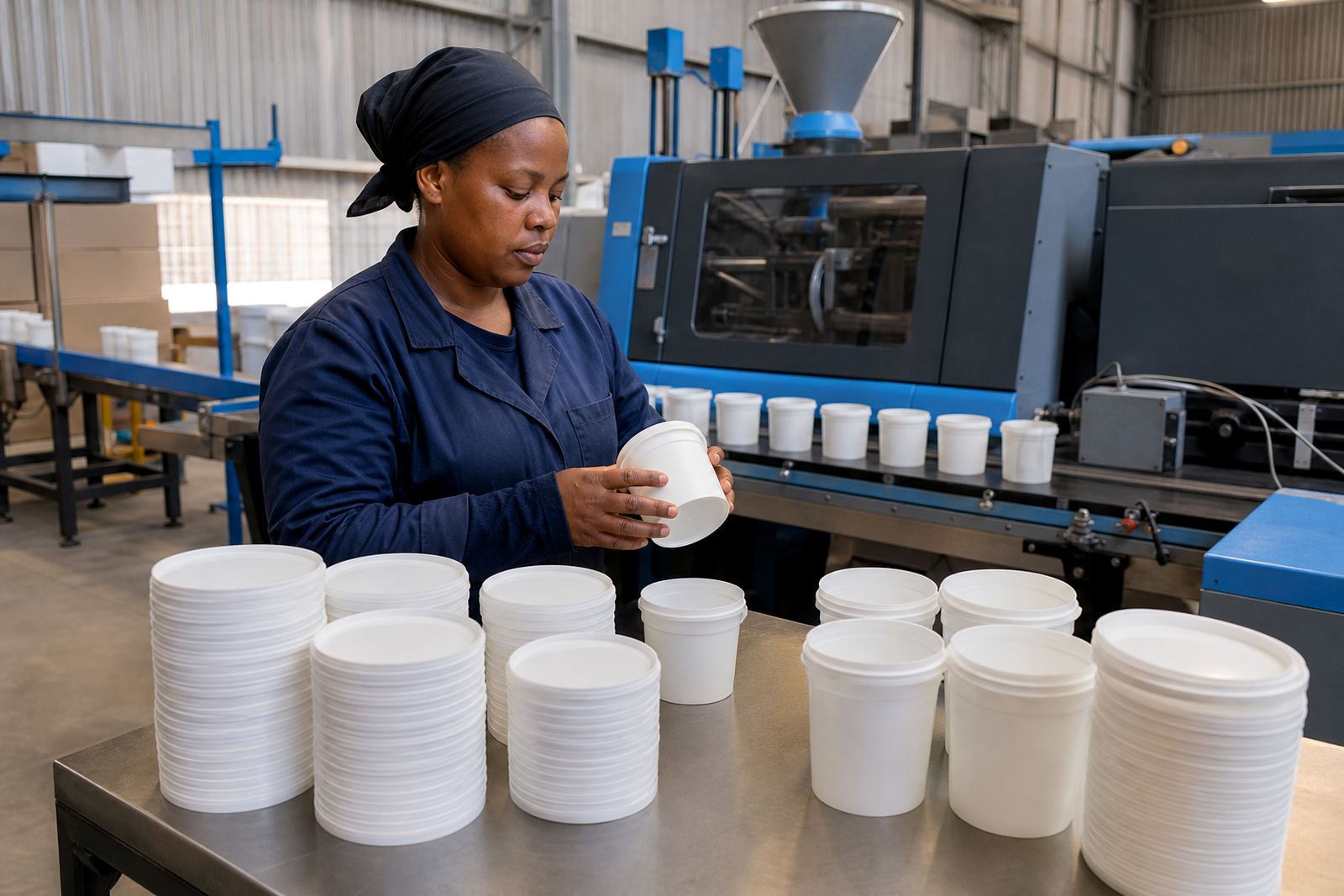
These tubs are produced through injection moulding, where melted polymer is forced into a mould under pressure and cooled into a consistent shape. That process gives controlled wall thickness, clean edges and repeatable dimensions from batch to batch. In daily use, it means the tub opens and closes cleanly, and it sits properly through packing, stacking and dispatch.
- Stackable profile for organised pallet loading
- Compatible with matching lids and tamper seals
- Suitable for manual packing and line filling
- Commonly supplied in polypropylene and HDPE
Polypropylene and HDPE for different filling rooms
Polypropylene tubs are a common fit for dry goods, powders, wipes, dry cosmetic products and many general packaging lines. The material is light, stable and suitable for tubs that need a neat finish and dependable stacking. HDPE tubs are often specified where impact handling, squeeze resistance and tougher transport conditions matter, especially on routes that move between inland plants and coastal depots.
Food packers often ask for food-safe materials on the product that touches the goods, and that includes the tub body plus the lid if both are part of the pack. Pharmaceutical and cosmetic packers usually want a container that keeps a clean appearance on shelf, handles secondary packing well, and works with tamper evidence where required. The exact material choice depends on product type, fill weight and how the tub will be closed on the line.
- Polypropylene for light, tidy and versatile pack formats
- HDPE for stronger handling and transport resilience
- Food-safe material selection for direct product contact
- Option to match colour to product line or pack family
Sizes, profiles and line-fit options
Stackable tubs are usually specified by volume, top opening, base footprint and overall height. Some packers need a low, wide tub for quick scoop access, while others want a taller form that makes better use of carton space. The right profile depends on what sits inside it, how the contents settle and whether the pack moves in trays, sleeves or loose cartons.
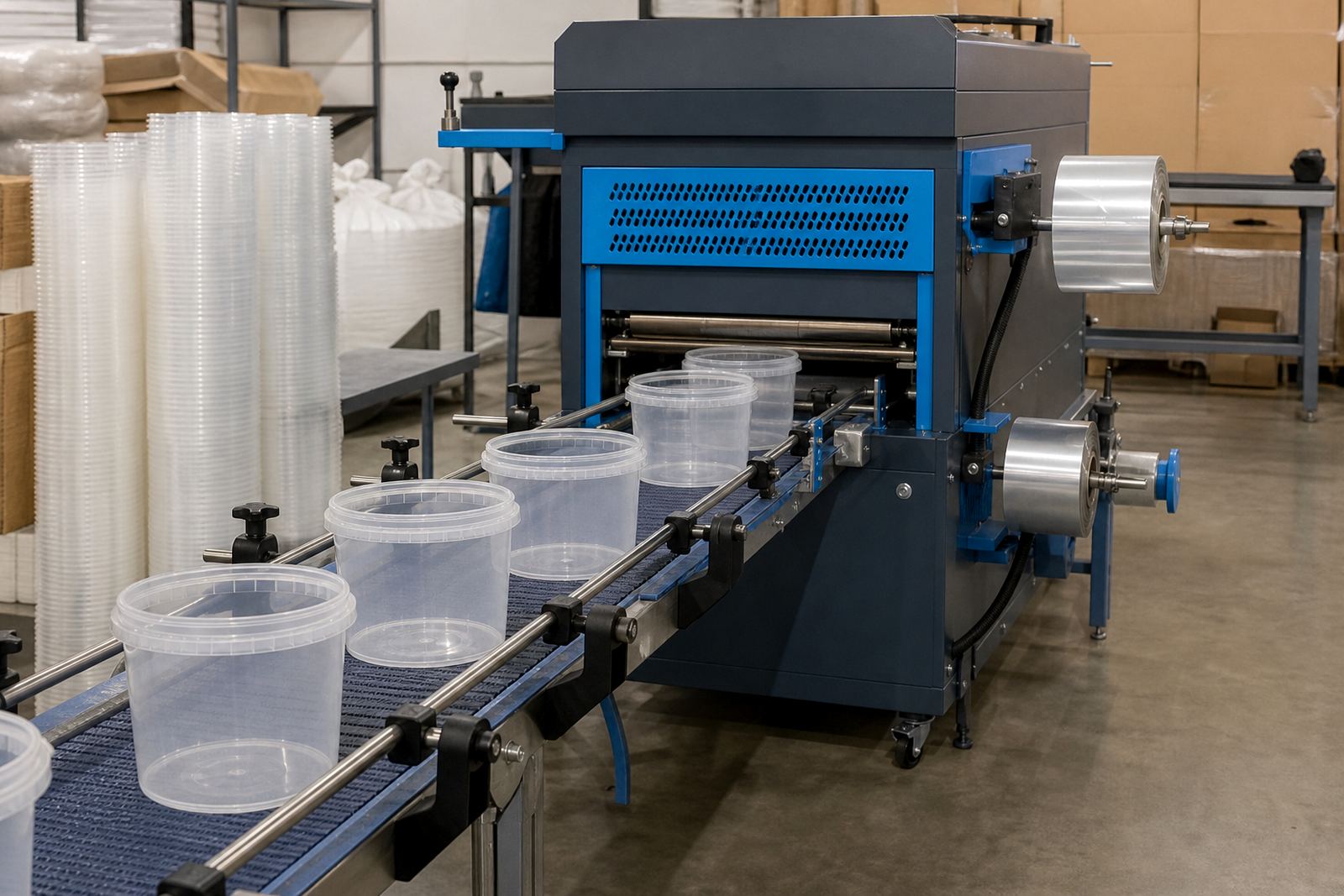
Typical options can include round tubs, square tubs and straight-sided formats with a stacking rim. Lids may be flat, domed or tamper-evident depending on the pack style. If a packing line uses automatic closing or shrink wrapping later in the process, the tub should be checked against the guide rails, grippers and carton layout before production starts. A pack that looks right on paper can still sit poorly if the neck finish or rim profile is off by a few millimetres.
- Sizes from small retail tubs to larger bulk handling formats
- Choice of round or square body shapes
- Matching lid styles for manual or line closing
- Options for label panels, embossing or plain sides
Tamper seals, lids and pack integrity on the shelf
For food and personal care packs, the closure matters as much as the tub itself. A tight lid helps keep the contents protected in storage and on delivery, while a tamper seal gives a visible sign if the pack has been opened. Depending on the pack style, the seal can sit over the lid, lock into the rim or work as a band that is broken on first opening.
When a customer is filling jars, creams, sauces, spices or tablet packs, the closing method has to suit the filling speed and the way the product is handled after sealing. A lid that is too loose can shift in transport, while one that is too tight can slow the line. We look at the lid, the seal and the tub together, because the pack only works properly when all three parts match.
- Lids supplied to match the tub geometry
- Tamper evidence options for retail and controlled packing
- Closure styles suited to hand packing or mechanical closing
- Support for line fit checks before a full production run
Where stackable tubs suit the job
This range suits food packers, pharmaceutical packers and cosmetic makers that want neat, practical storage with easy pallet building. In food plants the tubs can be used for dry ingredients, prepared components, toppings and finished packs. In cosmetics they work for creams, balms, powders and similar fills where shelf appearance matters. In pharmaceutical settings they are often used for secondary packs, sample packs and controlled container formats where a clean, consistent finish is needed.
The stackable shape also helps in distribution. A warehouse team can layer tubs with less wasted headroom, and a transport load settles more cleanly when the footprints match. That matters on local routes in Gauteng and on longer runs to the coast, where humidity and handling conditions can vary. For packers with stock in more than one branch, a standard tub format also makes it easier to plan stock movement between plants and depots.
- Food, pharmaceutical and cosmetic packing lines
- Warehouse storage and dispatch sorting
- Secondary packaging and shelf-ready formats
- Regional supply to major metros across South Africa
Care in the wash bay and through repeated use
Care depends on the polymer, the fill product and the washing method used at the plant. Injection-moulded tubs are generally easy to handle in routine packing operations, but they should be kept away from sharp knocks, heavy scraping and incorrect stacking height. A damaged rim can affect the lid fit, and a twisted base can throw off the stack on pallets or in cartons.
If tubs are being reused internally, they should be checked for residue, staining and any distortion before they go back into service. Clear labelling and sensible batch rotation help keep the pack room tidy. In coastal areas, where warm humid air can affect storage rooms, a clean dry store and good stock rotation keep the load looking consistent from first fill to final dispatch.
- Store flat and stack within the recommended height
- Inspect rims and lids before refilling or repacking
- Keep away from hard edges that can nick the seal area
- Use dry clean storage where packs are held for longer periods
Details to settle before a tub run is released
Before production, it helps to settle the main pack details so the tub runs properly on the line and fits the product in real use. The first item is the fill weight or fill volume, because that decides the internal capacity and headspace. Next is the closure style, including lid type and whether tamper evidence is needed. Colour, label area and stacking height also need agreement, especially where one product family is split across several sizes.
It also helps to check how the tubs will move after filling. If they go into cartons, sleeves or trays, the outside dimensions need to suit that pack format. If they are handled in bulk, the base and stacking rim should be tested for stability under load. Our Alrode team supports custom tub design, lid development, tamper seal design, material selection, mould development, trial production runs, line fit checks, pack size planning, colour matching guidance, stock run planning, secondary packing advice and product refinements. Clients can contact us through the enquiry form on our contact page.
- Fill volume, product type and target pack weight
- Material choice between polypropylene and HDPE
- Lid style, seal method and label area
- Carton, tray or pallet format for dispatch
Key facts
| Material | Polypropylene or HDPE |
|---|---|
| Manufacturing method | Injection moulded |
| Format | Stackable tub |
| Closure | Matching lid with tamper seal options |
| Use sectors | Food, pharmaceutical and cosmetic packing |
| Supply area | Alberton, Johannesburg, Durban, Cape Town, Pretoria, Port Elizabeth |