The oval shape changes what people notice first
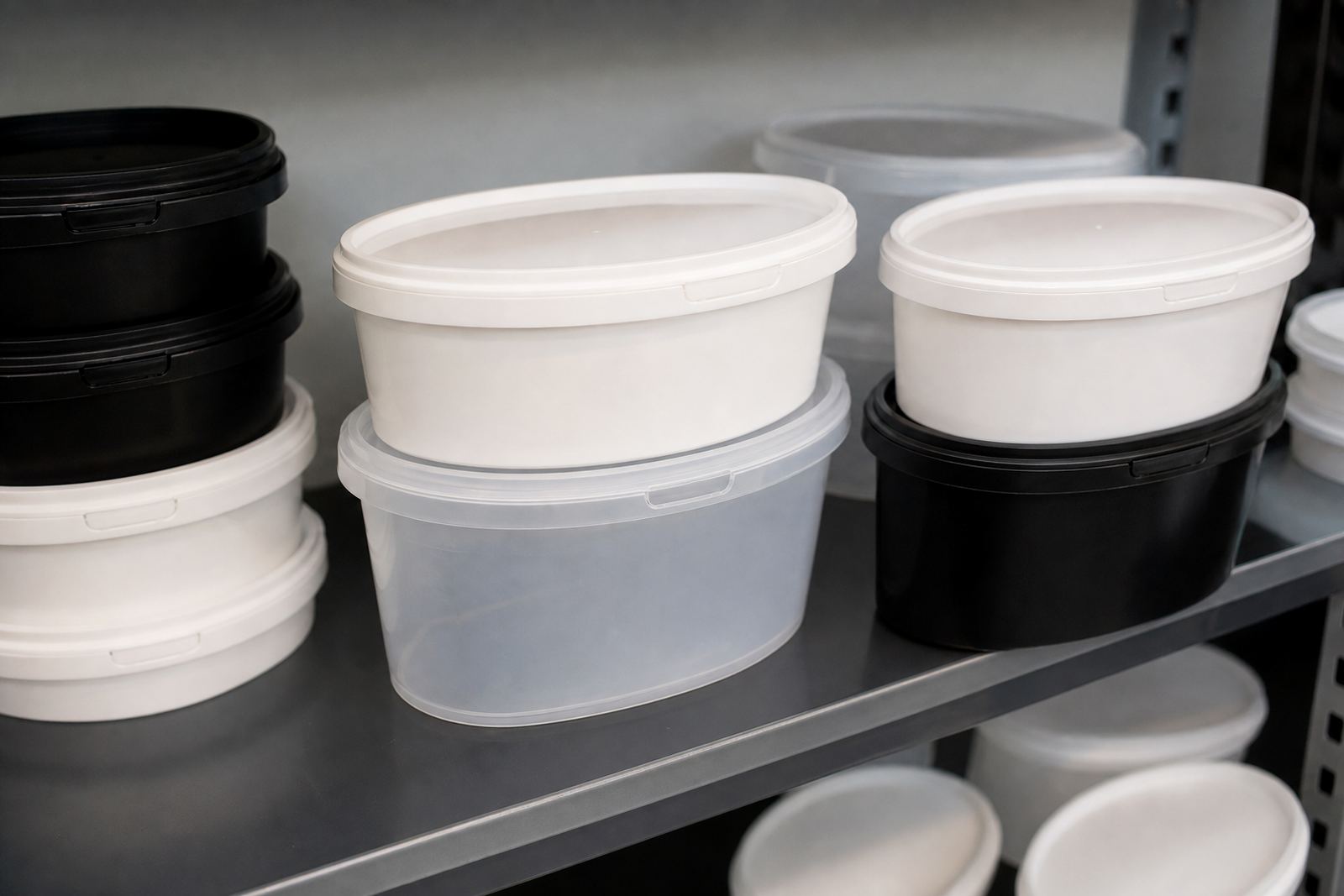
An oval tub breaks the hard square rhythm that fills many retail shelves. That softer outline can make a product feel more considered, while still keeping a straight base that sits neatly in trays and cartons.
On a packed shelf, the eye picks up shape before text. An oval profile gives a front face that feels tidy and open, and it can help smaller packs look less cramped beside round tubs or square pails. In a store in Alberton or a wholesale counter in Johannesburg, that can shift how the pack is read at arm’s length.
For food, pharmaceutical and cosmetic packs, the real value is not only appearance. The shape needs to support practical filling, sealing and handling, with enough wall strength to survive transport and day to day movement.
Grip comfort matters when tubs move through a real shift
Workers handling tubs all day notice shape very quickly. Oval tubs often sit better in the hand than very wide square containers, especially when gloves are worn or hands are damp from washdown. That matters on packing lines where tubs are picked, filled, lidded and boxed in steady runs.
At the same time, an oval body has to be designed carefully so it does not twist in the hand or catch on guides. A good profile balances comfort with stability, and the base must stay firm when tubs are loaded into crates or stacked on a pallet.
- Less strain when lifting repeated packs
- Better hand control during capping and labelling
- Cleaner movement through packing stations
- More consistent stacking in shipper cartons
Polypropylene and HDPE suit different shelf jobs
Oval tubs are commonly made in polypropylene or HDPE, and each material brings its own feel and handling strength. Polypropylene is often chosen where a lighter, crisp-walled tub is needed with good rigidity. HDPE is used where toughness and impact resistance matter, especially for transport and colder storage conditions.
For hot-fill or chilled product ranges, the right resin choice depends on the full pack journey, not only the shelf. A cosmetic cream tub, a pharmaceutical powder container and a food tub for dry goods may all need different wall design, lid fit and closure control.
Material choice also affects clarity, colouring and surface finish. A neat gloss or soft matte finish can change how light sits on the shelf, which is useful when the pack has to look orderly under retail lighting in Cape Town or Pretoria.
Lid fit, tamper seals and shelf confidence
An oval tub only works properly when the lid and seal are matched to the rim. If the closing line is loose or uneven, the pack feels careless and can create leakage or dust ingress during transport. That is a real issue for fine powders, creams and dry ingredients moving through long delivery routes.
Tamper evidence is often needed for packed goods that must show if the container has been opened. The seal format should be easy for the consumer to understand, but still practical for the packer working at speed. For some ranges, a pull tab or tear band works better than a tighter band that slows the line.
- Even rim engagement all round the oval opening
- Seal style that suits the product texture
- Lid depth that protects the upper wall during transport
- Label area that stays clear after closing
Shelf shape, label space and carton planning
Oval tubs can help a product look organised, but the shape has to work with the rest of the pack system. Labels need a flat enough face to read cleanly, while cartons need enough repeat spacing to avoid waste. When the wrong pack size is chosen, shelf presentation can look crowded even if the tub itself is well made.
Pack size planning helps set the footprint, fill volume and case count before production starts. That is especially useful when one product range needs different sizes for food service, retail packs and refill formats. A change of just a few millimetres can alter how many units fit on a tray or in a shipping carton.
In coastal areas such as Durban and Port Elizabeth, storage conditions may also influence how labels, seals and outer cartons hold up. Humidity can affect paper components, so the pack structure should be planned with the full supply route in mind.