Cold rooms change the way a tub behaves
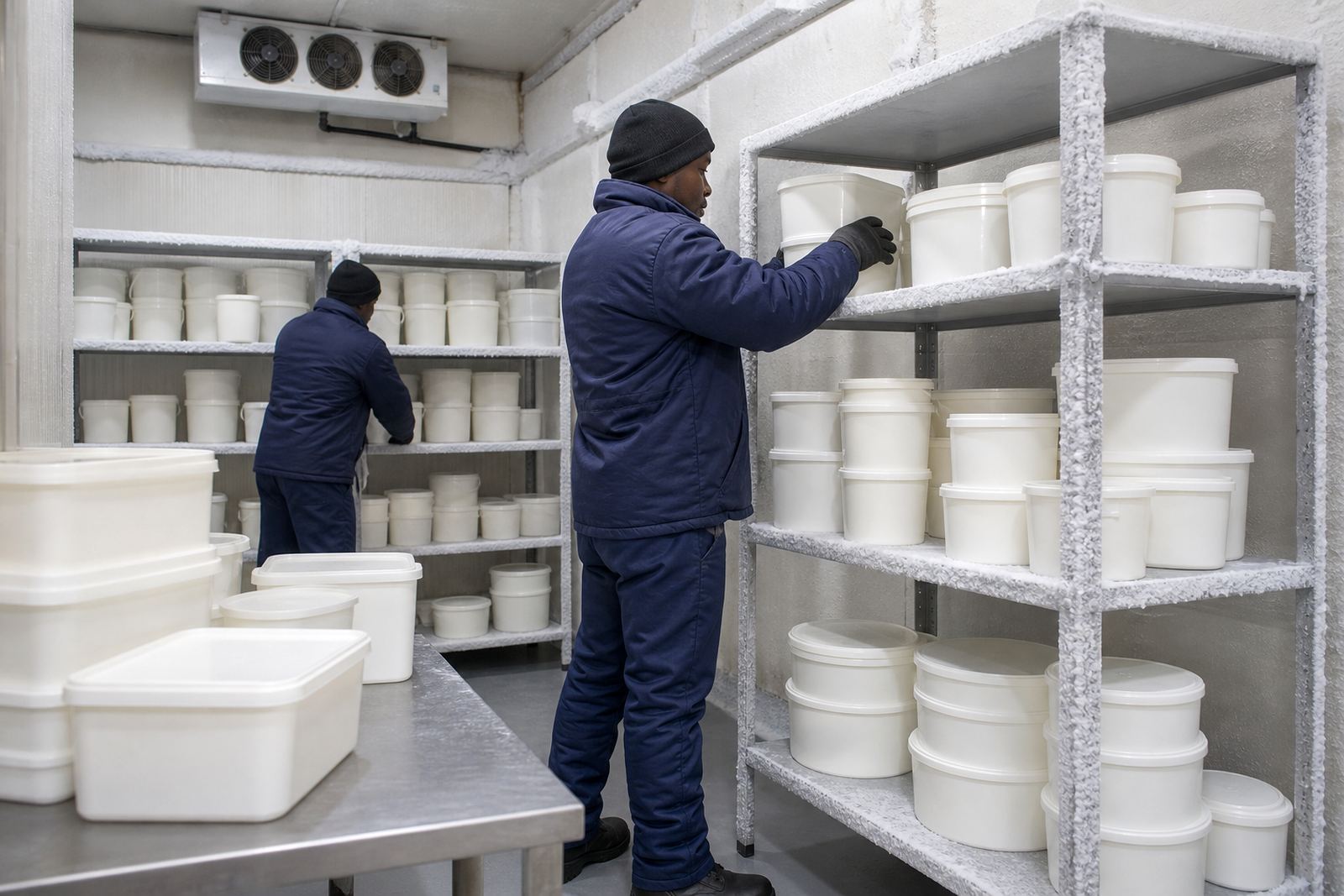
A tub that works well on a packing line can behave differently once it meets sub-zero air. Plastic becomes less forgiving in the cold, so the wall thickness, rim shape and lid engagement need proper thought before the pack is sent into frozen storage or onto a refrigerated vehicle.
Injection-moulded containers are made with repeatable wall sections, which helps with stacking and consistent fit. Even so, freezer use calls for care with corner radii, clip points and tamper seal features. A container that is too thin may crack when handled with gloves or lifted from a crate. One that is too stiff can pop a lid loose if the contents contract during freezing.
- Check whether the contents are packed cold or frozen after filling.
- Allow for shrinkage in the product, especially liquids and semi-liquids.
- Make sure stack height still works in cold rooms and on pallets.
Polypropylene and HDPE are common choices for frozen storage
For freezer use, polypropylene and HDPE are often considered because both can handle many food, pharmaceutical and cosmetic packing jobs. Polypropylene is widely used for tubs and lids where clarity is not the main concern but shape retention matters. HDPE is often chosen where impact resistance and a slightly more forgiving feel are useful in cold conditions.
The right choice depends on the product, fill temperature and the way the pack will travel through the supply chain. A yoghurt-style tub, a powdered ingredient pack and a cosmetic base cream may all need different wall profiles even if they look similar on the shelf. The colour choice also matters because darker colours can hide scuffs, while lighter colours show contamination more easily during inspection.
- Use food-safe material grades where the tub carries consumable products.
- Match the resin to the fill weight and freezing cycle.
- Consider lid stiffness together with the container body, not in isolation.
Lid fit and tamper seals need extra attention in the cold
Cold air can make a loose fit worse. If the lid and tub do not mate properly at room temperature, freezer storage will not improve matters. In fact, the change in temperature can reduce flexibility at the rim and make opening or resealing awkward for packers, warehouse staff and end users.
Tamper seals should be designed with the full handling route in mind. A seal that tears too easily may fail during pallet movement, while one that is too tight can make retail opening difficult after freezing. If the product is packed on a fast line, the seal needs to sit correctly without slowing the line or causing missed closures. That is especially important where tubs are filled in batches and then moved straight into cold stores.
- Confirm that the lid locks evenly around the full rim.
- Test seal tear points with gloved hands.
- Look for stress whitening or cracking after a few freeze and thaw cycles.
Packing lines need room for cold handling
Freezer-friendly packaging is only part of the picture. The packing line has to suit the way the tubs are filled, stacked and transferred into cold storage. If product is filled too warm, condensation can form on the outside and make cartons slippery. If it is filled too cold, some materials may stiffen before the lid is seated properly.
For packers in Johannesburg or Germiston, a controlled route from filler to crate can save a lot of trouble later. In Durban, where humidity is often higher, condensation on outer surfaces can be a bigger issue during loading and staging. The details sound small, but they affect whether cartons keep their shape and whether labels stay readable after chilling.
- Keep the transfer path short and orderly.
- Use carton sizes that suit the tub footprint exactly.
- Plan pallet patterns so edge tubs are not crushed in cold rooms.
Trial runs show where the weak points sit
Freezer storage exposes faults that are easy to miss at room temperature. A trial production run can show whether a lid holds, whether the tub base bows, and whether the tamper seal tears cleanly after chilling. It also shows how the container behaves when it is lifted from a freezer, stacked again, or moved through a distribution centre.
At this stage, material selection and mould development become practical rather than theoretical. A small change in rim profile or corner depth can make a real difference to handling. Secondary packing advice also matters, because the outer cartons, shrink wrap and pallet arrangement all influence what happens once the load enters the cold chain.
For a bakery line in Alberton sending frozen fillings to Cape Town, the useful test is not how the tub looks on a bench. It is how the filled pack behaves after a night in cold storage, a forklift move, and a shelf check by the customer.
A freezer checklist for packers and dispatch teams
There is no single tub that suits every frozen product, but a practical checklist helps narrow the choice. The aim is to reduce cracks, leaks, distorted lids and waste at dispatch. It also helps when different branches and depots need the same pack style sent to Johannesburg, Pretoria or Port Elizabeth under the same product code.
- Confirm product temperature before filling and before closure.
- Check whether the tub needs a flat base, stackable shoulder or deeper grip zone.
- Test the lid, tamper seal and body as one unit.
- Review how the pack behaves after freezer storage and manual handling.
- Match the outer carton and pallet pattern to the tub size.
Cold storage is unforgiving, but it is predictable when the pack is designed properly. The right combination of injection-moulded tub, lid and seal will carry a product through packing, freezing and distribution without unnecessary trouble.