Shape Starts With the Product, Not the Mould
In injection moulded packaging, the outline of the tub needs to suit the product first. Thick sauces, wet wipes, spice blends, creams and dry powders all behave differently in the pack, so the shape has to support filling, closing and handling. A good tub shape also has to work with the lid, the tamper seal and the cartons or trays used further along the packing line.
At our base in Alrode, many enquiries come from packers who want a cleaner shelf face or a pack that sits better in outer cartons. That is where shape planning matters. A tub that looks tidy in a photo can still waste space on a pallet or twist awkwardly under a label applicator. The right geometry saves trouble later, especially when product moves between Johannesburg, Durban, Cape Town and the inland distribution points.
Round Tubs For Flow, Mixing and Easy Handing
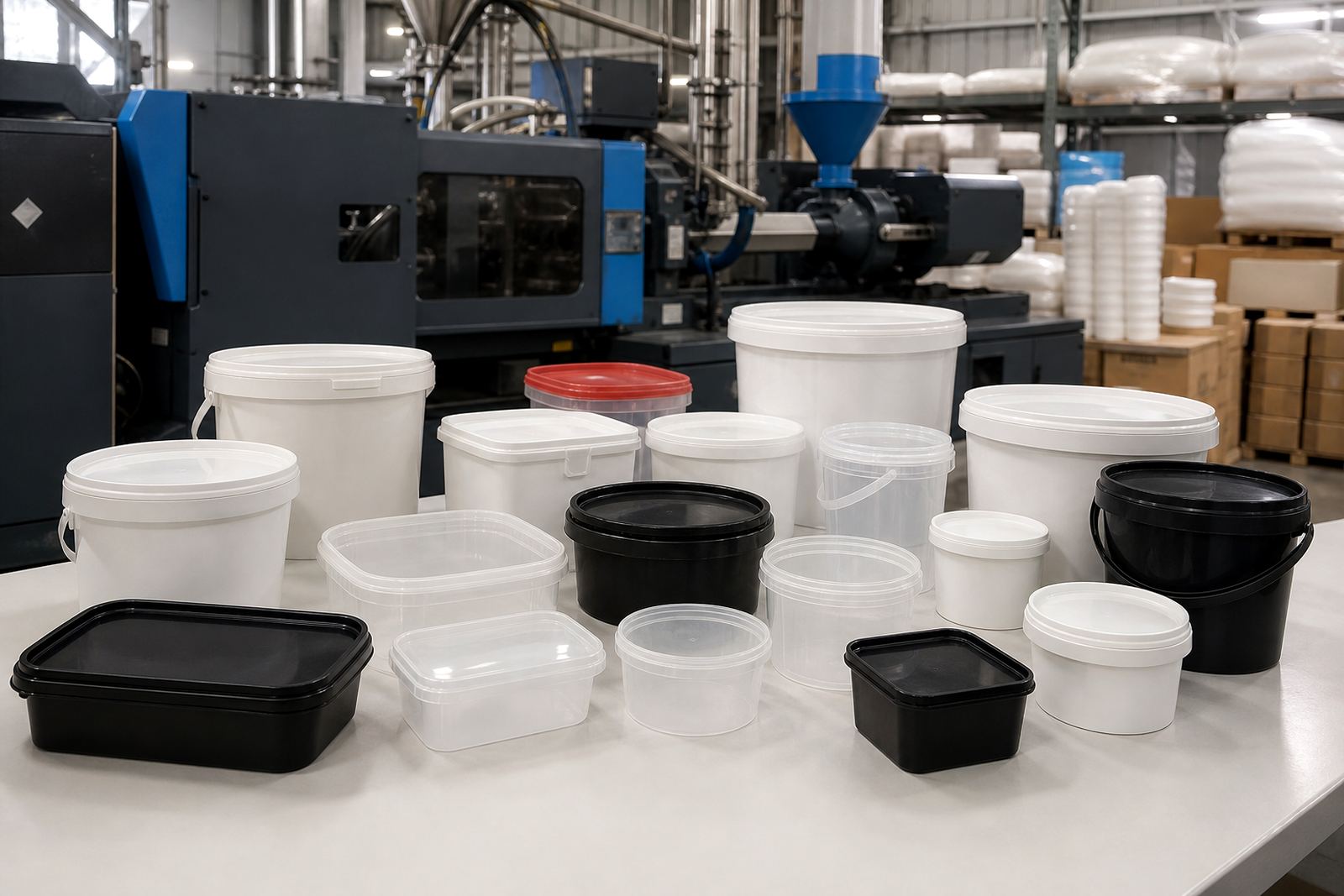
Round tubs suit products that are scooped, stirred or emptied by tilting. The curved wall helps product flow towards the centre and reduces corners where residue can collect. For creams, spreads, pastes and some food ingredients, a round profile can make filling and emptying feel natural. It is also familiar to many shoppers, which helps when the pack is meant to look straightforward and practical.
Round containers often work well when the packer wants a lid that seats evenly and a tamper seal that follows a clean circular path. They are also forgiving on the line, because operators can orient them quickly and the shape is less likely to snag during transfer. On the shelf, though, round tubs use more space than squared packs, so the display area must be planned with that trade-off in mind.
- Good for products that pour, spoon or scoop easily
- Useful where a smooth lid seal is important
- Less efficient for tight shelf packing
- Often suited to creams, dips, sauces and certain pharmaceutical packs
Square And Rectangular Tubs For Shelf Use And Carton Fit
Square and rectangular tubs make the most of shelf width and carton space. When the product must sit neatly in rows, these shapes reduce wasted gaps and help with pack counts in outer cases. That matters for wholesalers, chain stores and warehouse teams that count by layer. A rectangular tub also gives a broad front face for labelling, which helps with batch details, ingredients and product instructions.
These shapes are often the practical answer for dry goods, salad ingredients, confectionery, tablets or wipes where order and stacking matter more than curved handling. The corners need good mould design though, because poor wall thickness or sharp stress points can affect durability. For that reason, line fit checks and trial runs are worth doing before a full stock run is locked in.
- Uses shelf and pallet space efficiently
- Works well for counted packs and neat displays
- Offers a larger panel for labels and print
- Needs careful corner design to avoid weak points
Oval Profiles For Better Presentation Without Losing Space
Oval tubs sit between round and rectangular forms. They have a softer appearance than a boxy pack, yet they still use shelf space more wisely than a full circle. For cosmetic creams, personal care items and premium food packs, an oval shape can give the front of the pack a calmer look while keeping the pack easy to hold. The shape can also help when a product needs a wider opening for filling but not a square footprint.
On a retail shelf, oval tubs often read as more considered without becoming awkward to stack. They can suit products where visual presentation carries weight, but the pack still has to move through a normal packing line. If the opening, neck and lid profile are planned properly, an oval tub can work with tamper seals and secondary packing without fuss.
How Lid Style And Tamper Control Affect The Final Shape
The tub shape and lid style must be planned together. A wide square opening may need a different closure profile from a narrow round one, and a tamper seal has to sit evenly around the rim. If the seal band is too tight or too loose, the pack looks untidy and the first opening feels awkward. For food, pharmaceutical and cosmetic packers, that first opening matters because it affects customer confidence and handling at the point of sale.
Material choice also plays a part. Polypropylene is often used where good stiffness and a reliable hinge or snap fit are needed, while HDPE is commonly used where toughness and impact resistance matter. Both can be used in food-safe packaging when the full pack design, lid fit and intended use are taken into account. The shape should support the material, not fight it.
- Round rims often seat closures evenly
- Square packs need consistent corner tolerances
- Oval packs need balanced wall support on both ends
- Tamper seals must follow the rim without wrinkling
A Local Example From Alrode To The Coastal Routes
A packer in Gauteng might want a rectangular tub for a dry ingredient range because the cartons stack better in dispatch. The same product line may still need a round tub for a cream or paste, simply because the fill process and emptying behaviour are different. That is where pack size planning and line fit checks save money later. A shape that suits one product can become awkward on another line, even if the contents come from the same plant.
For a Durban customer, humidity and transport handling can also influence the discussion. If the product will travel through warm coastal conditions and then sit in a store room, the lid fit and wall strength need to be sensible, not delicate. In Cape Town and Port Elizabeth, shelf presentation may matter just as much as pallet density. A well planned shape gives the packer one less thing to juggle.
At Plastic Factory, these conversations usually land on the practical points: what the product is, how it is filled, what the shelf space allows and how the tubs will move through packing, dispatch and retail. That is where round, square, rectangular and oval tubs each show their value in a different way.
A Shape Checklist For Real Packing Lines
Before settling on a tub shape, it helps to compare the product and the route it takes after filling. The same pack has to work on the line, in cartons, on pallets and on the shelf, so the decision should cover more than appearance. A shape that is neat but awkward can slow production or waste space, while a practical shape can support the whole pack chain.
- Does the product pour, scoop or settle in a way that suits the shape?
- Will the tub stack neatly in outer cartons and on pallets?
- Is there enough panel space for labels, batch marks and instructions?
- Will the lid and tamper seal sit cleanly on the rim?
- Does the shape fit the display space used by customers?
When these points are clear, the right tub shape becomes easier to settle on. That is usually where the best packaging decisions are made, with the product, the packing line and the shelf all given equal weight.