
From resin pellets to a finished container
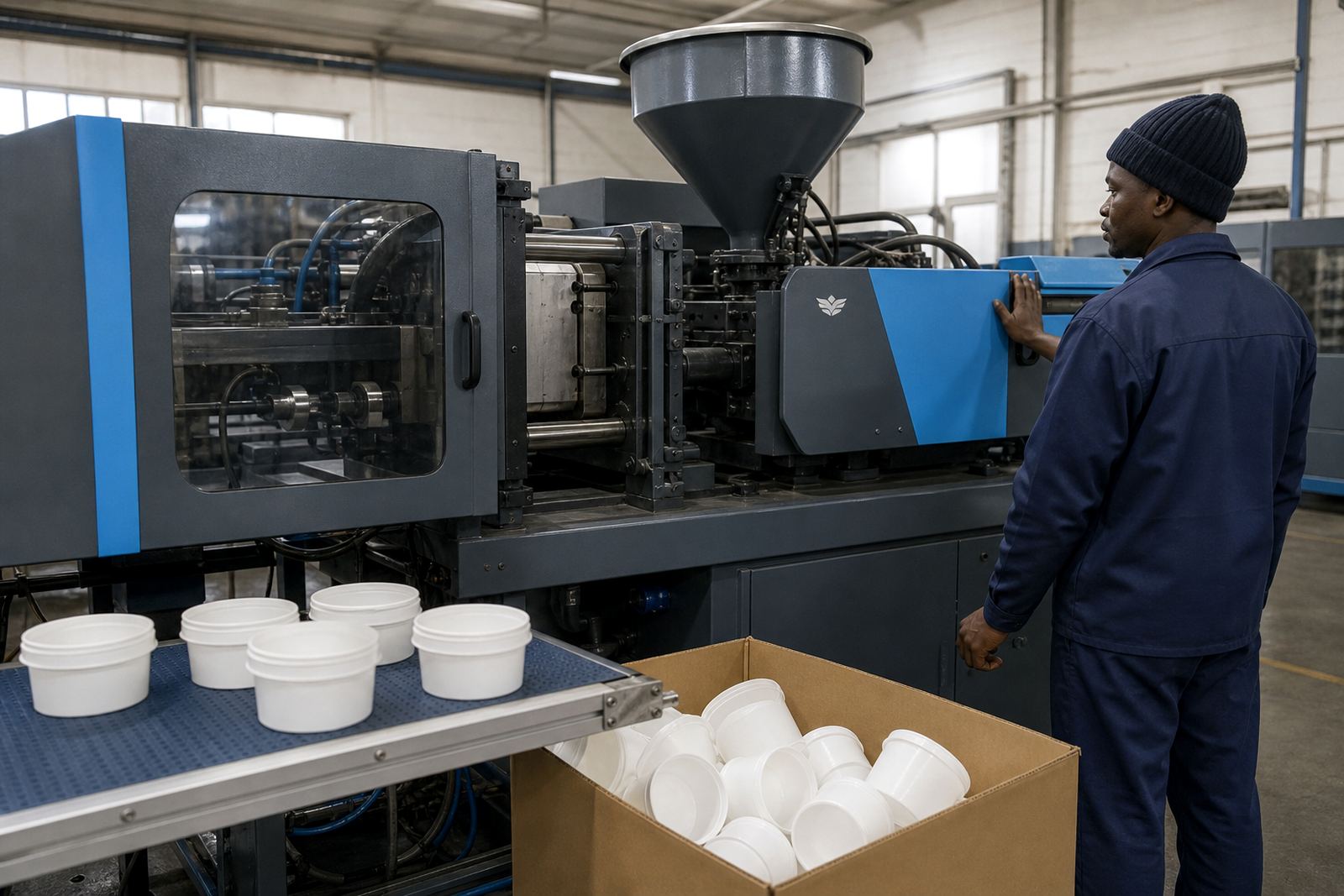
Injection moulding starts with plastic resin in small pellets, usually polypropylene or HDPE for packaging work. The pellets are heated until they soften, then the molten plastic is pushed into a steel mould under pressure. Once the cavity is full, the material cools and holds the exact shape of the tub, lid or other component.
This method suits repeat packaging because each cycle follows the same mould shape. That gives consistent wall thickness, clean edges and sizes that can work across filling lines in Alberton, Johannesburg or further afield. A small variation can matter on a high-speed line, so the mould, resin and cooling stage all need to be set properly.
Why polypropylene and HDPE are common in pack lines
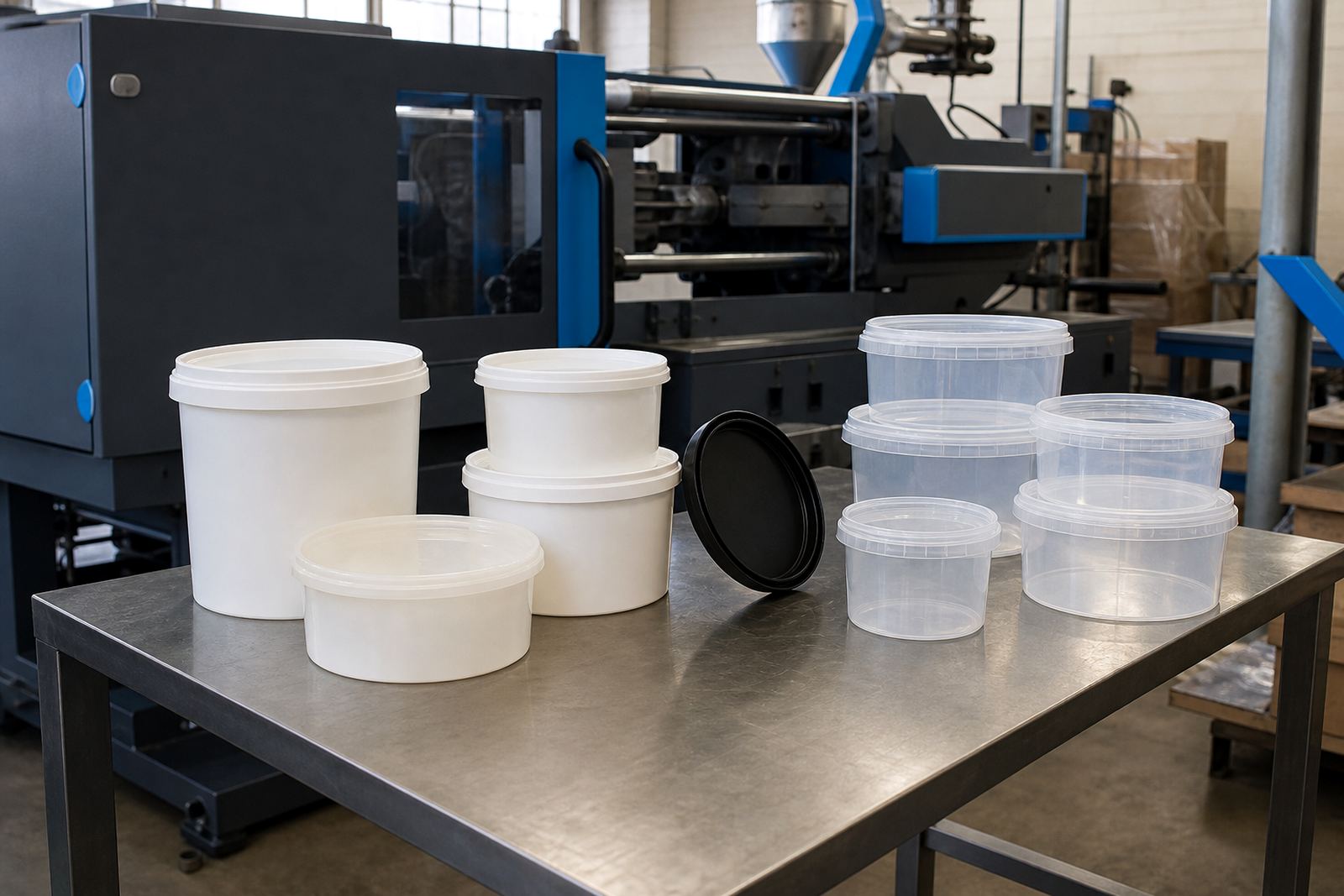
Polypropylene and HDPE are widely used for moulded packaging because they balance strength, flexibility and practical handling. Polypropylene is often chosen for tubs and lids that need a neat finish and stable shape. HDPE is used where impact resistance and a slightly tougher feel help during transport and stacking.
Both materials can be worked into food-safe packaging designs when the overall product specification supports that use. The material choice also affects how the container behaves in heat, cold rooms and humid coastal conditions, which is worth noting for Durban and Cape Town deliveries. If a packer fills cream, powder or a sauce, the resin choice can influence sealing and shelf presentation.
A few material points usually guide the selection:
- Wall thickness for stacking and hand feel
- Clarity or opacity, depending on product presentation
- Compatibility with lids, seals and tamper features
- Performance on the filling line and during transport
How the mould shapes tubs, lids and tamper seals
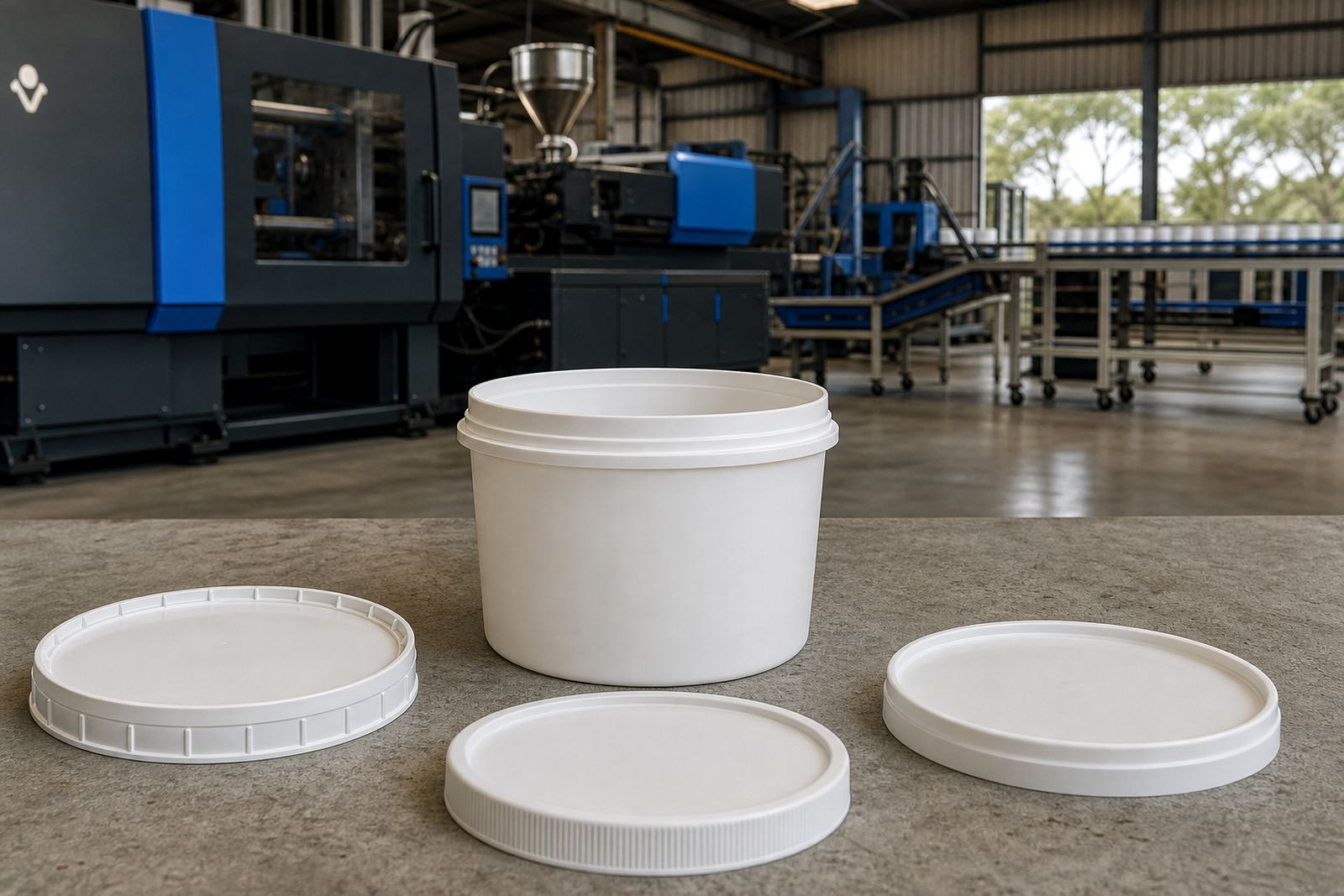
The mould is the heart of the process. It is machined to form the exact outside shape, internal volume and closing surfaces of the container. A tub mould and a lid mould are different tools, because each one needs its own dimensions, draft angles and finish. If a tamper seal is part of the design, the mould must allow that feature to break cleanly when the pack is opened.
Small details matter here. A lid may need a tighter snap fit, while a tub may need a stronger rim for stacking and handling. The mould maker also has to think about cooling channels, ejection points and any marks that could affect the visible surface. A good mould saves trouble on the line later, especially when packs are moving in cartons and sleeves through the plant.
Typical mould decisions include:
- Number of cavities for the planned output
- Rim and closure design for lid fit
- Surface finish for branding or product visibility
- Seal band or tear-off feature design
What happens during a trial run
Before a full production run, trial production runs help check whether the moulded part works in real use. The test may show how the lid seals, whether the tub stacks neatly, and whether the container fills cleanly on the line. It also helps confirm that the chosen material behaves properly when the product is packed, stored and moved.
A trial run can reveal issues that are not obvious on paper. For example, a lid may sit well on the bench but lift slightly once the pack is filled and handled through the dispatch area. Or the tamper seal may need a small adjustment to break in a cleaner way. These checks save waste and reduce the chance of line stoppages later, which matters when stock is moving in and out of Alrode.
For packers, the trial should look at:
- Fit between tub, lid and tamper feature
- Behaviour on the actual filling line
- Stacking and secondary packing in cartons
- Appearance after handling and transport
Matching the container to the product and packing line
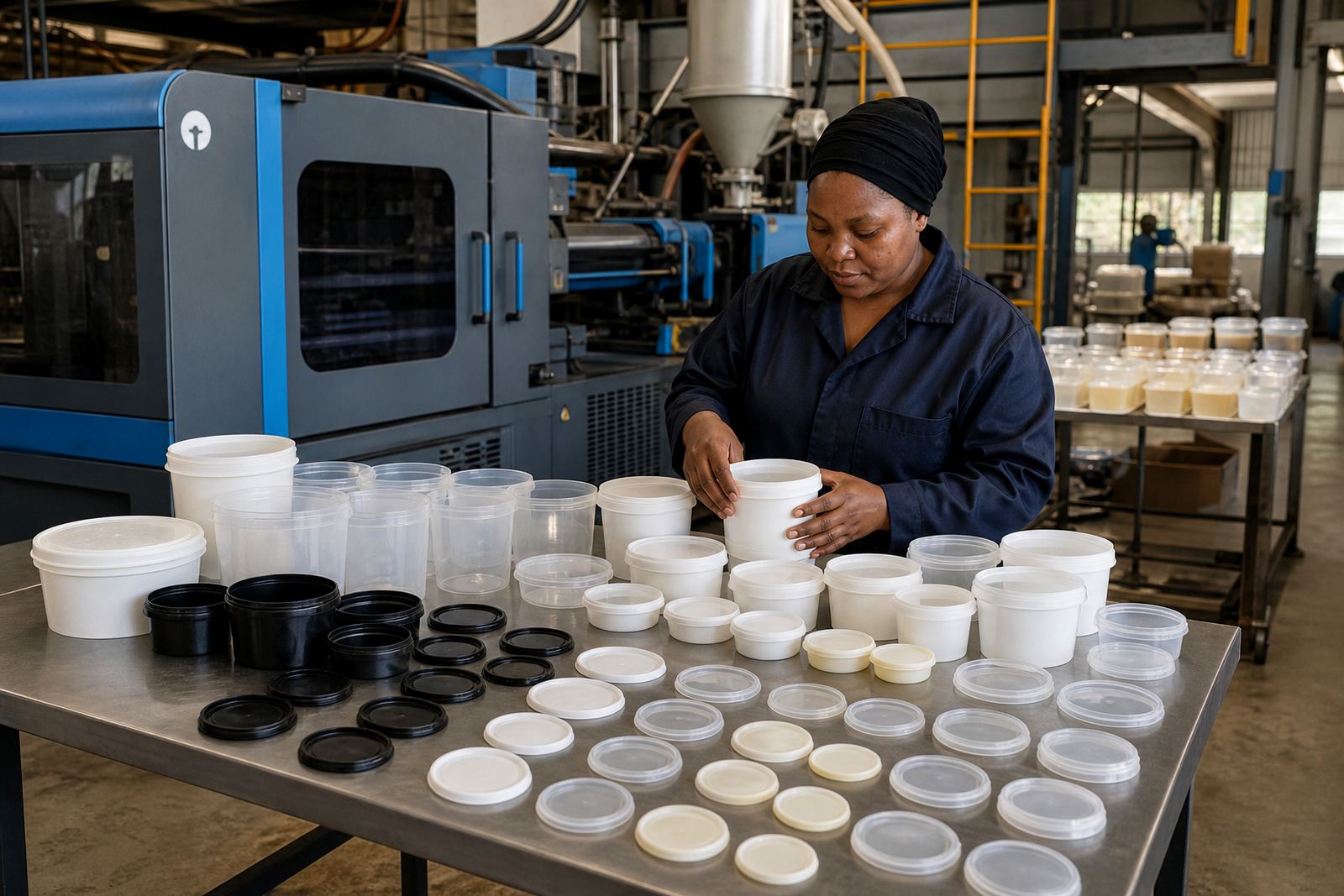
Not every tub suits every product. A cream pack, a tablet tub and a cosmetic sample container may all use moulded plastic, but each one needs a different shape and closure. Line fit checks help confirm whether the container will move through existing equipment without snagging, tipping or misfeeding. That is important for packers working from Gauteng into other provinces, because one pack may need to suit several depots and contract fillers.
Pack size planning also plays a part. A container that looks right in isolation may not sit efficiently in a carton or pallet pattern. If the outer pack is too tall or too wide, transport costs rise and handling becomes awkward. Colour matching guidance can also matter when a packer wants a specific look across a product family, and small differences in tint are easier to spot on white or translucent plastic.
Practical checks usually include:
- Container volume against fill weight or fill level
- Lid closure with gloves or on an automated line
- Carton count and pallet arrangement
- Secondary packing advice for dispatch and storage
A local example from Alrode to the major routes
Consider a cosmetics packer in the Alberton area that needs a small HDPE tub for cream, plus a matching lid and tamper seal. The product has to travel to Johannesburg depots, then on to Durban and Cape Town orders without scuffing or leaks. In that case, the mould needs to produce a tidy rim, the resin must suit the closure and the pack size has to work in outer cartons.
That is where material selection, mould development and ongoing product updates come together. If the first version needs a minor adjustment, the change should respond to what happened on the filling line or in transport, not just to a sample on a table. In practice, the best packaging is the one that fits the product, the filling method and the journey through South Africa, no drama and no wasted movement.
In a plant like this, the useful questions are often very direct:
- Will the closure stay secure in warm storage areas?
- Does the container stack cleanly in the warehouse?
- Can the tamper feature be opened without damage to the rim?
- Does the pack stay neat after delivery to Pretoria or Port Elizabeth?