When a lid is only doing one job
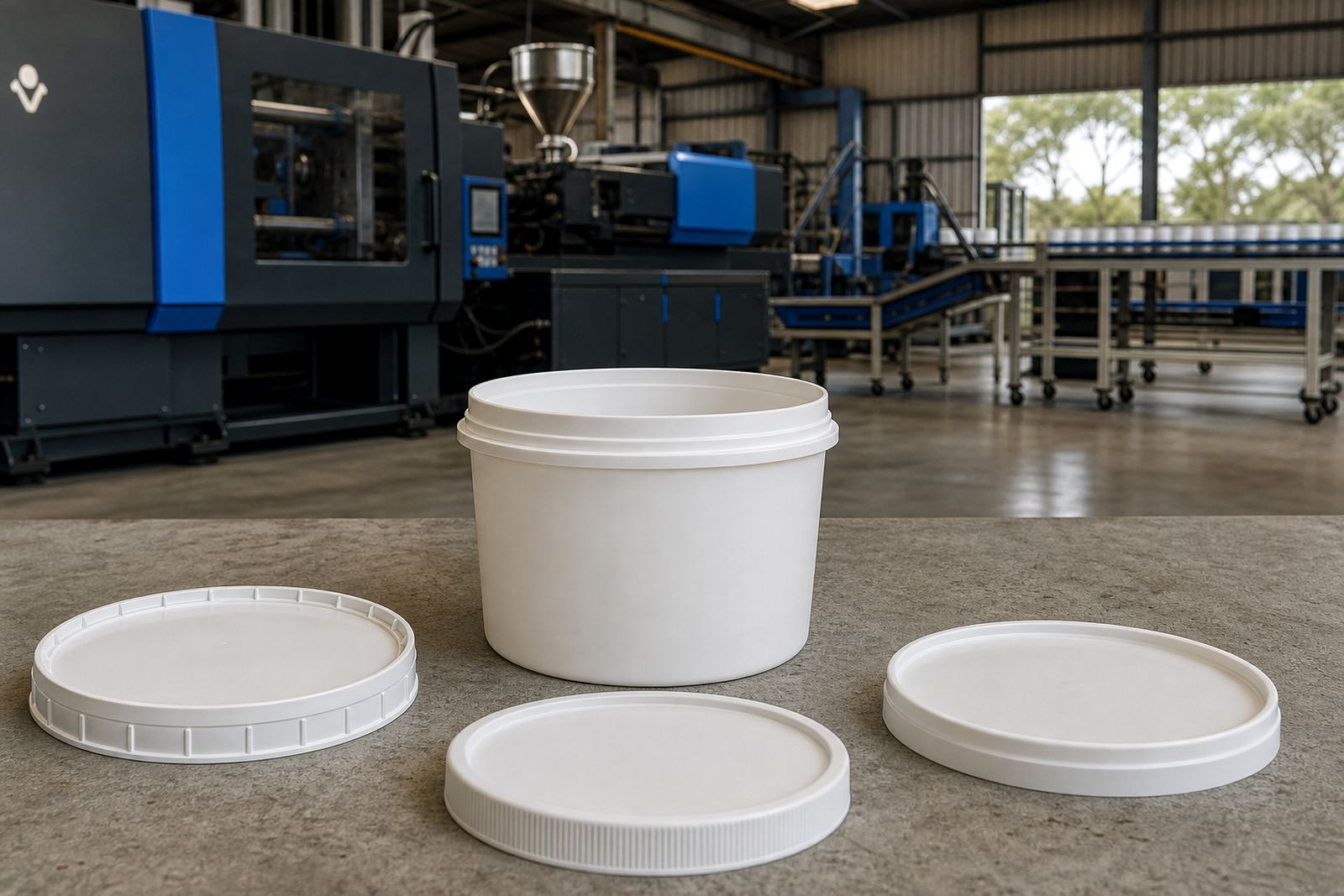
Plain snap lids suit many everyday packs because they close quickly and open without fuss. They are a common match for polypropylene and HDPE tubs used for dry food, creams, powders and general-purpose products where the contents are handled often. The fit is usually light to medium, which keeps filling and closing straightforward on manual or semi-automatic packing lines.
That lighter closure can be useful where staff need to open and reseal a pack during use, such as on refill ranges or products sold in larger packs. If the lid must sit flat for shelf display, the rim and bead shape matter as much as the lid itself. A lid that feels neat in hand but lifts at one corner will cause trouble during stacking and transport.
In practice, a plain snap lid works best where the product is not under pressure from liquids, where dust control is manageable and where the pack is not expected to show tamper evidence. It keeps tooling simpler and often gives packers fewer stoppages when lid placement is done by hand.
Tighter fits for packs that travel far
A firmer lid fit is often the better choice when containers move from Gauteng to coastal cities or spend time in hot stores, cold rooms and warehouse racks. Changes in temperature can affect how a lid feels on the rim, especially if the tub wall flexes during filling. For soups, sauces, gels and heavier creams, a tighter fit gives more confidence that the lid will stay seated through handling.
That stronger fit is not only about keeping the lid on. It also helps the pack retain a tidy profile when units are stacked in cartons, shrink-wrapped or loaded on pallets. If the lid is too loose, the top layer in a carton can shift and damage the presentation by the time it reaches Durban or Cape Town.
- Use a firmer fit where packs are stacked high in store rooms.
- Choose it for products with heavier fill weight or movement inside the tub.
- Check how the lid seats after the pack has cooled, if the filling stage is warm.
- Confirm that staff can still open the pack without damaging the rim.
A good firmer fit should feel secure without forcing the rim out of shape. If the lid needs heavy pressure every time, the line slows down and the pack may look stressed at the edge. That is where mould development and line fit checks matter, because small changes in bead height or wall thickness can change the whole result.
Tamper seal choices for visible control
Tamper seal options are useful where the end user must see that the pack has not been opened. In food, pharmaceuticals and some cosmetic ranges, that visible control can matter as much as the closure itself. A tamper seal may be a band, ring, tab or wrap style that shows clear evidence once the lid is removed.
The seal design must work with the lid style, not against it. If the lid sits too loosely, the seal carries too much load. If the lid is too tight, the sealing feature can become hard to apply cleanly on the line. For packers using lids in high volumes, the best option is the one that stays consistent with the tub rim and the closing method in use.
Material choice also matters. PP and HDPE each behave differently under pressure and during repeated handling. A packing line in Alberton may handle small cosmetic tubs in one shift and food tubs the next, so the seal needs to match the product format rather than forcing one style across every range.
- Use tamper evidence where the pack reaches retail shelves.
- Check that the seal tears cleanly without leaving sharp fragments.
- Allow enough room on the rim for the sealing feature to sit properly.
- Keep colour and lid shape aligned so the pack still looks orderly.
How the lid style changes the packing line
The closing method affects the pace of the whole line. Plain snap lids are usually the fastest for hand placing, while firmer fits may need more care to avoid denting the rim. Tamper seal options add another step and should be tested with the actual pack size, not guessed from a drawing or sample that never meets the real filling conditions.
Trial production runs are useful here. They show whether the lid slips during application, whether the tub mouth deforms under pressure, and whether the final pack still stacks well. A lid that looks fine on a sample bench can behave differently when dozens of units are sealed in sequence, especially if operators are wearing gloves or the product is slightly warm.
Material selection and line fit checks go together. A food-safe tub for a dry ingredient may need a simpler closure than a cosmetic cream packed in a glossy white container. The packing line, the product texture and the transport route all shape the lid choice more than any general rule.
A Johannesburg to Port Elizabeth example
Picture a packer in Alberton supplying a cream product to Johannesburg wholesalers, with the same range also moving to Port Elizabeth and Cape Town. The line needs a lid that closes cleanly, survives pallet movement and still opens neatly for the customer. A plain snap lid may work for small trial tubs, but a firmer fit may be better for the larger shelf pack that travels further.
If the product is sold with a visible first-open feature, the tamper seal should be tested with the same filling speed and the same carton style used in daily production. Coastal humidity can affect carton performance and the feel of a tightly packed top layer, so the lid and secondary packing advice should be considered together. A lid that works in Alrode may still need small changes before it performs well on a Durban route.
This is where local planning helps. Not every pack needs the same lid across every size. A 250 ml cosmetic tub, a 500 ml food tub and a pharmaceutical pack all ask different things from the closure, even if they share the same basic shape.
A clean way to compare three lid paths
When comparing lid styles, it helps to measure the pack the same way every time. Look at how the lid seats, how much pressure is needed to close it and whether the finished pack stays neat after stacking. Then compare that against the product and the route it takes.
- Plain snap lid: best for quick closing and frequent opening.
- Firmer fit: useful for transport, stacking and a tidier seal line.
- Tamper seal option: suited to visible first-open control and retail packs.
That comparison should sit beside colour matching guidance, stock run planning and the choice of lid profile. The aim is not to make the lid as tight as possible. It is to make the closure work with the tub, the fill, the label and the customer’s handling habits. In real packing rooms, the best lid is the one that behaves the same way on the first unit and the last unit of the shift.
Small decisions that save trouble later
Lid style affects more than appearance. It influences rework, shelf presentation, carton stability and how easily the customer opens the pack. A good match can reduce split rims, bent edges and loose tops that arrive after transport. It also makes it easier to plan stock because the same closure can be repeated across a defined pack range without constant adjustment.
For many South African packers, the safest route is a short test run with the actual product, the actual tub and the actual lid. That gives a clearer picture than assumptions based on a sample only. Once the lid style is settled, the rest of the range can be planned around it with fewer surprises on the line.