Small Orders Carry More Changeovers
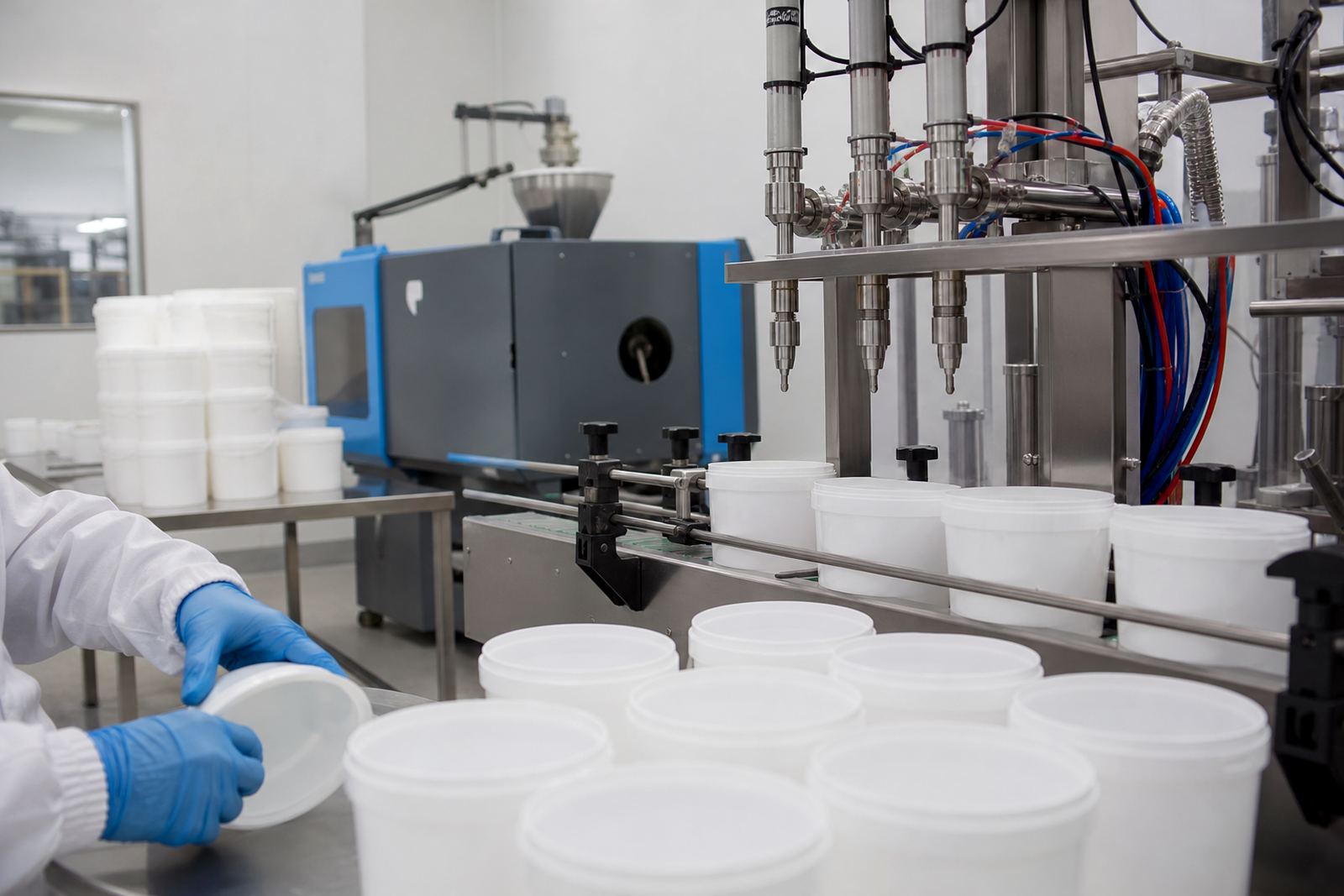
A short run sounds easier on paper because the quantity is lower, but the work behind it can shift quite a lot. A smaller repeat order often means more frequent changeovers on injection-moulding lines, more handling in dispatch, and tighter attention to the first few cartons off the machine. With tubs and lids, that first part of the run matters because a lid that snaps differently or a wall that cools unevenly can affect packing speed later on.
For food, pharmaceutical and cosmetic packers, short runs are often used to test a new format, trial a colour, or cover a seasonal lift in demand. The packer may only need a few thousand units, but the mould still has to produce consistent dimensions, clean sealing surfaces and stacking that behaves on the filling line. In Alrode and the wider East Rand, many buyers want the option to top up stock without carrying too much inventory on site.
- Short runs suit product trials and smaller market releases.
- They can suit packers with limited storage space.
- They work well when artwork, fill weight or pack size is still being settled.
- They need close checking on lid fit, seal seating and carton counts.
Volume Runs Reward Steady Planning
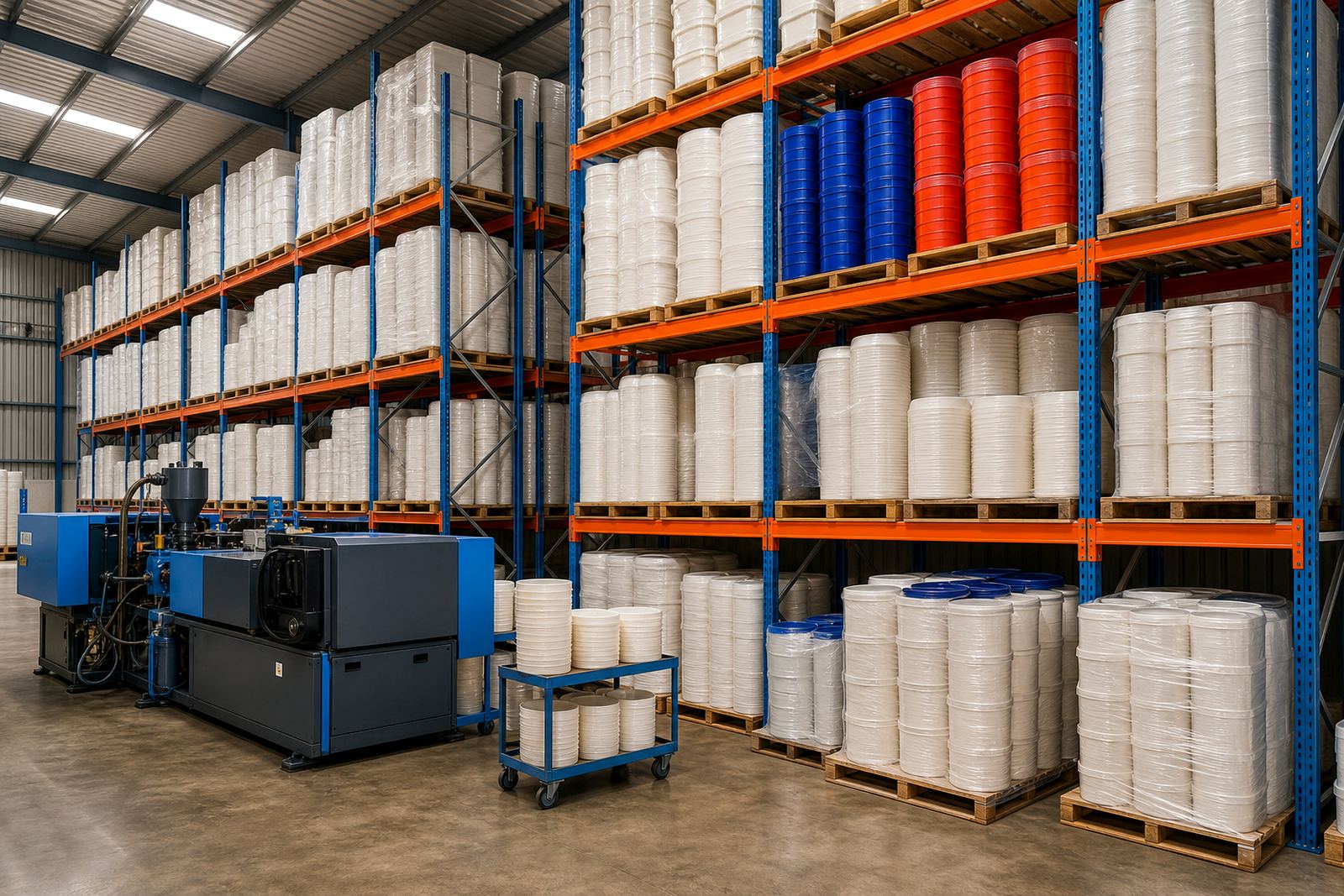
Large scheduled production runs move differently. The machine time is used more efficiently, material is ordered with a clearer pattern, and packing teams can plan around fuller pallets and more stable stock levels. For a customer running multiple stores or servicing national distribution, volume orders often make more sense because the packing line can stay on one format for longer without breaking rhythm.
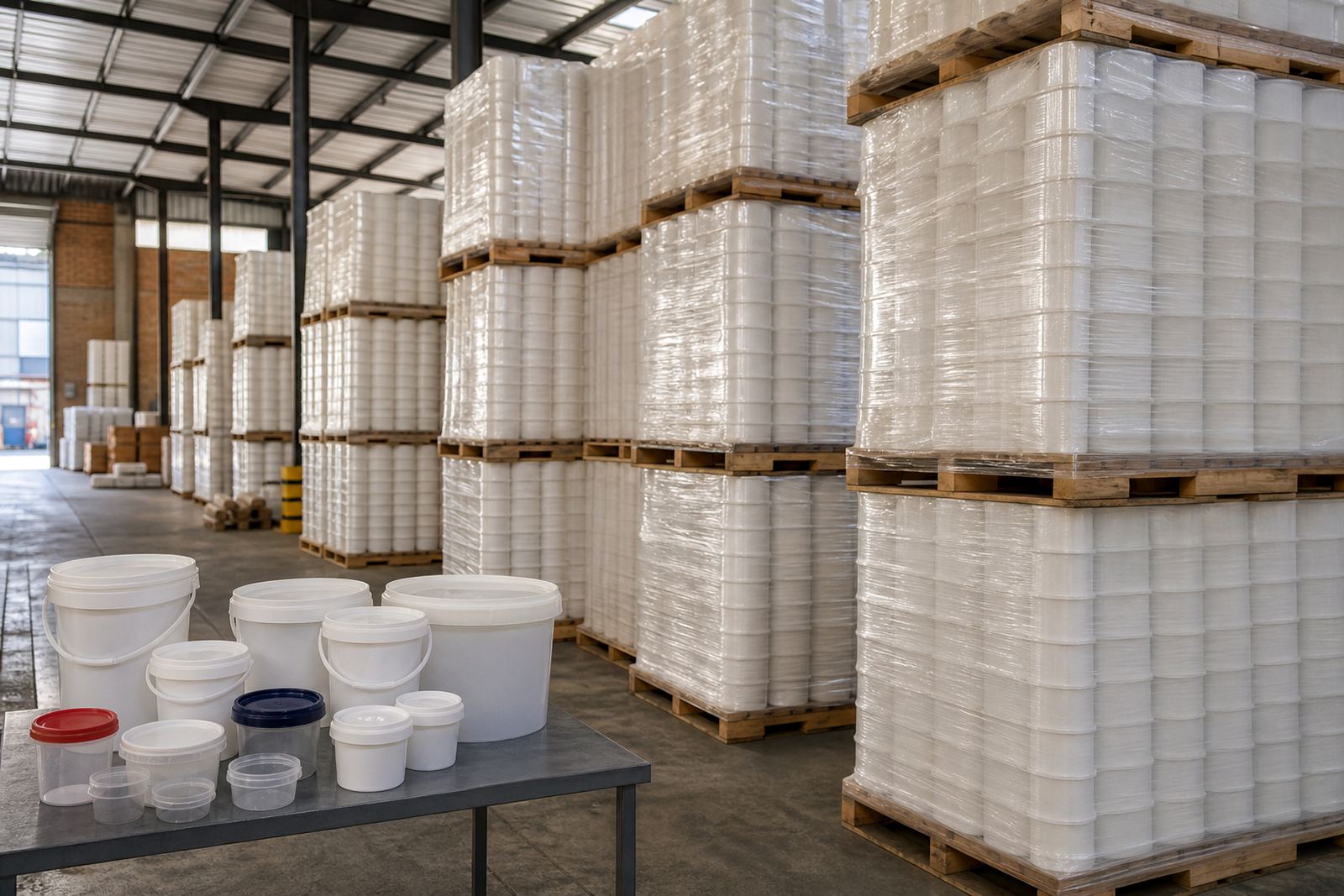
Volume is not only about making more units. It is also about matching production to the way goods move through the supply chain. A detergent tub for one province may not need the same cadence as a yoghurt tub supplied into Durban, where heat and coastal humidity put extra pressure on storage and transport. A larger run gives room for more exact planning around pallet height, shrink wrapping and secondary packing.
- Volume runs reduce the number of machine changeovers.
- They support more predictable stock cover.
- They help when a customer needs the same pack over several months.
- They suit delivery plans into Johannesburg, Pretoria, Durban, Cape Town and Port Elizabeth.
What Changes In The Tooling And Material Choice
The tooling does not change because a customer orders fewer cartons, but the way it is used can change. Injection moulds for polypropylene and HDPE containers have to keep the same cavity detail, yet the processing window may be managed more tightly when a short run needs a quick restart or when a volume job is scheduled for longer shifts. A lid with a tamper seal feature must still close cleanly, whether the order is a test batch or a full production cycle.
Material choice also matters. Polypropylene is widely used for many tubs and lids because it handles a broad range of pack formats and gives a clean finish for branded packs. HDPE is often chosen where a pack needs a different feel, more squeeze resistance, or a particular chemical compatibility. For food-safe applications, the material, colour and handling path all need to be considered together, because the packer still has to run the tubs through real filling lines without fuss.
In practice, the larger the order, the more important it becomes to settle the details early. A small batch can sometimes absorb a minor adjustment. A bigger batch exposes every small mismatch between the tub, the lid and the cartoning method.
Line Fit Checks Matter At Both Sizes
Line fit checks are not only for difficult jobs. They are useful on short runs, because a new pack can show issues that do not appear on drawings. They are equally useful on volume runs, because even a familiar tub can behave differently when the packing line speeds up, pallets move more often, or sealing film is changed.
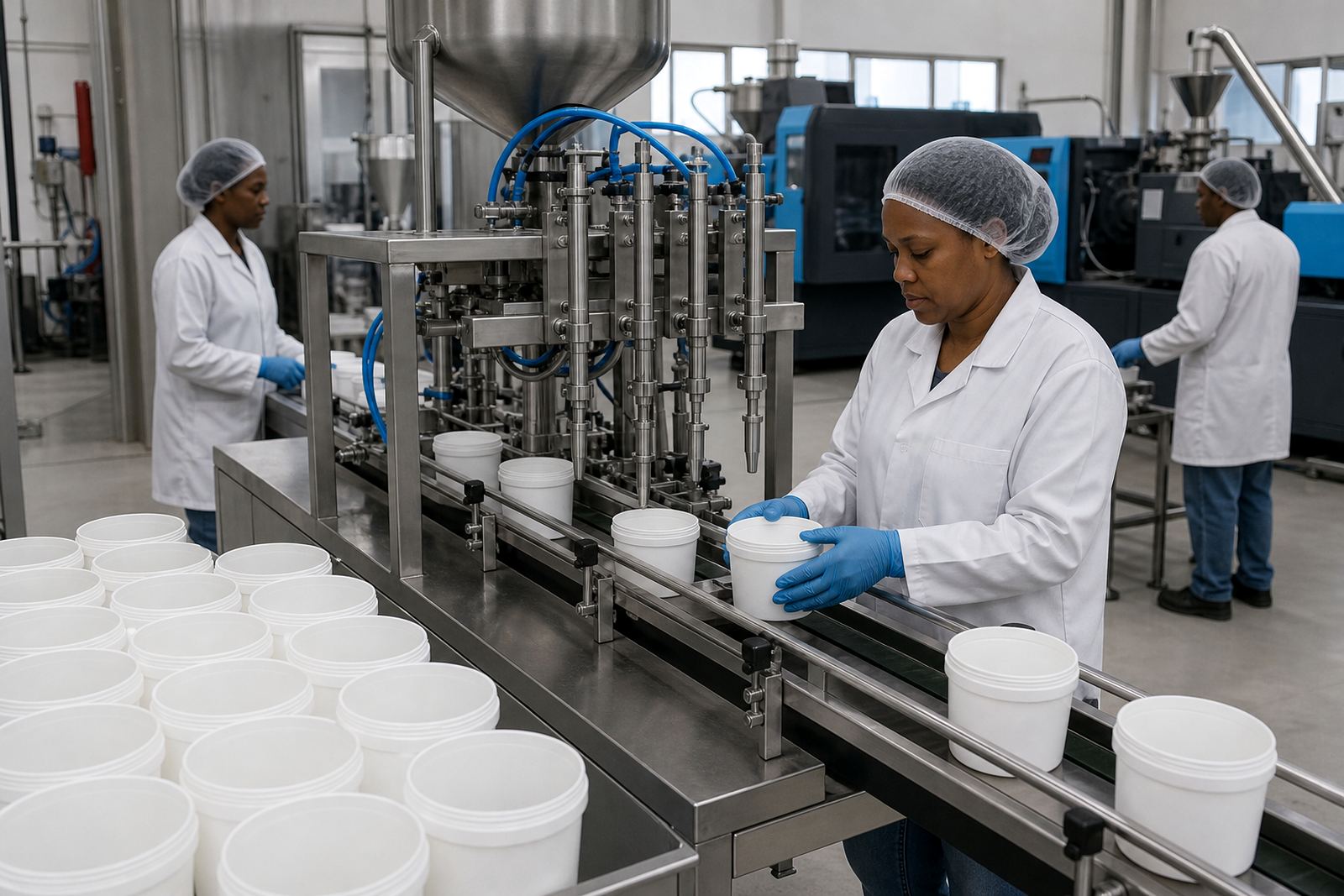
At Plastic Factory in Alrode, line fit discussions often focus on the parts that affect daily work on the filling floor. That includes how the tub nests, whether the lid seats with even pressure, how tamper seals break, and whether the filled unit stacks safely in transit. If the packer is working with creams, powders, sauces or capsules, the details around closure and handling become part of the production plan, not an afterthought.
- Check whether the container feeds cleanly into the line.
- Confirm the lid closes without twisting or lifting.
- Watch for scuffing on clear or coloured packs.
- Test the filled pack in its carton and pallet format.
A Local Example From Alberton To Durban
A cosmetic packer in Alberton might start with a smaller repeat order of tubs for a new cream range. The first run is used to confirm the colour match, the lid feel and the label position on the shelf. Once the product gains traction, the same customer may move into larger scheduled runs so that dispatch can feed several routes, including Durban and Cape Town, without interrupting the filling plan.
That shift changes the conversation. In the short run stage, the main concern is getting the pack right and avoiding excess stock. In the volume stage, the focus turns to pallet count, stock rotation and secondary packing advice. A slightly different tamper seal length or a change in carton count can matter more once the goods are moving through multiple depots and warehouses. It is a practical shift, not a dramatic one, but it changes how the whole order is managed.
For food packers in particular, the move from short run to volume often follows customer demand rather than a machine issue. A sauce tub may begin as a limited line for local shops, then grow into a regular item that needs steady production and scheduled dispatch across South Africa.
How To Plan The Next Order Size
When deciding between a short run and a volume run, the real question is how the pack will move after it leaves the factory. A packer that is still testing a flavour, a cream formula or a tablet count often benefits from smaller supply runs. A packer with settled demand and clear distribution lines usually gets better control from a larger scheduled run.
The following points help shape that decision:
- How stable is the product formula and fill weight?
- Will the same tub be used across several pack sizes?
- How much warehouse space is available for finished stock?
- Will the order feed one site or several delivery points?
- Does the packing line run best with short changeovers or longer cycles?
Clients usually send the enquiry form on the contact page with the pack size, intended use and expected order pattern. That gives room to discuss custom tub design, lid development, tamper seal design, material selection, mould development and trial production runs in a way that matches the job, not just the number of units.