Start with the product, not the container
Food-safe packaging decisions work best when they begin with the product itself. A dry spice blend, a moist salad dressing, a powdered nutrition product and a ready-to-eat chilled item all place different demands on the tub, lid and seal. Weight, acidity, fat content, storage temperature and handling on the line all matter, so a one-size choice usually creates trouble later.
In practice, the first questions are quite ordinary: how the product flows, whether it needs a tight closure, and whether it will sit in cold rooms or on warm shelves. A packer in Alrode handling soup bases for distribution into Johannesburg and Pretoria may need a very different container profile from a cosmetic blender filling body scrubs for Durban retailers.
Polypropylene and HDPE in daily use
Polypropylene and HDPE are common choices for injection-moulded tubs and lids because they offer practical handling across many food pack formats. Polypropylene is often selected where clarity of shape retention, stiffness and repeat opening matter. HDPE is often preferred for its tough feel and its ability to handle everyday distribution knocks without making the pack too brittle.
Neither material is a magic answer on its own. The container wall thickness, rib design, lid fit and seal detail all influence performance. A light filling line in Germiston may handle a smaller pack very neatly, while a bulk fill in Boksburg might call for stronger stacking shoulders and a lid that sits properly under pressure.
- Choose the material around the product, not the other way round.
- Check how the pack behaves in cold stores and during transport.
- Match the container finish to the filling speed and handling method.
- Keep the lid and tub as a tested pair where possible.
Lids and tamper evidence are part of food safety
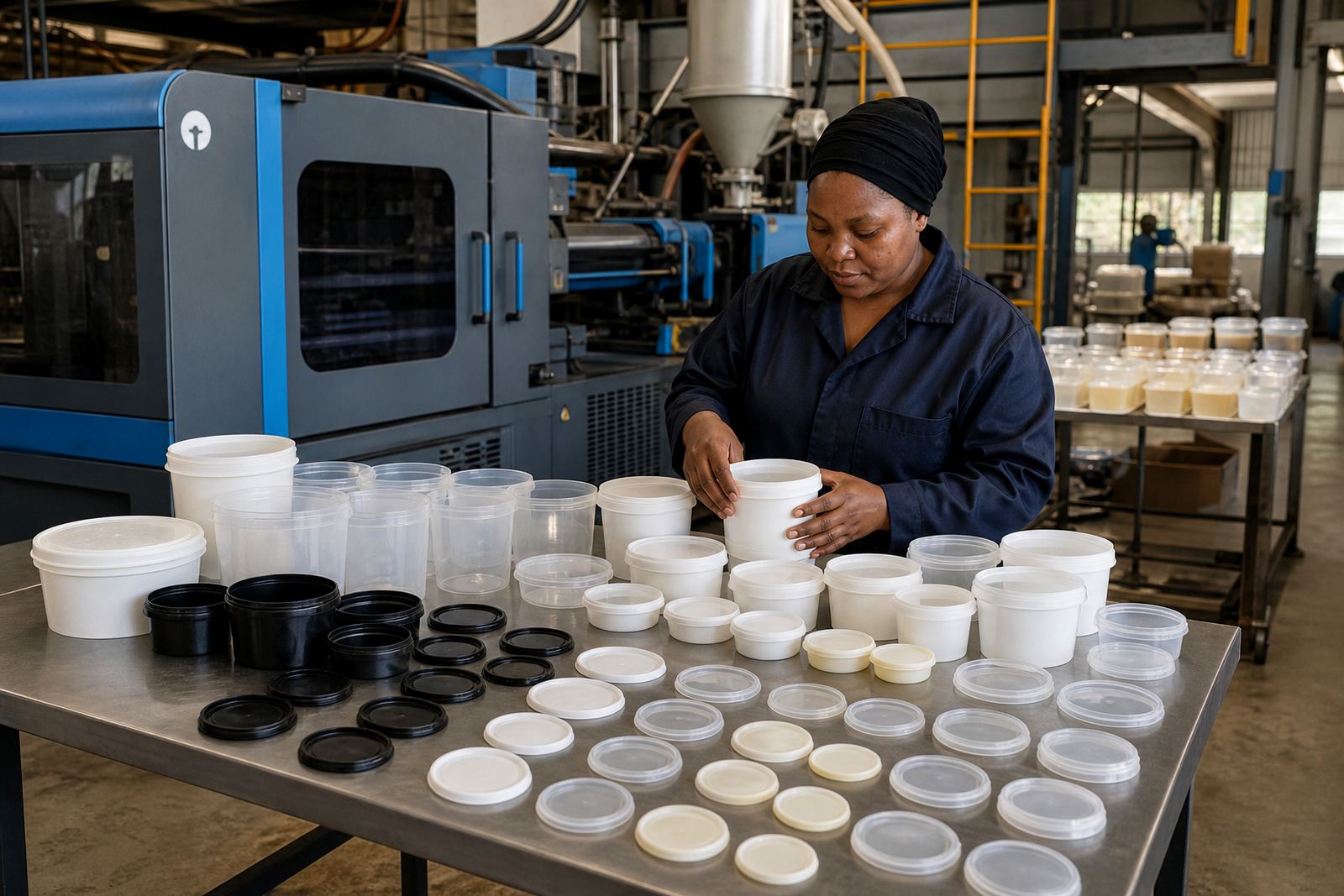
A good tub is only half the story. The lid must close properly, stay seated during handling and help protect the contents from dust, spills and casual opening. Where added security is needed, tamper seals or tear-off features give packers and buyers a clearer sign that the container has not been opened after filling.
For food lines, the tamper feature should work neatly with the filling process and not slow the line down. If the closure is awkward, operators start forcing it, and that leads to inconsistent packing. The better approach is a lid and seal arrangement that suits the product weight and the way staff close packs at the end of the line.
- Keep the lid profile easy to align during fast filling.
- Make sure the seal breaks cleanly and clearly.
- Test the closure with the actual product, not an empty sample only.
- Allow for secondary packing where cartons or shrink wrap are used.
Food-safe materials need line fit, not just a label
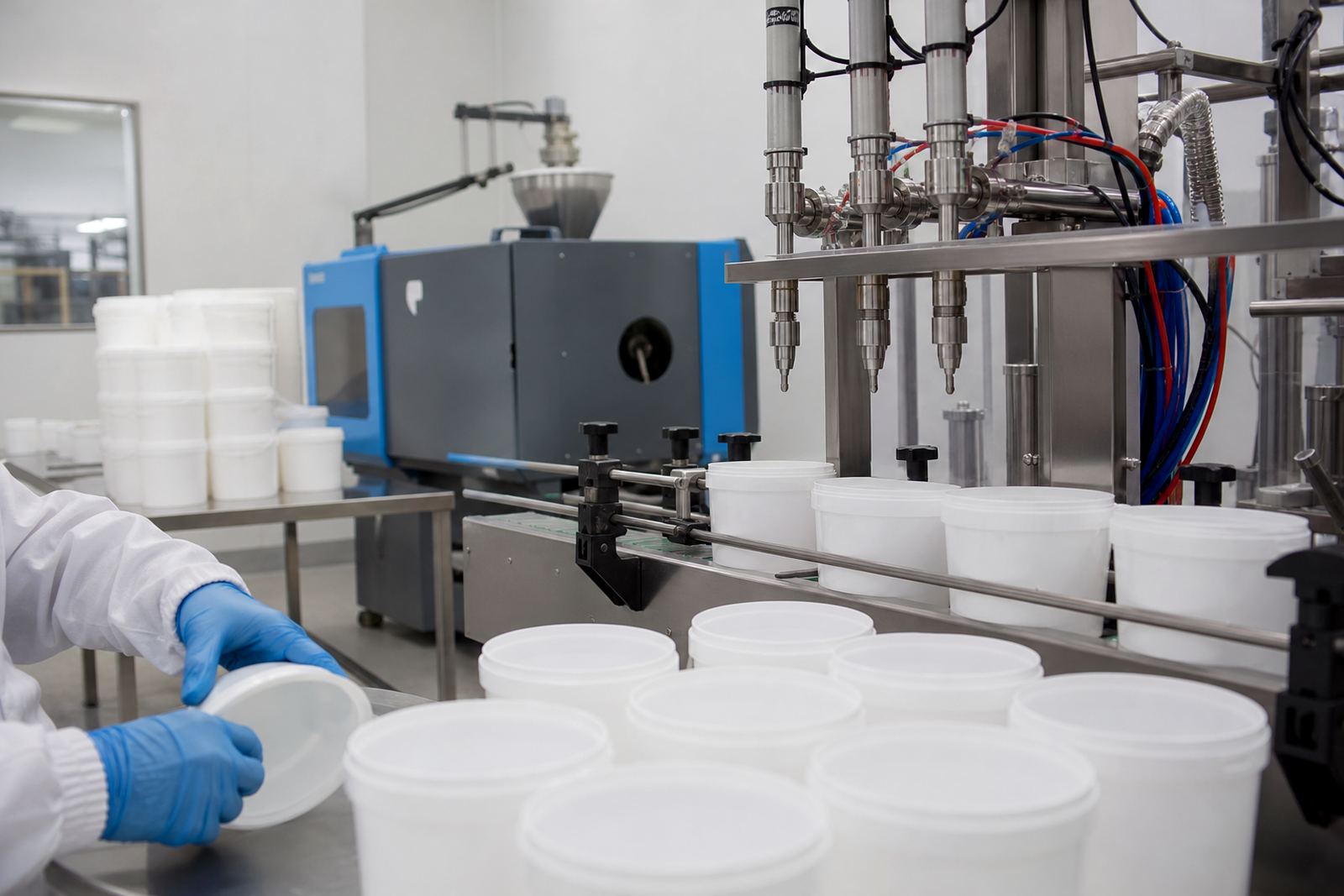
Food-safe material choice is about more than a description on paper. The tub has to fit the capper, the sealer, the conveyor and the operator’s routine. If the neck finish is awkward or the stacking profile is unstable, the pack may slow the line or create avoidable losses. Small details in the mould can change how the container moves through packing, storage and dispatch.
That is why trial production runs matter. A sample can look fine on a table but behave differently when filled in quantity. In a coastal city like Durban, humidity and storage conditions can also affect how packs are handled before distribution. In Johannesburg, long distribution routes and warehouse stacking bring another set of pressures. The same container has to cope with both without fuss.
Custom tubs, sizes and colour control
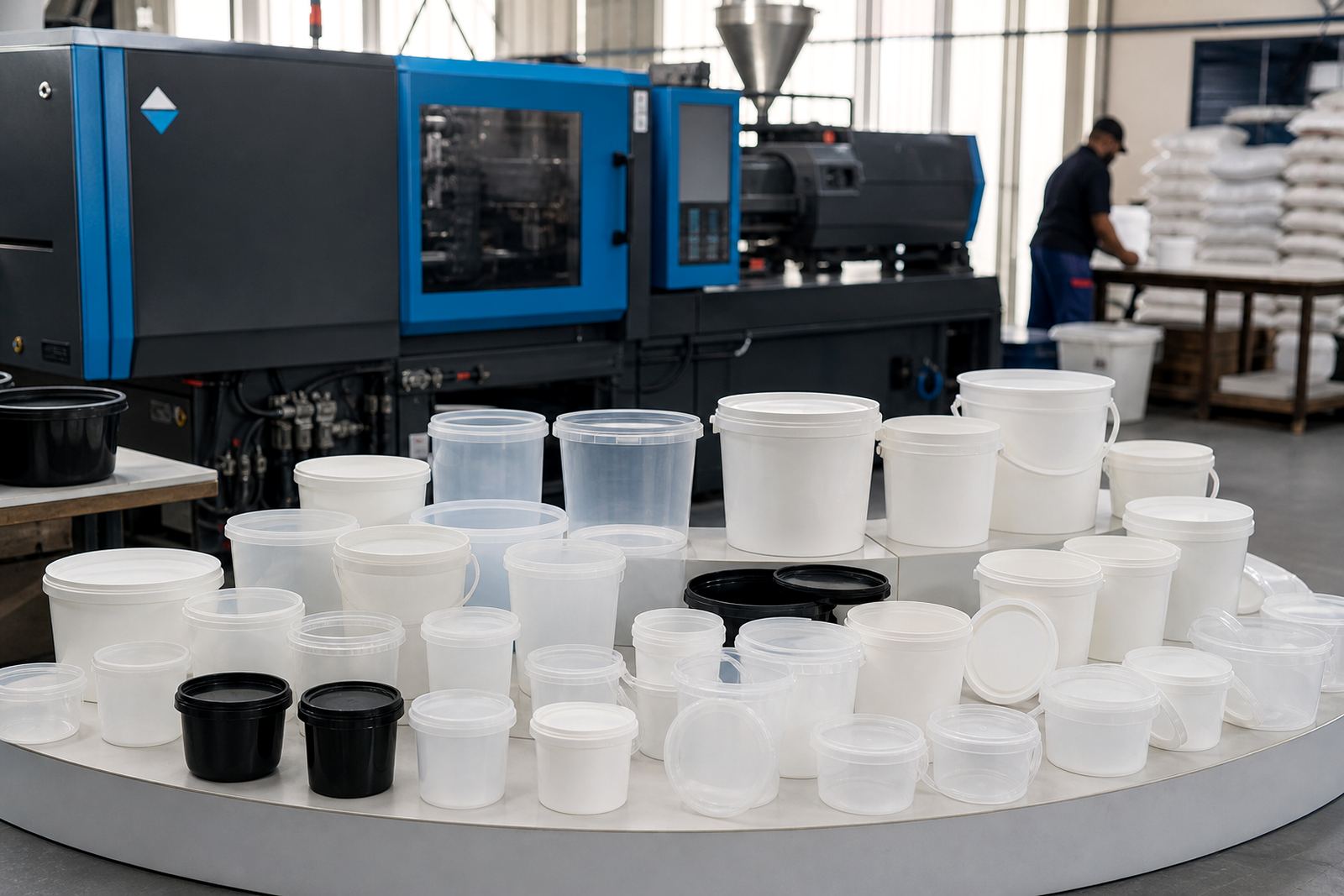
Pack size planning helps reduce waste and keeps the product presentation consistent. A 250 ml tub, a 500 ml tub and a 1 litre tub all need different wall strength, stack behaviour and label space. Once the size is right, colour matching guidance can support branding without sacrificing the practical side of the pack.
For food, colour should never interfere with the way the pack is inspected, filled or stored. Light tones can make residue easier to notice, while darker colours may suit products that need stronger shelf presence. The final choice should follow the product, the filling environment and the way the finished packs move through the supply chain.
- Plan pack sizes around daily production volumes.
- Allow enough label area for batch details and product names.
- Keep colour choices practical for storage and line inspection.
- Review the stack height before finalising the mould.
A local example from Alrode to the coast
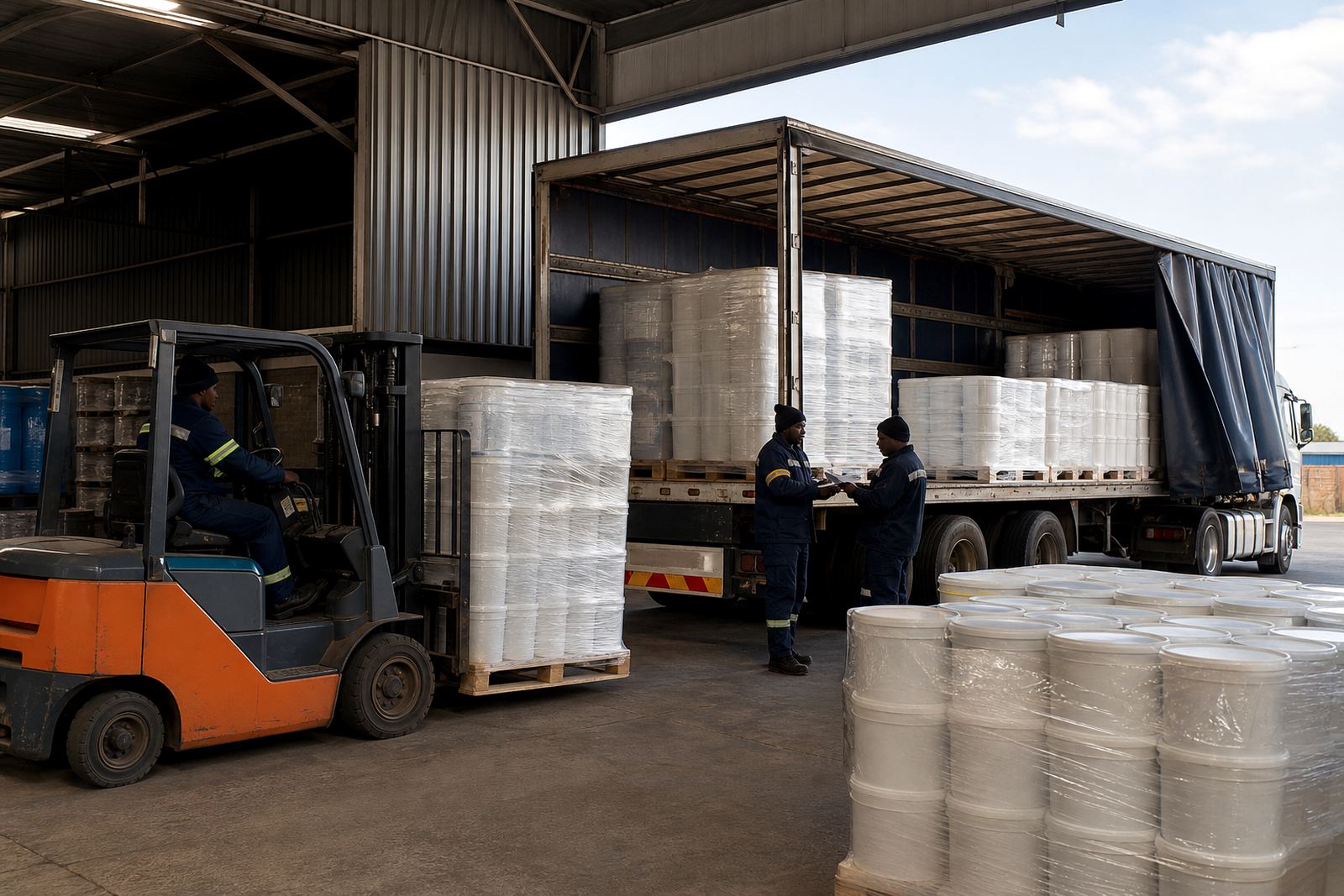
A packer in Alrode producing chilled food for Cape Town, Durban and Port Elizabeth may need tubs that hold shape well in cold rooms and stay neat during freight movement. The same business might also run a second product for Pretoria and Johannesburg, where warehouse handling is heavier and cartons are stacked for longer periods. In that kind of operation, one container family can work across several markets if the lid fit, sealing method and pack size are properly matched.
That is where mould development, secondary packing advice and ongoing product updates become useful. When the product changes slightly, the pack often needs small adjustments too. A lid that closes comfortably on one formulation may need revision for another, especially when the fill weight or surface finish changes.
What sensible packers check before moving forward
Food pack decisions improve when the team checks the practical points early. A few careful tests usually reveal whether the tub belongs on the line or needs a different shape, material or closure. It is better to sort that out during trial production than after stock has already moved into distribution.
- Does the container suit the product texture and fill weight?
- Does the lid close properly across a full batch?
- Will the pack stack safely in warehouse conditions?
- Is the tamper feature clear and consistent?
- Does the shape leave enough room for labelling and coding?
Plastic Factory works from Alrode, Alberton with injection-moulded containers and tubs for food, pharmaceutical and cosmetic packers across South Africa. For local businesses, the practical value lies in getting the tub, lid and seal to work together on the packing line, not just looking neat on a sample table.