Rim Shape Is Doing More Work Than It Looks
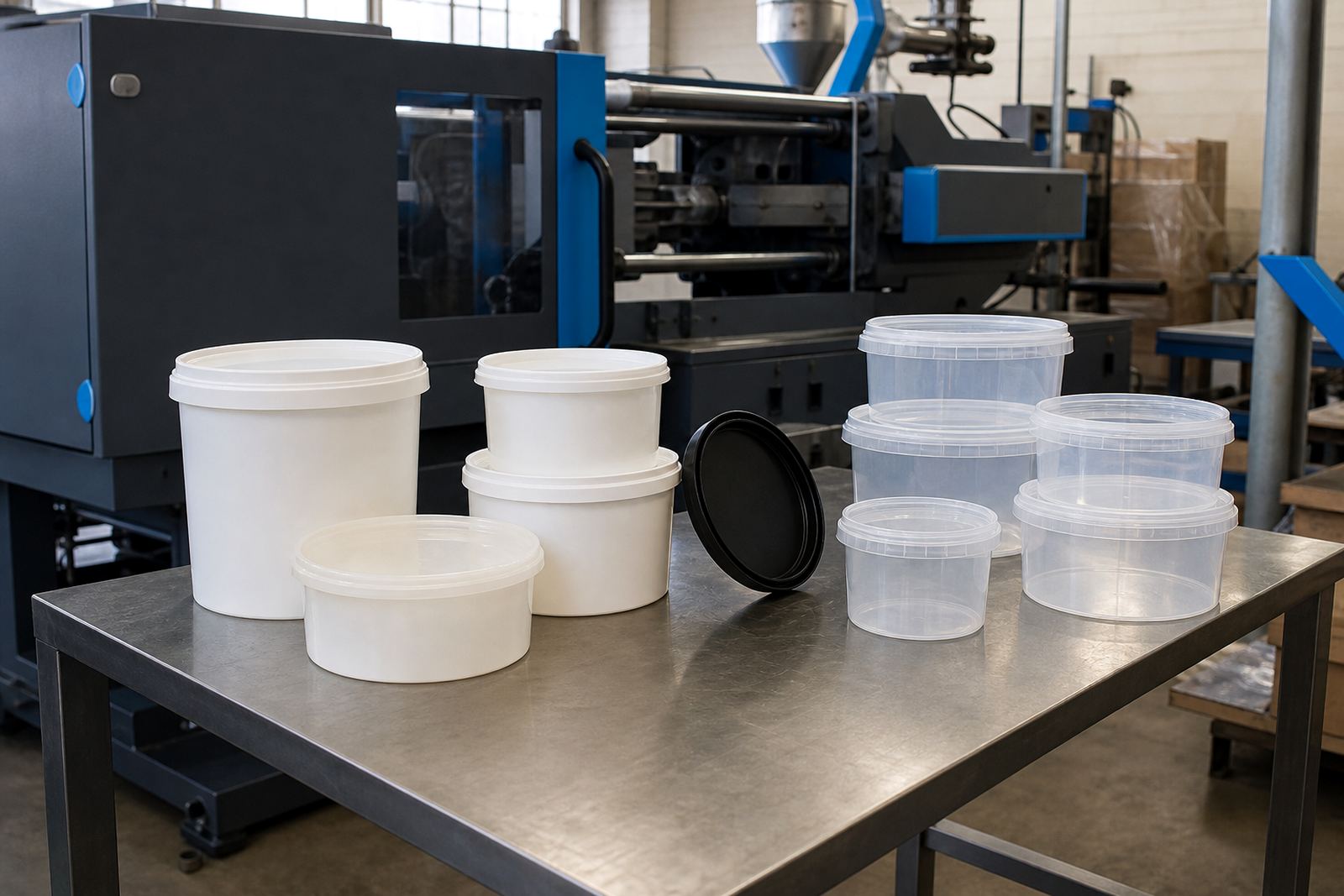
With injection-moulded tubs, the rim is the part that carries the seal, guides the lid and keeps the pack stable through handling. If the rim profile is too shallow, too wide or uneven after moulding, the lid may sit proud on one side and bite too hard on another. That is where leaks, loose closures and crushed edges start showing up on the line.
In food, pharmaceutical and cosmetic packing, the details matter because the container has to behave the same way every time. A tub moulded in polypropylene may suit one closure profile, while an HDPE tub may need a different lid geometry, depending on wall finish, neck form and the type of tamper evidence required. Small differences in rim height or bead shape can be enough to change the feel of the close.
How Lid Geometry Interacts With Injection Moulding
Injection moulding gives tight control over repeat shape, but the tooling must be planned as a pair. The tub cavity, core, gate position and cooling balance all affect how the rim finishes, and the lid tool has to follow that same logic. If one part cools differently, the final fit can drift just enough to cause handling trouble on packing lines.
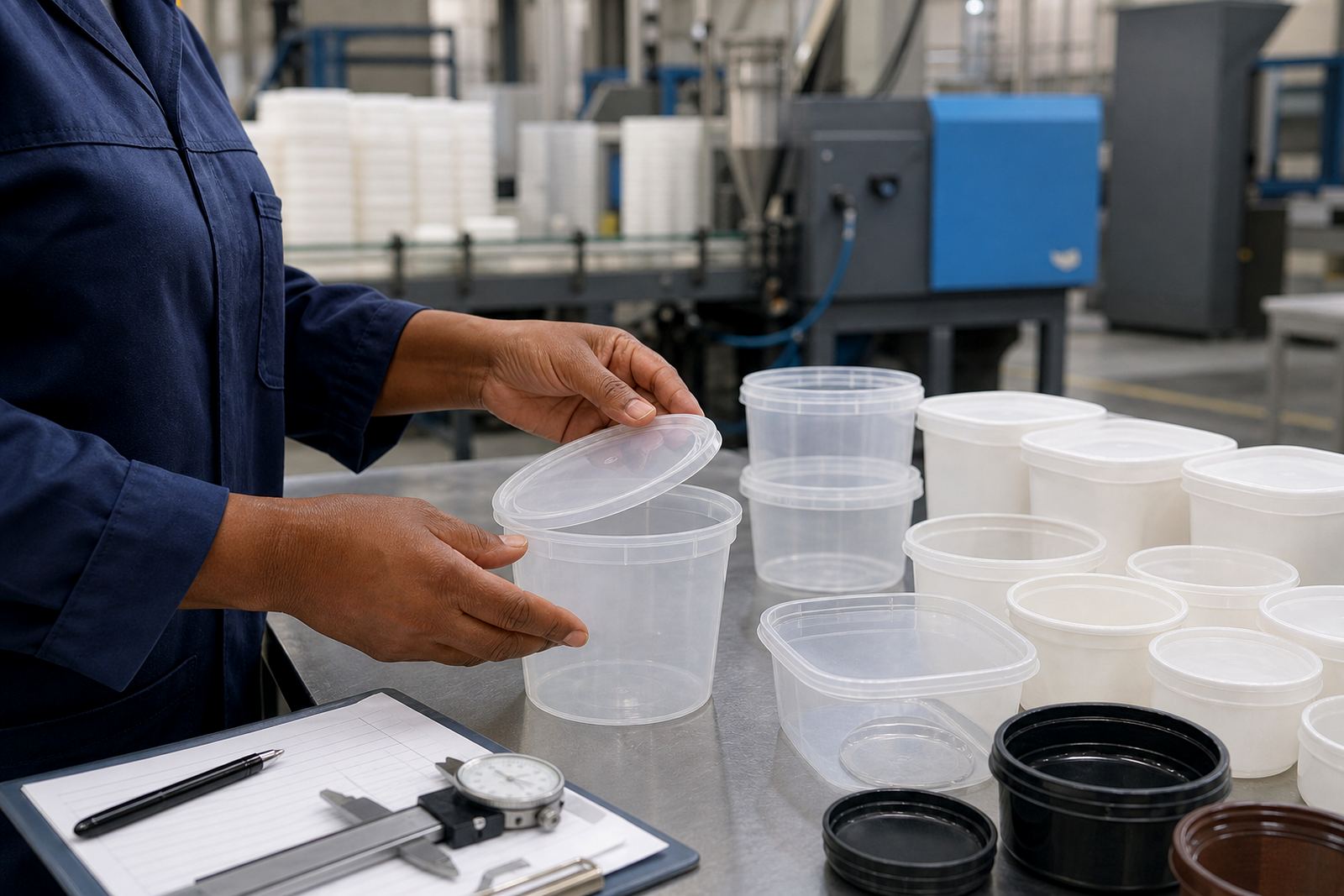
For packers moving jars and tubs through automatic or semi-automatic lines, lid skirt depth, snap profile and seal land all need to match the tub wall and rim. A good match lets the operator or machine apply the lid with even pressure. A poor match can mean higher reject rates, fiddly resealing and more pressure on the packing team when the line is already busy.
- Rim height must stay consistent across the full batch.
- Lid skirt depth must suit the tub shoulder and bead.
- Seal pressure needs to be firm without distorting the rim.
- Tamper features must engage cleanly every time.
- Material choice must suit the product and storage conditions.
Polypropylene, HDPE and the Feel of the Closure
Polypropylene and HDPE behave differently in service, so the closure should be matched to the material rather than copied from another pack. Polypropylene gives a clean moulded finish and works well for many food and cosmetic tubs. HDPE has its own stiffness and resilience, which can suit heavier fills or products that need a tougher container wall.
The same lid will not always behave the same way on both materials. A soft snap can feel secure on one tub and under-clamp on another. That is why material selection, lid development and line fit checks need to sit together. In practice, the packer wants a lid that closes neatly, opens when intended, and leaves the rim looking straight, not chewed up.
In coastal areas like Durban, humidity and storage conditions can also affect how a pack is handled in a depot or on a filling line. That does not mean the container fails, it simply means the design needs to allow for real conditions rather than a neat sample on a table.
Tamper Seals Need Space, Not Guesswork
When a tub uses a tamper seal, the lid and rim have to leave enough room for the seal band or bridge to work properly. If the profile is too tight, the seal can tear unevenly or sit awkwardly against the tub body. If it is too loose, the visible evidence of opening becomes unclear and the pack loses confidence at a glance.
For food and cosmetic products, that visible first open feature is often part of the pack decision. Pharmaceutical packers may need an even tighter check on closure behaviour because the pack has to travel through handling, storage and distribution without confusion. A careful mould development process reduces the need for patchwork fixes later. That saves time on the filling side and avoids odd looking closures on the shelf.
- Tamper bands need a clean break point.
- Lid release must stay controlled, not ragged.
- Seal bridges need enough strength for handling.
- Printed or coloured lids must still close cleanly.
- The rim must support the seal without distortion.
Pack Line Checks Catch Problems Before They Spread
Line fit checks are useful because a closure that passes one manual test may still behave differently at speed. A lid can be fine by hand, then slip, wobble or tilt once the pack line starts working under normal conditions. That is why test runs matter, especially where multiple pack sizes are filled from the same line.
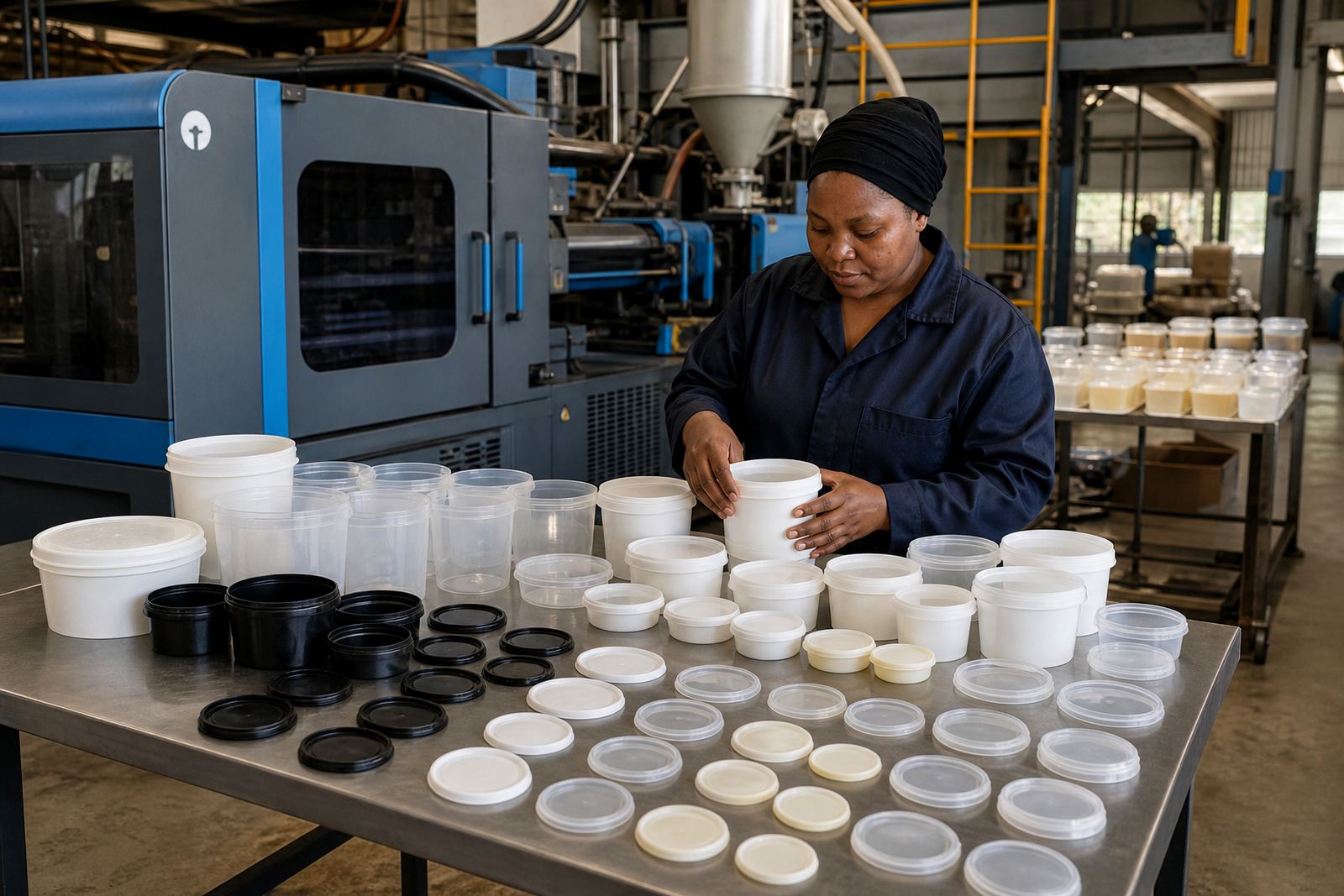
Plastic Factory works from Alrode in Alberton with packing needs that reach Johannesburg, Pretoria, Germiston, Boksburg and further afield to Durban, Cape Town and Port Elizabeth. A local example is a cosmetic packer in Alberton that shifts between cream tubs and body scrub tubs on the same line. If the lid skirt is too rigid for one size, the operator may have to slow the line and that slows the whole shift, which is not the kind of surprise anyone wants.
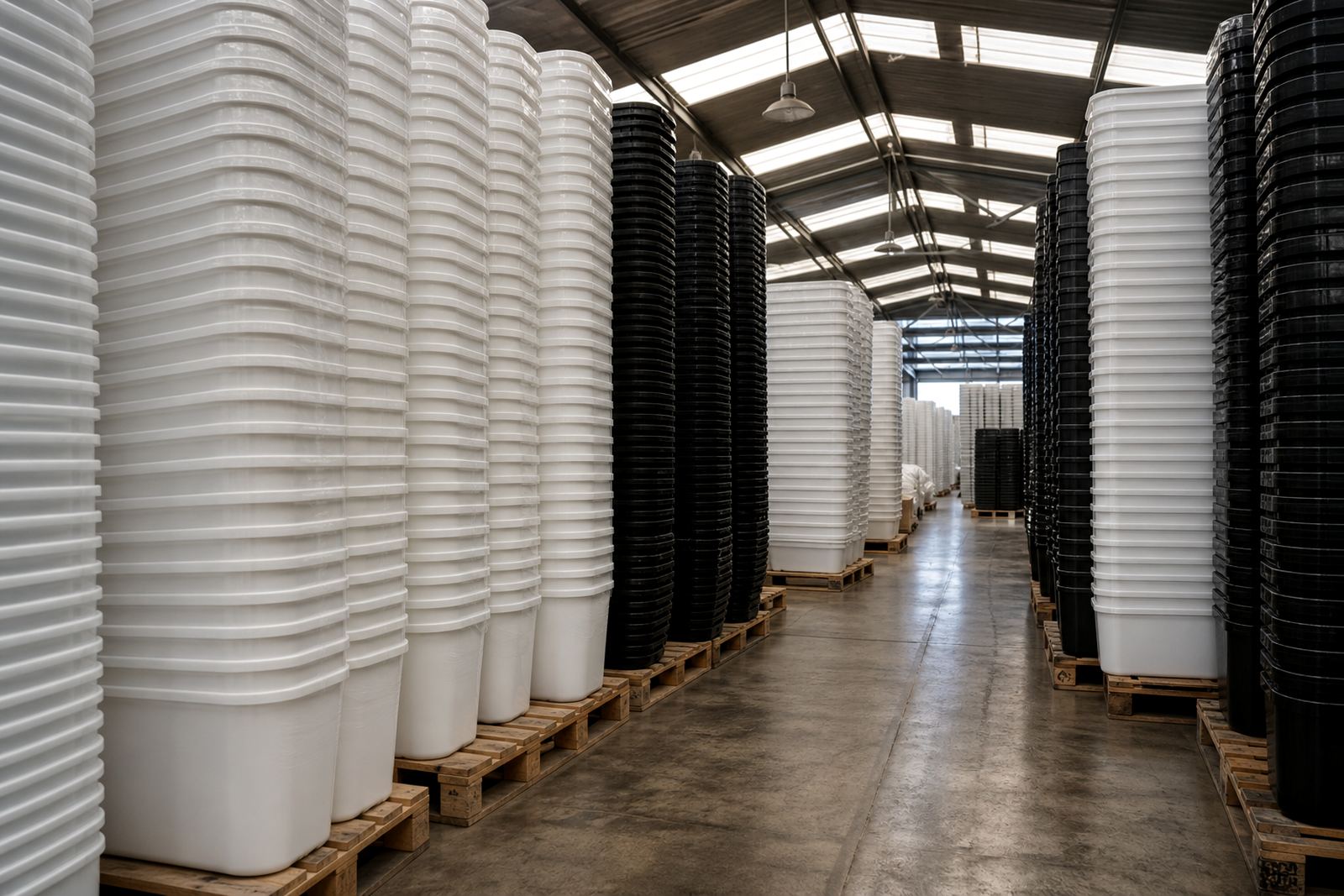
Trial production runs also help with secondary packing advice. Cartons, shrink packs and tray layouts can all change the way tubs and lids settle during transit. A closure that looks fine in the crate may need a small adjustment before a larger run is signed off.
A Practical Ordering Brief Starts With the Rim, Not the Artwork
When a business asks for a new tub or lid, the rim profile, product weight, fill temperature and line method should come before colour choices. Artwork and shade matter, but the closure system has to work first. If the base geometry is wrong, a neat colour match will not rescue the pack.
A useful brief for tub and lid development usually includes the following:
- the product type and pack size
- the material preference, such as polypropylene or HDPE
- the style of lid, including any tamper feature
- the filling method and line speed
- the storage and distribution conditions
- any colour matching guidance for shelf presentation
That kind of detail helps shape the mould development, trial production runs and stock run planning. It also makes it easier to keep the tub rim and lid geometry working together across later runs. A good pack should close straight every time, and stay that way through use.