Two common plastics, different packing habits
Polypropylene, often called PP, is a familiar choice for tubs, lids and many general packaging items. It handles a good range of foods and personal care products, and it is widely used where a neat finish matters. HDPE, or high density polyethylene, is known for a slightly tougher feel and good resistance to moisture, oils and many everyday handling knocks.
For packers in Johannesburg, Durban, Cape Town and other centres, the decision is rarely about one material being better in every case. It is more about what the product needs in storage, on the shelf and in transport. A dry spice blend, a sauce, a cream, a powder or a tablet all behave differently in a container, so the plastic should suit the product rather than the other way round.
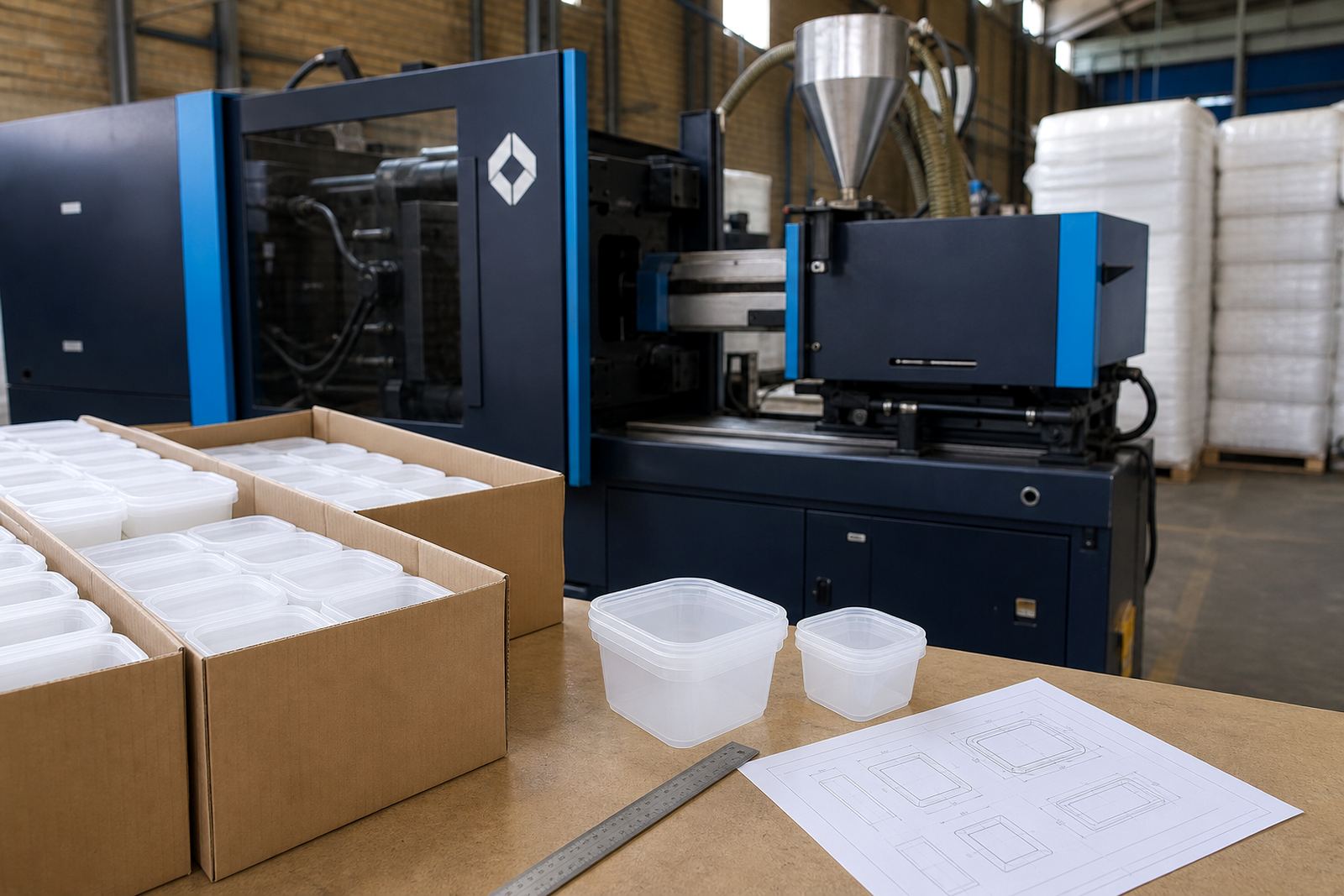
Injection moulding gives both materials shape with tight control over wall thickness, rim detail and lid fit. That control matters when tubs must stack neatly on a packing line, sit properly in cartons, or move through a secondary packing stage without wasting space.
Where PP usually earns its place
PP is often the first option when a packer wants a light container with good rigidity and a clean moulded appearance. It works well for many food tubs, cosmetic jars and pharmaceutical secondary packs, especially where the product is not overly aggressive to the plastic. It also suits lids that need a firm snap and consistent closure on line.
In practical terms, PP can be a good match for dry goods, powders, tablets, balms, creams and a number of chilled or ambient foods. It is also useful when colour matters, because the material can be matched to a wide range of shades. Clear identification, label placement and shelf presentation all benefit from a tidy mould finish.
- Often chosen for tubs and lids with crisp moulded detail
- Works well for many dry, semi-solid and ambient products
- Useful where a neat look matters on retail shelves
- Can suit packers needing a lighter container format
PP is not a one size answer though. Heat exposure, product chemistry and the way the pack is sealed all need checking against the actual filling process. A lid that closes well on a bench test can behave differently once it runs through a packing line at speed, so trial production runs matter.
Where HDPE makes more sense
HDPE is often picked when the packer wants a slightly more forgiving container for handling, transport and repeated movement through a warehouse. It is common in applications where moisture resistance matters or where the product may be stored for longer periods before dispatch. The material has a practical, familiar feel that many line managers recognise quickly.
For food packers, HDPE can work well with certain sauces, spreads, liquid or semi-liquid products and some bulk lines. In cosmetics, it is often used where the pack needs a tougher body and a dependable closure. Pharmaceutical packers may also look at HDPE for products that benefit from a solid, easy to handle container with good dimensional consistency.
In the humidity around Durban, for example, packers often pay attention to storage conditions and label performance as much as the plastic itself. A container that stands up well in a warm store room and still stacks properly after transit can save unnecessary handling issues. That is where HDPE earns respect in the plant.
Lids, tamper seals and the feel of a finished pack
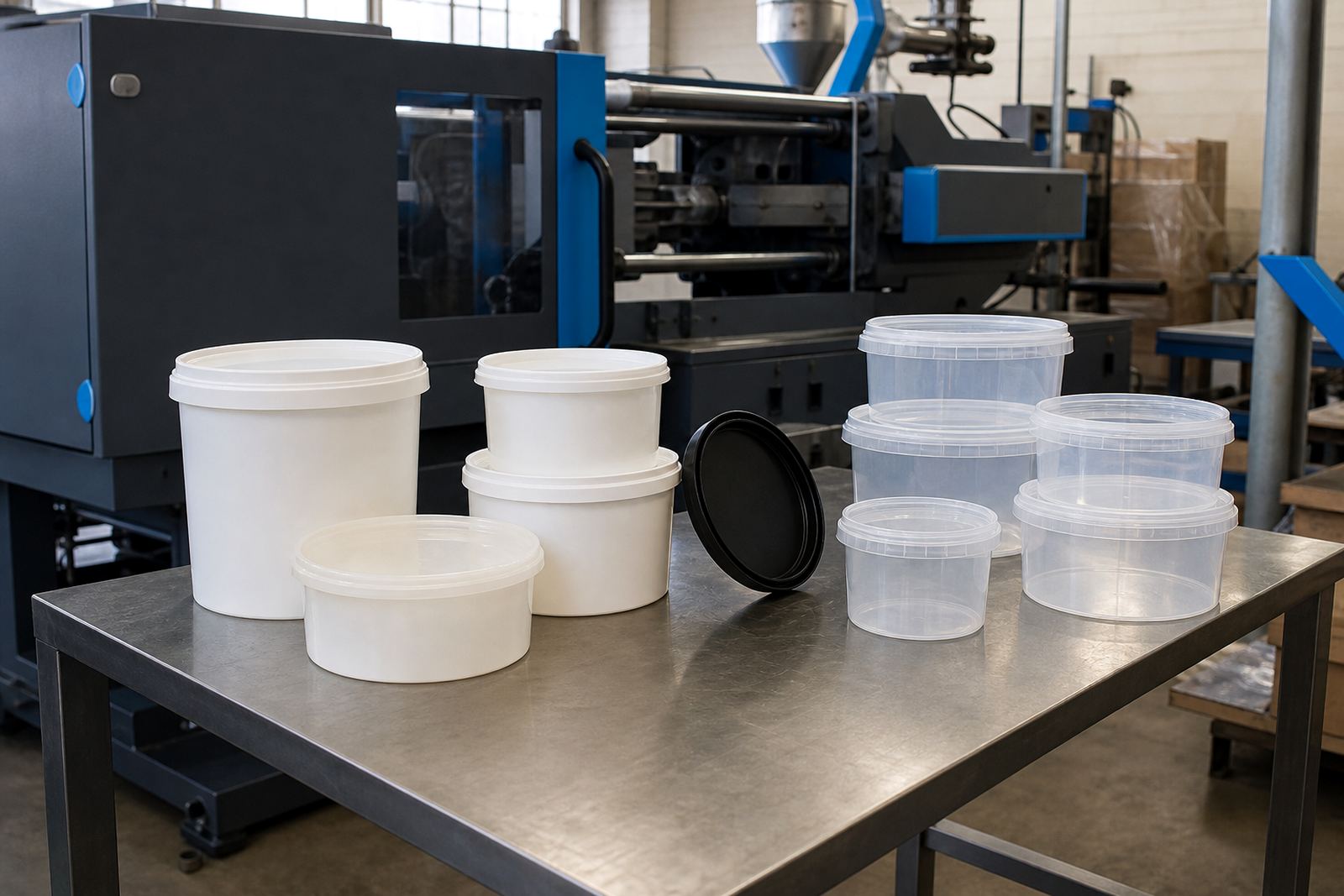
The container is only one part of the system. Lid design, tamper evidence and the way the pack closes all affect how PP and HDPE behave in real use. A tamper seal can give confidence on a food or cosmetic line, but it must work with the rim profile and the closing force of the chosen material.
PP often gives a tidy, precise feel at the closure point, which is useful for retail tubs and smaller pack sizes. HDPE can feel a little more flexible depending on wall design and mould detail, which may suit heavier handling or bulk storage. Neither material is automatically better for sealing, because the mould and the closure design do much of the work.
- Check lid fit against the actual filling process
- Match tamper seals to the rim and closure style
- Test stacking with filled packs, not empty samples
- Look at label adhesion after storage and transport
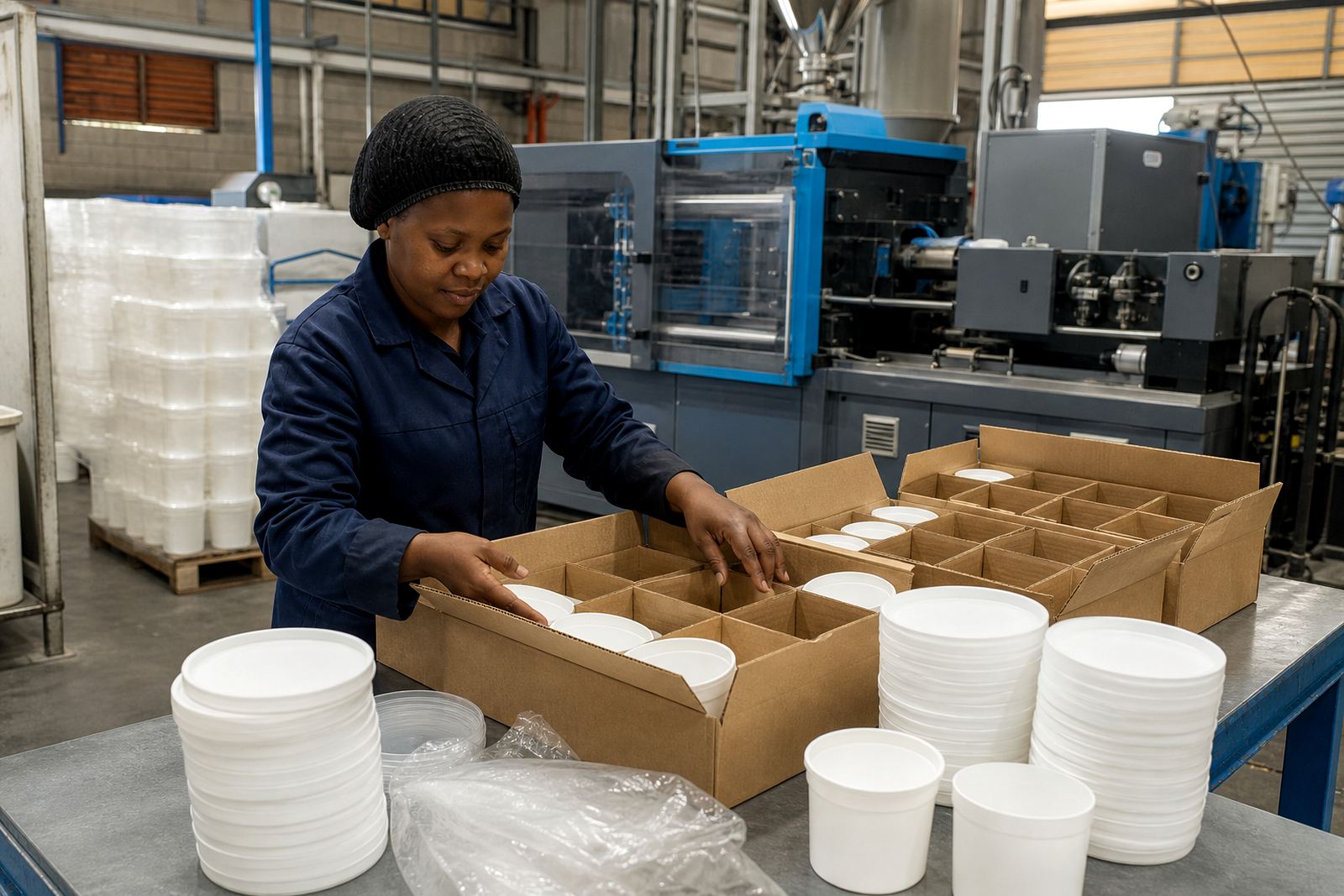
For line-fit checks, it helps to run the chosen tub through the actual packing sequence, from filling to final carton loading. That shows whether the closure sits properly, whether the seal tears cleanly, and whether the pack stays straight on the line instead of wobbling or binding.
Food, pharma and cosmetics do not ask for the same thing
Food packing usually puts hygiene, shelf appearance and sealing performance near the top of the list. PP is often used here for dry foods, confectionery, spreads and many retail tubs, while HDPE can suit products where handling strength and resistance to moisture are more important. In a Pretoria packing room, for example, the best choice may change from one recipe to another, even inside the same product family.
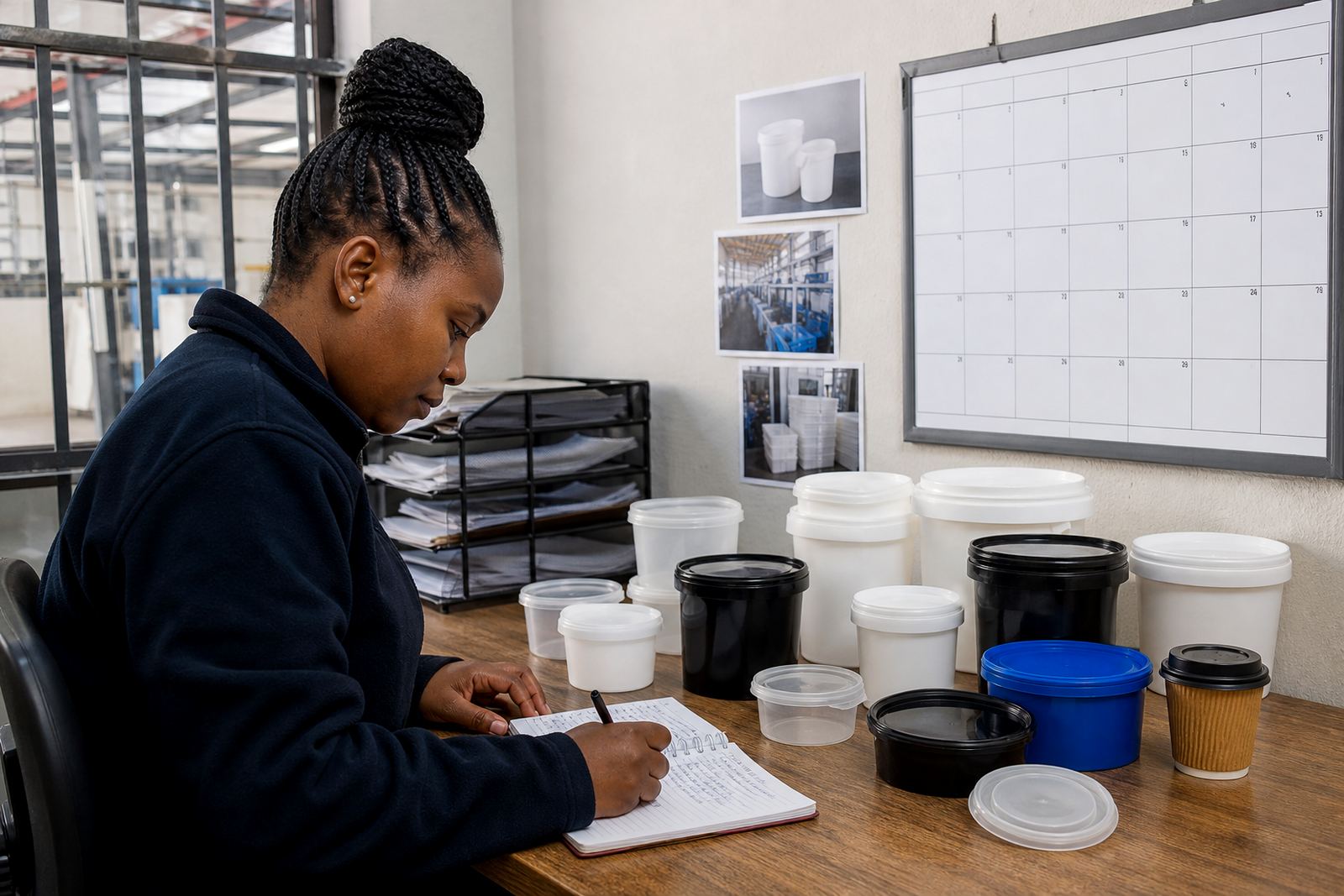
Pharmaceutical packers tend to look closely at consistency, closure integrity and the way a container behaves during counting, filling and dispatch. Cosmetic packers often care about presentation, colour consistency and the customer feel of the finished pack. Those needs overlap, but they are not identical, and that is where material selection becomes practical rather than theoretical.
There is no need to force one material across every line. A cream jar, a powder tub and a tablet container may each need a different answer. That can keep packers from over-specifying one pack and under-specifying another.
A local packing line example from Alrode
A packer in Alrode may be running a small to medium batch of cream tubs in the morning and a dry food line later in the day. If the product is light and the shelf look matters, PP might be the better starting point. If the line needs a tougher container for warehouse movement or a product that sits in storage for longer, HDPE may make more sense.
What matters is how the tub behaves with the lid, how the seal works and how the pack fits secondary packing. A good pack should move from mould to filling to carton without unnecessary fiddling. That is the difference between a container that looks fine on paper and one that fits the actual work done on site.
- Test the tub with the real product, not a sample fill
- Check stack height against carton and pallet plans
- Review label space before moulding is finalised
- Confirm lid feel on the same line that will pack it
In a plant that ships to Germiston, Boksburg and beyond, small dimensional changes can affect loading and dispatch. A few millimetres in rim height or body width can alter how many units fit into a carton, so material choice and mould design should be looked at together.
Picking the material that suits the full pack
PP and HDPE both have a place in South African packaging, but the right answer depends on the full route of the product. Think about product type, fill temperature, storage conditions, shelf appearance, lid style and the way the pack will move through the line. That is usually where the better decision becomes clear.
For many food, pharmaceutical and cosmetic packers, the useful question is not which plastic is best in general, but which one works best for this pack. Once the format is fixed, details like tamper seals, pack size planning and colour matching guidance can be handled around it. That keeps the whole pack practical, not just neat in isolation.
When a container, lid and seal are matched properly, the result is easier to fill, easier to stack and easier to dispatch. That is the kind of packaging choice that saves trouble later, and it usually starts with the right material call.