Start with the carton, not the product
The carton has to suit the pack weight and the shape of the load. A thin box that looks fine on a pallet in Alberton can soften quickly in Durban humidity, then the corners start to sag when the stack settles. Use a carton with enough board strength for the number of tubs inside, and keep the size tight to the contents so the load does not slide around.
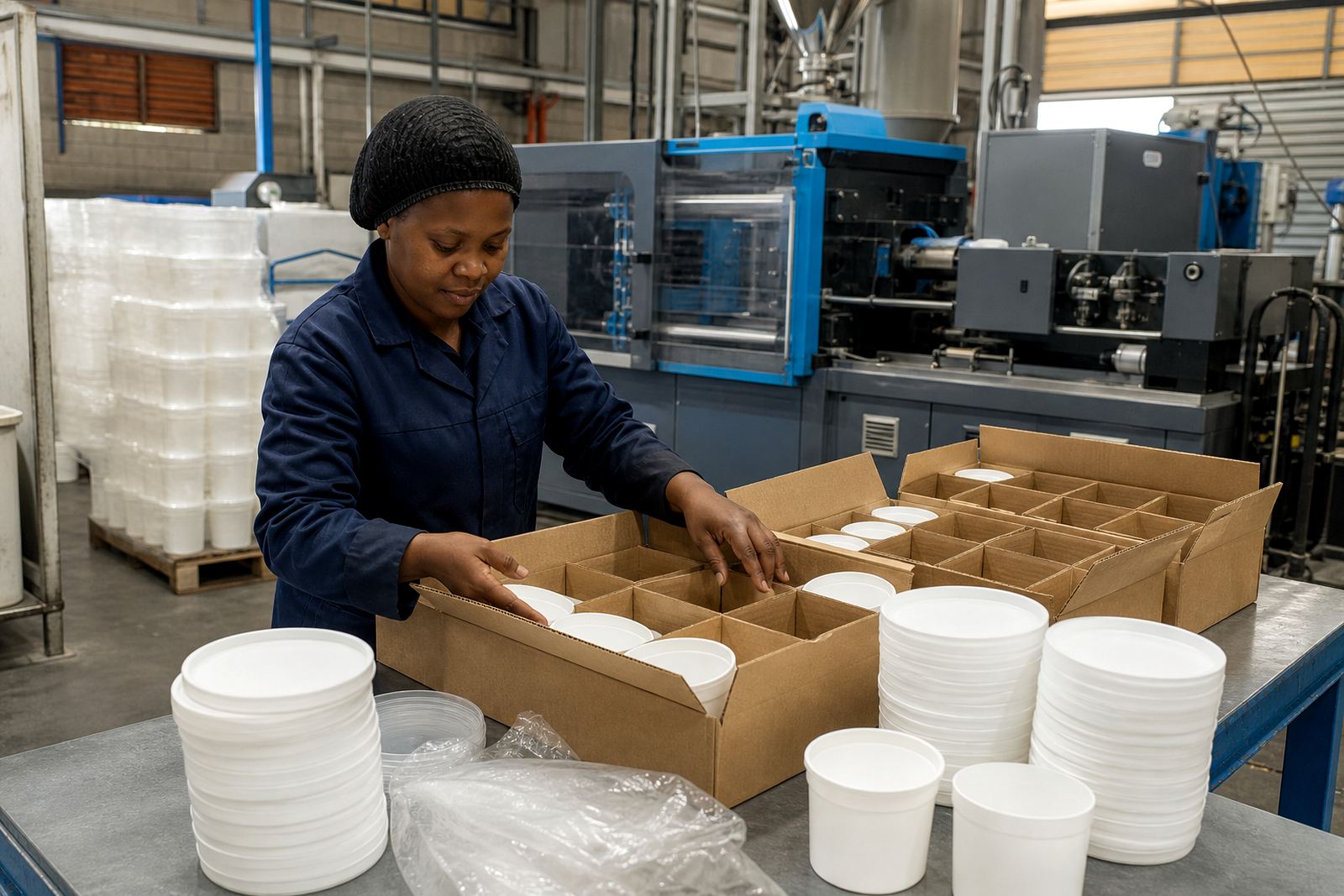
When tubs and lids are packed together, the extra air space matters. Too much gap lets the load shift during transport, and the edges of injection-moulded containers can mark each other. A snug fit is better than overfilling a box, though the carton still needs a little room for handling and sealing tape.
- Match carton height to the stacked tub height, not just the footprint.
- Check that the base holds without bulging when lifted from one side.
- Use consistent carton sizes where possible so pallets stack neatly.
- Leave enough headroom for tape and a clean fold on the top flaps.
Separate lids so they do not scratch or warp
Lids need more care than many packers expect. A loose lid stack can scuff at the rim, and if the stack is pushed hard into a carton the top lids can bow. That matters for food packs and cosmetic tubs where the closure line must sit cleanly. For clear lids, marks show even faster. For coloured lids, the edge wear is still there, just harder to spot at a glance.
Place lids in their own inner packs or sleeves, then box them so the stack cannot tilt. If the lids travel with tubs, keep a divider between the parts. The divider does not need to be fancy, it just needs to stop direct rubbing and keep the pack upright. On longer trips to Cape Town or Port Elizabeth, that extra layer helps when the carton is rehandled at depots and cross-docks.
- Pack lids flat in even stacks, never at a slight angle.
- Use a divider between lids and tub rims.
- Keep the top stack low enough that the carton closes without pressure.
- Label mixed packs clearly so warehouse staff know what sits inside.
Use the right inner packing for each material
Polypropylene and HDPE containers behave differently in transport, even though both are common for food, pharmaceutical and cosmetic packing lines. Polypropylene is lighter and can flex a little more, while HDPE often feels denser and holds its shape well. That means the inner packing must suit the item, not just the carton size. A loose wrap that works for one tub can leave another moving around too much.
Inner bags, interleaving sheets and simple separators all help when the goods are boxed in bulk. For smaller tubs, nest them in stable stacks and keep the open edge protected. For larger tubs, stop side pressure from building up at the corners. If the product carries a tamper seal component, keep that part from being crushed under the lid stack. The seal needs to arrive flat and ready for the line.
- Use separators where tub walls might rub during transport.
- Keep seal components in a smaller inner carton if they are packed separately.
- Do not let mixed sizes sit loose in the same outer box.
- Mark cartons by size, colour and lid type for easier receiving.
Pallet stacks need steadiness, not just height
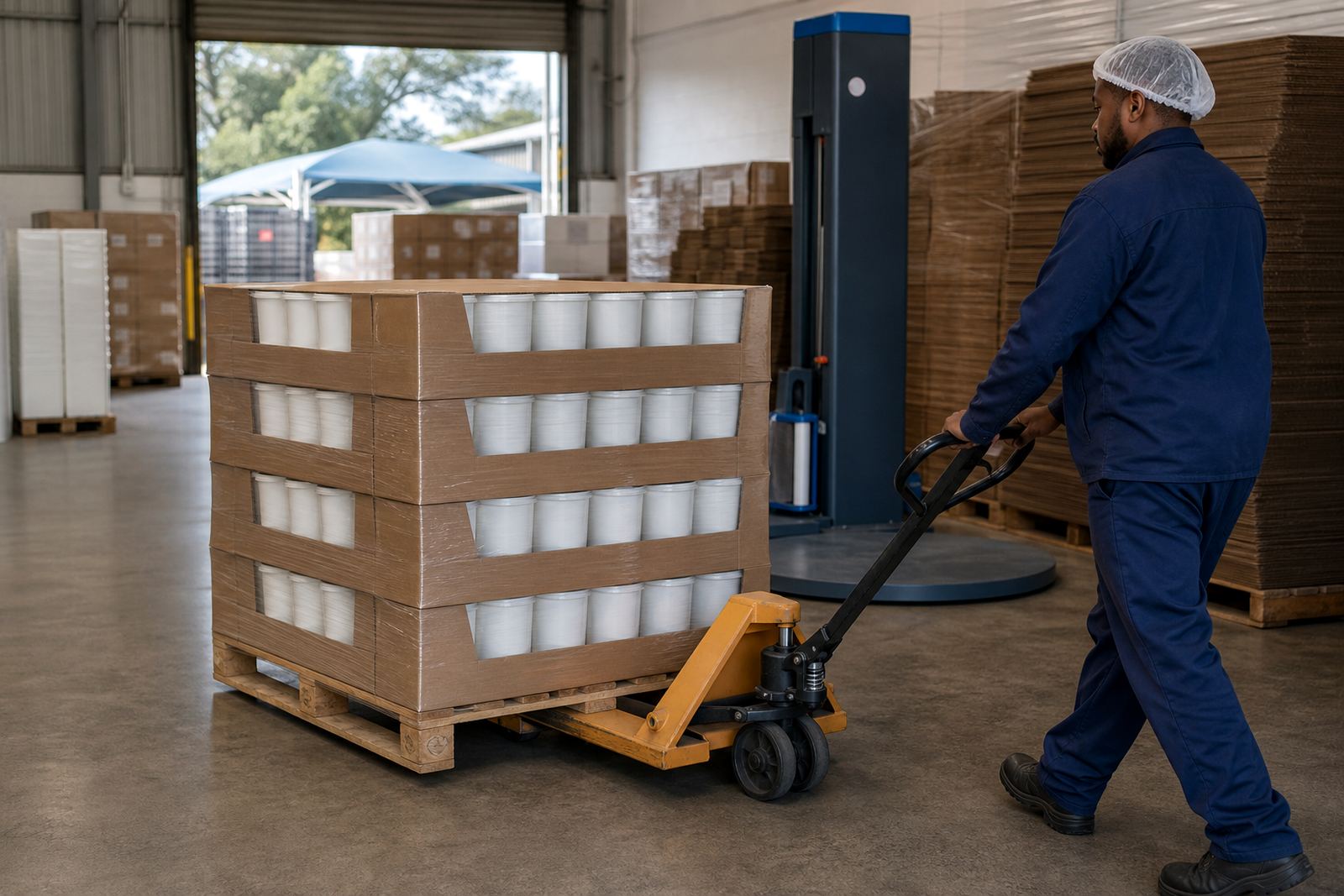
A carton that looks fine on the floor can fail once it is stacked three layers high on a pallet. The bottom layer carries the weight, and any soft carton starts to lean or squash at the edges. Use flat, even layers and keep the stack pattern consistent from one layer to the next. If the cartons vary in size, the pallet can step out at the edges and catch during loading.
Stretch wrap should hold the stack together without crushing it. Too much tension pulls the side walls inward, which is a problem when cartons contain lids or pre-packed tubs with neat counts. In Johannesburg, where parcels may move through several depots before delivery, the stack must stay square even after a rough lift or a braking stop. A clean pallet pattern saves a lot of damage later.
- Build level layers so the pallet top stays even.
- Keep heavy cartons at the bottom and lighter cartons higher up.
- Wrap the pallet tightly enough to stabilise it, not compress it.
- Check overhang at the edges before the pallet leaves the loading area.
Label the carton the way warehouse teams read it
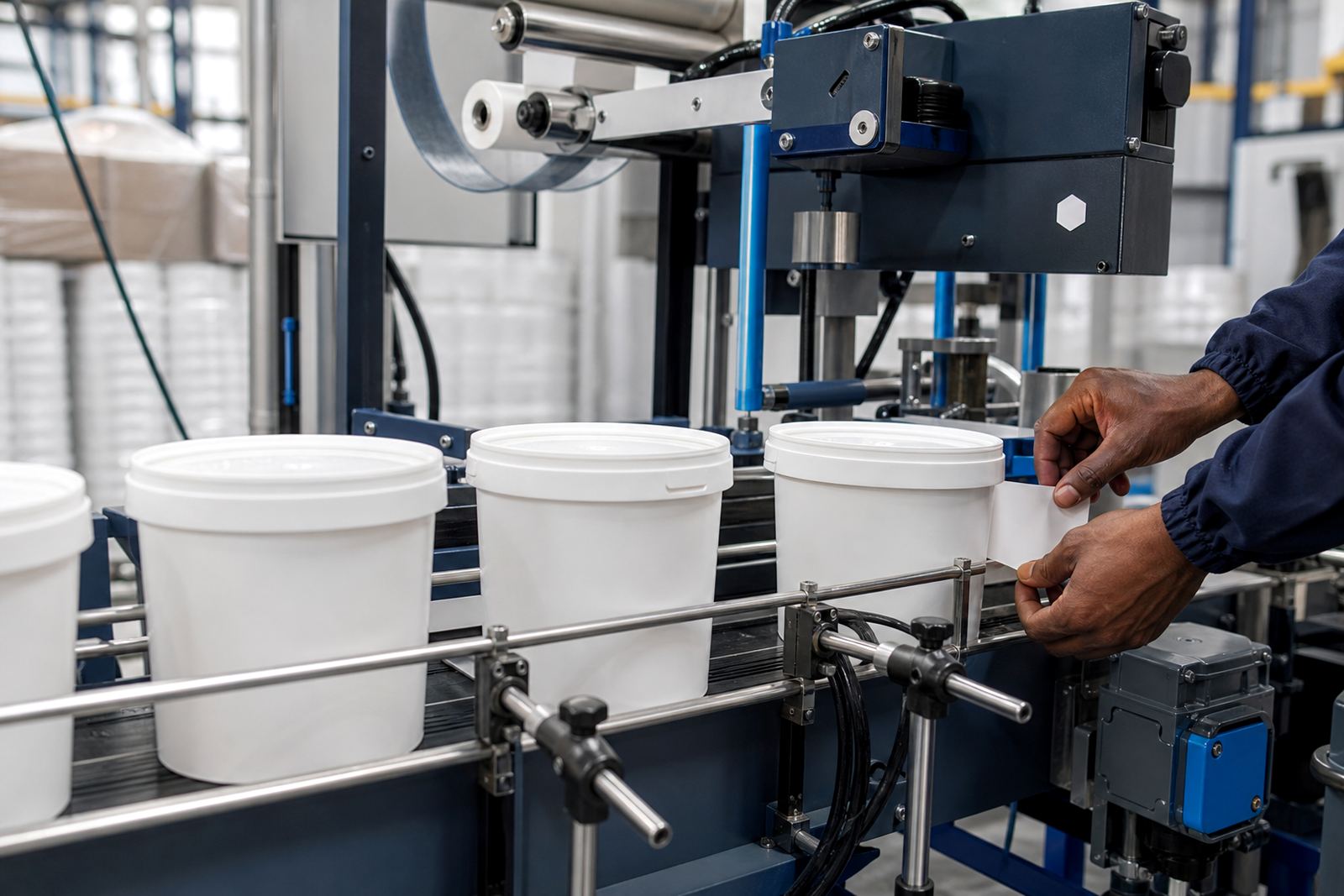
Good labels shorten confusion in the store room and on the receiving side. The label should show the product name, pack count, colour, lid type and any special handling note. If a carton contains tubs for a pharmaceutical packer, that pack should be obvious without opening the box. If the load includes cosmetic tubs in a custom colour, the carton must reflect that detail clearly.
It also helps to keep the same label position on every carton. Staff should not have to turn the box around three times to find the details. A neat label is part of packing discipline, not just admin. When cartons are opened on the line, the right label cuts down the chance of mixing a white lid pack with a natural tub pack, and that kind of mix-up is hard to unwind once production has started.
- Print the pack count in large text.
- Show lid and tub details together where they travel together.
- Use handling marks only where they matter for the load.
- Keep label placement consistent across all cartons in the run.
A local packing check before the load goes out
A packing check works best when it reflects real local conditions. A line in Alrode might move goods into a cool store, then a truck carries the same load through heat, traffic and more handling before it reaches Durban or Pretoria. That is why a carton should be checked for edge crush, tape hold and internal movement before dispatch. The box needs to stay firm after being lifted from the base, turned slightly and stacked beside other freight.
For one Johannesburg order of tubs and matching lids, a simple change made the load safer: the packer reduced the headspace in each carton, added a divider between lid stacks, and moved tamper seal components into smaller inner packs. The cartons stopped slumping at the corners and the receiving team could put the goods straight onto the shelf without sorting loose items first. Small changes like that save time on both sides and protect the product shape too.
- Lift a filled carton from the base and check for flex.
- Shake one box lightly to hear if the contents move.
- Confirm the tape holds across the full flap join.
- Inspect the outer corners for soft spots before palletising.
Packing advice that supports the line, not the other way round
Carton packing works best when it fits the packing line rather than forcing the line to adjust. If tubs are counted in a fixed batch, pack them that way. If lids travel in nested stacks, keep that count stable so staff can load the carton quickly and accurately. The same thinking helps with stock run planning, trial production runs and line fit checks, because packaging that moves neatly through the process is easier to manage in storage and transport too.
Plastic Factory works with packers across Alberton, Germiston, Boksburg and further afield, so practical packing matters just as much as the container design. When the carton is matched to the tub, the lid and the route, the load arrives in better shape and the receiving side spends less time sorting damage or reworking counts.