Filled tubs behave differently from empty stock
An empty tub is light and easy to shift. Once it is filled, the same container puts more strain on the base, side walls and lid, so the way it moves through the line matters much more. A tub with sauce, cream, powder or granules can also shift inside the pack if the fill level is uneven, which makes stacking less stable.
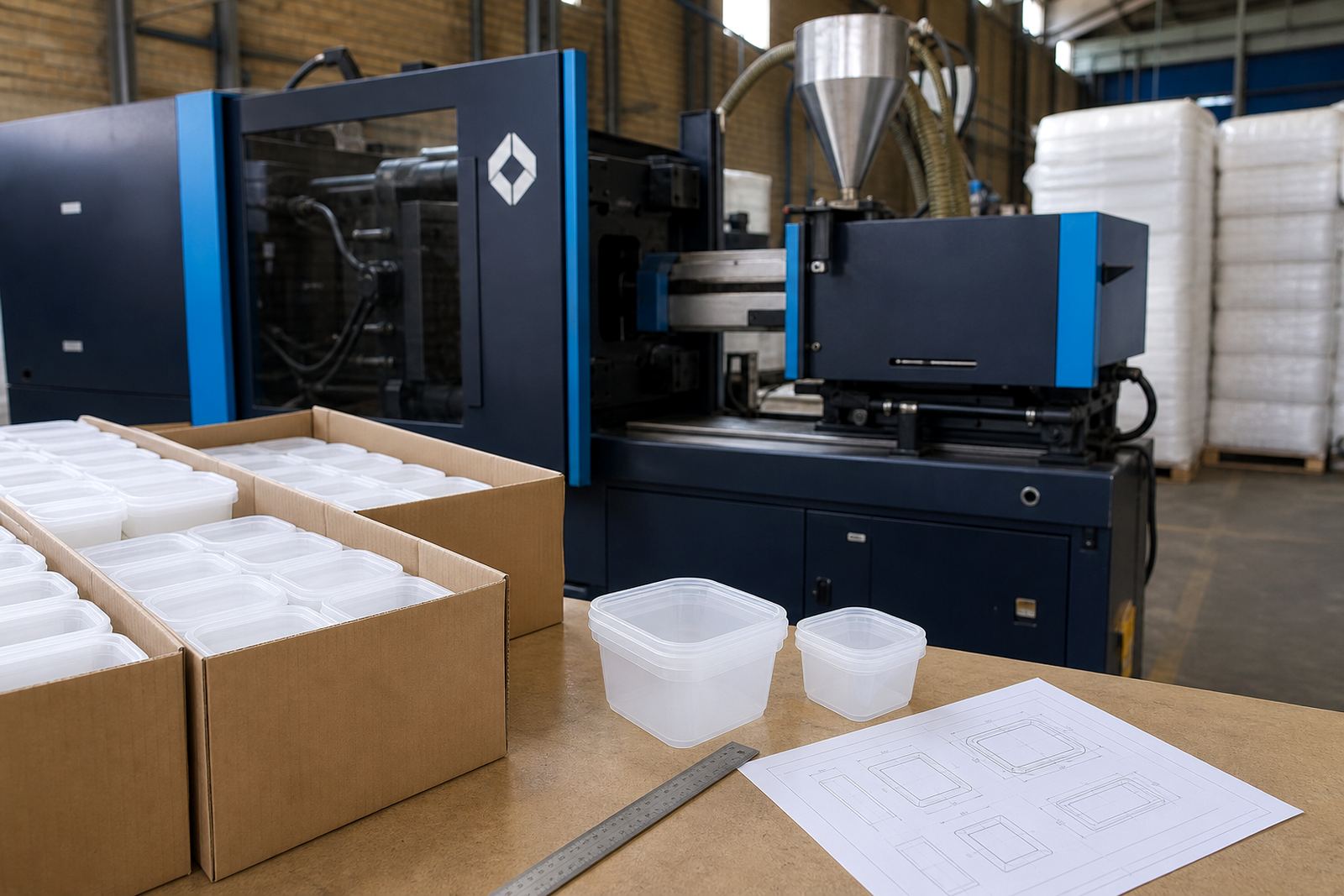
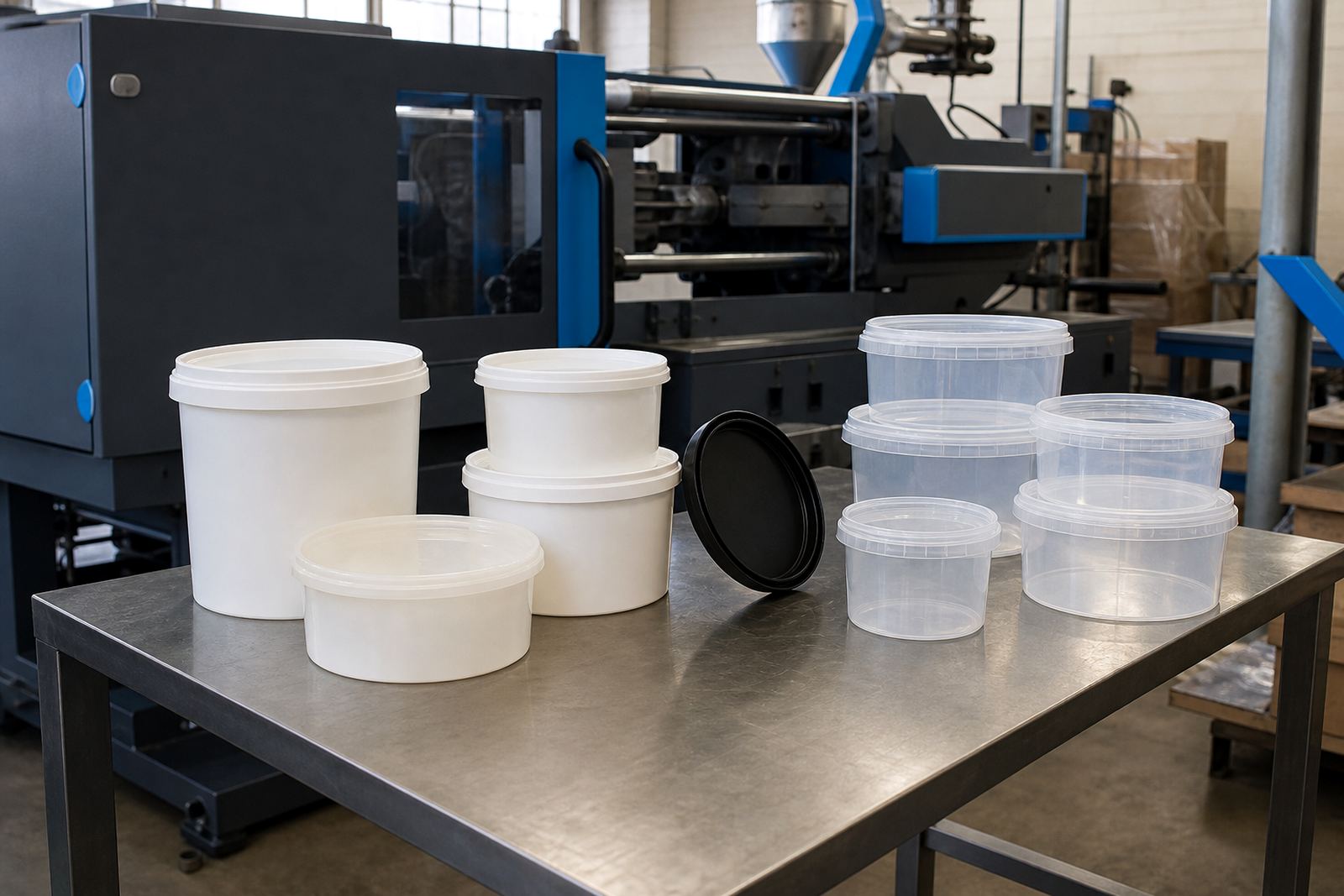
Injection-moulded polypropylene and HDPE tubs are used across food, pharmaceutical and cosmetic packing because they hold shape well under normal handling. Even so, the filled unit must be treated as a complete pack, not just a container. The lid, tamper seal and fill weight all play a part in how safely it travels.
- Check that the filled weight matches the pack size.
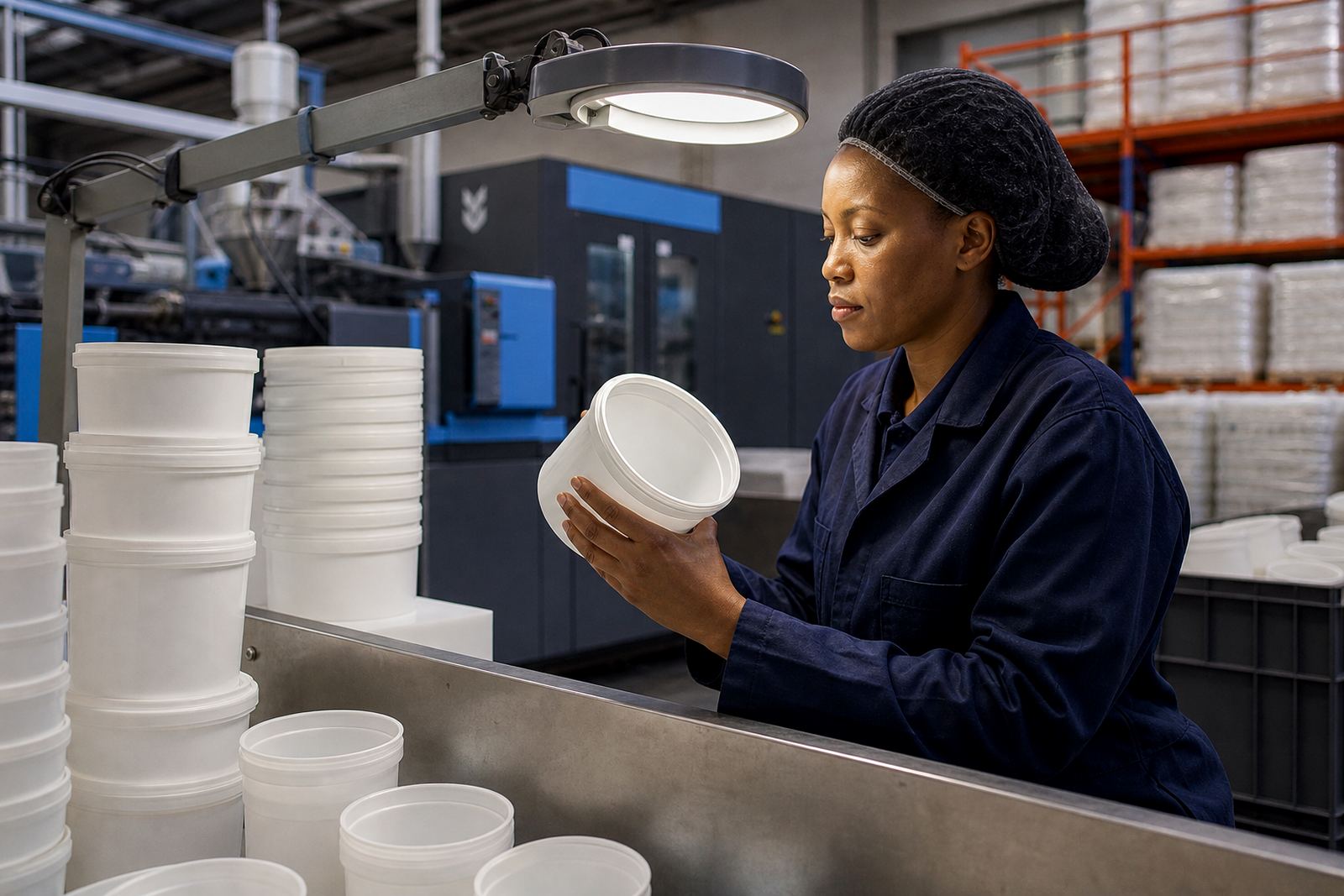
- Keep the rim clean before lidding.
- Make sure the seal line is even all round.
Packing line checks that prevent extra rework
Most problems start on the line, not in the truck. If the filler overfills one run and underfills the next, the tubs stack unevenly and cartons shift during transit. Small differences are enough to affect pallet stability, especially when tubs are packed in rows that must stay square.
For liquid or semi-solid products, the headspace must be kept consistent so the lid closes properly without product touching the sealing area. For powders and dry goods, a neat top finish helps the tamper seal sit correctly and reduces dust around the rim. A line fit check is useful when the container, lid and sealing method are being matched to the packing equipment.
- Keep fill levels consistent from the first tray to the last.
- Test lid closure with the exact product, not only water.
- Watch for rim contamination from sauce, oil or powder.
Stacking in warehouse spaces around Gauteng
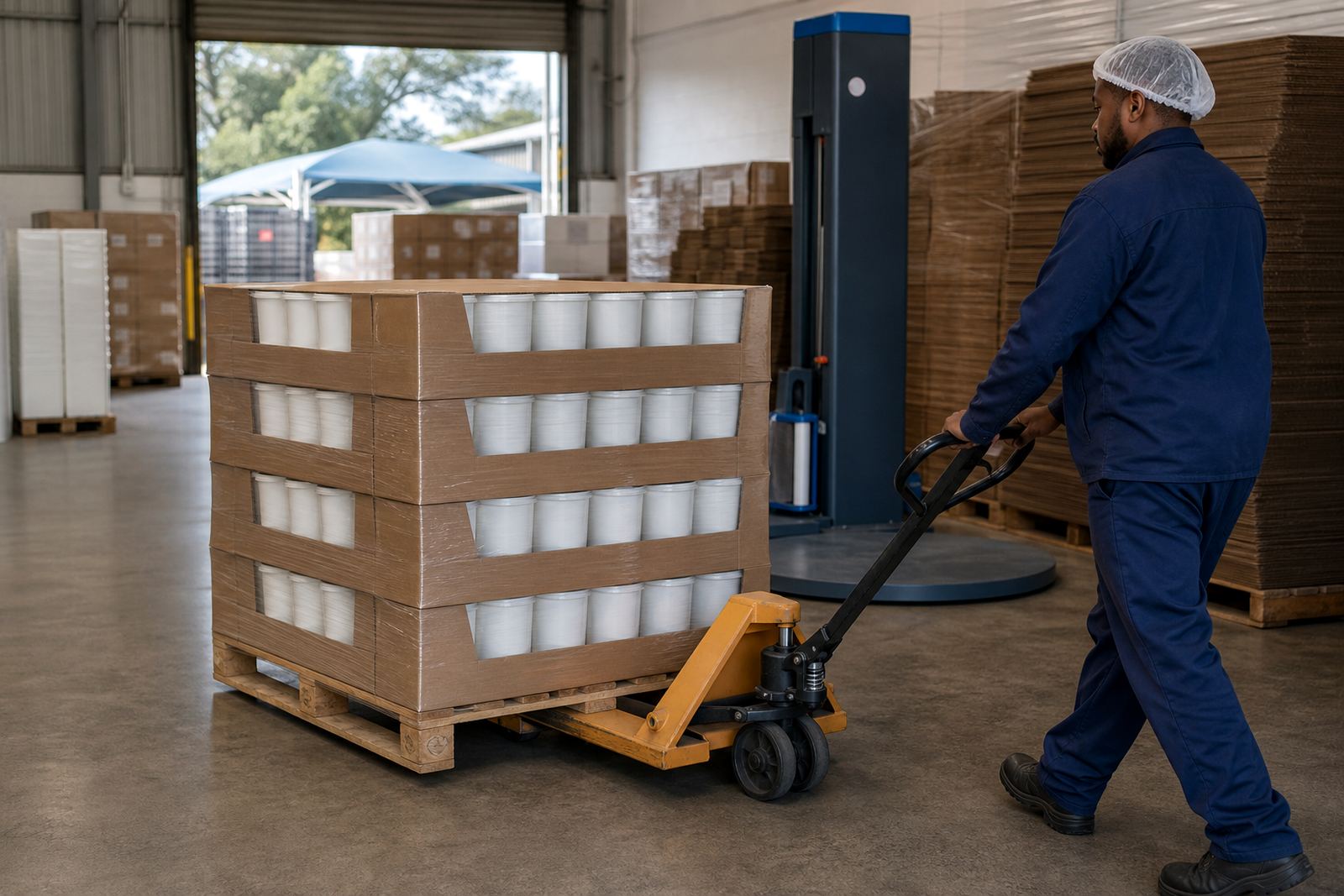
In Alrode and the wider Gauteng distribution belt, many filled tubs move from packing straight into short-term storage before delivery. That stage needs clear stacking rules. A pallet of packed tubs should stay level, with no loose corners and no leaning rows that can crush the lower layers. If the product is warm when packed, allow it to settle before a full stack goes into storage.
Humidity also matters in coastal areas such as Durban and Port Elizabeth. Labels can lift, cartons can soften and outer packs can lose shape if the storage room is damp. For that reason, many packers use secondary packing that keeps the tubs tight and dry, especially on longer holding periods. In Johannesburg and Pretoria, dust control becomes part of the same routine, particularly where open handling happens near loading bays.
- Store pallets on a flat surface with clear wrap or banding where needed.
- Keep heavier tubs on lower layers.
- Protect cartons and labels from damp floors and open doors.
Transport loads need more restraint than empty returns
Once the tubs leave the factory, the focus shifts to movement in the vehicle. Braking, cornering and uneven roads all place stress on the pallet. A load that seems fine in the warehouse can still shift badly on delivery if it is not strapped, wrapped or separated properly.
For local routes between Alberton, Boksburg and Germiston, short trips can create a false sense of safety because the distance is small. The same load may then fail on a longer run to Cape Town or Durban if the packing is loose. Local road conditions, delivery sequencing and hand unloading all need to be considered before the truck leaves.
- Use wrap, banding or pallet restraint that matches the weight of the load.
- Keep similar pack sizes together on one pallet where possible.
- Leave enough space for safe offloading without crushing the outer cartons.
Tamper seals and lids do more than close the pack
A lid that only looks closed is not enough for filled product. The seal must hold during handling, storage and delivery, and the tamper feature must stay intact until the pack reaches the next stage. If the lid is too tight, it can deform the rim. If it is too loose, the pack may open during movement or leak through the side.
For food and cosmetic packing lines, the lid choice should match the product type and the way the tubs are filled. Heat, pressure and product texture all affect the closing method. For pharmaceutical packing, neat handling matters even more because the pack has to stay visually clean and consistently closed throughout the chain. Trial runs help confirm whether the tub, lid and seal work together on the actual line.
A Durban load that taught the hard way
A packer sending tubs from Alberton to Durban once had no trouble on short inland deliveries, but the coastal run exposed weak pallet restraint. The tubs themselves were sound, yet the outer rows shifted slightly and the cartons at the edge took strain. Nothing dramatic happened, but the team had to slow down loading and tighten the pallet build before the next trip.
That sort of adjustment is common. A filled tub system may work well in one warehouse and need a different approach in another, especially where humidity, transport distance and offloading practices change. The product did not need a new container, only a better plan for the way it moved.
For packers working across South Africa, the safest method is to treat filled tubs as part of the full supply chain. That means the container, lid, seal, fill process and pallet build are all checked together, not one at a time.