
The packing room starts with the floor, not the filler
In a packing area, loose dust and spill residue move further than many operators expect. A swept floor, clear walkways and tidy staging points help keep container rims, lids and tamper seals free from grit that can interfere with closure. When tubs pass from storage to filling and then to sealing, every hand movement matters, especially on busy shifts where product moves in large counts.
Good housekeeping also reduces mix-ups. Empty cartons, open sleeves and half used labels should not sit beside the filling line because they invite confusion. On a humid Durban week, moisture on the floor can make packaging materials feel tacky and harder to handle, while in dry inland conditions fine dust can settle quickly on open packs.
How container handling protects the finish on the line
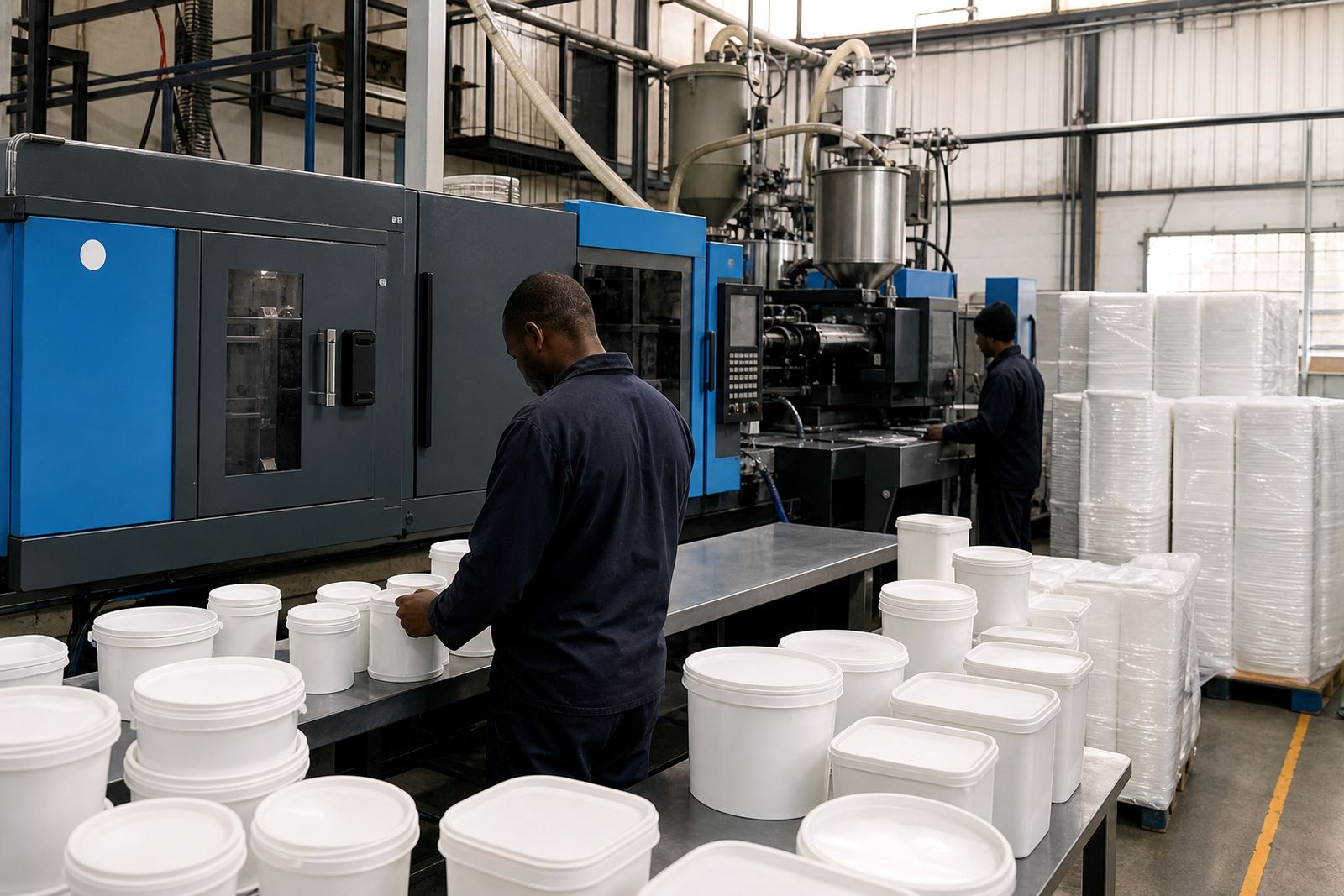
Injection-moulded polypropylene and HDPE containers are practical for many food, pharmaceutical and cosmetic packs because they hold shape well and close cleanly when handled properly. Even so, the rims, lugs and lid edges can pick up debris if staff stack them on dusty pallets or place them on unclean tables. Clean handling starts before filling begins and continues right through to final closing.
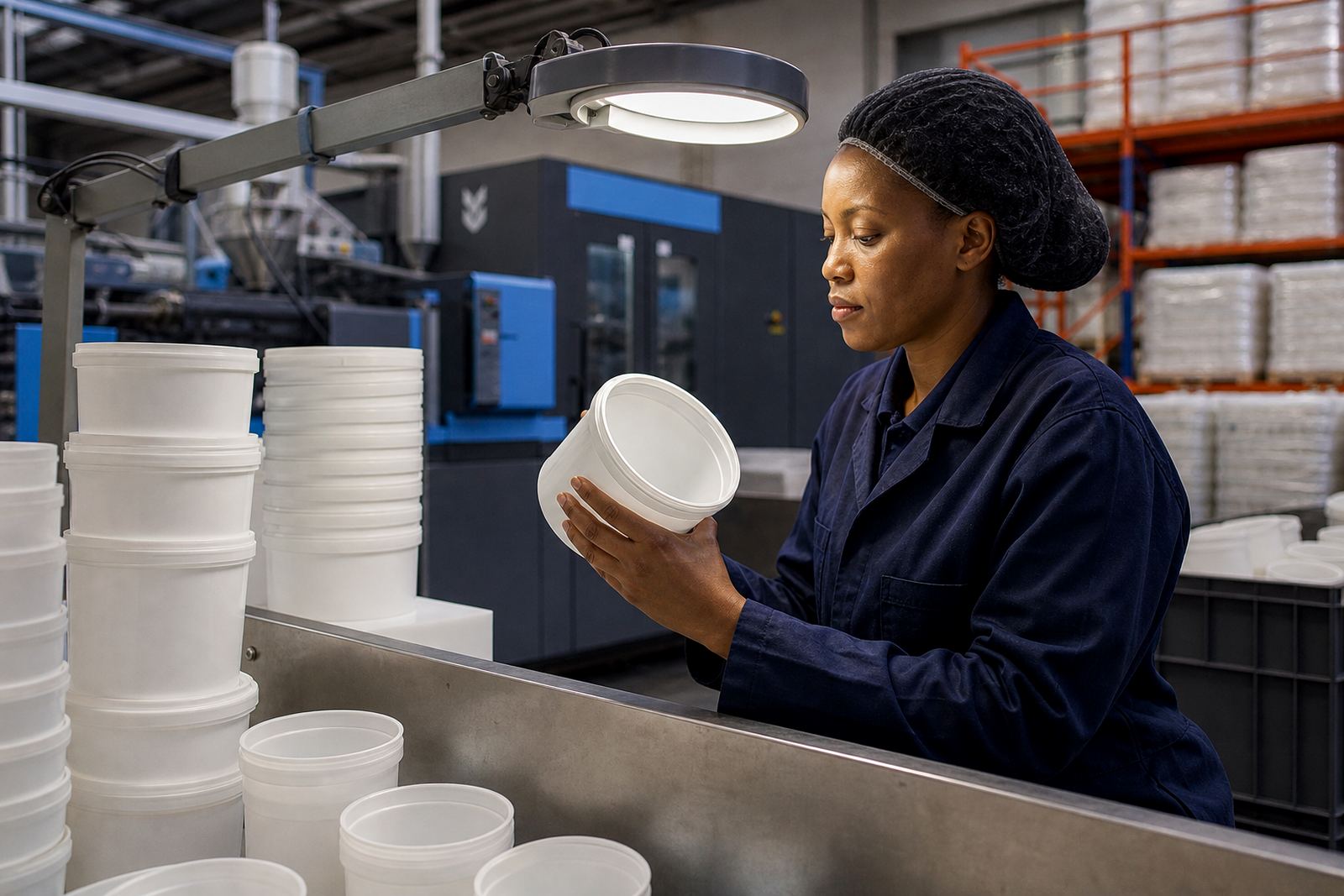
Operators should lift containers by the body rather than dragging them across benches. Lids need the same care, because a scuffed sealing edge can weaken the closure. If a packer uses tamper evident features, the seal band or strip should be checked for alignment during the first few closures and then again during the run.
- Keep open container stacks covered until needed.
- Do not place lids directly on exposed floors.
- Separate filled stock from empty stock at once.
- Use dedicated trays or totes for loose caps and seals.
What food, pharma and cosmetic lines share in common
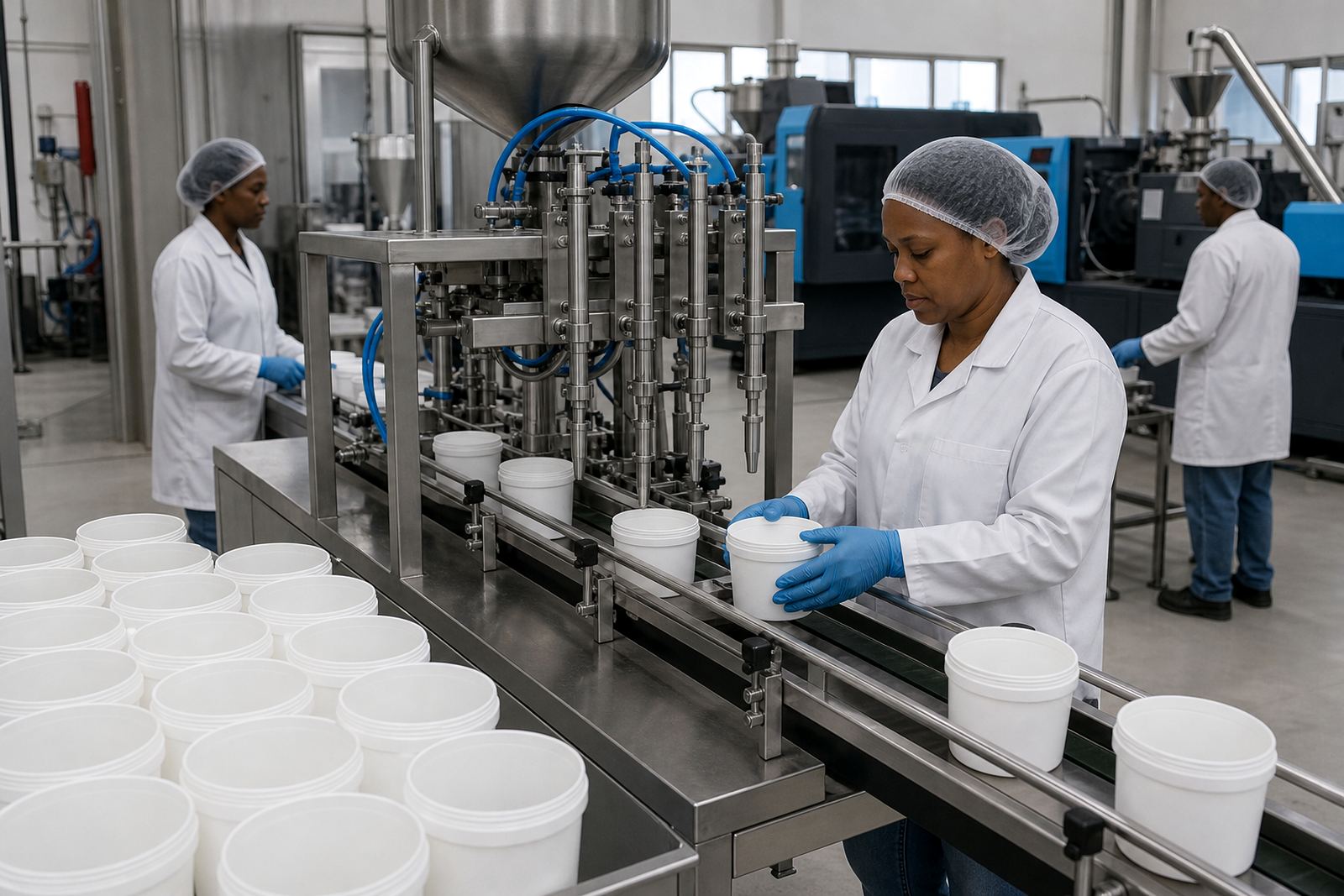
Each of these sectors has its own filling pattern, but the basic cleanliness discipline is similar. Food packers need to control crumbs, powders and spill splash near the mouth of the container. Pharmaceutical fillers need careful segregation of batches, labels and closure parts. Cosmetic lines often deal with creams, gels and coloured products that can stain benches or transfer onto the outside of the tub if wiping is rushed.
A neat packing environment makes line checks easier. Staff can spot a damaged lid, a missing seal or a misaligned container faster when the area is organised. It also helps supervisors see whether the line is running at the right pace, or whether product is building up near the closing station because the handover point is crowded.
For packers in Alberton and Germiston, this matters when stock moves between storage and dispatch in one shift. A clean transfer route reduces the chance of packaging picking up soot from forklifts, pallet dust or general yard dirt before it reaches the final carton.
Material choice shapes the cleaning routine
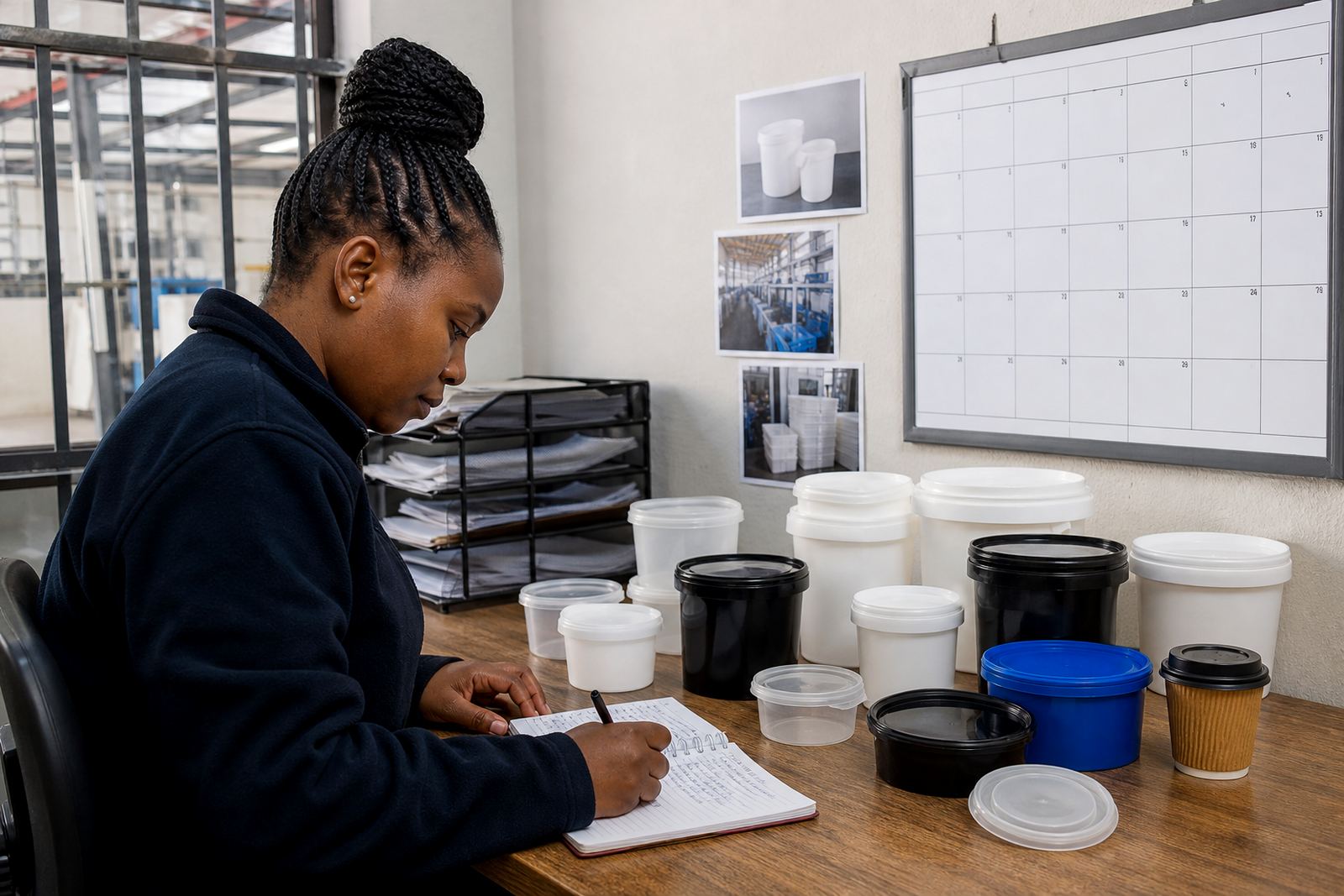
Not every pack behaves the same once it reaches the line. Polypropylene containers are commonly chosen for their light weight and good rigidity, while HDPE containers are valued for toughness and a practical finish on many filling lines. The shape, wall thickness and lid fit all influence how easy it is to keep the pack area neat.
Shallower tubs can be stacked and moved with less chance of toppling, while deeper containers may need more careful spacing to stop the rims from catching. If the product is oily, powdery or sticky, the contact points around the neck and lid need extra attention. Trial runs help identify where material drips, where closures slip and where housekeeping needs to be adjusted before full production.
- Use a container profile that supports stable stacking.
- Match the lid style to the closure method on the line.
- Check whether the seal band sits evenly after closing.
- Keep spare parts in closed, clean storage trays.
A Pretoria fill room with one stubborn problem
A cosmetics packer in Pretoria was filling small tubs with a thick cream product. The line itself was sound, but the team kept finding loose dust around the closing station after each shift. The cause was not the filler. It was the transfer habit. Open sleeves were left near a side door and the pallet staging area sat too close to the traffic path, so dust was moving back into the room.
After the layout changed, the team moved unused containers into covered bins, brought lids out in smaller quantities and marked a cleaner path for finished cartons. The result was not dramatic in appearance, but it changed the feel of the whole room. Fewer wipe downs were needed and the closing team had less doubt about what was touching the packs. That sort of change is small, yet it is often what keeps a line steady.
Practical habits that keep the room under control
Clean packing environments rely on routine more than on a once off deep clean. Every shift should start with a clear bench, a dry floor and enough space for empty and filled stock to stay apart. Staff should know where lids, seals and rejects go, so that nothing is left mixed into the main production flow.
A short daily discipline often works better than a long clean up at the end. It keeps the line visible and it reduces the chance of finding a closure fault only after cartons have been packed. Secondary packing should also be kept tidy, because torn outer bags and open boxes can shed material back into the filling area.
- Wipe benches before the first fill starts.
- Empty waste bins before they overflow.
- Keep cleaning cloths separate from product contact parts.
- Record recurring spill points and fix the cause.
- Inspect lids and tamper seals during changeovers.
A cleaner line makes audits and dispatch easier
When a packing room is tidy, the rest of the operation becomes easier to manage. Checks are quicker because containers, lids and seals are stored where they should be. Dispatch also benefits, since labelled cartons are less likely to be damaged or reworked before leaving the site. On larger runs for Johannesburg or Cape Town, that order helps maintain consistency from first carton to last.
Clean packing environments are not about making the room look polished for a visitor. They are about keeping the product path controlled from storage to seal and from seal to pallet. For local packers working with food, pharmaceutical and cosmetic goods, that discipline protects the pack, supports the line and reduces avoidable waste.