
Set the receiving bay before the truck rolls in
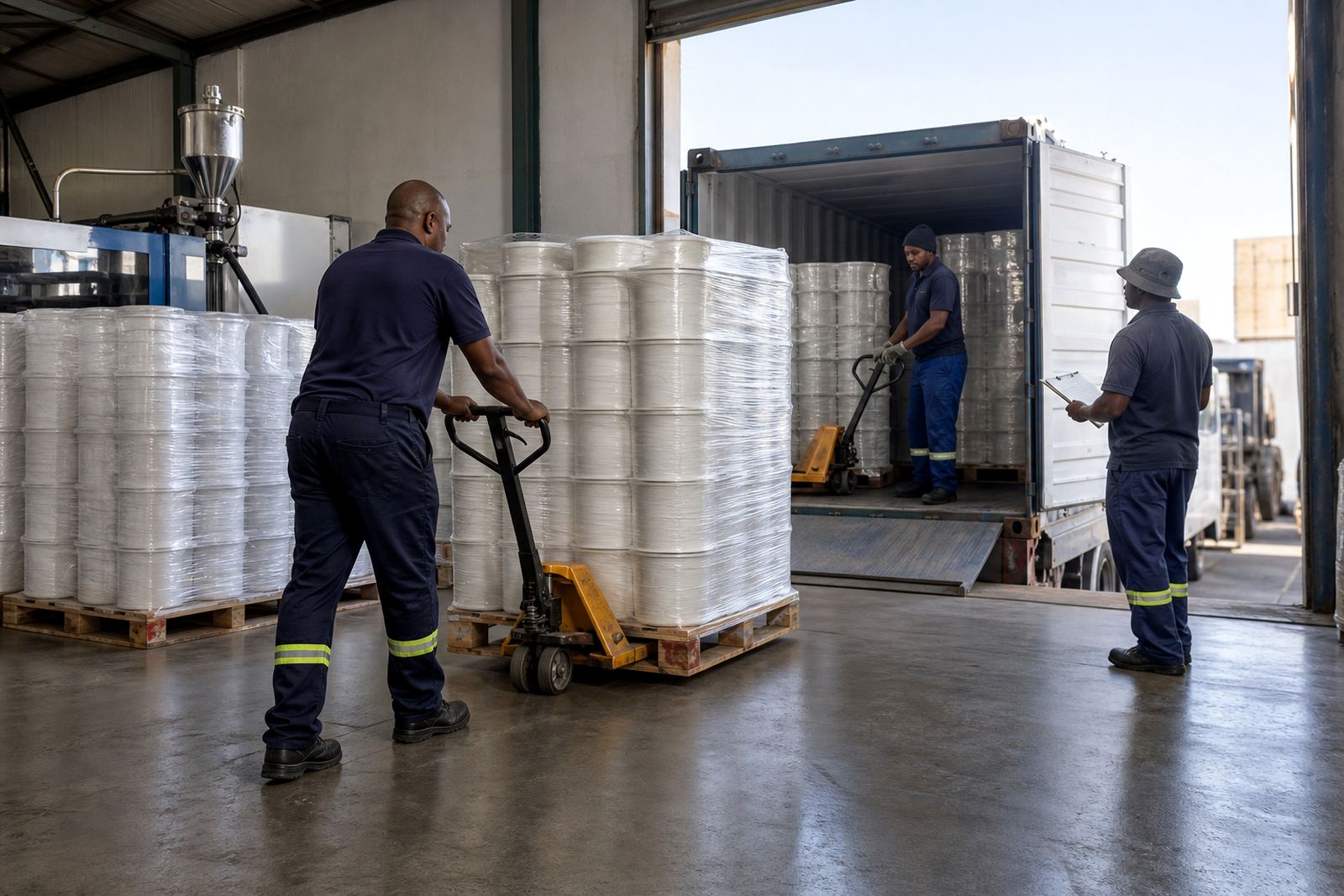
A smooth receiving process starts before the first carton is lifted. Clear a level space near the receiving bay, mark off room for pallets, and leave a separate area for counted stock, empty pallets, and any cartons that need checking. In Gauteng heat or coastal humidity, closed cartons should not sit on wet concrete for long because moisture can soften packaging labels and make outer boxes harder to read.
At a busy site in Alrode or Germiston, a receiving team often has only one practical shot at keeping order. Put the tally sheet, cutter, marker, tape and pallet tags within reach before doors open. If tubs, lids and tamper seals arrive together, keep each product family on its own pallet or row so the mix stays clear from the first minute.
- Confirm the receiving space is dry, level and easy to access.
- Keep one area for checked stock and another for items still to count.
- Use pallet tags or board labels for each product line.
- Keep cartons sealed until the count is ready to start.
Count cartons first, then open only what needs checking
The safest method is to count the outside units first. Check pallet counts, carton counts and any bundle labels before cutting open the top layer. That keeps the receiving table calm and reduces the chance of losing track when several sizes arrive together, such as 250 ml tubs, larger HDPE tubs and matching lids.
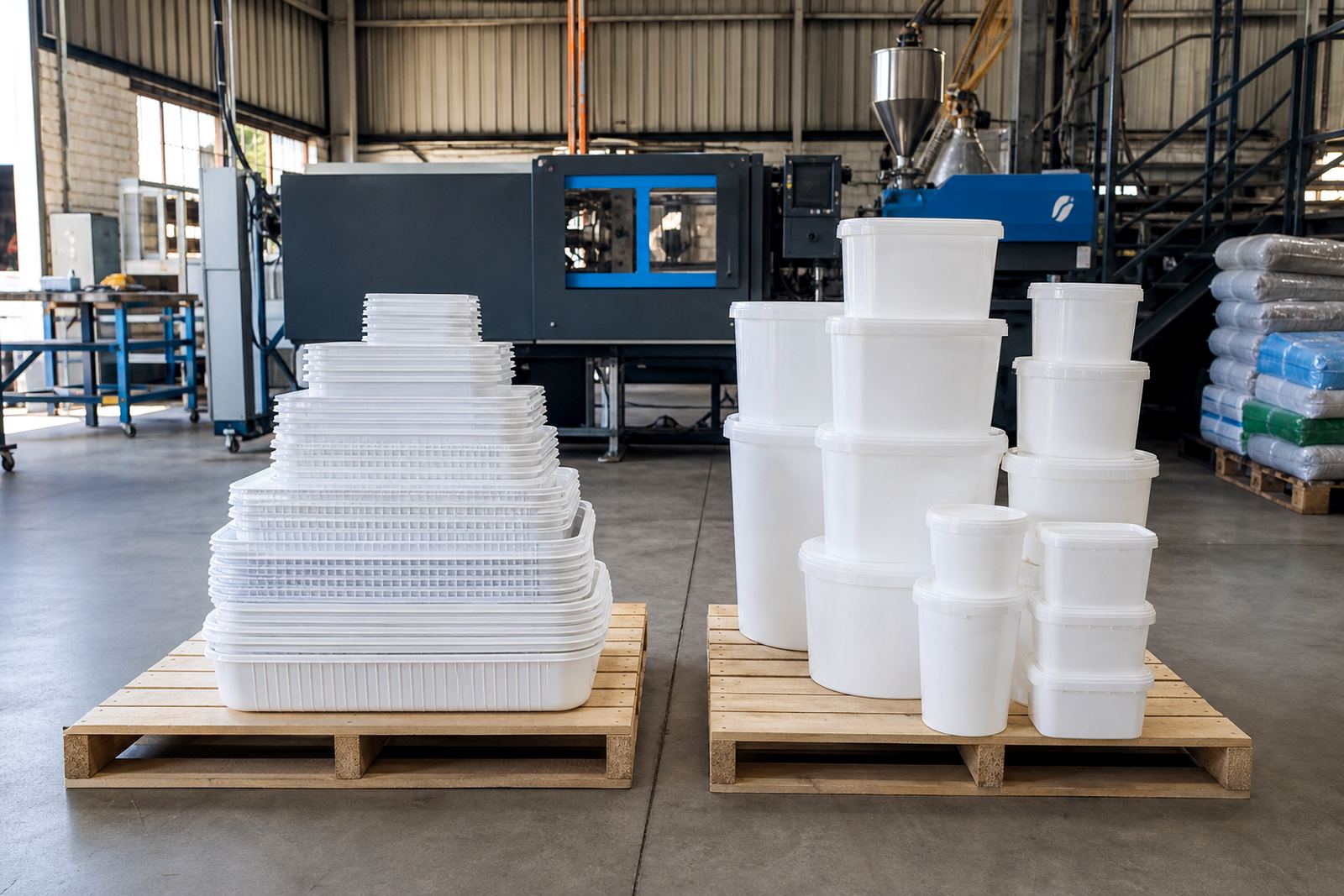
Once the outer count is confirmed, open a sample from each line to check size, colour, fit and finish. Injection-moulded containers should stack neatly, sit evenly and show consistent wall formation. Lids should close squarely and tamper seals should line up without forcing. If a pack line uses a filling head or lidding station, check one sample against the actual packing line set-up, not just against the carton label.
- Count cartons before opening them.
- Open samples from each product size and colour.
- Check lid fit by hand on a sample tub.
- Keep one sample aside as a reference from the receiving point.
Stage tubs so the packing floor keeps its order
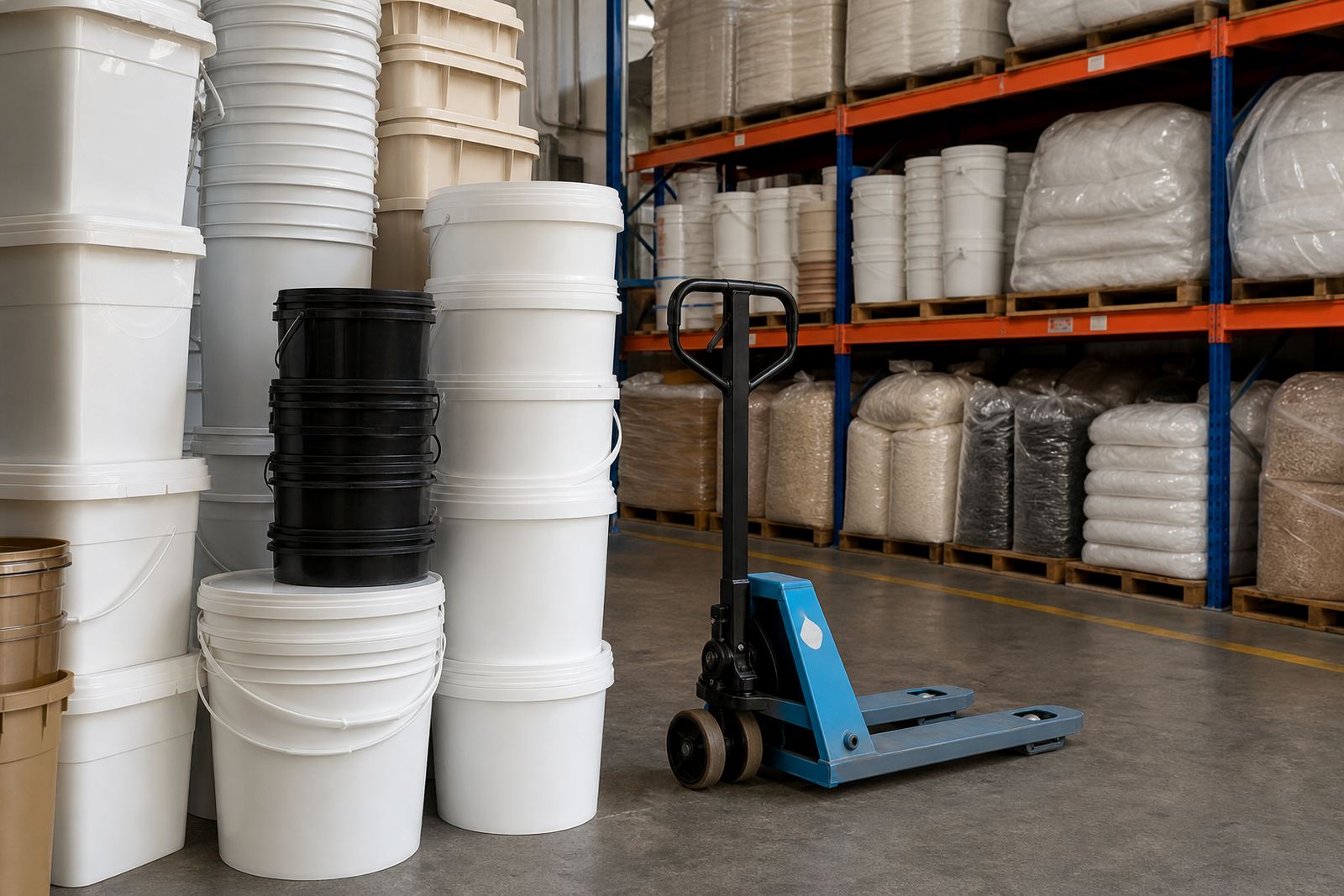
After counting, staging becomes the next control point. Tubs should be placed where the packing team can reach them without crossing forklift traffic or walking through finished goods. If the site runs a hand-pack area, stage by pack size and use clear separation between food pack stock, cosmetic stock and pharmaceutical stock. That reduces mix-ups when staff are working quickly and changing over between products.
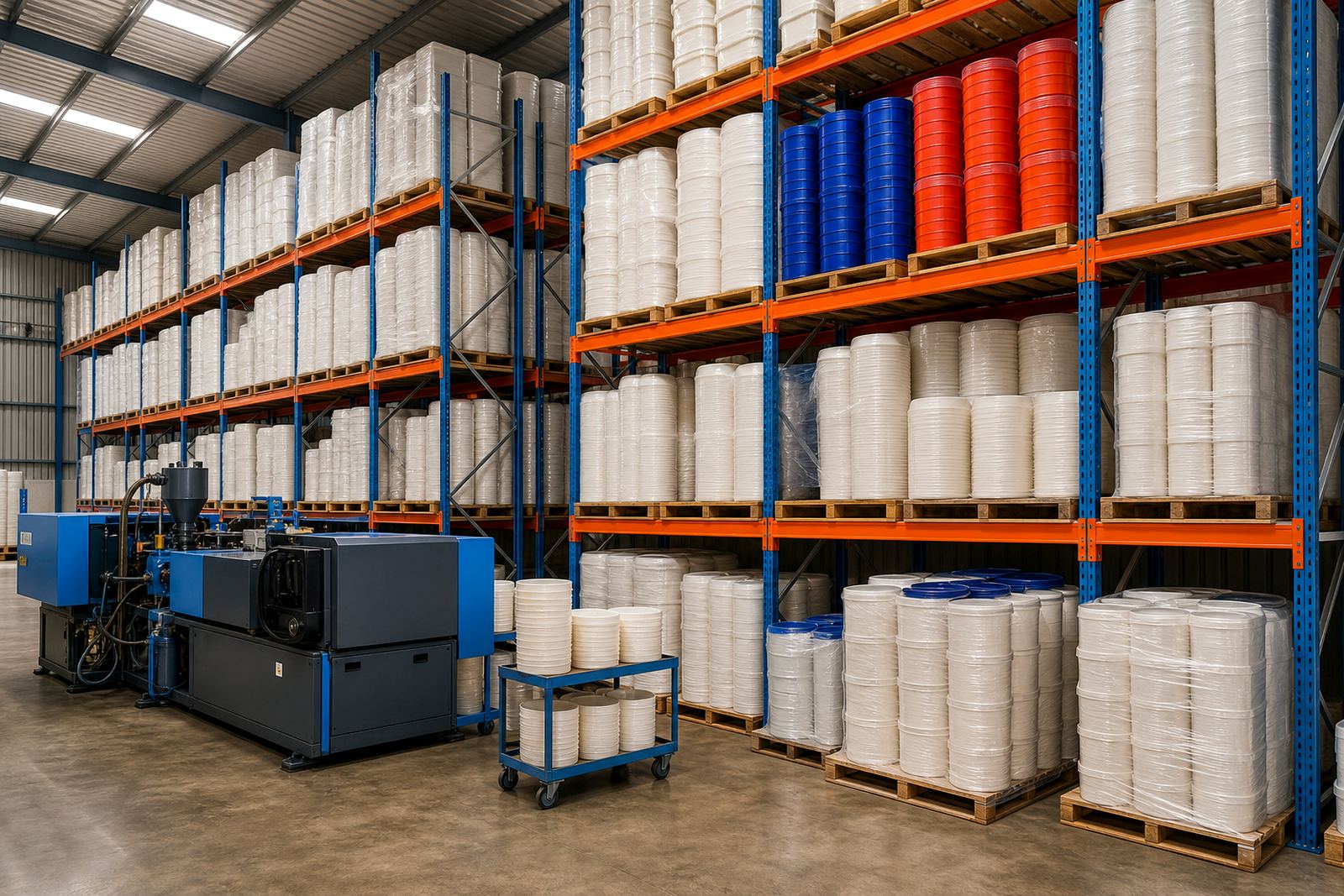
At larger facilities in Pretoria or Durban, staging often works best when stock is broken into smaller, clearly marked groups. Keep lids close to their matching tubs and place tamper seals in their own marked trays or cartons. If a line runs in batches, release only the quantity needed for that batch and keep the balance sealed. This makes stock taking easier and helps the floor stay cleaner during busy shifts.
- Stage by product, size and pack line.
- Keep lids beside the tubs they belong with.
- Separate tamper seals so they do not get crushed.
- Release stock in manageable batches, not in one big pile.
Where products move from receiving straight to packing, avoid stacking cartons too high. A tall stack near a roller door or a humid loading bay can shift, lean or absorb damp air. Shorter stacks are easier to count and easier to move without damaged corners or split boxes.
Check fit before the first full run starts
A trial fit at receiving can prevent trouble later on the line. A lid that sits too tightly can slow packing, while a loose lid can lead to poor closure and rework. For tubs supplied for food, pharmaceutical or cosmetic use, the fit should suit the product, the filling method and the way the site handles finishing and sealing. If a tamper seal is used, check that it tears cleanly and stays aligned where it should.
Material choice matters here too. Polypropylene is often used where light weight, stiffness and repeat stacking are useful, while HDPE is commonly chosen where toughness and impact resistance are needed. The receiving team does not need to solve the full technical brief, but it helps to know which product is meant for which line. That makes it easier to spot if a carton has been delivered to the wrong bay or if a line has received the wrong closure style.
- Test a sample lid on a sample tub before the line starts.
- Check that tamper seals tear in a controlled way.
- Separate material types if more than one is on site.
- Keep mixed sizes away from each other during the first hour of receipt.
Use local site conditions to shape the unloading routine
A site in Cape Town may face cooler mornings and damp air, while a Durban warehouse can deal with humidity that makes cartons feel softer by midday. In Johannesburg or Pretoria, dust and truck traffic can affect the receiving bay in a different way. The unloading routine should suit the site, not only the delivery note. If the bay is exposed, bring the cartons in fast and keep them under cover until the count is done.
A practical example: a cosmetic packer in Alberton receives matching tubs and lids for a new cream range. The truck arrives during a busy changeover, so the receiving supervisor sets one pallet aside for tubs, one for lids, and one for seals. Each pallet gets a marker card with the SKU, quantity and a quick note on condition. The team checks the top layer, confirms the fit on two samples, then moves the stock straight to the designated packing side. No cartons get opened twice and no one has to hunt through mixed stock later in the shift.
That kind of routine sounds small, but on a busy floor it saves labour and keeps receiving from becoming a bottleneck.
A clean handover is part of the packing plan
Receiving stock efficiently is not only about counting. It is part of the packing plan, the stock plan and the shift plan all at once. When tubs, lids and seals are staged properly, the pack line starts in order and the team wastes less time sorting out avoidable problems. Good receiving also makes it easier to notice when a run needs different colour matching guidance, a change in pack size or a revised carton split for the next delivery.
For local businesses working across Johannesburg, Durban, Cape Town, Pretoria and Port Elizabeth, the most reliable receiving routine is usually the one that is plain and repeatable. Clear bays, careful counts, sample checks and tidy staging do the job without drama. The less time stock spends floating between the truck and the line, the better the day tends to run.