
Where Nesting Saves Space, and Where It Does Not
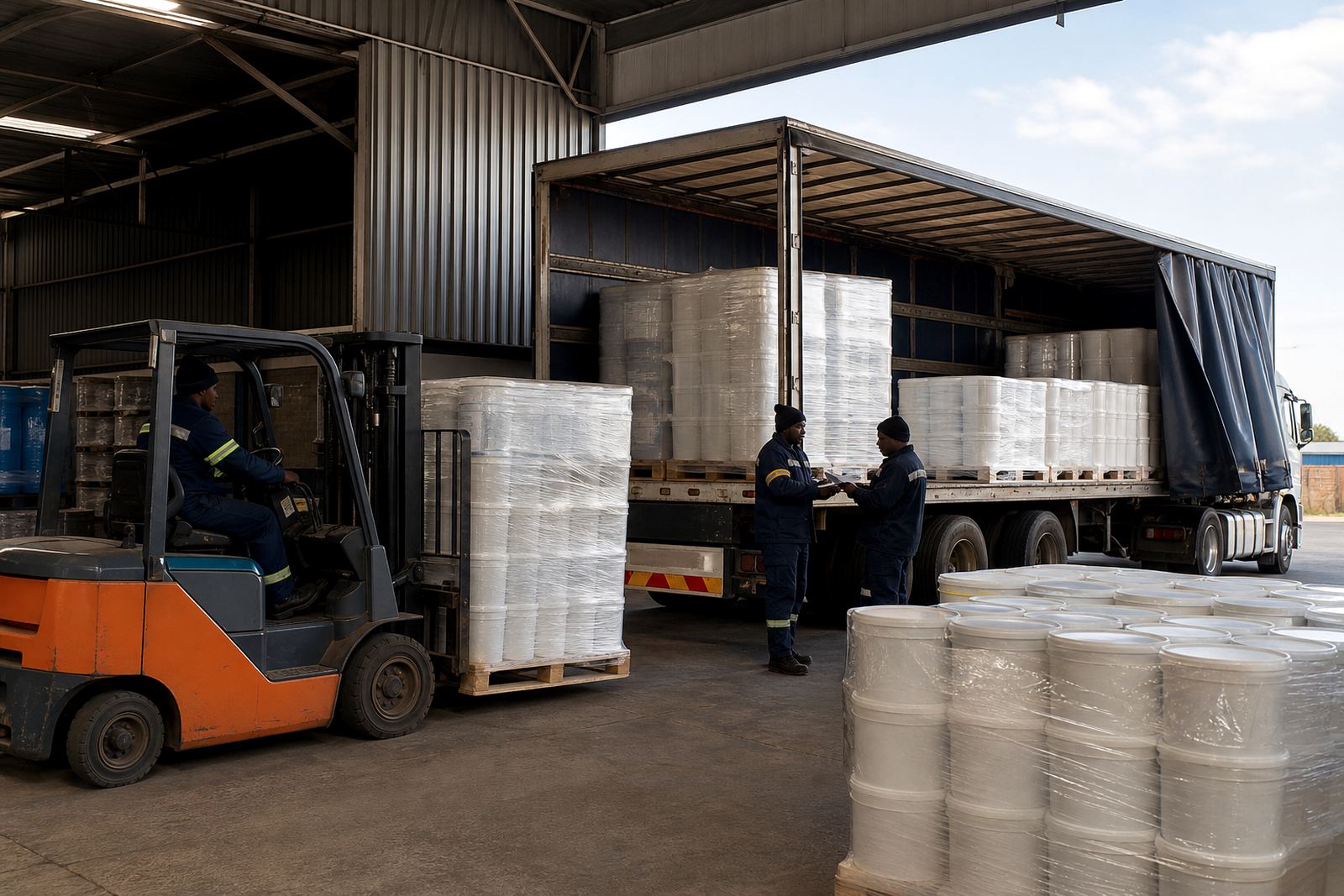
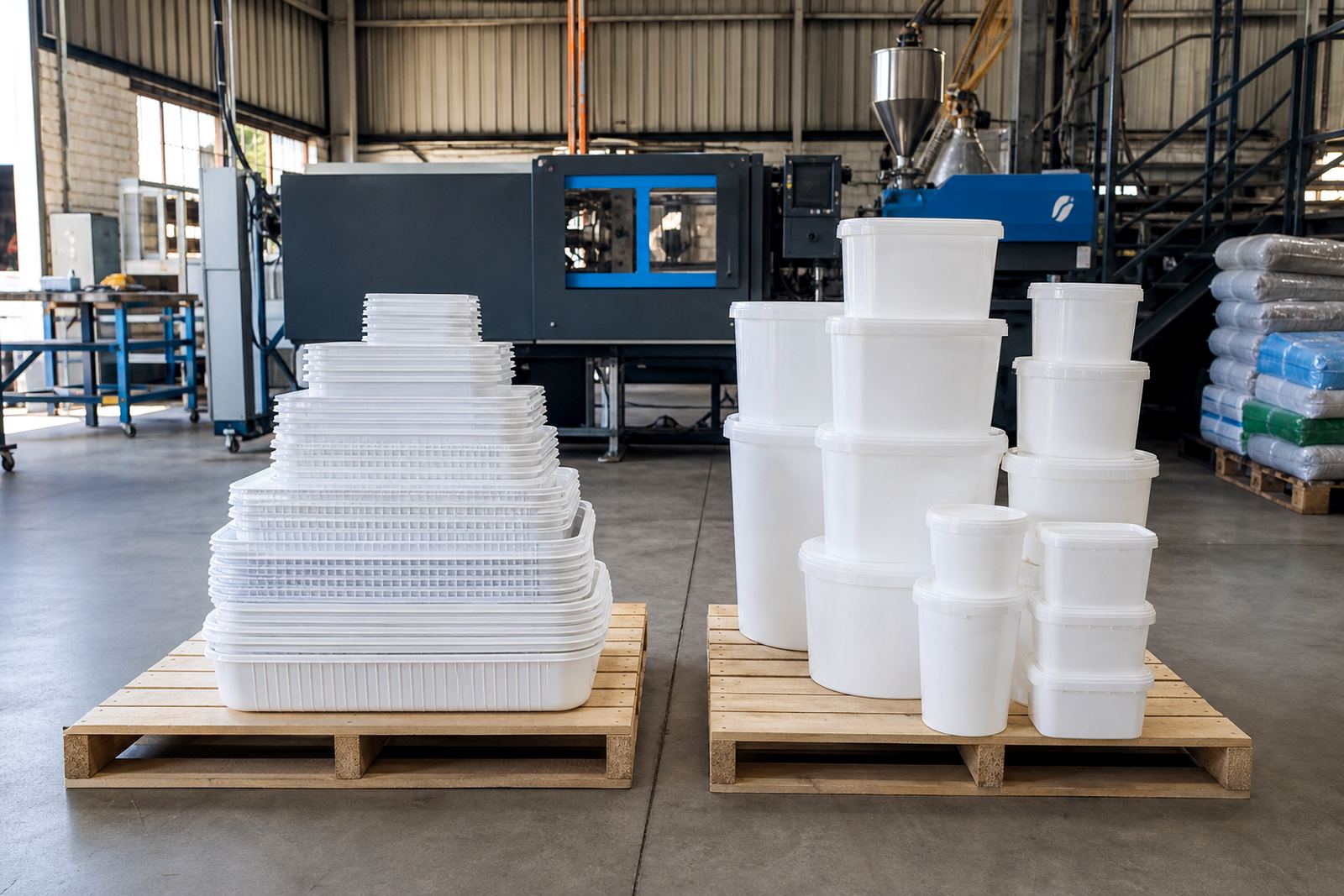
Nesting tubs sit partly inside one another, so they take up less room in storage and during transport. That makes them useful where empty packs move in bulk from Alrode to Johannesburg, Durban or Cape Town and every cubic metre in the truck matters.
Straight-wall non nesting containers stack on top of each other with a flat shoulder and a firmer footprint. They need more storage space, but they often give better height control and cleaner handling on filling lines. The first question is not which format looks neater, but how the empty pack will move before it gets filled.
In a busy store room, nested packs can be counted and issued faster. On a production floor, straight stacks can be easier to lift, separate and feed into a line when operators are working with gloves, speed and tight changeovers.
What Injection Moulding Changes In The Final Shape
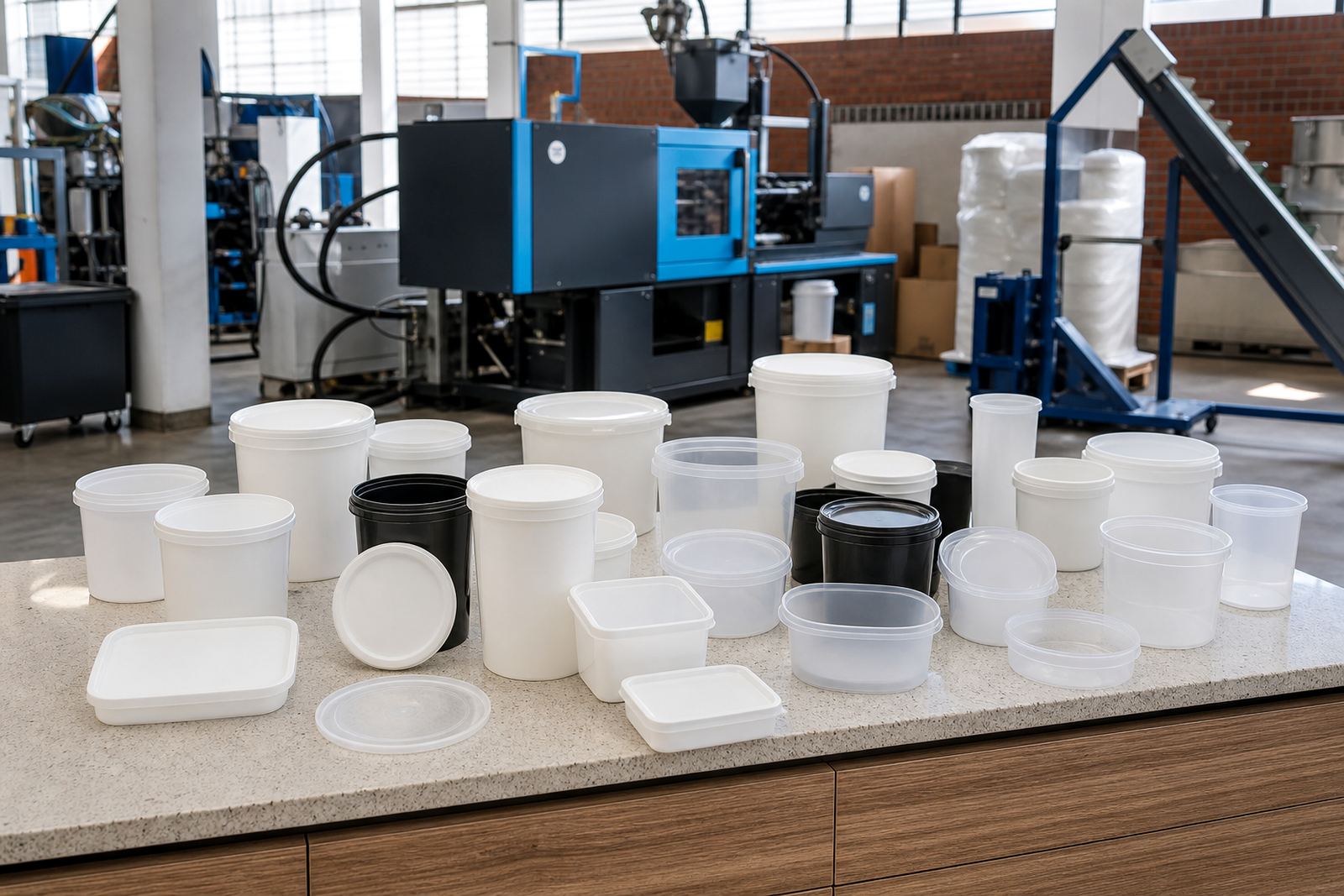
Injection moulding lets a tub or container be formed with repeatable wall thickness, rim detail and base strength. That matters when a pack must nest cleanly without locking too tightly, or stack straight without wobble.
With polypropylene and HDPE, the mould design controls much more than appearance. Rim profile, sidewall taper, bead placement and base finish all affect how the container behaves in a stack, in cold rooms and in humid coastal conditions.
A nested pack usually has a gentle taper so it releases without sticking. A non nesting pack keeps more straight wall geometry, which can support better load transfer when cases are full and palletised for long road hauls. Small differences in the mould can change how the whole pack line runs.
- More taper usually means easier nesting.
- Straighter walls usually mean better top-to-bottom stacking.
- Rim shape affects both sealing and handling.
- Base detail can reduce scuffing in transit.
When Food Packers Need Fast Handling
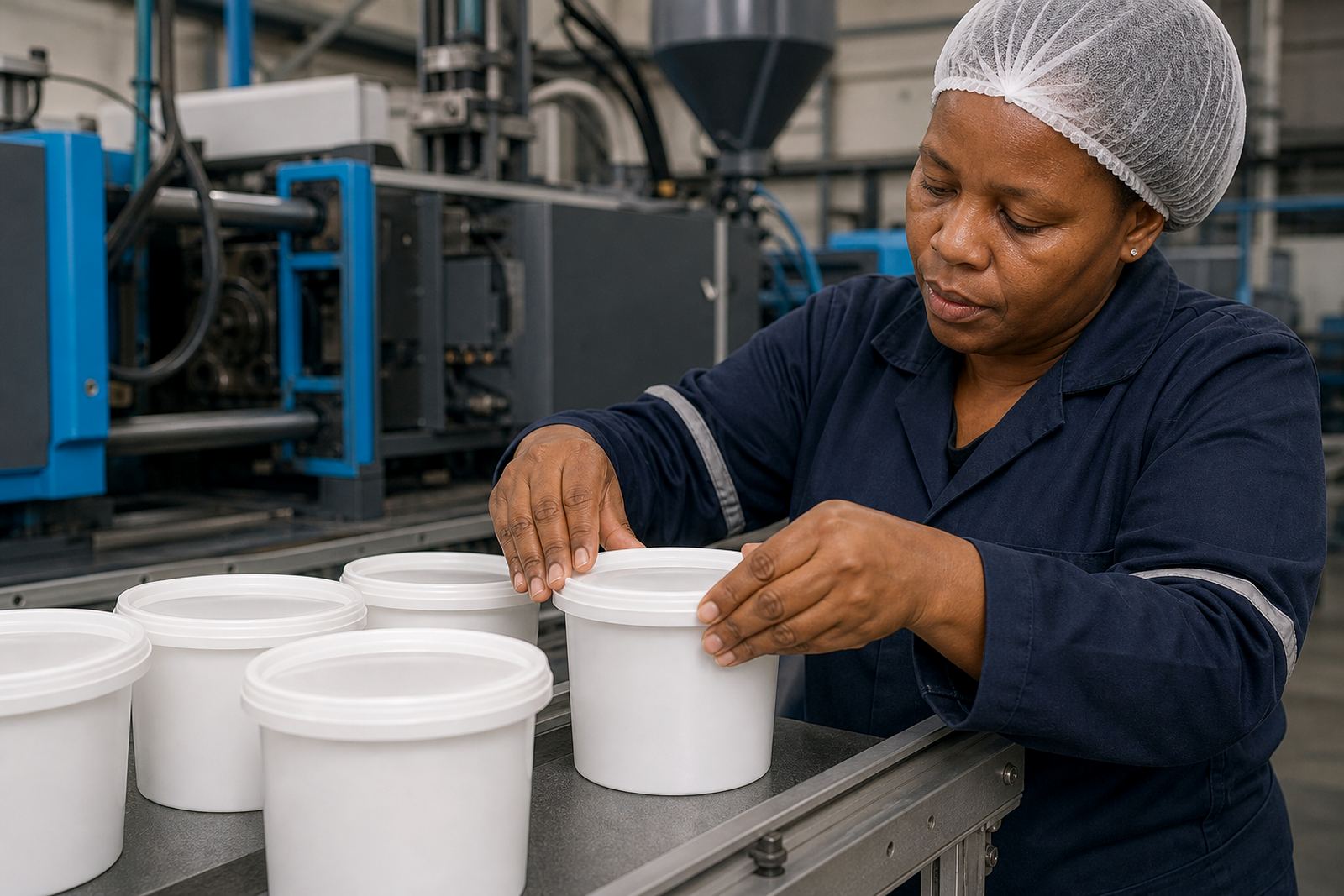
Food packers often care about speed at the filling table, lid placement and how the empty containers arrive in sleeves or loose stacks. A nested tub can reduce the volume of empties in the warehouse, which helps where stock is held in Alberton and sent out in mixed loads to regional packers.
Non nesting containers can be better where the same size is filled in high volumes and fed repeatedly into a line. Operators can separate them with less chance of vacuum grip between pieces. That matters on lines packing dairy, dry ingredients, sauces or ready-to-eat portions, where smooth hand movement can reduce hesitation at the line.
If a lid must close with a tamper seal, the container needs a rim that stays true under pressure. Some nested formats are fine for light filling but become less stable once weight, heat or sealing force is added. A trial run usually shows the difference quickly.
- Nested packs reduce the space taken by empties.
- Non nesting packs often feed more consistently on fast lines.
- Seal fit should be checked with the intended lid.
- Fill weight affects whether the wall shape still behaves well.
Pharmaceutical And Cosmetic Jobs Ask For Cleaner Control
Pharmaceutical and cosmetic packers usually want tidy presentation, reliable closure and stable pack dimensions. Nested containers can help where empty stock needs to be stored in smaller spaces, but the pack must still separate neatly without scuffing or pulling at the rim.
Cosmetic creams, bath products and gels often need a neat shoulder and a lid that sits square. Straight-wall tubs are useful where appearance on the shelf matters and where the pack is packed, sealed and boxed with little tolerance for shape drift. For pharmaceutical secondary packing, consistency between batches is just as important as the look of the tub.
Material selection is part of the decision. Polypropylene is common where a lighter, firmer pack is needed. HDPE is often used where toughness and impact resistance matter. The right answer depends on product weight, storage conditions and the way the pack is handled from moulding through to dispatch.
How Lid Design, Tamper Seals And Stack Height Work Together
The container shape cannot be separated from the lid. A nested body with the wrong rim can make lid application awkward, while a straight-wall body with an over-tight seal can deform during capping. That is why lid development and tamper seal design need to sit alongside the container choice.
Stack height also matters. Too much nesting depth can create a tall, unstable stack when empty packs are bundled. Too little taper can make the stack bulky and waste pallet space. For dispatch into Durban or Port Elizabeth, the best format is often the one that balances storage, line use and freight volume instead of trying to maximise only one factor.
Secondary packing should be planned at the same time. Sleeves, cartons and pallet patterns all change the way the packs travel. A neat container profile can still create handling trouble if the packed unit is too tall, too loose or awkward to count.
A Local Run In Alberton Shows The Difference
One common local example is a packer in the Gauteng industrial belt needing both a retail tub and a bulk supply format. The retail line wants clean presentation and a lid that sits firmly. The bulk line wants fewer truck movements, less empty air and simple stock counting.
In that setting, a nested tub can work for the bulk side where empty packs are held in reserve. A non nesting tub may suit the retail side where line feeding and shelf shape carry more weight. The same product family can use both formats if the moulded details are planned carefully.
That is where trial production runs and line fit checks pay off. A pack that looks fine on a sample table can behave differently once filled, sealed and stacked in a hot warehouse or on a coastal delivery route.
- Nested formats suit compact storage of empties.
- Non nesting formats suit controlled stacking and display.
- The best result depends on the full packing route.
- Local trial runs show handling problems before volume starts.
Making The Choice Without Guesswork
The decision between nesting and non nesting is rarely about one feature only. It comes down to how the pack is moulded, how it seals, how it travels and how the line runs in practice. A container that saves space can still slow production if the shape is awkward for operators, while a straighter stack can cost more in storage if the empty packs take up too much room.
For South African packers, the better choice is the one that fits the product and the route from mould to shelf. In food, pharma and cosmetics, that usually means checking the container body, lid, seal and packing method together, not one at a time.