When a One-Time Seal Is Not Enough
Recloseable packaging matters when the product lives beyond the first opening. A yoghurt-style dessert, a protein spread, a medicated balm, a face mask, or a refill item all need a container that can be opened, closed, and opened again without the lid feeling loose after a few uses. That is where the moulded tub, the matching lid, and the sealing detail all have to work together.
In many pack lines the first seal is there for protection during transport and shelf handling, then the lid carries the daily use. If the fit is poor, the product may dry out, leak, pick up odours, or leave residue around the rim. In hot inland stores around Johannesburg and Pretoria, or in humid coastal storage in Durban and Port Elizabeth, a weak closure shows up fast.
How Injection Moulding Shapes a Better Reclose
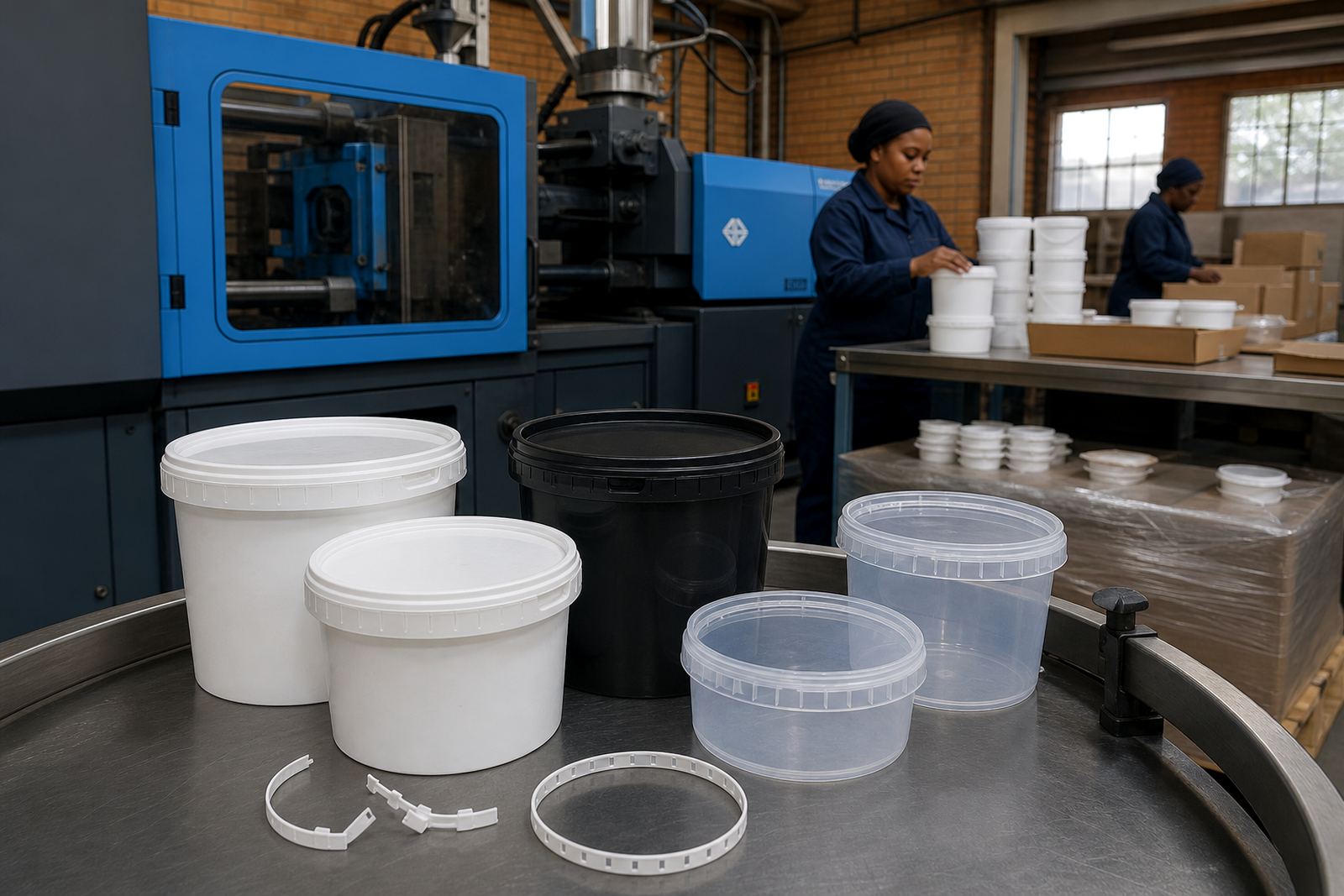
Injection moulding gives consistent wall thickness, clean rim detail, and repeatable lid fit. For tubs that need to reclose well, that repeatability matters. The rim profile, snap point, and base stiffness all affect how the lid feels after the first open and close cycle. A tub that flexes too much can pop its seal too easily, while one that is too tight becomes awkward on the line and awkward for the customer too.
Polypropylene is widely used for food and personal care tubs because it handles many dry and semi-wet products well and has useful flex for snap fit lids. HDPE is often chosen where a tougher, slightly more forgiving container is needed. Both materials can be used for food-safe packaging when the application, wall design and closure style are matched properly to the product. The wrong choice can mean rim distortion, or a lid that feels fine on day one but loosens after handling.
- Rim detail must match the lid profile closely
- Wall stiffness should support repeated opening
- Base shape should suit stacking and shelf handling
- Material choice must suit the product and storage conditions
Tamper Evidence Without Making Reclosing Awkward
Many packers want a tamper seal on the first opening, but they also want the tub to remain easy to use afterwards. The trick is to keep the tamper feature clear and visible without making the everyday closure clumsy. That can mean a tear strip, a security band, or a separate film seal under a recloseable lid. Each option has a different effect on packing speed and customer handling.
For a food packer in Alberton filling flavoured spreads or deli side dishes, the pack line may need a clean peel on the first open, then a firm snap fit for the next close. For a cosmetic packer in Germiston filling body scrubs or creams, the lid has to stay tidy after repeated use, because product around the thread or rim looks untidy and can make the closure feel unreliable. The fit has to work on the line and in the bathroom shelf at home.
- First opening should be clear and controlled
- Second and third closures should still feel firm
- Tamper features must not snag on the rim
- Product residue should not gather at the seal line
Pack Line Fit and Handling on Busy Floors
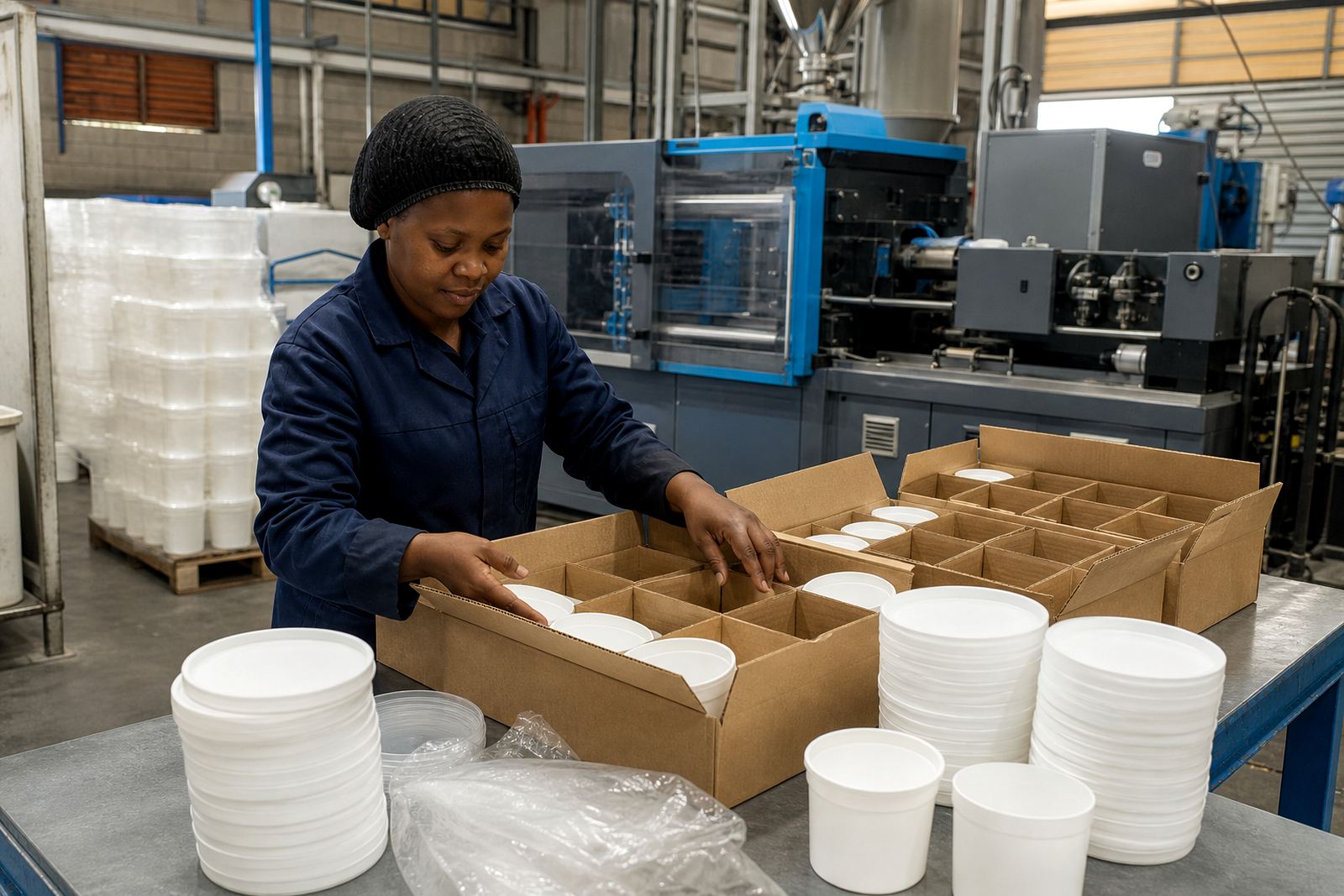
Recloseable tubs need to suit the actual line, not only the sample in hand. Fill temperature, capping method, label placement, and secondary packing all affect the result. A lid that looks fine in the sample room can behave differently once it runs through a busy shift with varied operators and changing product flow.
Line fit checks usually look at the same practical points: whether the lid seats evenly, whether the tamper seal applies without tearing early, and whether the filled tub stacks cleanly into cartons or shrink-wrapped trays. In South African plants where packers work across mixed product runs, even a small issue can slow a line down or leave too many rejects. A tidy closure saves handling later, and that matters in high-volume production.
Local Conditions That Change the Spec
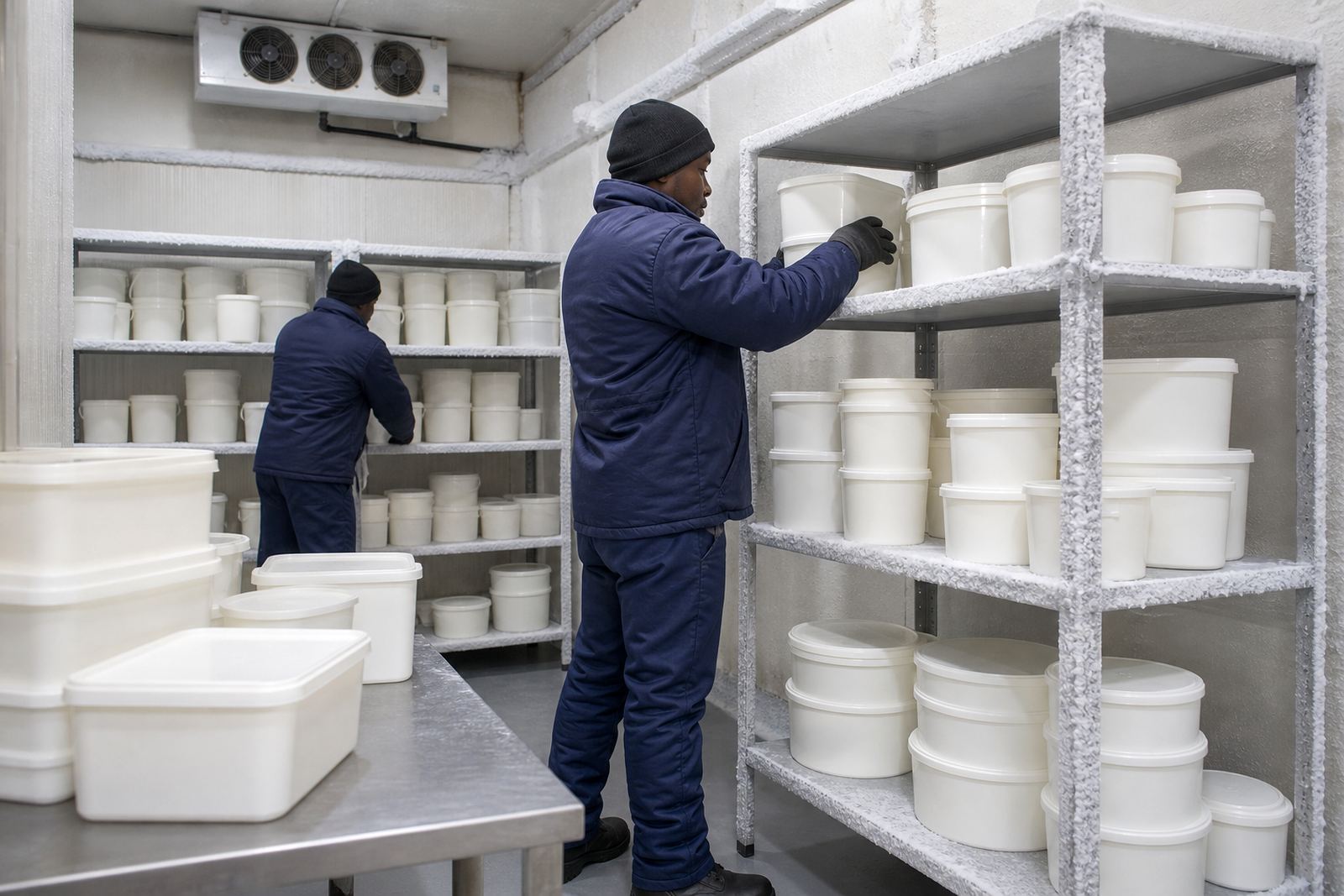
Packaging for local distribution has to deal with more than the product itself. Durban deliveries can face heat and humidity, which affect labels, film seals and some closures. Cape Town can bring cooler storage changes between warehouse and truck. Inland routes from Alberton to Pretoria or Boksburg may involve longer transit, stacked pallets, and repeated handling at distribution points. Recloseable tubs need enough strength to cope with all of that.
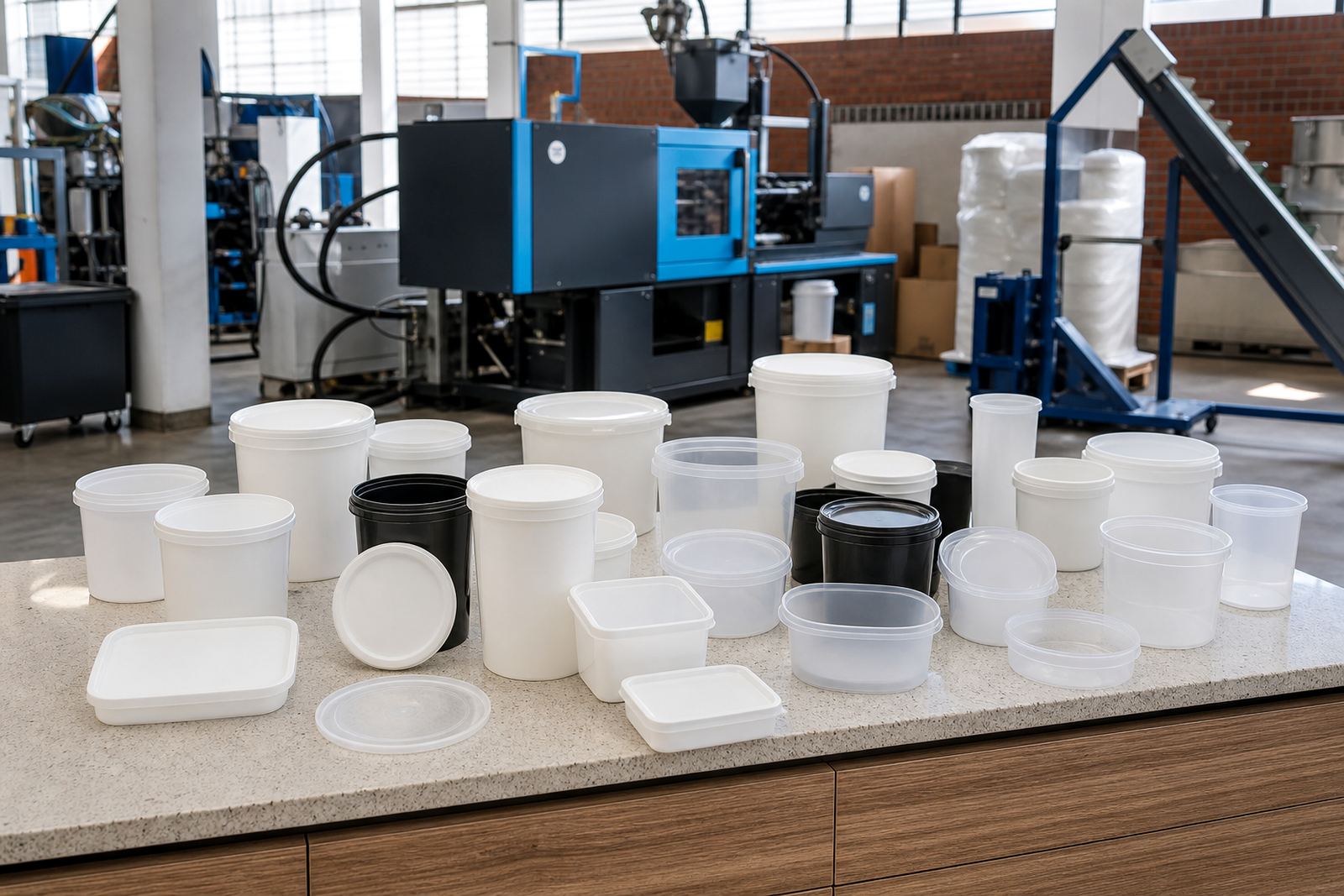
Colour matching guidance also matters when a product range grows. A main size may work for one flavour or one cream formula, then a smaller pack size or a different colour lid is needed for the next pack line. Keeping the family of tubs consistent helps with shelf presentation and makes stock run planning easier for the dispatch team. A lid that closes properly after purchase is part of that consistency, not just a finishing detail.
What a Practical Tubs Range Can Cover
A good recloseable range normally starts with the product habit. Is it a daily-use item, a single-opening dessert, or a refill pack that gets handled many times? From there, the tub volume, lid style, seal detail and stock holding plan can be set with fewer surprises. Trial production runs are useful here because they show how the container behaves in real filling conditions, not only on paper.
For packers in Johannesburg, Durban, Cape Town, Pretoria and Port Elizabeth, this approach helps match the packaging to the route, the product and the final user. One pack may need a simple snap-on lid for dry contents, while another may need a tighter closure with clearer tamper evidence for higher-value product. The right answer is often plain and practical, not flashy.
- Choose the tub depth around the fill pattern
- Match lid style to how often the pack opens
- Set the tamper feature before tooling is finalised
- Use trial runs to confirm line fit and reclosing
A Tidy Close Says the Job Was Thought Through
Recloseable packaging is about more than getting product into a container. It is about how the pack behaves after the customer has already opened it, used some, and wants the rest to stay in good condition. That is where mould detail, material choice, and closure design earn their place. When they are matched well, the tub feels secure without being stiff, and the pack keeps doing its job long after the first open.
For food, pharmaceutical and cosmetic packers, that kind of packaging protects the product, supports the line, and gives the end user a better daily experience. It is a small detail, but it carries through the whole supply chain. A lid that closes properly can be the difference between a pack that feels careful and one that feels unfinished.