A chilled run that had to stay neat on the line
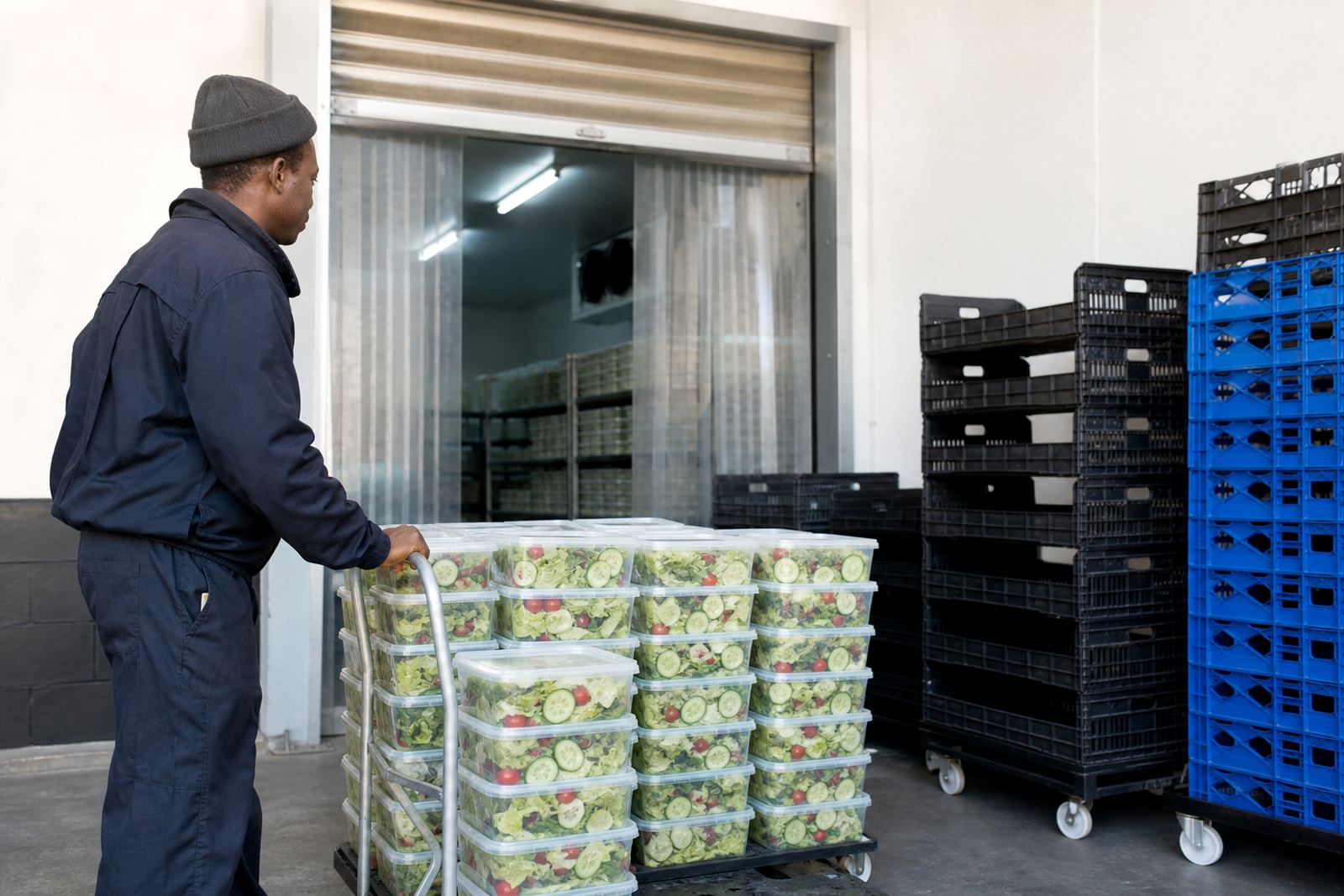
The client was a chilled foods packer in Johannesburg handling salads for retail and foodservice channels. Their packers needed rectangular tubs that stacked well in cold rooms, moved cleanly through filling, and kept the contents presentable after transit across Gauteng and further afield.
The main challenge was balance. The tub had to feel light enough for a fast packing line, but firm enough to keep its shape with wet product, dressing and repeated handling. The lid had to close evenly, and the seal line had to stay consistent when trays were packed in batches through the morning and into later shifts.
- Project type: chilled food packing for salad portions and mixed deli items
- Town base: Johannesburg, with supply routed through our Alrode operation
- Container style: rectangular deli tub for neat stacking and shelf presentation
- Closure: matching lid with tamper seal option for packed retail lines
Size, material and closure decisions
We worked with polypropylene containers for the main run, then checked the lid fit against the client’s packing line and cold storage handling. For chilled foods, a food-safe material with good rigidity matters because the pack has to survive filling, lidding, cartoning and cold-room movement without the corners opening or the walls bowing.
The tub profile was selected for clean stacking and a predictable footprint inside secondary cartons. We also reviewed HDPE options for related pack sizes where the client wanted a slightly different feel, but the main salad line used polypropylene because it suited the line speed and the shelf presentation they wanted.
- Rectangular footprint for carton packing and shelf alignment
- Clear lid fit checks against the filling line guide rails
- Tamper seal layout for retail packs where the seal needed to be obvious
- Material selection discussed against temperature, handling and display needs
Trial runs on the packing line
Before full scheduling was set, we ran trial production runs to confirm the tub sat correctly under the filling heads and did not tilt on the conveyor. The client’s team wanted a repeatable pack that would not force constant adjustments, because small line changes can slow a chilled foods run very quickly.
We checked the lid seating, the seal point and the way the packed tubs nested in cartons. A trial run also showed where the shoulder of the tub needed a tighter line and where the label area could stay clear for date coding and product identification. The result was a pack that worked with the line instead of forcing the line to work around it.
- Trial fill with cold product to test shape retention
- Lid closure checked across multiple sample tubs
- Carton fit reviewed for transport and depot handling
- Label zone kept clear for date and batch marking
Replenishment planning for a busy week
The client asked for a supply pattern that could handle quick-turn replenishment without forcing excess stock into their cold rooms. We set out a practical pack-size plan that matched their normal order rhythm, then discussed how stock run planning could reduce the risk of short packs on busy weeks and overfull storage on quieter ones.
That part of the job was as important as the tub itself. A packer working with fresh food needs packaging that arrives in the right quantities, in the right mix of sizes, and in a sequence that makes sense for the filling schedule. For this project, replenishment planning was tied to how the tubs would move from dispatch into the pack line, then out to customers in Johannesburg and other centres.
- Pack-size planning tied to weekly pack volumes
- Secondary packing advice for carton loading and stacking
- Ongoing product updates for changing salad formats
- Dispatch planning shaped around refrigerated storage space
The project timeline in weeks
The work ran over four weeks from first brief to scheduled production. The opening week covered the brief, product dimensions and material discussion. The second week focused on mould development notes, lid development and fit checks for the preferred tub sizes. In week three, trial production runs confirmed the tub performance on the packing line. Week four was used for stock run planning and the first replenishment schedule.
That timeline suited the client because the line was already active and the packaging change had to fit into normal operations without disrupting product flow. The work also let us catch small handling issues before the first larger dispatch, which matters on chilled products where the pack has little room for error once it is filled and sealed.
- Week 1: brief, dimensions and pack format
- Week 2: mould and lid development checks
- Week 3: trial production and line fit checks
- Week 4: replenishment schedule and first dispatch planning
What shifted after the new tubs were in use
The biggest change was consistency. The packing team had a tub that sat properly on the line, sealed cleanly and stacked in a more predictable way inside cartons. That made the chilled run easier to manage across the day, especially when product moved from the cold room to the line and out again for distribution.
The salad packer also gained a clearer way to manage colour matching guidance for related sizes, because the family of tubs and lids could be kept visually aligned across different pack formats. The project gave them a cleaner retail look, tighter control over replenishment and a packaging set that matched the pace of a Johannesburg food operation.
- Cleaner stacking in cartons and cold-room storage
- Better lid fit consistency across the packed run
- More predictable replenishment for the packing schedule
- Clearer path for related container sizes in the same range
What to carry through on a similar job
We would follow the same sequence of brief, fit checks, trial production and replenishment planning. On chilled food packaging, the line fit matters just as much as the container shape, and a tub that looks right on paper can still need minor adjustments once it meets a real packing line. This job showed that the best results come from checking the container, lid and secondary packing together.
For a similar salad run, we would again keep the discussion centred on the actual packing rhythm, the storage conditions and the way the finished packs move from Johannesburg to other delivery points. That approach keeps the packaging practical, and it gives the client a container set that fits the work rather than asking the work to adapt around the container.
Key facts
| Project type | Chilled salad and deli packaging for a Johannesburg food packer |
|---|---|
| Container style | Rectangular injection-moulded tubs with matching lids |
| Materials | Polypropylene main range, with HDPE discussed for related formats |
| Closure | Tamper seal option for retail presentation and product control |
| Timeline | Four weeks from brief to replenishment scheduling |
| Supply base | Alrode, Alberton with delivery routed into Johannesburg and other centres |