What the Pinetown packer needed on the floor
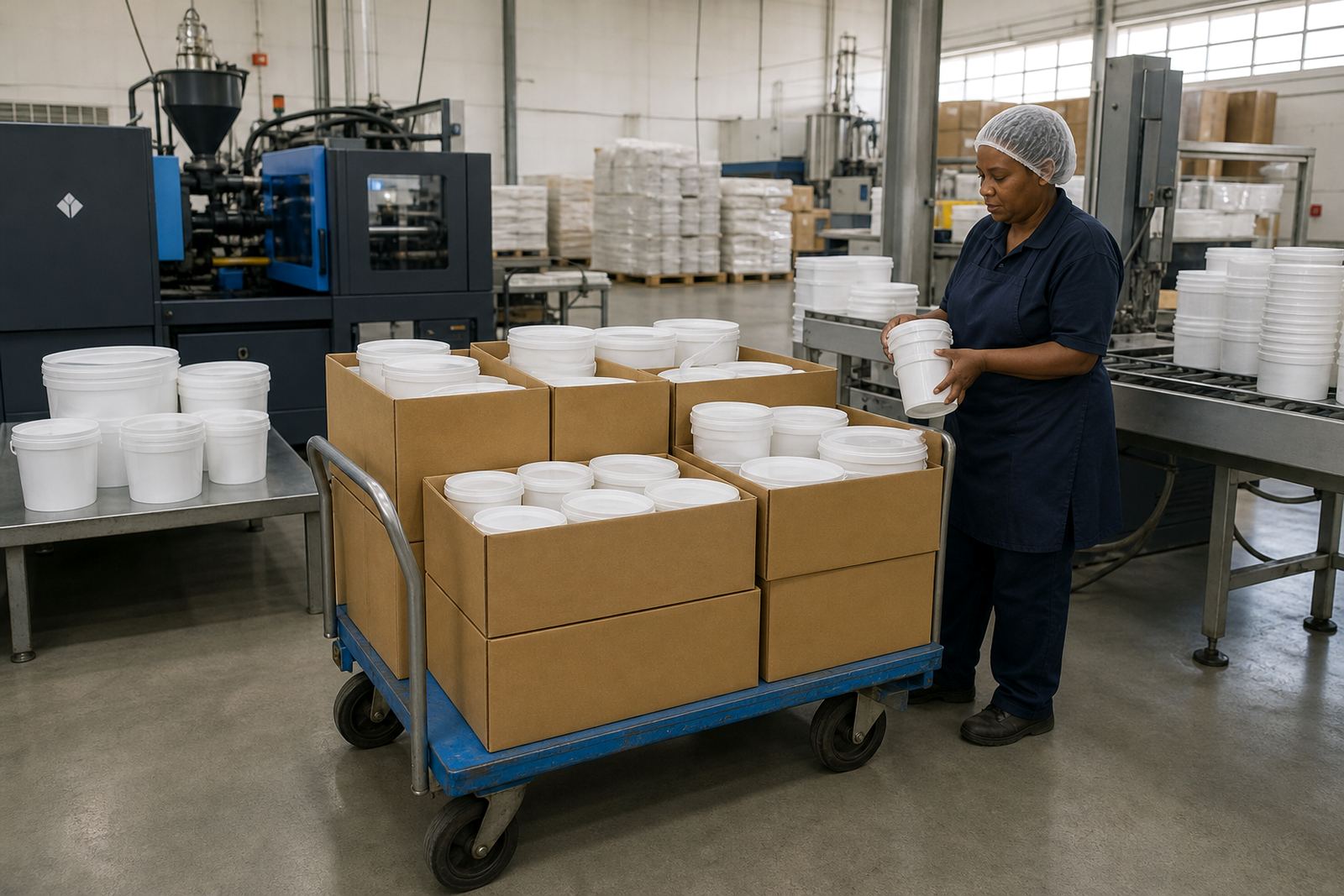
The client was a dairy packer in Pinetown working to fairly tight receiving space and regular dispatch cycles into KwaZulu-Natal and beyond. Their team needed a tub format that would nest well when empty, stack neatly when filled, and suit a packing line where lid fit had to stay consistent from run to run.
The brief was not only about the container itself. They needed a practical pack size plan, lids that matched the tubs properly, and tamper sealing details that would help with retail handling and store room control. In dairy work, a lid that sits right saves a lot of time, and a tub that nests cleanly keeps the receiving area from filling up too quickly.
Materials, shape and line handling
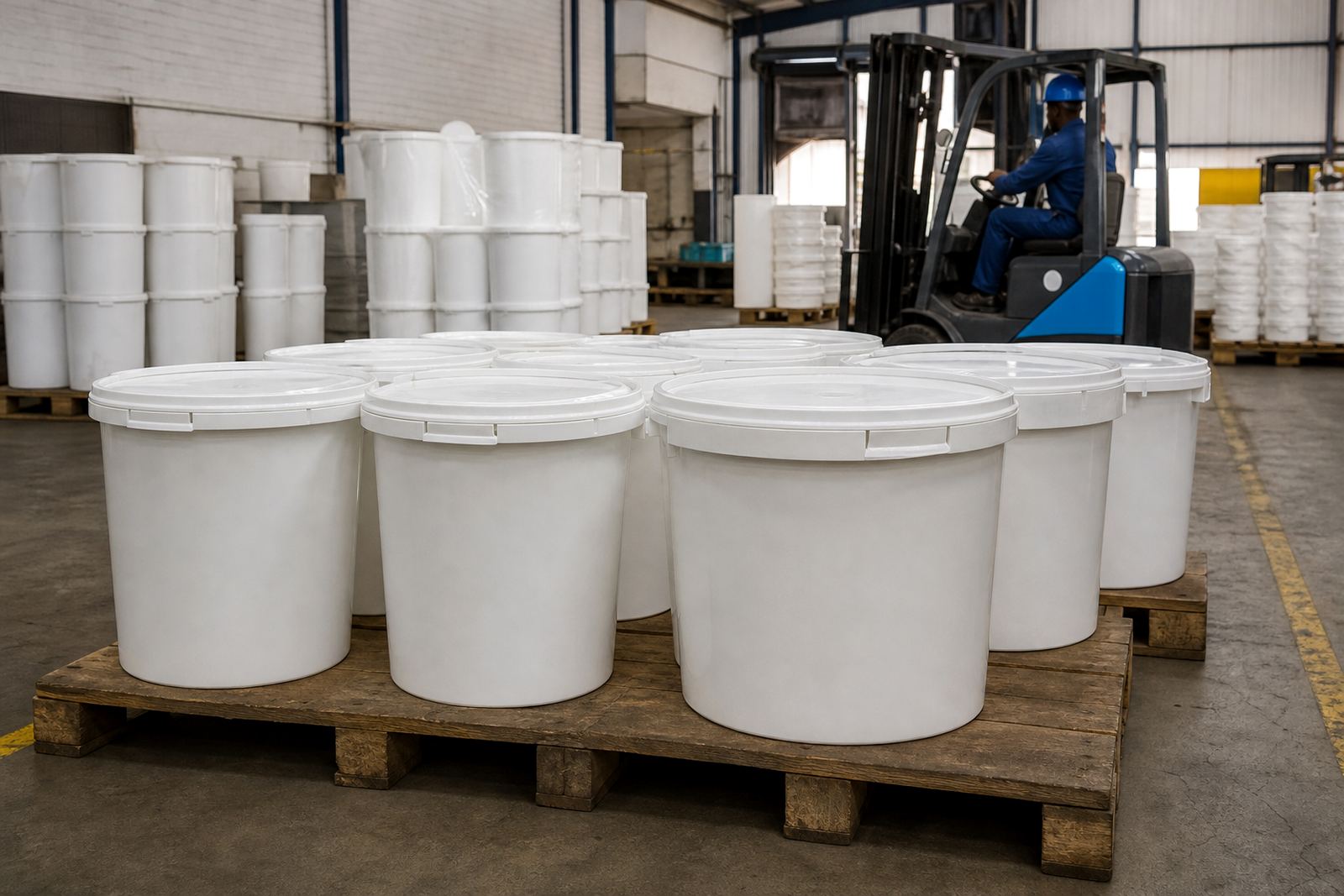
We worked with injection moulded polypropylene tubs for the main pack, together with matched lids and tamper evident sealing features. Polypropylene suits many food packers because it is light, rigid enough for handling, and handles repeated stacking better than softer options. The lid profile was set up to support a firm fit, with a rim shape that helped the seal sit evenly during closing.
The format was planned for food handling on a standard packing line, with smooth internal corners and a finish that would not trap product residue as easily. The tubs also needed enough wall strength to hold shape during chilled storage and moving pallets, especially where the receiving teams were handling nested empties in bulk.
- Tub format: injection moulded round dairy tub
- Material: food suitable polypropylene
- Closure: matched lid with tamper seal point
- Handling: nested empties for receiving and storage
- Use case: chilled dairy packing and distribution
Trial runs and fit checks in weeks
The work moved through mould development, trial production runs, and line fit checks over a six week period. The first stage confirmed the wall thickness, stacking profile and lid engagement. After that, the packer checked how the tubs travelled on their line, how they nested in empty form, and how the lids behaved under normal closing pressure.
During the trial phase, small adjustments were made to the closure detail and the way the tamper seal area settled around the rim. Nothing dramatic, just careful tuning so the packers did not have to fight the container during a busy shift. That kind of fine work matters in a dairy room where hundreds of units can move through in a short stretch of time.
- Week 1 and 2: brief, drawings and tooling planning
- Week 3: trial production and sample tubs
- Week 4: lid fit and seal checks on the line
- Week 5: packing room observations and handling review
- Week 6: stock run planning for repeat supply
Receiving, stacking and dispatch in practice
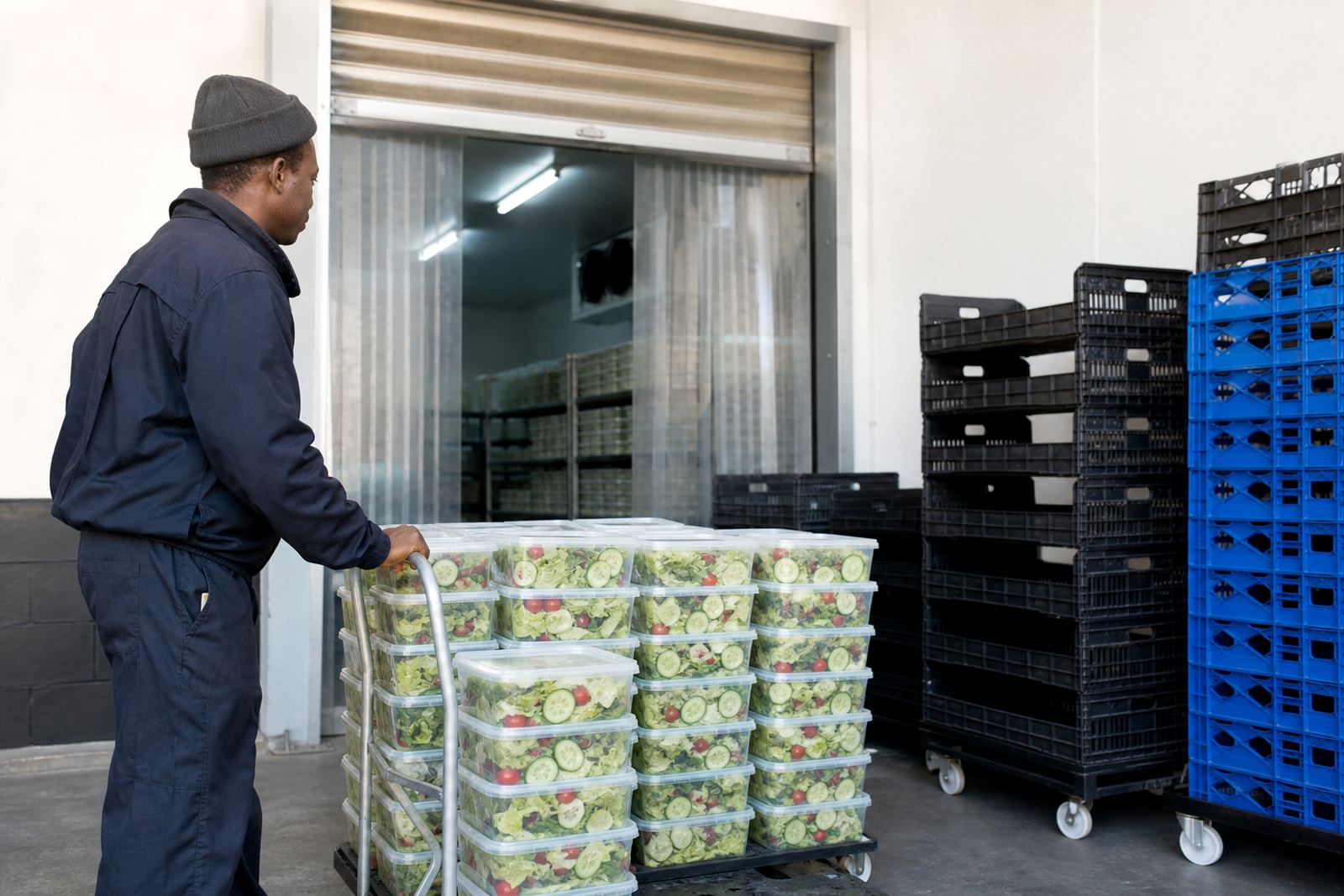
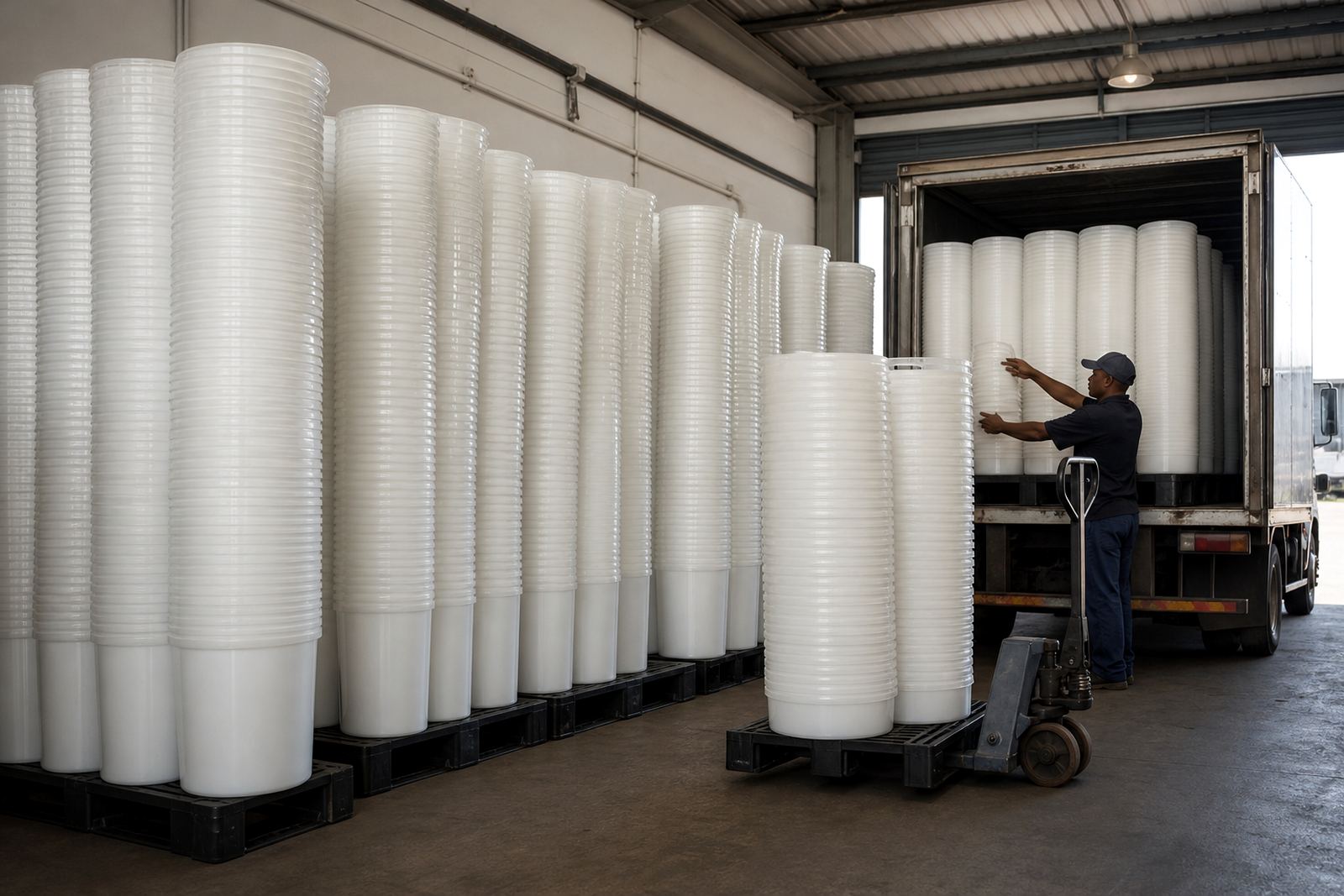
The strongest result was in day to day handling. Nested empties arrived in tidy stacks, so the receiving team could move and store them without wasting floor space. Once filled, the tubs stacked well on pallets and kept their shape through chilled storage and transport. That made a clear difference to load planning, especially when consignments were moving out towards Durban, Pretoria and Johannesburg at different times in the week.
The client also asked for colour matching guidance so the pack could sit comfortably with their usual shelf presentation. We kept the approach practical and restrained, with the colour held steady across the recurring run. Where dairy packs are handled in a busy room, a consistent look helps stock control and makes mix ups less likely.
What the recurring run looked like after approval
Once the tooling and fit were signed off, the order moved into a repeat run pattern with stock planning around the packer’s weekly usage. The tubs were supplied in a format that suited receiving, with lids packed separately in a way that kept counts clear and dispatch orderly. For the client, the main gain was consistency. The team did not need to keep resetting the line for every batch.
We also kept an eye on secondary packing advice, because dairy tubs can be damaged by rough handling before they even reach the cold room. The outer packing had to be neat enough for warehouse movement and simple enough for the packhouse to open without fuss.
- Clean nesting for empty returns and storage
- Stable stack performance on filled pallets
- Matched lid fit across repeat supply
- Tamper seal detail suited to retail packing
- Colour kept consistent across later runs
What to carry through on a similar dairy order
We would repeat the same method of checking the tub against the line before settling the mould detail. Dairy packing leaves very little room for loose fit or uncertain stacking, so the trial stage is worth the time. On a similar job, we would again start with the pack size, then confirm lid behaviour, then close out the nesting and dispatch handling details.
For packers in coastal or inland towns alike, the same principles hold: the tub has to move easily, close properly, and hold up under normal warehouse handling. A good dairy pack is not flashy. It is just well matched to the way the line works, and that is what keeps the run steady.
Key facts
| Project type | Recurring dairy tub supply for a Pinetown packer |
|---|---|
| Container format | Injection moulded tubs with matched lids |
| Material | Food suitable polypropylene |
| Key handling feature | Nested empties for compact receiving and storage |
| Support services used | Mould development, trial production runs, line fit checks, stock run planning |
| Timeline | 6 weeks from brief to approved run |