
Start With The Pack’s Real Job
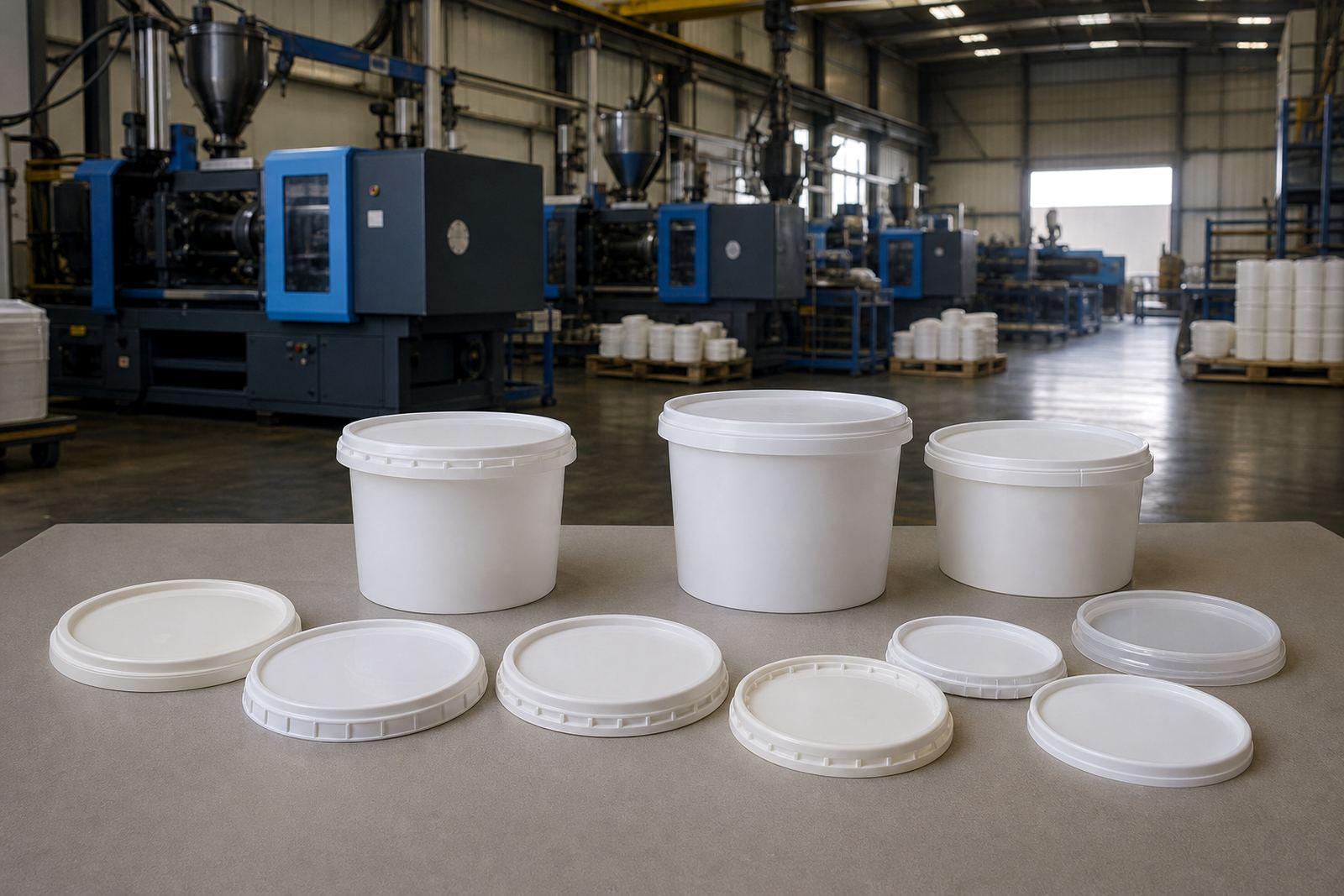
Before a lid style is settled, look at how the product moves through the packing line and how it is handled after filling. A yoghurt style lid, a tamper evident finish, or a snap-on cover can all suit different jobs, but they do not behave the same when the pack is filled, stacked, or opened in store.
For food, pharmaceuticals, and cosmetics, the pack needs to suit the product as well as the way the business packs it. A lid that is easy to close by hand may work well for dry goods, while a tighter closure may be better where leakage or contamination is a concern. On hot days in Durban or humid coastal storage, closure choice matters even more because the pack may face moisture and rough handling in transit.
Match Closure Force To The Product
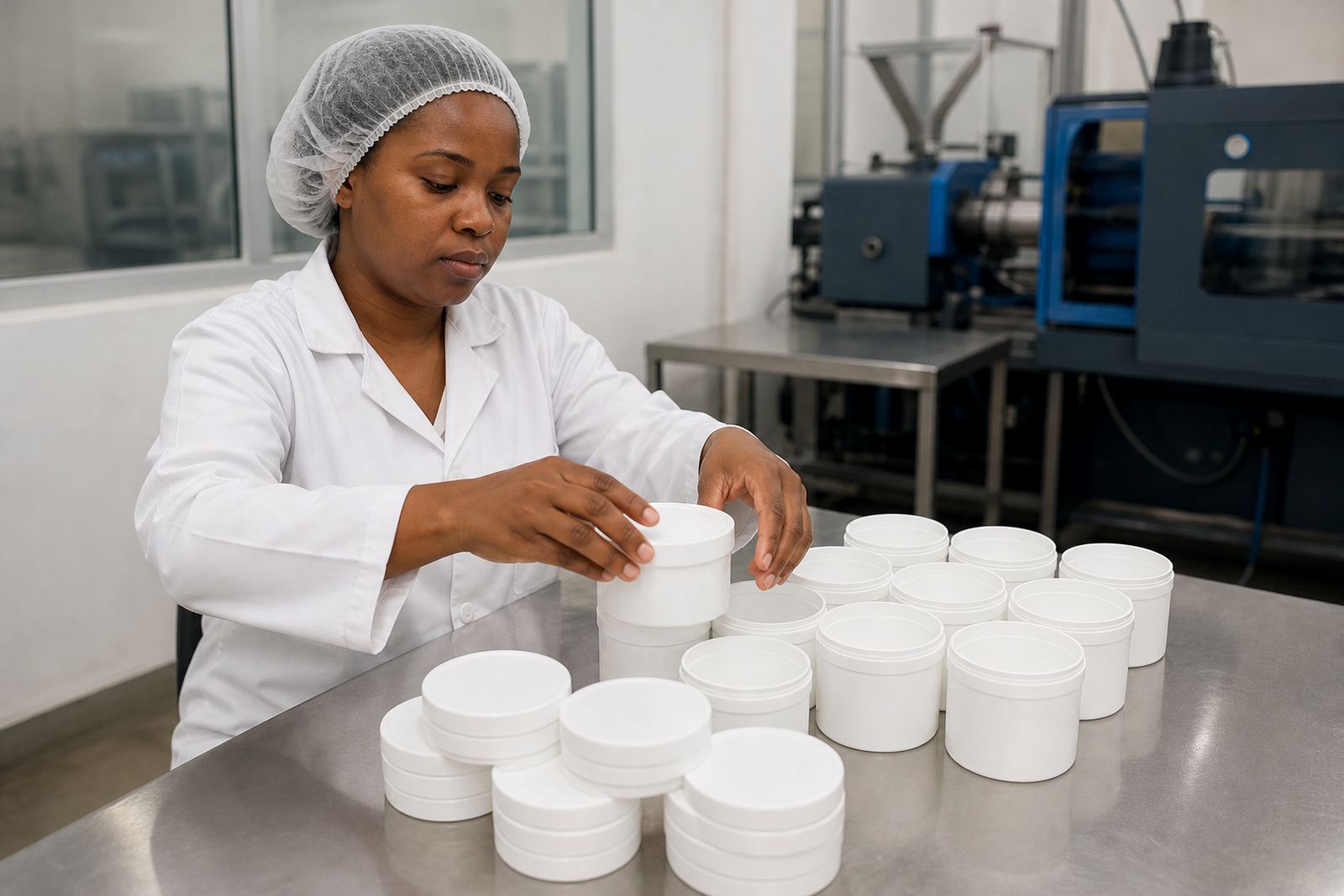
Closure force is the pressure needed to seat the lid properly on the tub. Too light and the lid can lift, too tight and packing staff may struggle with speed and consistency. The right balance depends on the tub lip, the lid profile, and whether the line uses manual closing or a fitted sealing stage.
Polypropylene and HDPE tubs both take a range of lid styles, but the rim detail needs to be matched to the closure shape. Injection moulded packs can be made with consistent wall and rim geometry, which helps the lid sit evenly. That is useful where the pack is checked by weight, lined up for secondary packing, or carried through a stock run with mixed batches.
- Check whether the lid presses down evenly around the full rim
- Watch for flex at the corners or side walls during closing
- Confirm that staff can close the pack without pinching or crushing the rim
- Test stacking after closure, not only the first fit
Decide Between Reuse And One-Time Security
If the pack will be opened and closed more than once, a reusable snap-on lid may be the better route. If product security matters more, a tamper seal or tear band can be added so the pack shows if it has been opened. Some packs need both a tight closing lid and a separate tamper feature, especially where product handling moves through different hands.
For cosmetics and dry foods, presentation can matter just as much as protection. A clean rim, a lid that sits level, and a closure that does not distort the tub all help the pack look orderly on shelf. For pharmaceutical products, the lid style must support controlled handling and clear pack integrity, even when the container is repeatedly stacked, counted, or boxed.
- Use a re-closeable lid where repeated access is expected
- Add a tamper feature where opening control is needed
- Keep the lid profile neat where shelf appearance matters
- Match the closing method to the pace of the packing line
How Lid Style Affects Line Filling
On a packing line, a lid that looks right on paper can still cause trouble if it sits awkwardly on the tub or needs extra force to close. Trial production runs help show whether the lid feeds well, seals consistently, and stacks without slip. That is useful where packers run mixed sizes or where the final pack goes into cartons and shrink wrap.
Line fit checks usually look at the same practical points: lid feeding, lid seating, hand pressure, stack stability, and the way finished packs behave in transit. If the product is oily, powdery, or filled close to the rim, the lid choice should account for the risk of contamination on the sealing surface. A lid that works cleanly on one product may be the wrong fit for another, even if the tub size is the same.
A Quick Selection Checklist For Buyers
When lid choices are being narrowed down, keep the discussion tied to the product rather than the lid alone. The container shape, the filling method, and the way the pack leaves the warehouse all influence what will work best. A small change in rim detail can alter closure feel and how the pack presents in store.
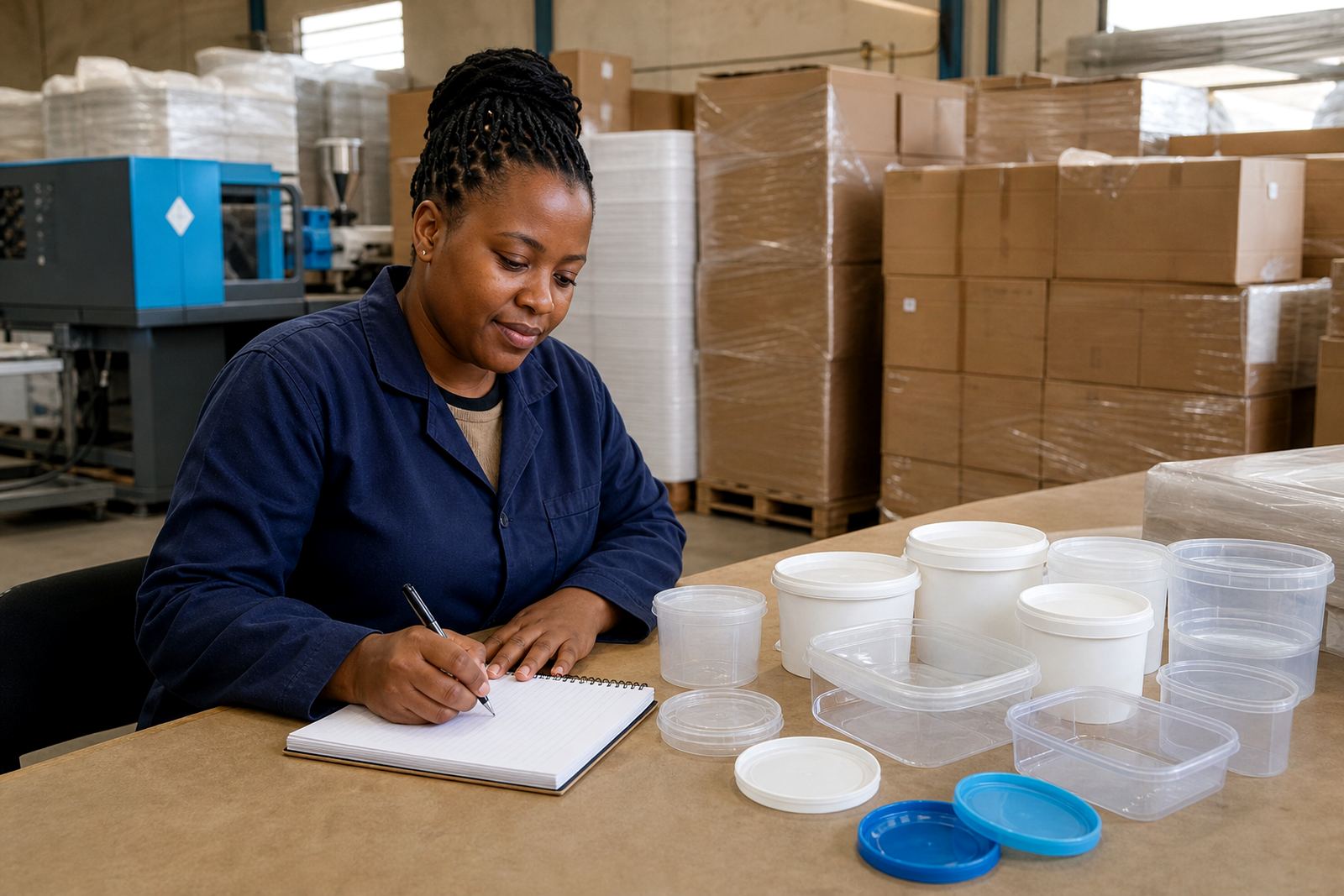
Use this checklist during planning:
- What product is being packed and how sensitive is it to air, dust, or moisture
- Will the tub be opened once or several times
- Does the line need fast hand closing or a tighter seated fit
- Must the pack show tamper evidence
- Will the finished tub be stacked, boxed, or shrink wrapped
- Does the lid need a plain finish, a coloured finish, or a clearer shelf look
Planning Lids For South African Supply Runs
Businesses in Johannesburg, Pretoria, Durban, Cape Town, Port Elizabeth, Alberton, Germiston and Boksburg often need lids that suit both the product and the way stock moves between sites. In warm inland conditions, packs may travel through hotter delivery vehicles and still need to hold their shape. On the coast, moisture and salt air can make neat closure and stable stacking more important.
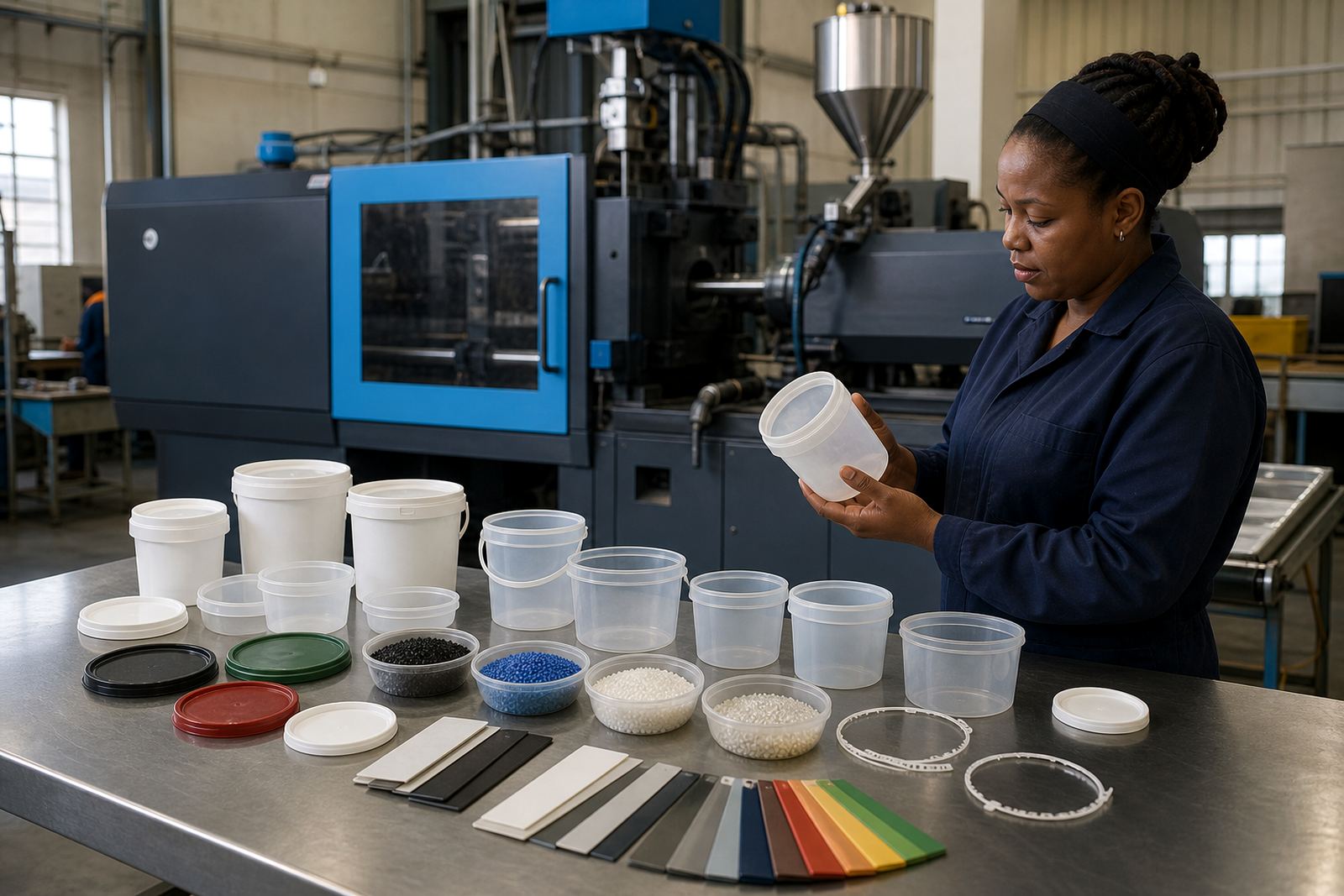
Plastic Factory works with injection moulded polypropylene and HDPE containers and tubs, with lid development and tamper seal design shaped around the pack rather than a one-size answer. Material selection, mould development, colour matching guidance, and pack size planning all help the final lid choice make sense on the line. Where needed, secondary packing advice can also help the finished packs move cleanly into cartons, sleeves or outer cases without scuffing the lid surface.
For local packers, the best lid style is usually the one that closes cleanly, protects the product, and keeps the pack looking tidy through storage and dispatch. That practical balance is what matters on real production floors in Alrode and across South Africa.