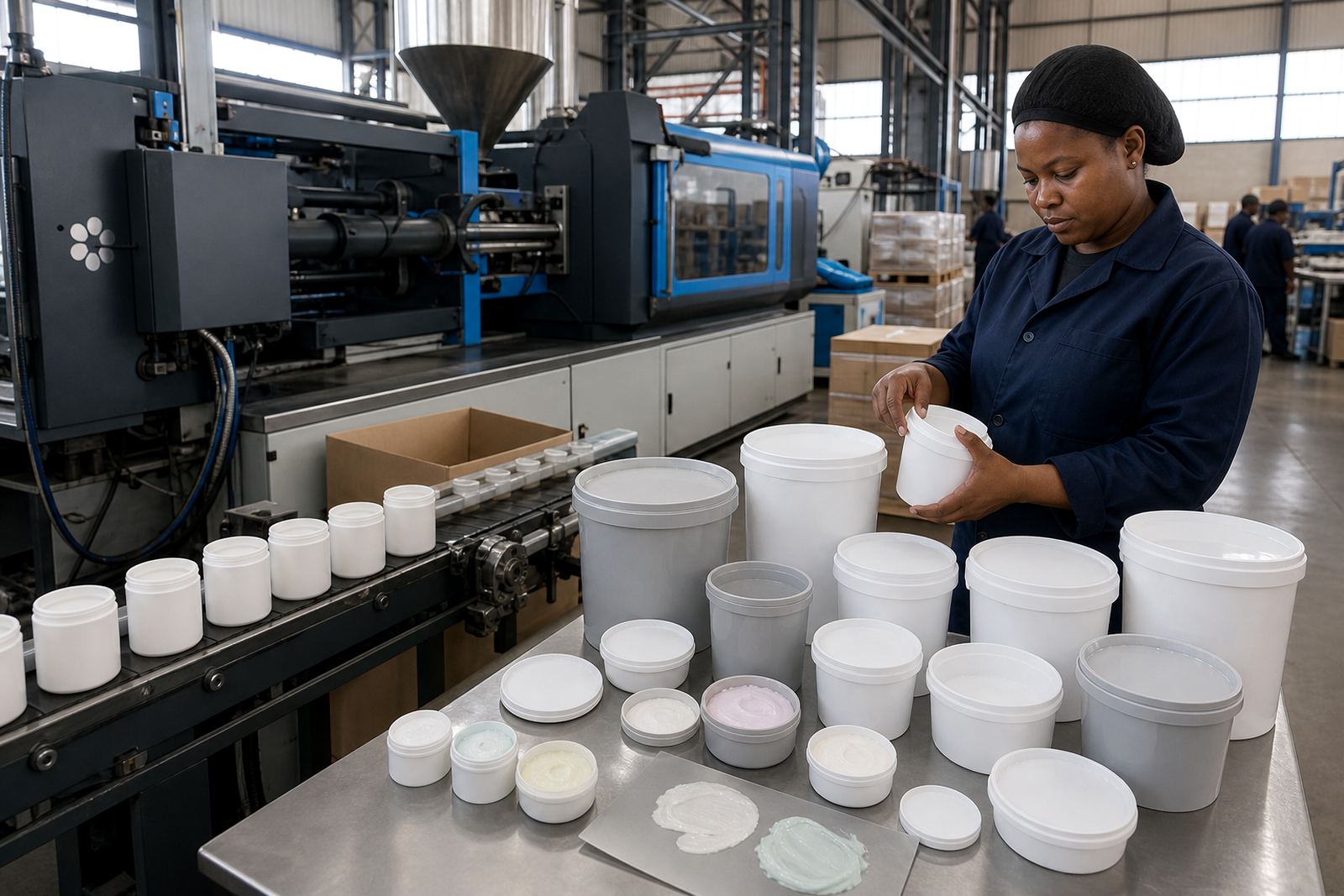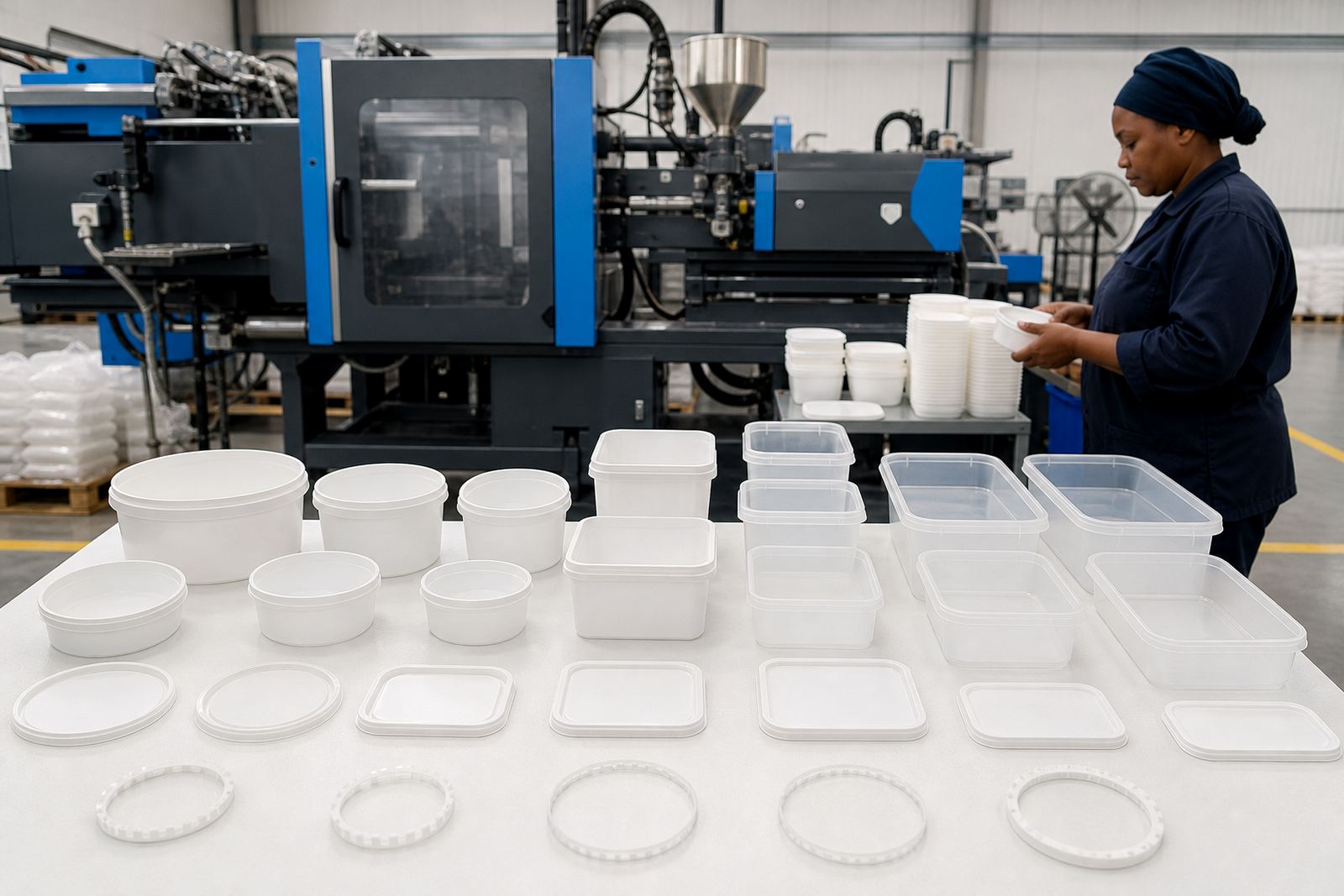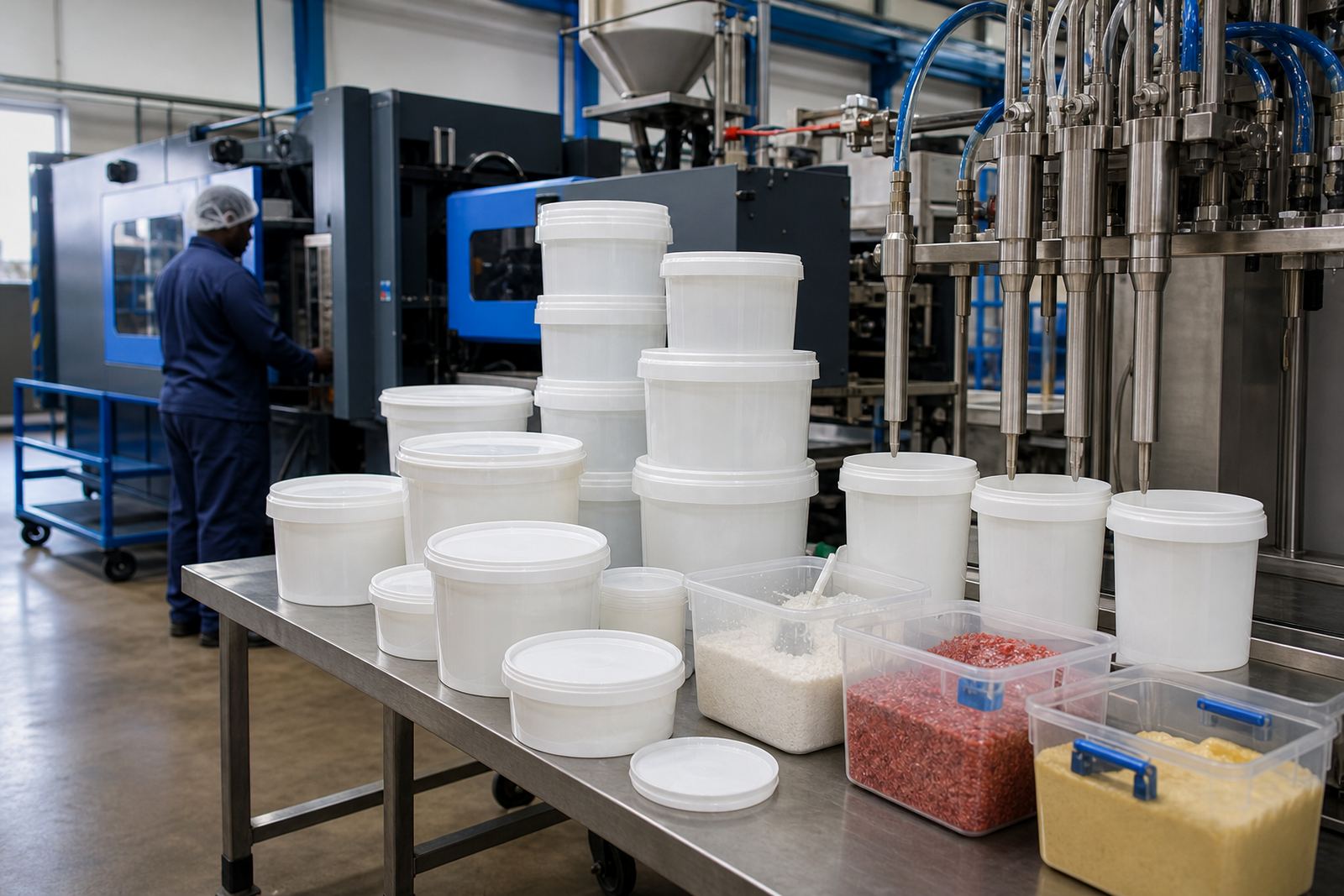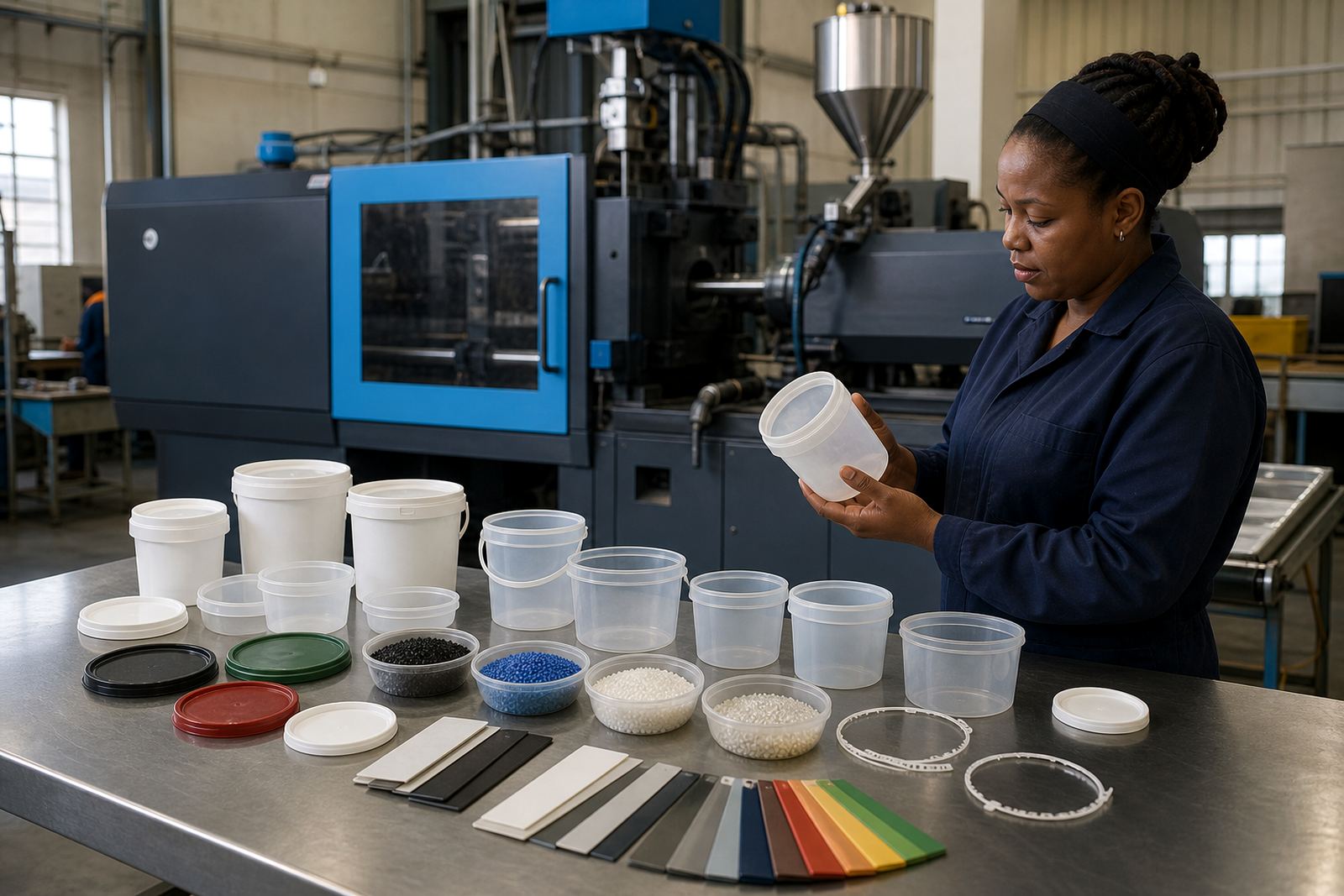
Start with the product, not the plastic
For food, pharmaceutical and cosmetic packing, the first question is what the container must protect. A dry powder, a cream, a cleaning paste and a chilled food item do not ask the same thing from the pack. That is where polypropylene and HDPE start to split, even before mould shape or colour is discussed.
PP is often selected where a neater finish, better stiffness and a more defined wall profile matter on shelf or in secondary packing. HDPE is often favoured where impact handling, squeeze resistance and a more forgiving sidewall help during filling, movement and storage. On busy packing lines in Gauteng or the coast, that difference can save a lot of handling trouble.
- Match the pack to the fill: powder, paste, liquid or granulate.
- Think about shelf appearance, stacking and transport knocks.
- Check whether the lid must seal for freshness, tamper evidence or both.
Where polypropylene usually fits best
Polypropylene has a clean, practical feel and is widely used for tubs, lids and food contact packs. It is useful where a firm rim and good dimensional control matter, especially for injection-moulded containers that need consistent stacking and neat presentation. Many packers also like it for colour work because the finished piece can be made in clear, white or custom shades without looking heavy.
In pack houses around Alberton, Germiston and Boksburg, PP often works well for dry foods, spreads, personal care creams and pharmaceutical components that must sit neatly in crates and on shelves. It also handles repeated opening and closing well when the lid design is set correctly.
- Good for neat shelf presentation and defined shape.
- Useful for tubs, lids and parts with fine detail.
- Often chosen when colour consistency matters across a range.
Where HDPE earns its place
HDPE has a slightly different feel. It is well known for toughness and for handling knocks during loading, transport and warehousing. When a pack may be squeezed, stacked or moved through a rougher route, HDPE can be a sound choice. It is common in containers that need a practical wall profile and reliable everyday handling.
For local delivery runs between Johannesburg, Pretoria and the coast, HDPE can suit products that travel often or sit in warm storerooms. It is also useful when the packing line needs a container that fills cleanly and tolerates a bit of pressure without losing shape. In humid areas such as Durban and Port Elizabeth, material choice also needs to respect moisture, storage and product behaviour.
- Good for impact resistance during transport.
- Useful for squeeze packs and workmanlike handling.
- Often suited to products that move through long distribution routes.
Lids, tamper seals and line fit checks
The container body is only half the story. Lid development, tamper seals and line fit checks decide whether the full pack performs properly on the day the line runs. A lid that feels fine in hand can still behave badly under capper pressure, on a conveyor or in a carton drop. That is where sample runs matter.
Plastic Factory works on mould development, trial production runs and pack size planning so the container, lid and seal all sit together properly. The aim is not just a nice sample. The aim is a pack that fits the fill volume, closes cleanly and moves through the line without awkward stops.
- Check rim shape against the closure style.
- Confirm tamper evidence is visible and practical.
- Test the pack on the actual filling and closing setup.
A practical comparison for packers in South Africa
If you are deciding between PP and HDPE, use the product and the route as your guide. A cream that sits on a shelf in Cape Town may need a different finish from a dry ingredient packed in Alrode and sent through Gauteng depots. That is normal. The best material is the one that suits the fill, the line and the journey.
For many buyers, the decision is not about one material beating the other. It is about fit. Material selection, colour matching guidance and stock run planning help the final container stay practical for your business, not just neat on paper.
- List the product type and filling method.
- Note the storage conditions and delivery route.
- Choose the closure style before finalising the tub.
- Confirm stacking, label space and secondary packing needs.
- Run a short trial before committing to volume.
What to send when asking for a container recommendation
A good recommendation starts with a few clear details. That helps the team compare PP and HDPE against the product and the packing line, rather than guessing from a generic spec. For food, pharmaceuticals and cosmetics, the differences can be small but important.
Useful details include the fill product, pack size, lid preference, colour needs and how the goods are stored or moved. If the order is for Johannesburg Delivery, Durban Delivery, Cape Town Delivery, Pretoria Delivery or Port Elizabeth Delivery, it also helps to know how the packs are dispatched and whether stock must be held for repeat runs.
- Product type and target pack size.
- Whether the pack needs a tamper seal.
- Preferred colour or brand shade.
- Expected storage conditions, including heat or humidity.
- Any packing line limits or fit issues.