Start with the pack size that leaves the line
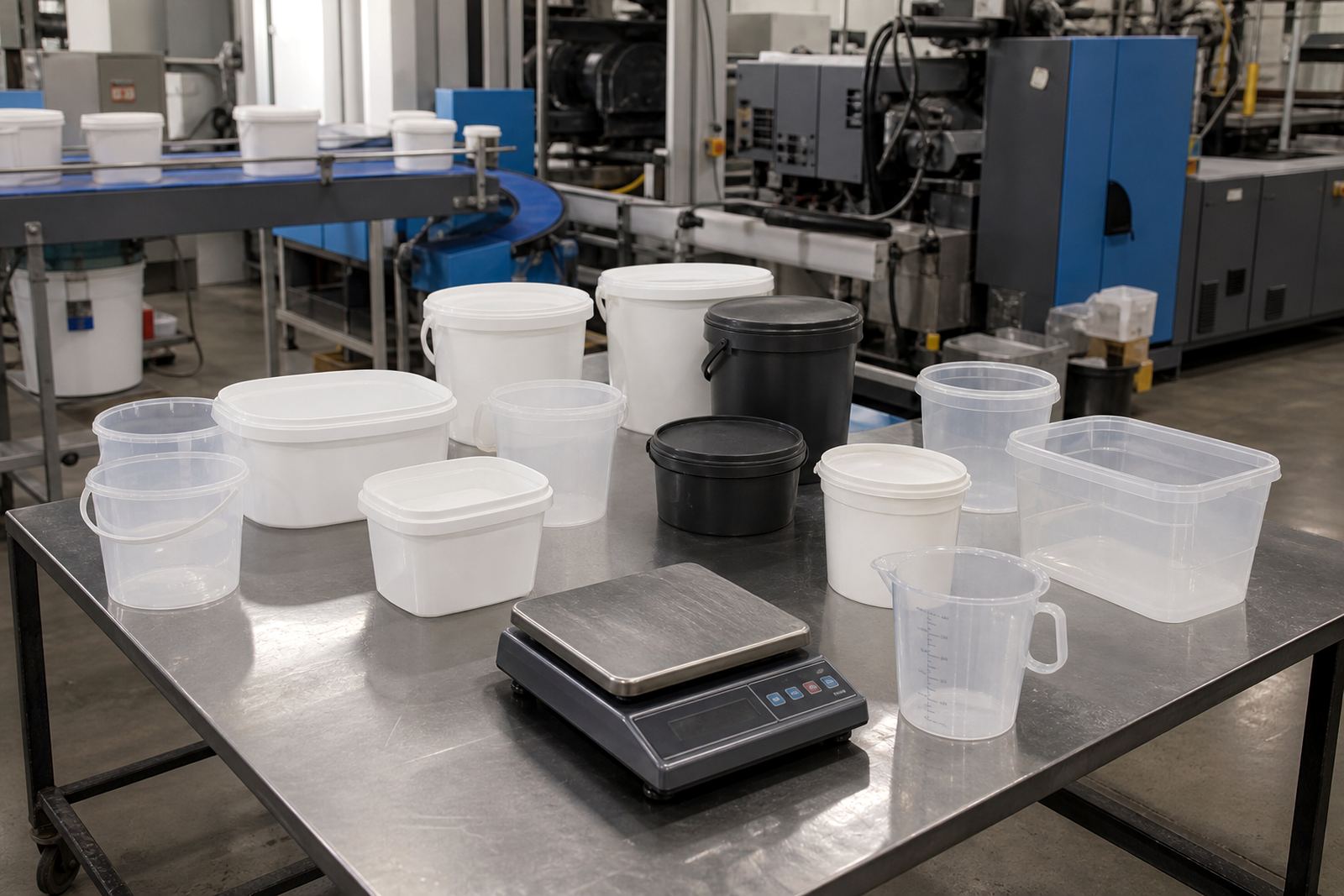
Order planning begins at the filling line, not in the store room. A 500 ml tub, a 1 litre tub or a smaller cosmetics container will all move differently once the lids, tamper seals and secondary packing are added. The right pattern is the one that keeps the line steady without leaving pallets standing for weeks.
Look at the quantity used per shift, the number of shifts in a week and how many packs are lost to setup, testing or label changes. In many plants the real figure is lower than the theoretical figure because changeovers, cleaning and pallet movement take time.
- Check the pack size running on each line.
- Count average use per shift, not only peak use.
- Allow for rejects, trial fills and sample pulls.
- Separate fast moving SKUs from slower ones.
Work out stock cover without tying up floor space
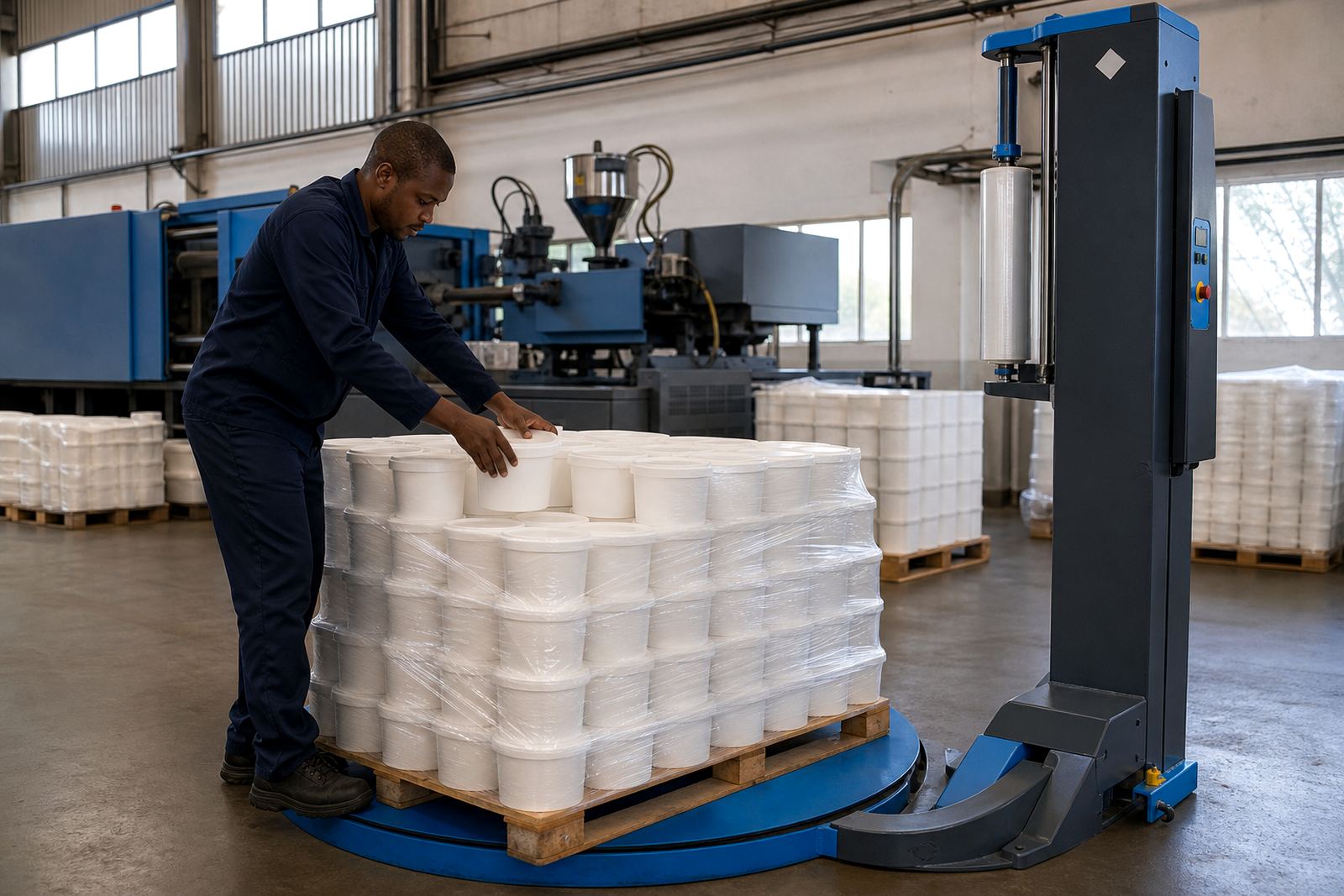
Stock cover is a balance between security and space. Too little cover can interrupt packing when a trailer is delayed or a supplier truck is held at the gate. Too much cover can crowd receiving areas, block access to pallets and make stock rotation harder. That matters in Alberton, Germiston and Boksburg where many packers work in tight yards and shared industrial space.
For a practical estimate, measure how many days of tubs, lids and seals you need to carry before the next planned delivery. Then compare that to the space available near the line and the warehouse aisle width. Coastal sites in Durban and Cape Town often also factor in humidity, because stored packs must stay clean and dry while waiting for use.
- List each item separately: container, lid and tamper seal.
- Allow a buffer for order changes and transport delays.
- Keep slower lines on tighter stock cover than core lines.
- Use clear pallet labels so older stock moves first.
Match repeat runs to mould and material behaviour
Injection-moulded polypropylene and HDPE containers behave well in repeat production when the mould is stable and the spec stays unchanged. If the wall thickness, rim profile or lid fit changes, the order pattern may need a fresh trial run. That is where mould development and line fit checks matter, because a container that looks right on paper still has to run cleanly on the pack line.
Material choice also affects how often you can repeat the same item without adjustment. Some products need more rigidity, others need better resistance to moisture or impact during transport. A steady run schedule reduces the risk of unnecessary changeovers and helps the production team keep a tighter count.
- Keep the approved sample beside the running stock.
- Confirm lid closure and seal engagement before full production.
- Watch for short shots, flash or uneven stacking.
- Note any changes in resin, colour or finish.
Plan around season peaks and customer demand swings
Food packers often see heavier demand before holidays, school breaks and month-end promotions. Cosmetic and pharmaceutical lines can also shift when a customer launches a new size or pushes a campaign into the market. Those swings are useful to map because they show where a once-a-month run may need to become a fortnightly or weekly pattern.
Estimate order patterns by looking at the last few cycles, then mark the months where volumes climb or drop. Keep the larger runs for the items with steady movement and keep smaller repeat runs for products that change often. That keeps the moulds in use without overcommitting warehouse space.
- Mark peak months on a simple annual grid.
- Separate promotional volumes from normal trade volumes.
- Allow for school holiday, festive and stocktake pressure.
- Review slow movers before they take up shelf space.
Keep trial runs short but useful
Trial production runs are not only for new products. They are also useful when a customer wants to confirm a lid fit, test stacking height or check how a tub behaves on a packing line after a material change. A short run gives practical numbers without filling the store room with unproven stock.
The best trial is one that checks pack count, weight, closure and secondary packing at the same time. If the line team can move from trial packs to full cartons without adjustment, the run pattern is easier to set for the next order. A few small notes from the floor can save a lot of guesswork later, even when the pack looks familiar.
- Run enough pieces to test the full packing cycle.
- Check stacking in carton and on pallet.
- Confirm the seal closes cleanly by hand and on the line.
- Record any scuffing, ovality or lid lift.
Build a repeat order sheet that matches real movement
A repeat order sheet works best when it holds only the information that affects production and dispatch. Keep the item name, size, colour, material, lid type, seal type and expected monthly movement in one place. Add notes for pack size planning and any special handling needed for secondary packing or pallet splits.
For businesses supplying Johannesburg, Pretoria, Durban, Cape Town or Port Elizabeth, delivery planning should sit next to the run schedule. That makes it easier to line up loading, warehouse space and dispatch dates without pushing the pack line into a rush. Thabo Letsoalo and the team in Alrode often look at movement this way: production first, then storage, then transport.
- List the approved pack size for each SKU.
- Note the normal reorder point in cartons or pallets.
- Track colour matching guidance where colour matters.
- Include any line fit checks already completed.
A practical checklist for the next planning round
Use a short checklist before confirming the next production cycle. It should cover stock on hand, packing line use, warehouse space and any changes in product mix. That gives a clearer picture of whether the order should be kept steady, increased or split into smaller runs.
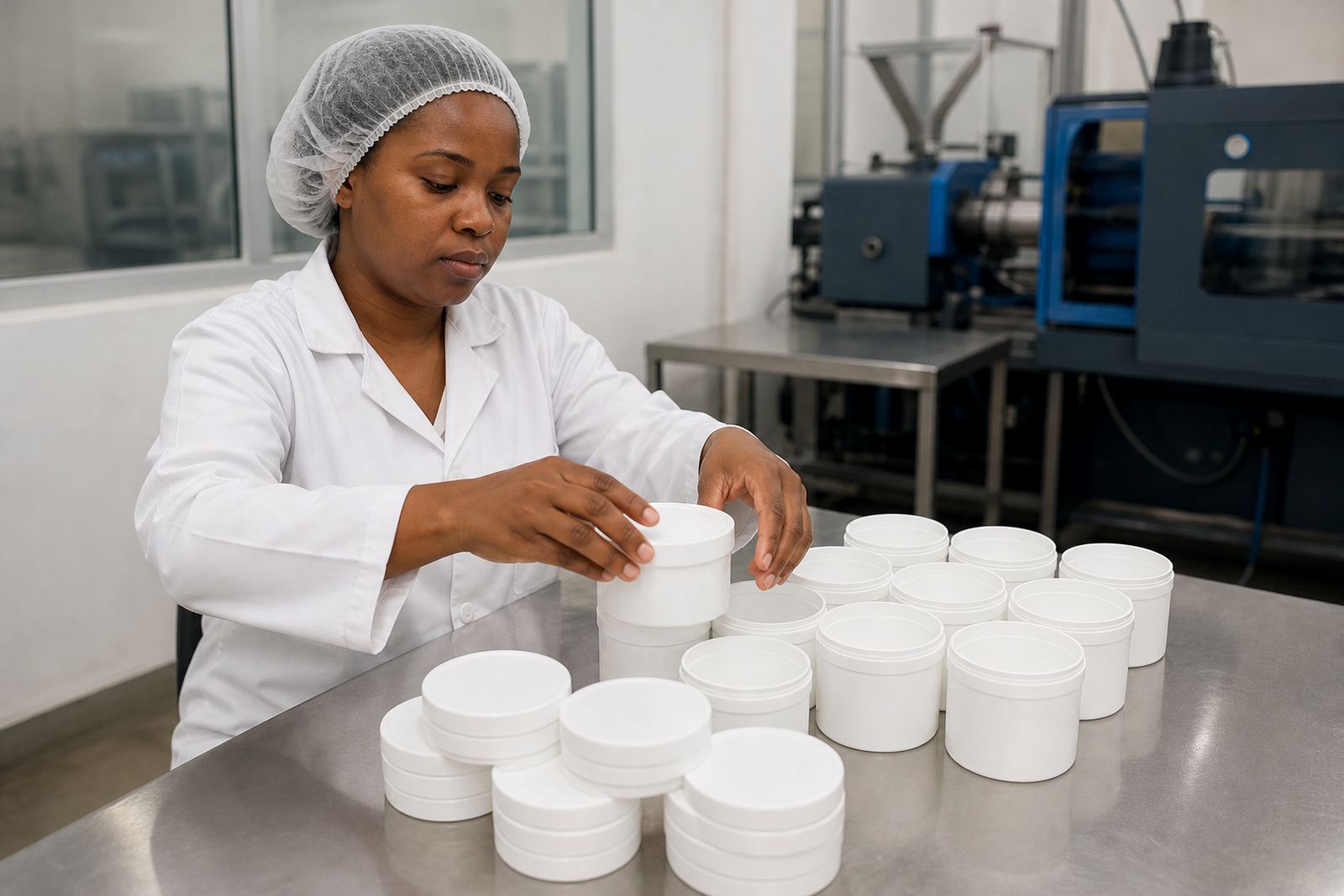
Where the product is food-safe or used in pharmaceutical and cosmetic packing, consistency matters even more. The container, lid and tamper seal all need to behave the same way from run to run. When that happens, stock cover is easier to hold and the pack line stays calmer.
- Confirm current stock by item and size.
- Check the next four to eight weeks of usage.
- Review any mould, material or colour changes.
- Set the next run size against available storage.
- Plan dispatch windows for each region served.