Start With The Product, Not The Tub
A practical tub begins with the pack itself. Tablets, capsules, powders, granules and creams all place different demands on wall strength, opening size and closure fit. A wide mouth helps when operators fill by hand, while a narrower neck can suit measured fills on a packing line. If the product moves through humid coastal stores in Durban or Port Elizabeth, the lid and seal need to stay consistent through storage and handling.
For many non-sterile pharmaceutical packs, polypropylene and HDPE are the usual material families to assess. Polypropylene suits light, clean-looking tubs with a firm feel, while HDPE is often selected where impact resistance and practical handling matter. Both can be injection moulded into repeatable shapes that work well for cartons, sleeves and secondary packing.
Match The Closure To The Packing Line
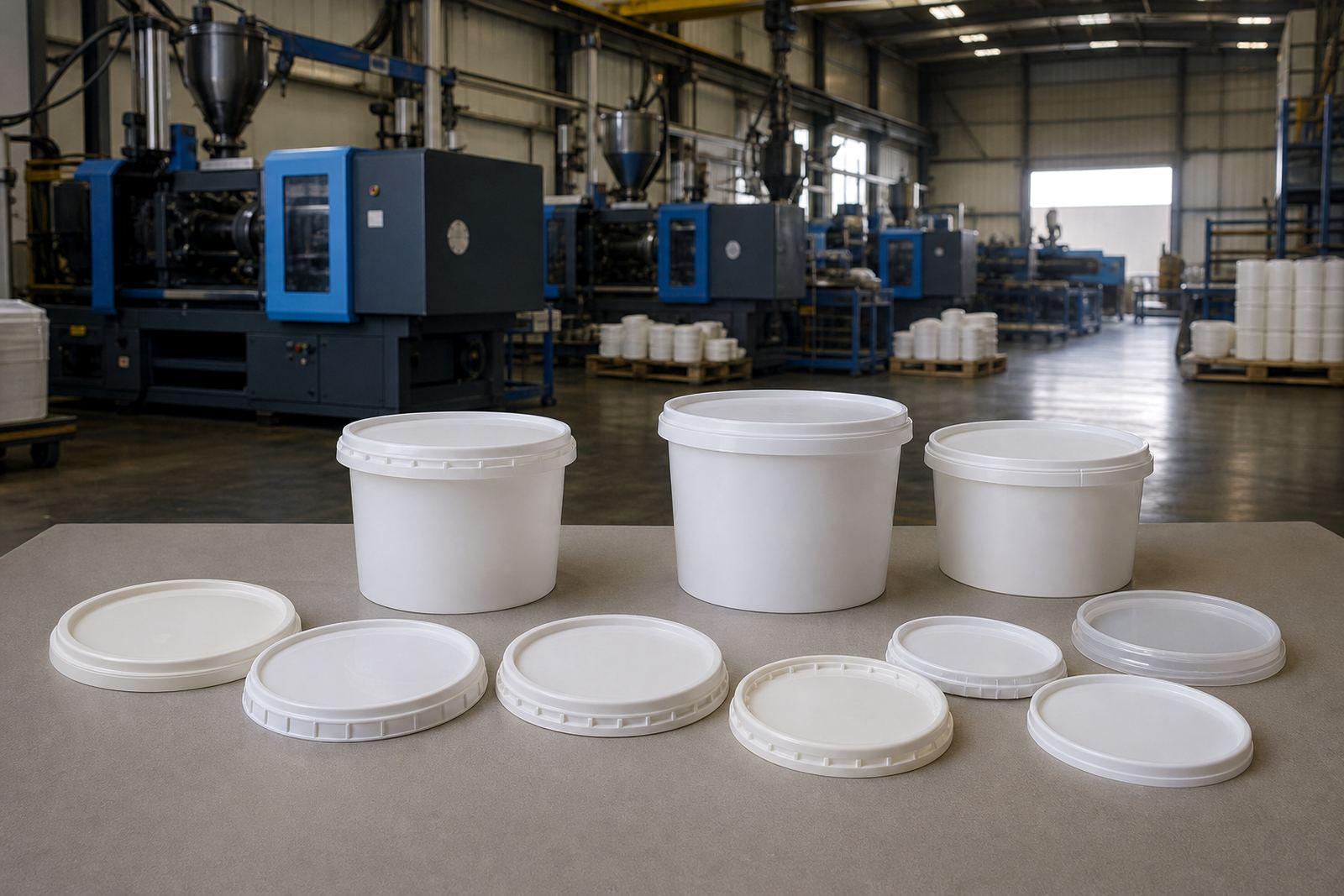
The lid is not just a cover. It affects line speed, sealing effort, product protection and how the pack behaves in transit. Some operations need a snap fit lid, others need a tamper evident feature, and some prefer both. If the pack will be opened and closed during storage, the closure must stay steady after repeated handling.
- Check the closing force so operators are not fighting the lid.
- Confirm that tamper seals tear cleanly and show clear evidence of opening.
- Test whether the lid sits flat after filling and capping.
- Look at how the closure behaves in cartons, shrink sleeves or trays.
- Make sure the top profile suits label placement and date coding.
Where packs are filled near Randburg or Cape Town, the choice often comes down to how the line is set up and how the product is presented on shelf. A lid that looks neat but slows packing can create problems later on the floor.
Food-Safe Thinking Helps Pharmaceutical Packing Too
Even in non-sterile pharmaceutical environments, material hygiene matters. Smooth internal surfaces are easier to keep clean and the right resin choice reduces unnecessary odour, staining or brittle behaviour. Food-safe materials are often considered for health-related packs because the same practical traits support clean handling and a controlled product environment.
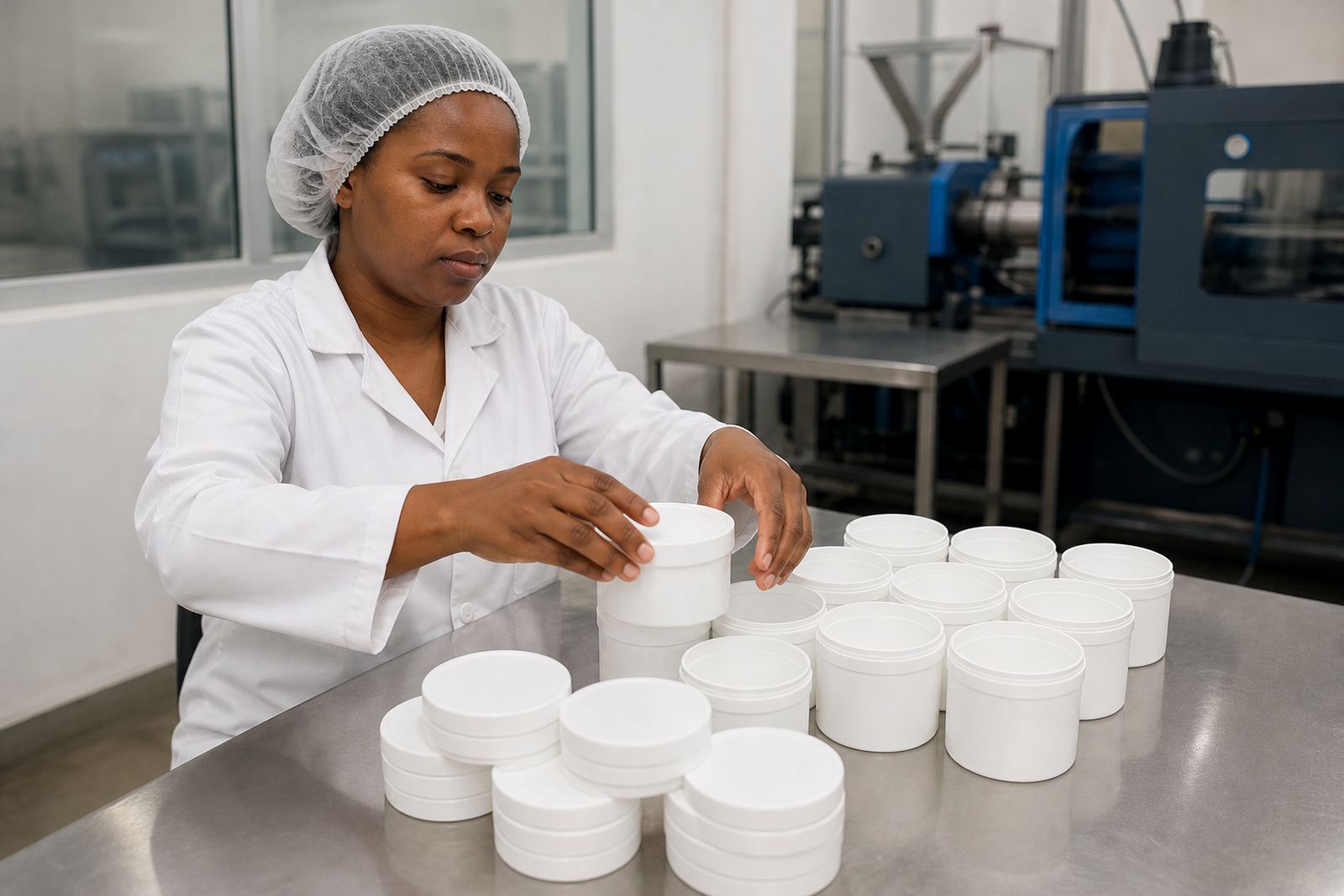
Injection moulding gives consistent wall thickness and repeatable dimensions, which helps when tubs move between filling, inspection and carton packing. That consistency also matters when packers in Johannesburg or Pretoria need tubs that nest properly, stack neatly and separate without jamming. Small changes in mould finish or wall profile can make a real difference on the line.
Plan The Size Around Real Fill Volumes
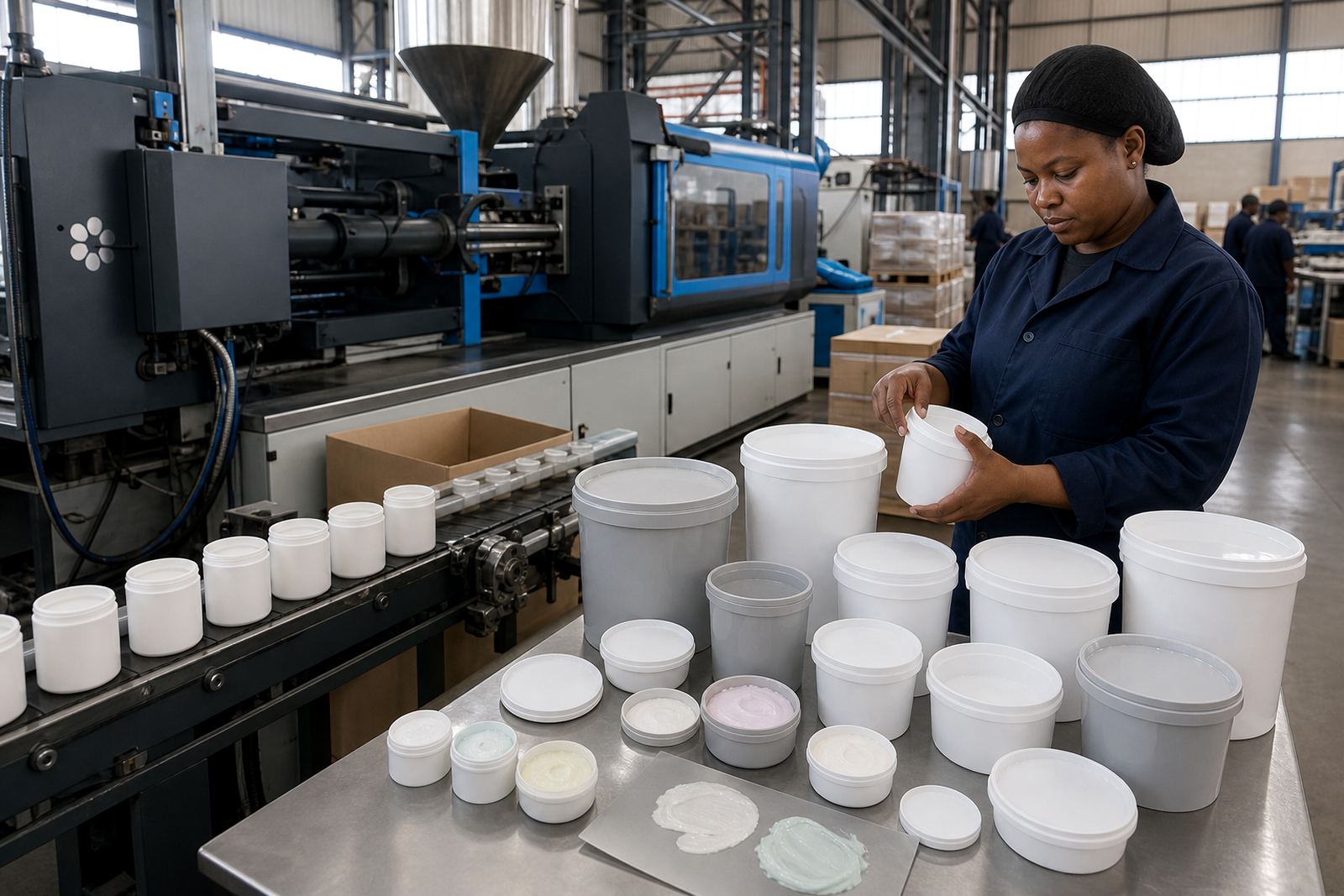
Pack size planning should start with the actual fill, not a rough guess. The container must suit the fill level, headspace and closure height, with enough room for labels and any insert leaflet. If the tub is too deep it may look underfilled, and if it is too shallow the product can press against the lid. That balance matters when the same product is packed in different formats for local stores and national distribution.
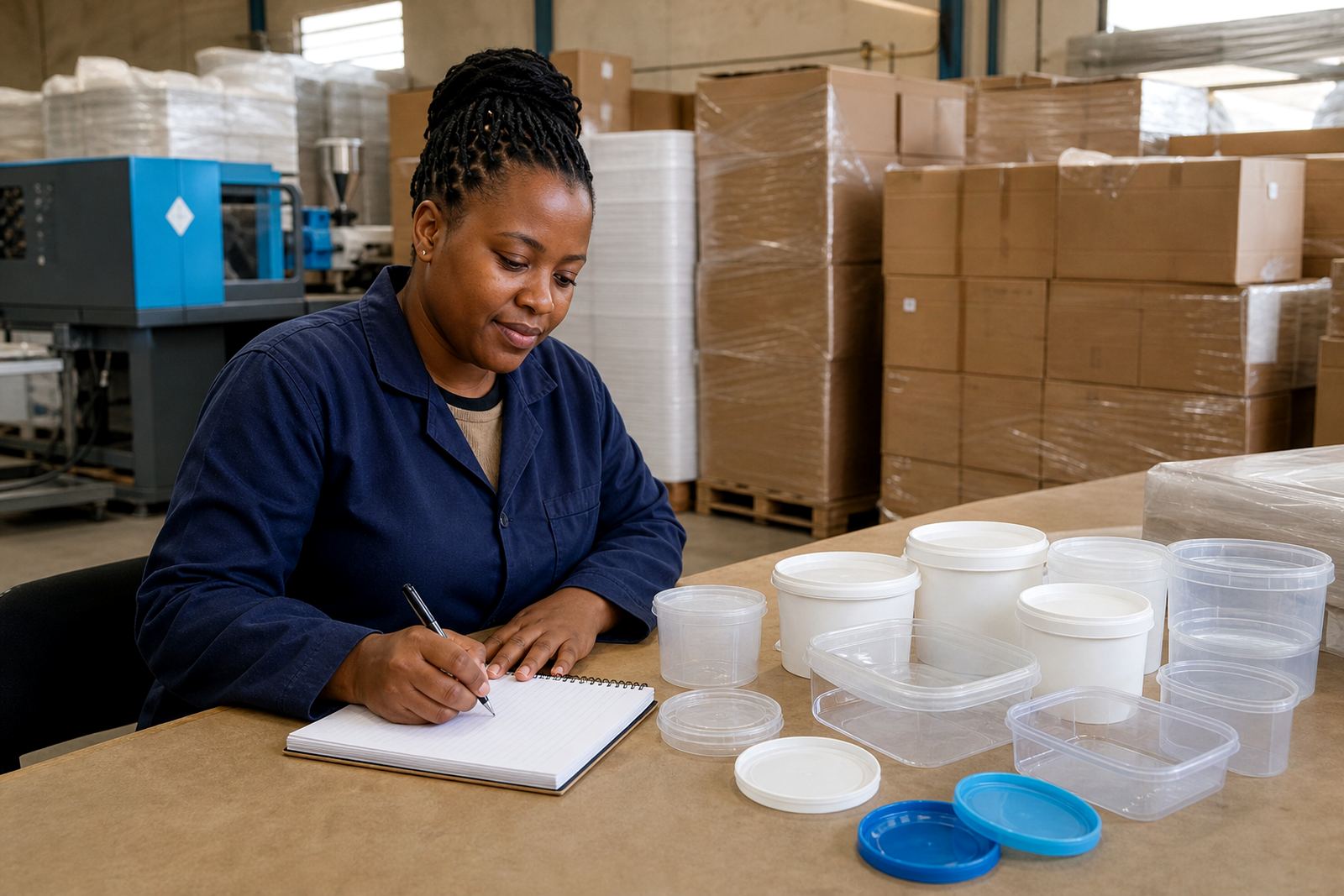
For contract packers, trial production runs are useful before committing to a full stock run. A short run can show whether the tub feeds properly, stacks correctly and survives transport from Alberton to Durban or Cape Town. It is also the right stage to check whether the chosen colour, lid height and seal line all work together.
- Measure the actual product fill, not only the nominal label size.
- Allow space for a leaflet, scoop or separator if needed.
- Check how the pack looks when only partly filled.
- Review carton fit and pallet stacking before final approval.
Use Colour And Marking With Purpose
Colour matching guidance is useful when product families need to stay visually distinct on the shelf or in store. White, natural and tinted options each send a different signal and can support internal sorting on busy packing floors. Clear or translucent tubs may help with visibility, while solid colours can conceal light sensitive contents and keep a cleaner appearance during handling.
Marking areas also matter. Labels need a stable surface, and date coding must sit where it can be read without twisting the pack. If the tub will move through secondary packing, the shape should avoid awkward shoulders and grooves that catch on sleeves or cartons. A good mould choice makes all of this easier without adding unnecessary complexity.
Check The Mould Before You Scale Up
Mould development is where the pack either settles into regular production or causes repeated adjustments. Trial production runs show whether the tub ejects properly, whether the lid seats correctly and whether the tamper seal tears as intended. This is the stage for close inspection, not after a full stock run has already been packed.
A useful check list for new tubs includes the following:
- Does the container hold shape after filling and stacking?
- Do lids and seals align without forcing?
- Is the wall thickness consistent across the body?
- Does the pack still look tidy after transport vibration?
- Can operators handle it comfortably with gloves on?
In Alrode, where many packs are made for national distribution, this kind of checking saves trouble later. A tub that works on the bench but fails in a live line tends to create waste, rework and frustration.
Keep A Working Line Of Updates
Products change, pack sizes change and filling methods change too. Ongoing product updates help keep tubs aligned with what the line needs now, not only what it needed at the first run. That can include a lid tweak, a different seal detail, or a revised colour choice for a new batch.
For businesses packing in Johannesburg, Pretoria, Durban, Cape Town or Port Elizabeth, practical support often comes down to steady coordination between design, production and dispatch. Plastic Factory works from Alrode, Alberton and supplies Alberton, Germiston and Boksburg as well as wider South Africa. When a pack needs to move from concept to line use, the details matter more than grand claims.