
When a tamper seal earns its place on the line
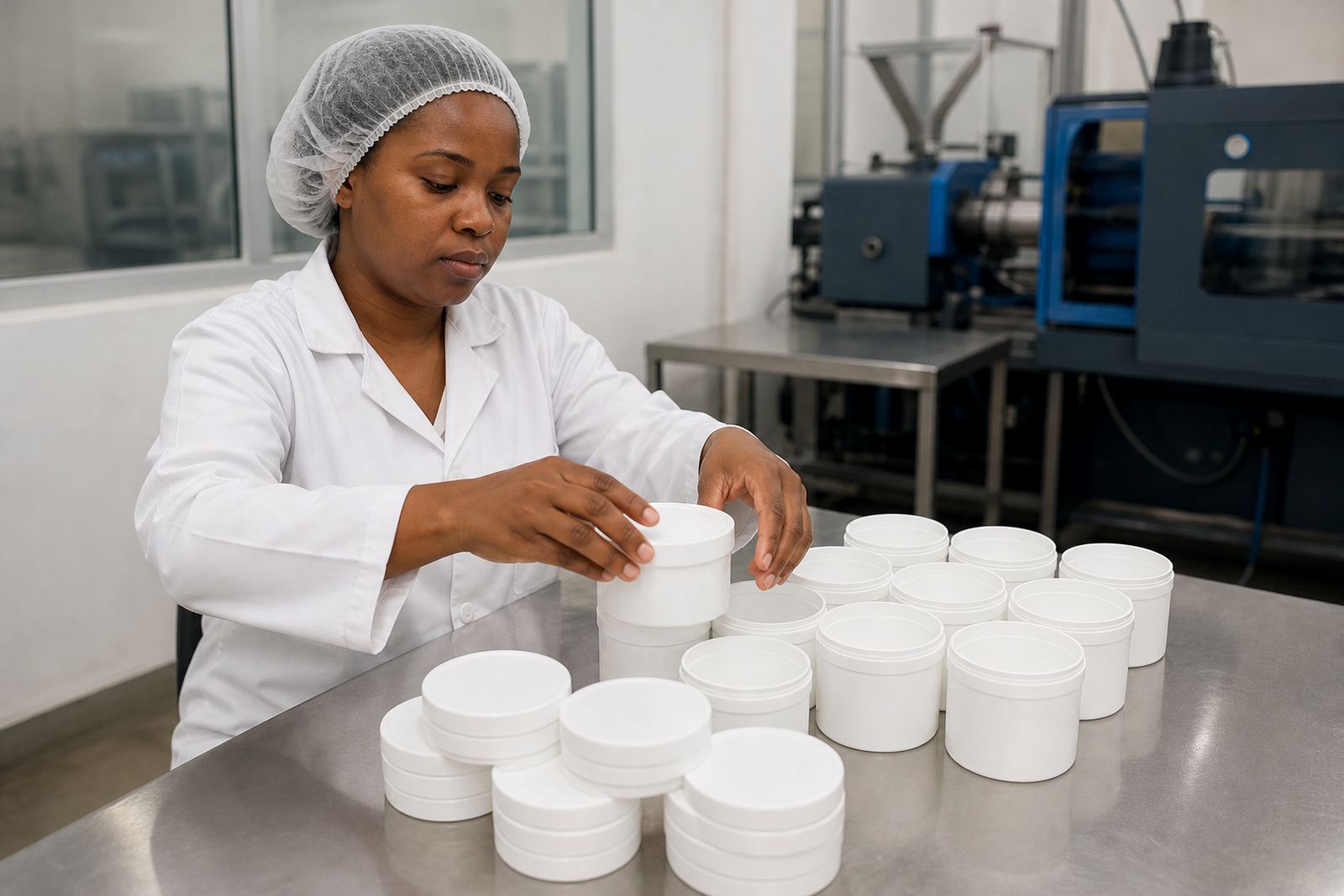
A tamper evident feature makes sense when the product needs a clear sign of opening, whether that is for powders, creams, tablets or dry foods. It is useful where the pack moves through wholesalers, pharmacies, contract fillers or regional depots and the end user needs confidence that the lid has not been lifted in transit.
In practice, the seal should suit the way the product is filled, closed and stored. A loose fit, the wrong film thickness or a lid that twists too easily can undo the benefit. On fast packing lines, the seal also has to sit neatly with the capping motion, so operators are not stopping to correct misaligned lids or torn bands.
- Use a seal where the pack is resold through more than one handling point.
- Use it when the product needs a visible opening mark for the customer.
- Use it for goods that can be affected by dust, moisture or rough handling.
- Use it when the pack must match the rest of the range across sizes.
How the seal works with polypropylene and HDPE tubs
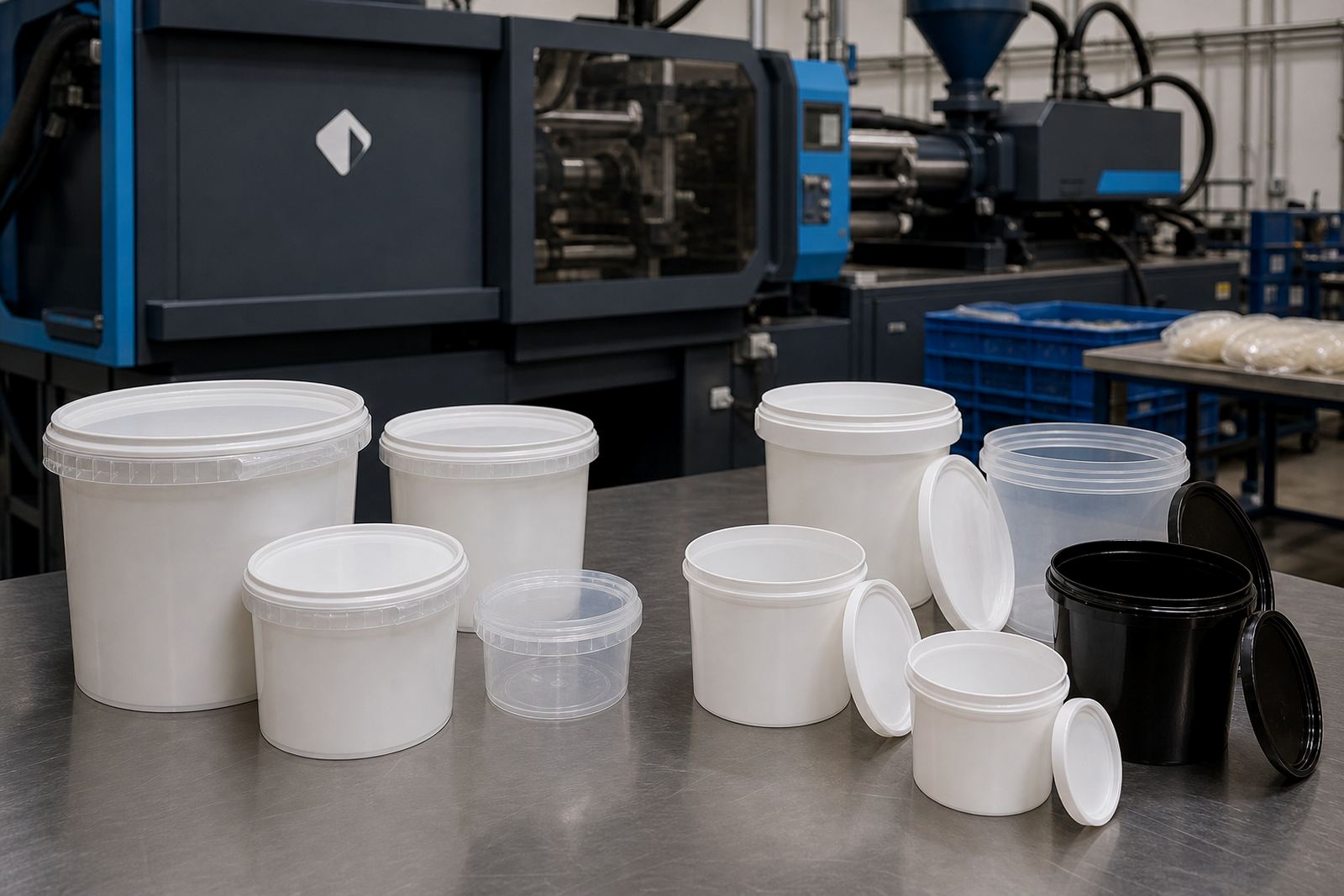
Injection-moulded polypropylene and HDPE containers are common for food, pharmaceutical and cosmetic packing because both materials hold shape well and can be made in a range of wall thicknesses and sizes. The seal must suit the material, the rim profile and the lid type. A rigid tub with a sharp rim may take a different tamper band to a softer, more flexible body.
For many packers, the best result comes from testing the tub, lid and seal as one set. A good lid still needs the correct bead engagement, and a good seal still needs the container to accept it without stress marks. If the pack will travel to Durban or Port Elizabeth, coastal humidity can also affect how well the closure sits over time, especially on goods stored in warmer stores or back rooms.
- Match seal style to the rim and neck finish of the tub.
- Check whether the lid closes before or after the seal is applied.
- Look at how the pack behaves in heat, humidity and stacked storage.
- Keep the same closure logic across sizes where possible.
A practical check list before a trial run
Material selection influences the finish, feel and sealing behaviour of the final pack. Food-safe materials are often used where the product sits close to direct contact use, while cosmetic and pharmaceutical packs may need a cleaner look, tighter closing action and better presentation on shelf.
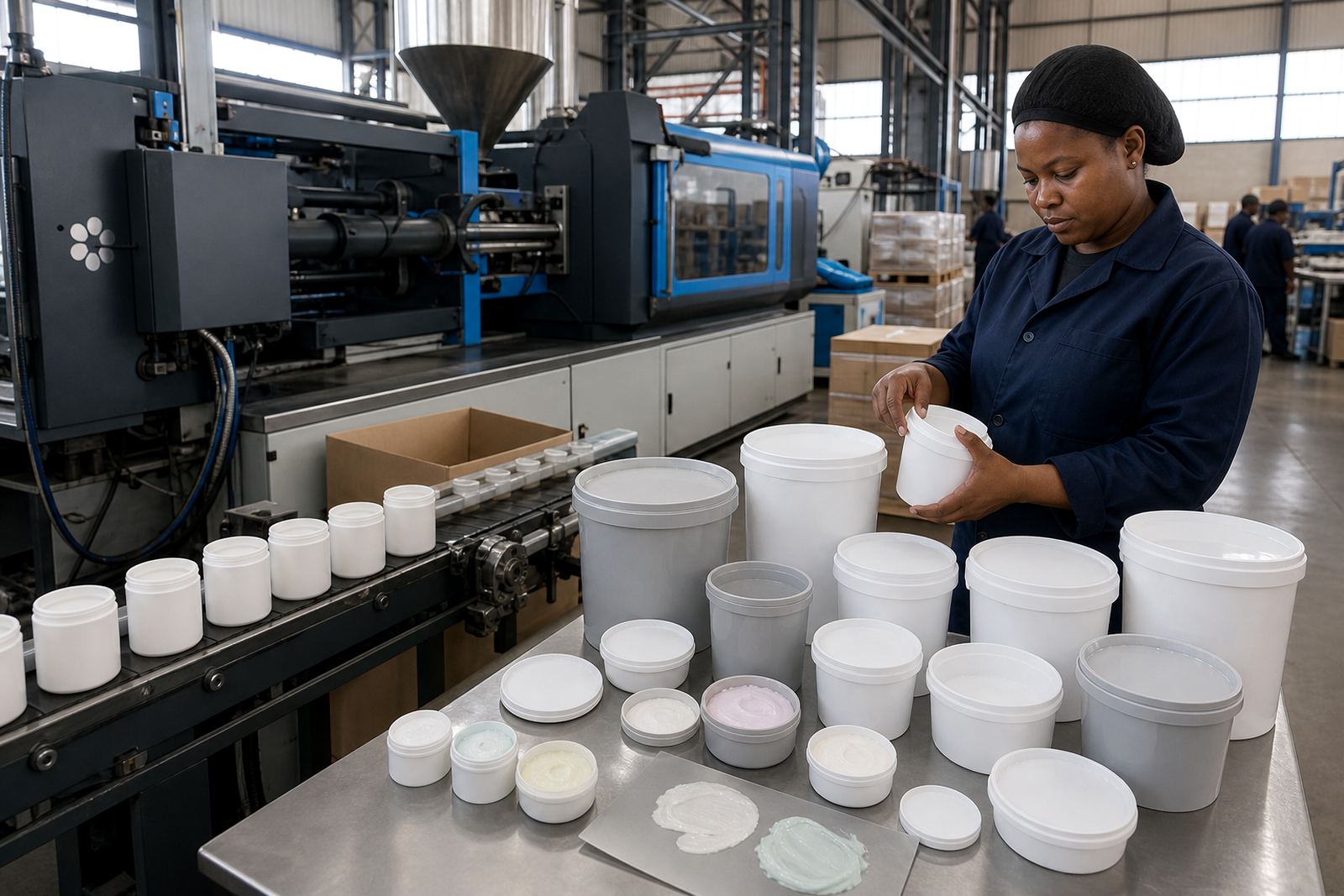
Colour matching guidance helps when one product family uses several sizes but must still look like one range. A white lid on one size and a natural body on another can work, but only if the visual system stays clear across the line. For packs moving through Johannesburg, Pretoria and Germiston, the range also needs to hold up under warehouse handling, pallet movement and repeated picking.
- Keep lid colour and seal colour aligned with the product range.
- Use material and wall thickness that suit the filling method.
- Check whether the lid finish works with gloved or bare-hand opening.
- Keep the visual cue strong enough for store staff and end users.
Where pack size planning prevents trouble
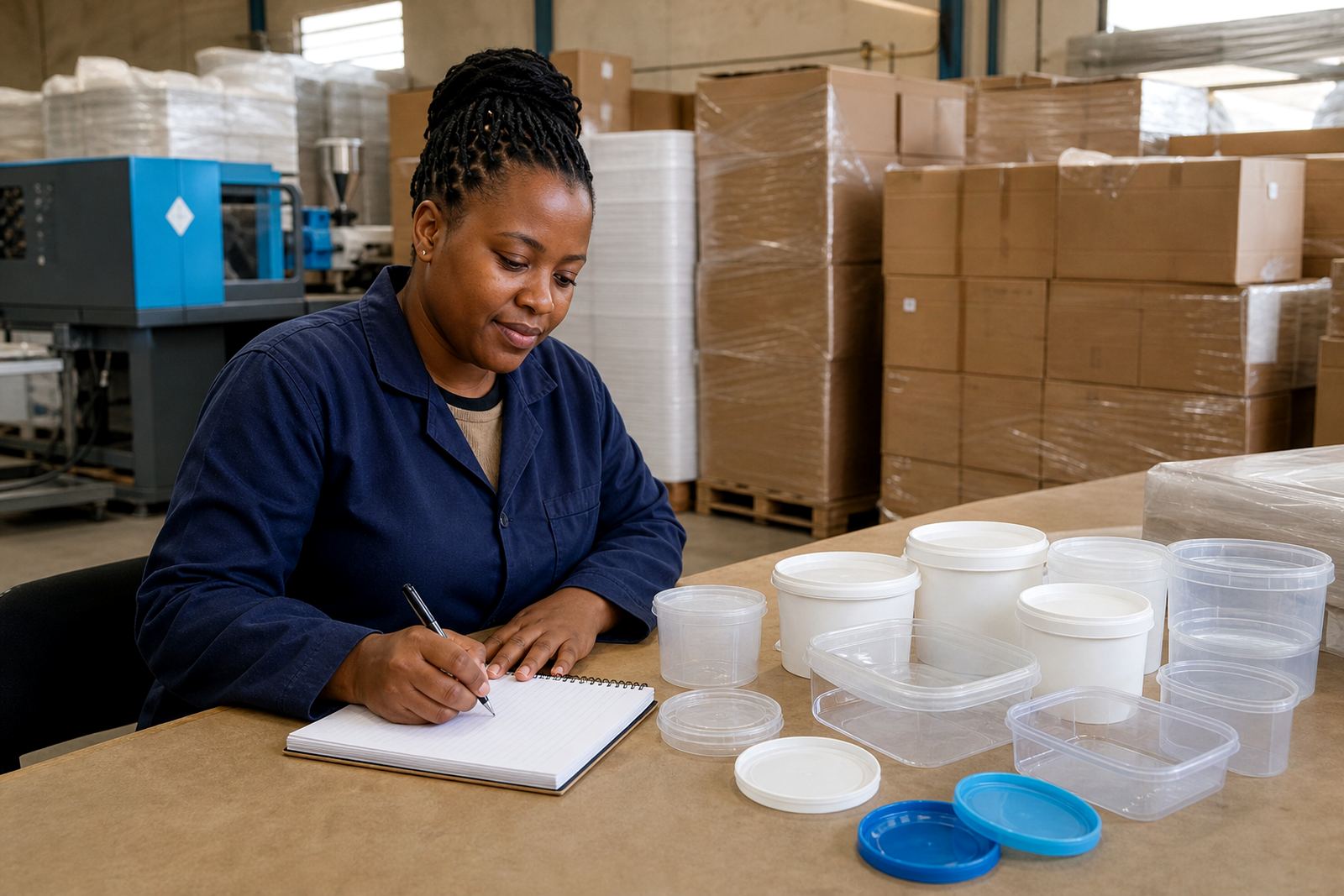
Pack size planning is not only about volume. It also affects headspace, sealing pressure, shelf fit and pallet count. A 250 ml tub and a 1 litre tub may use the same family of closure logic, but the mould and seal detail often need adjustment to suit the way each pack behaves on the line.
For Durban and Cape Town supply, careful size planning matters because goods may spend more time in transit and storage. If the lid is too shallow or the tamper band too tight, the pack can show stress before it even reaches the customer. Stock run planning should allow for the quantities that move well, rather than forcing oversized batches into storage space that is already tight.
- Plan sizes around fill weight, not only nominal volume.
- Check how each size nests, stacks and labels.
- Allow for transit movement between inland and coastal depots.
- Keep stock runs aligned to actual packing demand.
A closer fit for Alberton production and national delivery
At our Alrode base in Alberton, the work is shaped around practical packing needs for South African businesses. That means checking lid development, tamper seal design and line fit before a mould is committed to a larger run. It also means keeping an eye on dispatch detail, because the pack has to leave the site in a condition that still suits the filler and the shelf.
For food, pharmaceutical and cosmetic packers, the right seal is part of the whole container system, not an extra afterthought. When the closure, seal and secondary pack all line up, the result is easier to fill, easier to inspect and easier to move through local supply chains from Boksburg to Port Elizabeth and beyond.
Enquiries are handled through the contact form, where product size, intended use and line details can be shared for review.