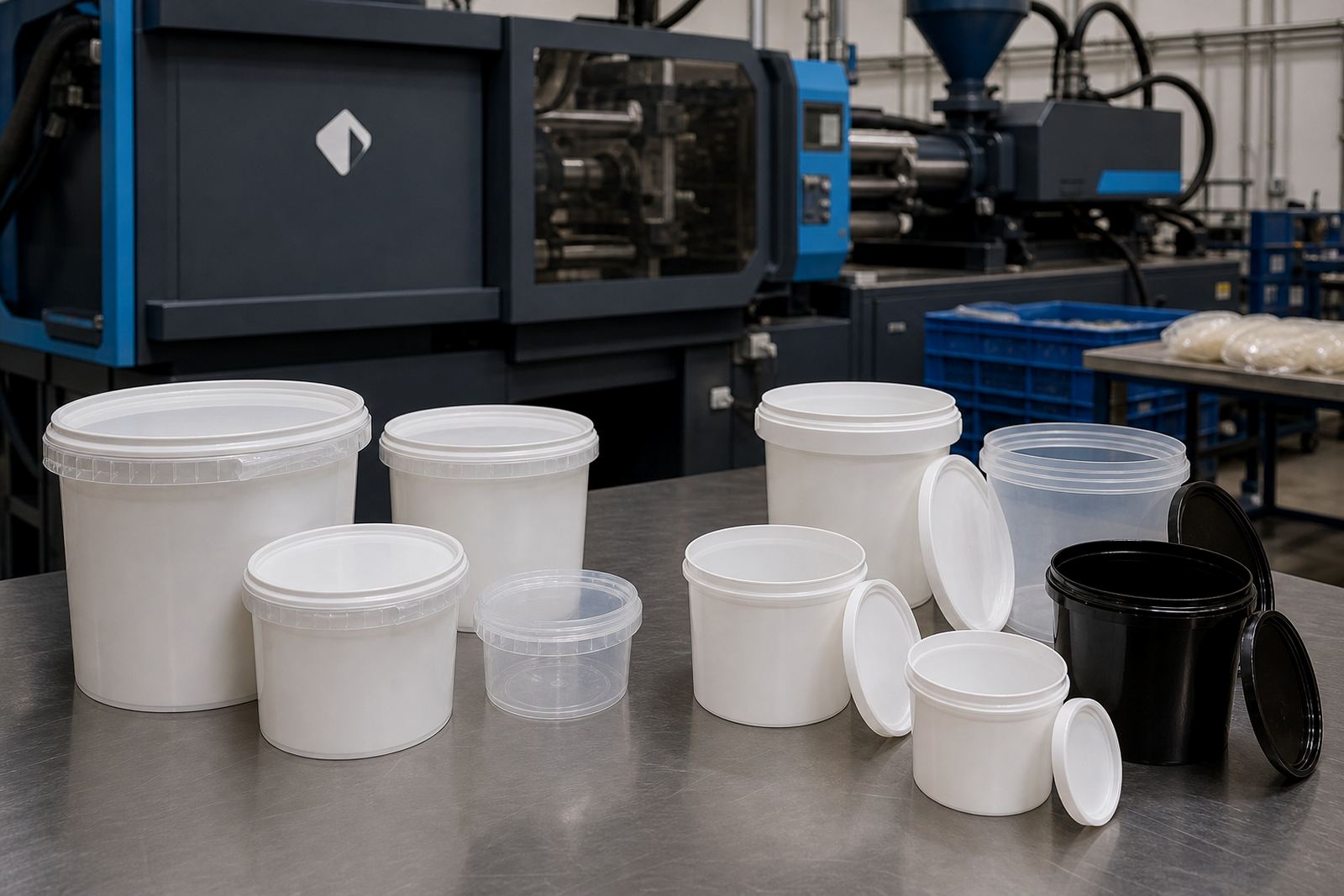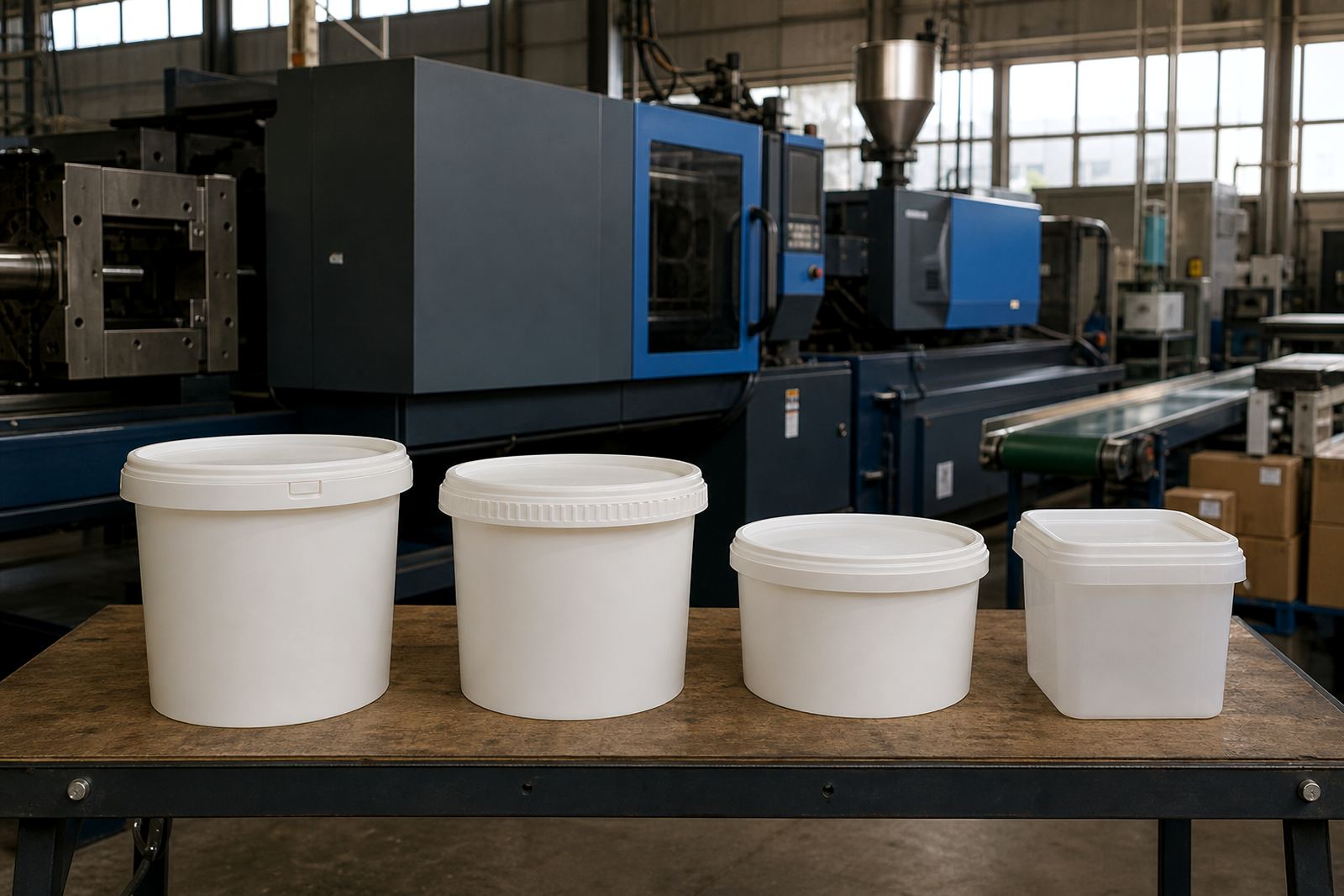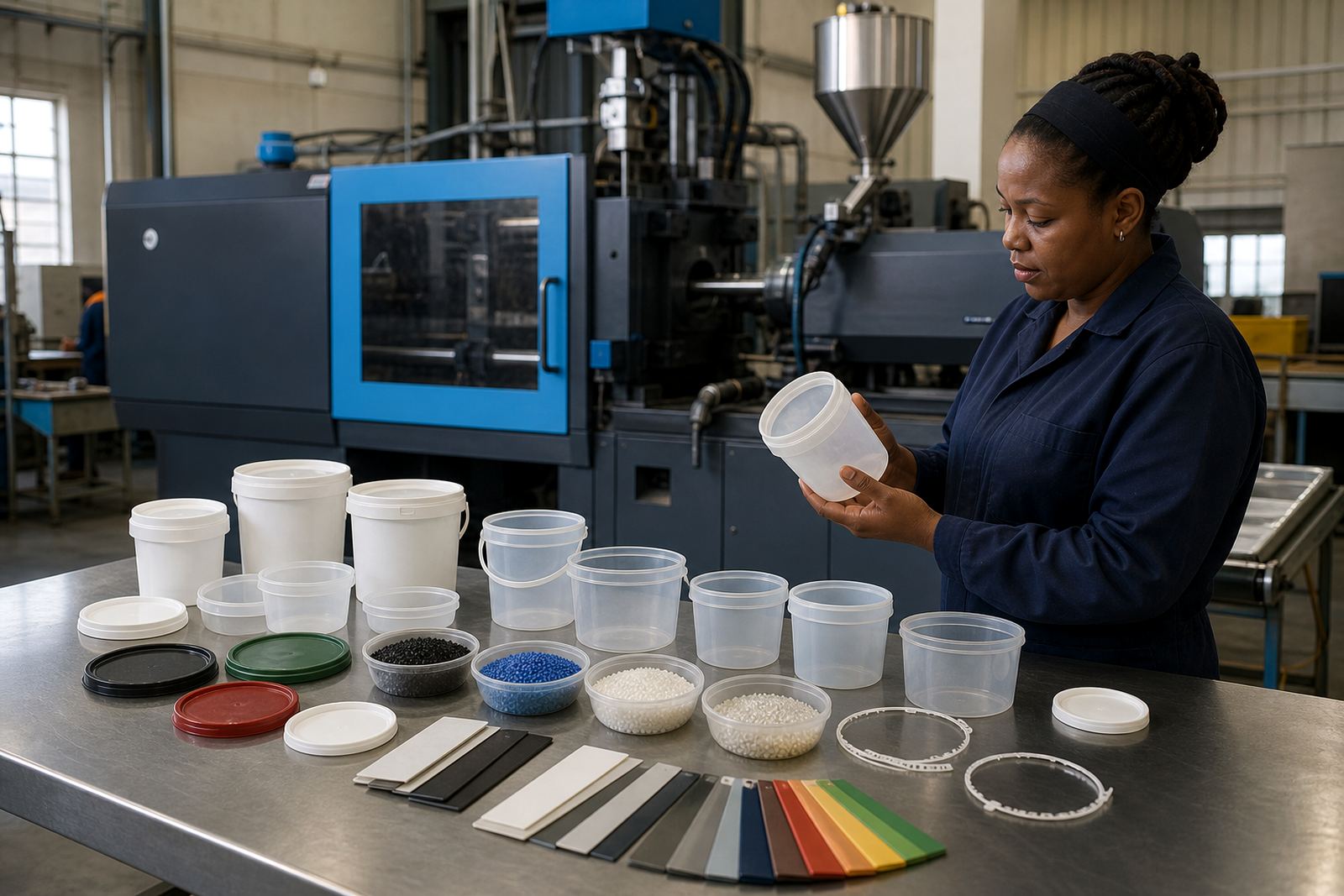

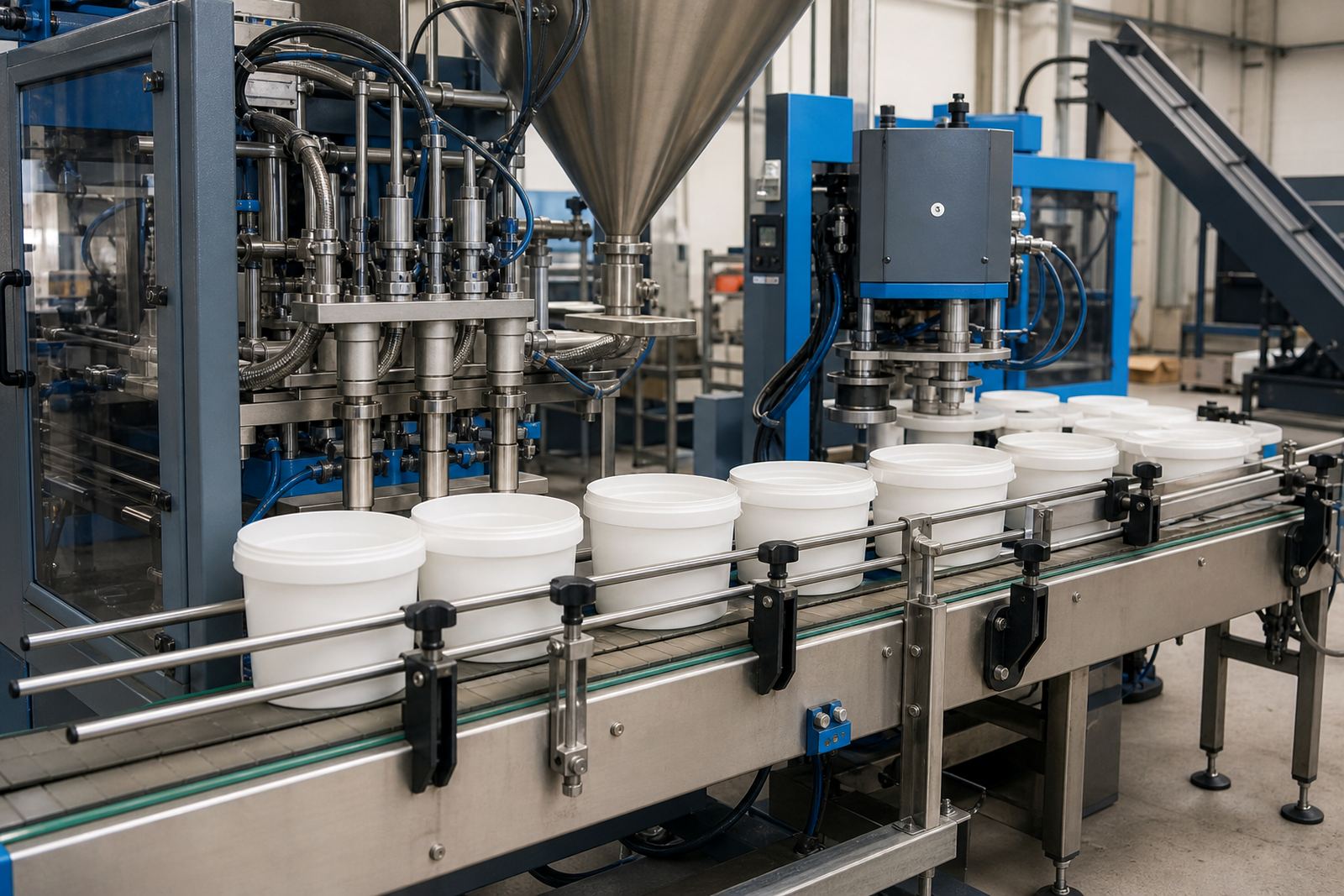
Start With The Line, Not The Tub
Begin by looking at the packing line as a whole. The container must move through the filler, capping or sealing point, inspection, labelling and packing table without stopping the rhythm of the shift. A square tub with a wide shoulder behaves differently from a round pail, and a short body fills differently from a tall one. Even a small change in neck finish or lid profile can alter how the line feeds and how neatly packs stack in cartons.
For food, pharmaceutical and cosmetic packs, it helps to note the product state first. Powders, pastes, granules and liquids all place different demands on the opening, closure and tamper seal. When the container is injection moulded in polypropylene or HDPE, the wall form, stiffness and surface finish should be checked against the way your operators handle the pack at speed. In busy plants around Alrode, Alberton and the wider Gauteng area, a line fit check often saves a lot of rework later.
- Measure the usable opening, not only the outer diameter.
- Check whether the container sits steady on the conveyor and table.
- Confirm that the lid can be applied without twisting the body.
- Note if the pack needs a tamper seal, induction seal or liner style closure.
- Allow for label position, date coding and carton clearance.
Measure The Real Space On The Floor
Line fit starts with actual measurements from the floor, not brochure sketches. Record the conveyor width, guide rail spacing, drop height, fill head clearance and turning points where the pack changes direction. If the pack needs to pass under a capping unit or through a shrink tunnel, the tallest point on the lid matters as much as the container height. In some plants a few millimetres decide whether a pack runs cleanly or rides up on the guides.
Also check what happens after filling. A tub that stacks well in a store room may still cause trouble if the lugs, lid profile or base shape catch on each other during packing. If the product is sent to Johannesburg, Durban, Cape Town, Pretoria or Port Elizabeth, the outer carton and pallet pattern also need to be considered, because transport vibration and heat can change how tightly the packs settle. Coastal humidity can affect labels and secondary packaging too, so the full route deserves attention.
- Height from conveyor top to top of closure.
- Pack width at the widest shoulder or grip point.
- Base contact area and whether the pack rocks.
- Space needed for grips, rails and transfer plates.
- Carton dimensions, pallet layers and corner protection.
Match The Closure To The Filling Method
The closure must suit the way the product is packed. A screw lid, press-on lid or tamper evident seal each asks different things from the line. If the filling process leaves residue on the rim, the seal may not seat properly. If the product is hot-filled or filled at room temperature and then stored in varying conditions, the lid shape and resin choice should be checked for movement or distortion. Polypropylene and HDPE both have common uses in packaging, but they behave differently under load and during closure application.
For tubs used on food and personal care lines, the sealing area should be clean and consistent. A tamper seal needs a sound lip and a dependable path around the rim, while a lid for dry product may only need reliable retention and neat stacking. On some packing lines the issue is not the lid itself but the sequence of operations. If the closure arrives before the fill settles, or if the pack is too flexible, the rhythm slips and handling gets rough.
- Confirm the fill level against the headspace under the lid.
- Check closure torque or fit pressure with actual product.
- Test how the rim behaves after filling and cooling.
- Review whether liners, seals or labels interfere with closure.
- Watch for lid misfeed, skewing or split seals during a run.
Trial Runs Show The Small Friction Points
A trial production run is where hidden issues show up. A pack can pass a drawing review but still jam at the guide rails, lean during transfer or pick up scratches where it touches metal. Small differences in mould finish, wall thickness and base stability matter when hundreds of units move through the line. Trial runs also show whether the operator grip feels natural or whether the container shape slows down hand packing at the end of the line.
During a trial, keep notes on the exact fault and where it appears. Is the problem at first fill, after capping, during labelling or at case packing? That sequence matters because the fix is often different for each point. Sometimes a slight lid change, a different tamper seal design or a revised pack height solves the issue without changing the whole format. Sometimes the answer is a new mould detail that improves release and stacking, which can make the whole line steadier.
- Run the pack at normal line speed, not only at test pace.
- Check a full sequence, from empty pack to palletised carton.
- Inspect scuffing, denting and lid lift after handling.
- Mark where the line slows, pauses or needs extra touch handling.
- Record any changes needed to rails, grippers or carton size.
Secondary Packing Must Carry The Same Logic
Once the container fits the line, the carton and pallet plan must support it. Secondary packing advice matters because a pack that behaves well individually can still waste space in the carton or lean on the pallet. If a tub has a broad shoulder, the carton insert and divider layout may need adjustment. If the lid profile is high, the layer count on the pallet may need revising so the top layer does not press too hard during transport.
For packers supplying across South Africa, stock run planning should also consider how batches are stored and moved between branches. Johannesburg, Germiston and Boksburg often handle fast distribution and repeated lifting, while deliveries into coastal cities can face more humidity and longer travel vibration. The aim is to keep the container, lid and carton working as one unit so the pack arrives looking the same as it left the line.
- Confirm carton internal size against the filled pack.
- Check whether the pack nests, stacks or interlocks as intended.
- Review pallet layer count against product weight and top pressure.
- Allow for labels, tamper seals and date coding on the outer pack.
- Keep a spare sample pack for line and warehouse reference.
A Practical Check Before You Lock The Format
Before a format is approved for production, compare the pack against the real line conditions and the real product. If the packing line is old, manual or mixed with different pack sizes, the container should tolerate that variation without constant adjustment. If the line is more automated, consistency in mould dimensions, lid fit and base stability becomes even more important. This is where material selection, mould development and line fit checks work together.
Plastic Factory supports packers with custom tub design, lid development, tamper seal design, mould development, trial production runs and pack size planning. That process is useful when a food, pharmaceutical or cosmetic packer in Alberton or elsewhere needs a container that feels right in the hand and also behaves properly on the line. The best result is a pack that feeds cleanly, closes properly and stacks without fuss.
- Keep a sample set of empty and filled containers for sign-off.
- Note the exact lid, seal and label combination tested.
- Review the container in cold store, ambient store and dispatch conditions.
- Confirm handling at receiving, filling, packing and dispatch points.