
An oval profile that works well in hand and on shelf
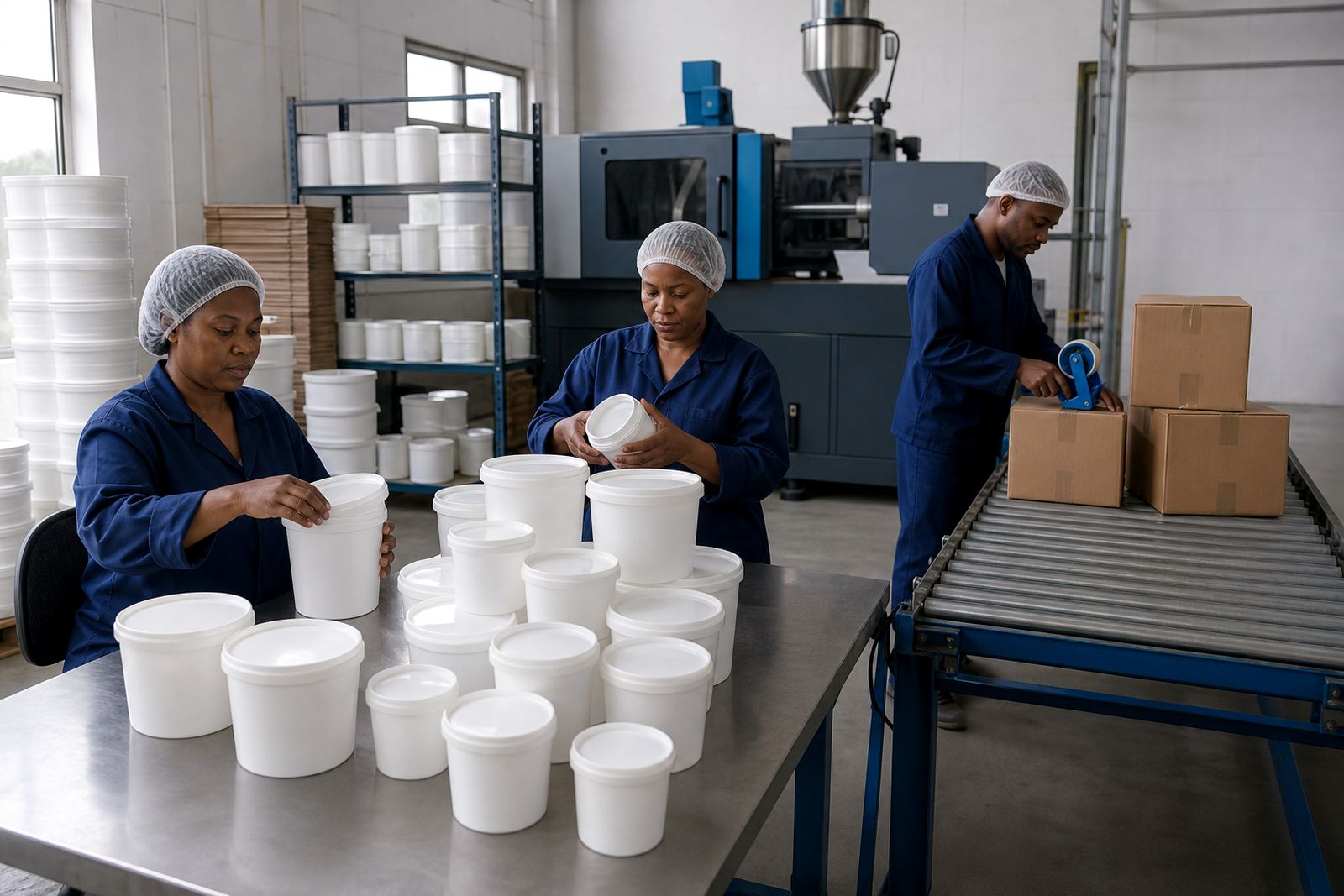
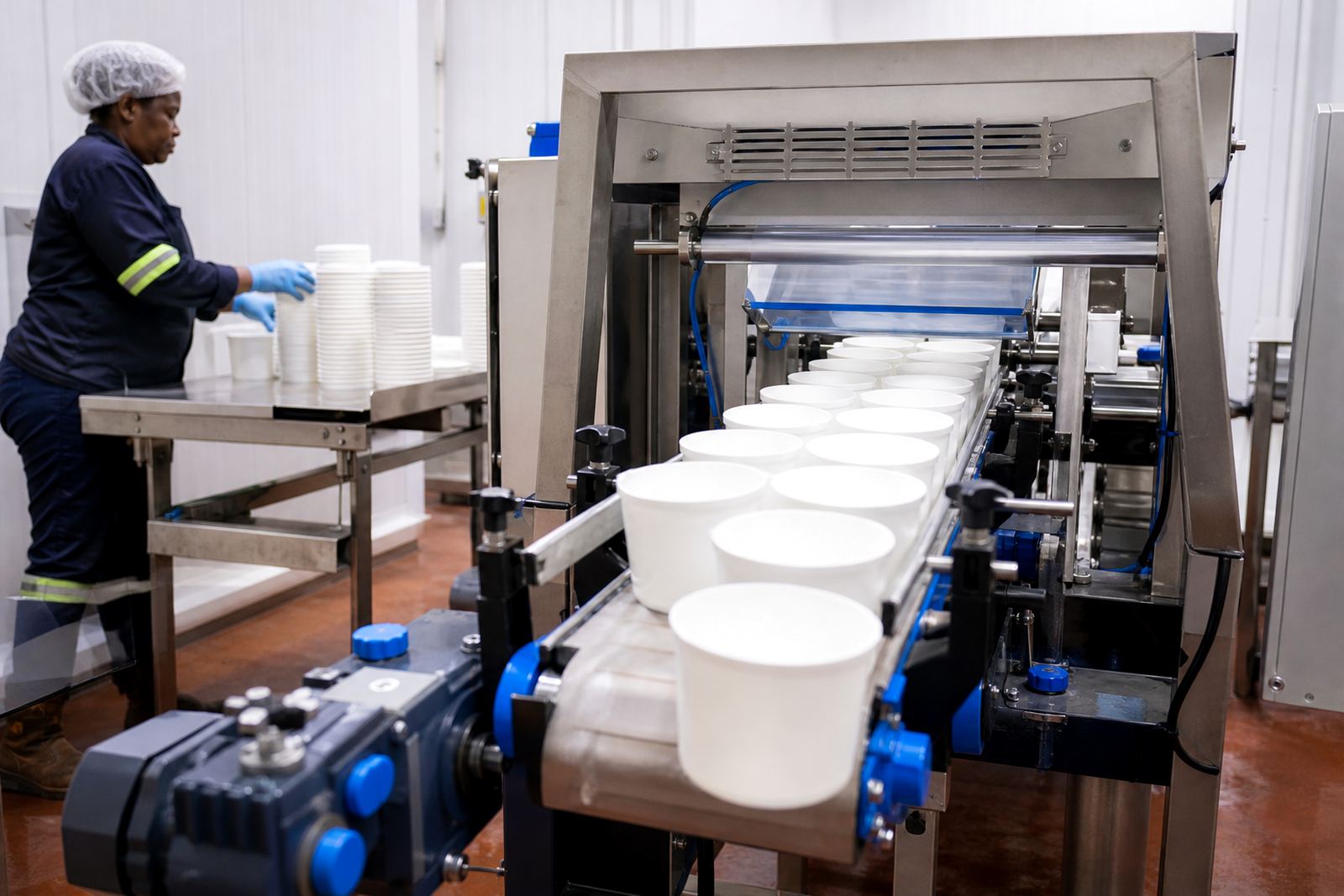
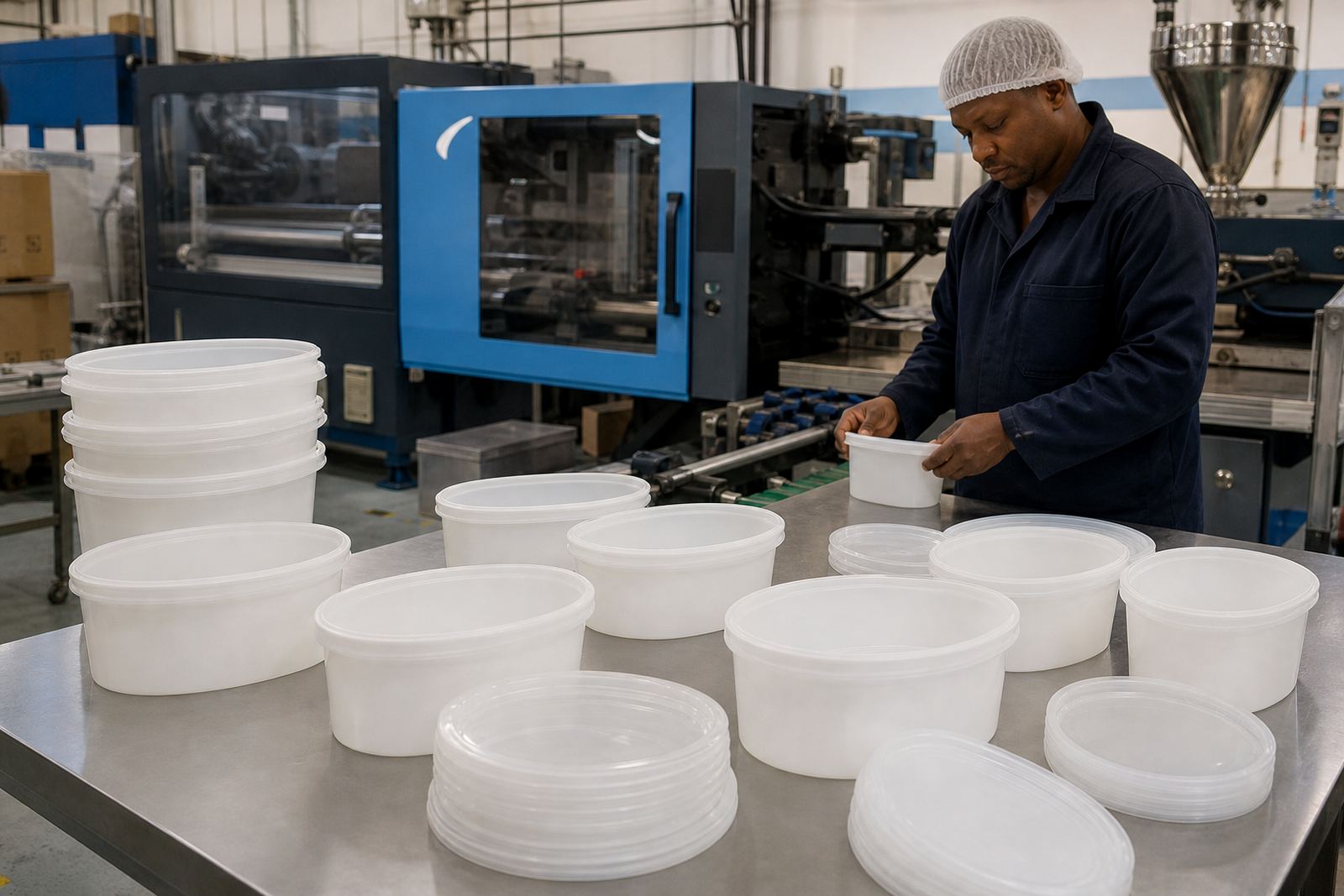
The oval tub range is injection-moulded for packers who want a container that sits neatly in the hand and presents a calmer look on shelf. The shape helps when tubs are carried, stacked and opened in busy packing rooms, and the smoother edges are often preferred for personal care products, spreads, dry goods and cream-based fills. In Alrode and Alberton, where packing lines often run across mixed product sizes, this profile gives a tidy format without the hard corners of a square tub.
Each tub is formed from food-safe polypropylene or HDPE, depending on the product and filling method. Polypropylene is widely used where stiffness and heat resistance matter, while HDPE is valued for its toughness and chemical resistance. Both materials are suitable for many food, pharma and cosmetic applications, provided the final pack is matched to the filling product and storage conditions.
Sizes, fills and closing options
Oval tubs are supplied in a set of practical pack sizes, with wall and brim dimensions chosen around common retail and wholesale fills. The working range usually includes smaller tubs for balms and dressings, mid-size tubs for creams and deli products, and larger tubs for bulk packing or repacking lines. Capacity, brimful volume and actual fill volume are not the same, so the final choice should always be tied to the product density and headspace needed.
- Small oval tubs for sample packs and personal care fills
- Mid-size tubs for spreads, sauces and creams
- Larger tubs for bulk portions, refill packs and dispatch cartons
- Matching lids for snap-fit closing
- Tamper seal options for visible first-open protection
Top closure can be built around a plain lid, a tamper-evident seal or a sealing arrangement that suits a line using induction or pressure closing methods where specified by the packer. The lid fit must match the rim profile exactly, otherwise the pack will not close cleanly on the line.
Where the oval tub range is used most often
This range suits packers handling goods that need a neat presentation and a practical grip point. Food plants use oval tubs for sauces, relishes, dairy-style products, bakery fillings and dry ingredients. Pharmaceutical packers use them for ointments, powders and measured-use products where clarity and closure control matter. Cosmetic fillers often prefer the softer shape for creams, masks, body butters and hair treatments.
The profile also works well in secondary packing and on retail shelves where the product must show clearly in a carton or shrink-wrapped tray. A tub with an oval footprint can make better use of narrow shelves and still leave enough room for label panels, batch coding and tamper indication. In Durban and Port Elizabeth, where coastal humidity can affect label grip and stored packs, the container finish and closure choice need careful matching to the full pack build.
- Food filling rooms with retail and bulk lines
- Pharma packing areas using controlled-dose containers
- Cosmetic production with branded label panels
- Contract packers managing several fill weights
Fitting the tub to your packing line
Oval tubs need to be checked against the full line set-up before a mould is approved for production. Rim diameter, stacking height, lip shape and lid engagement must all suit the filling heads, capping stage and any conveyor guides already in place. If the pack is going through heat tunnels, shrink sleeves or a sealing stage, the wall thickness and top finish should be confirmed against those conditions.
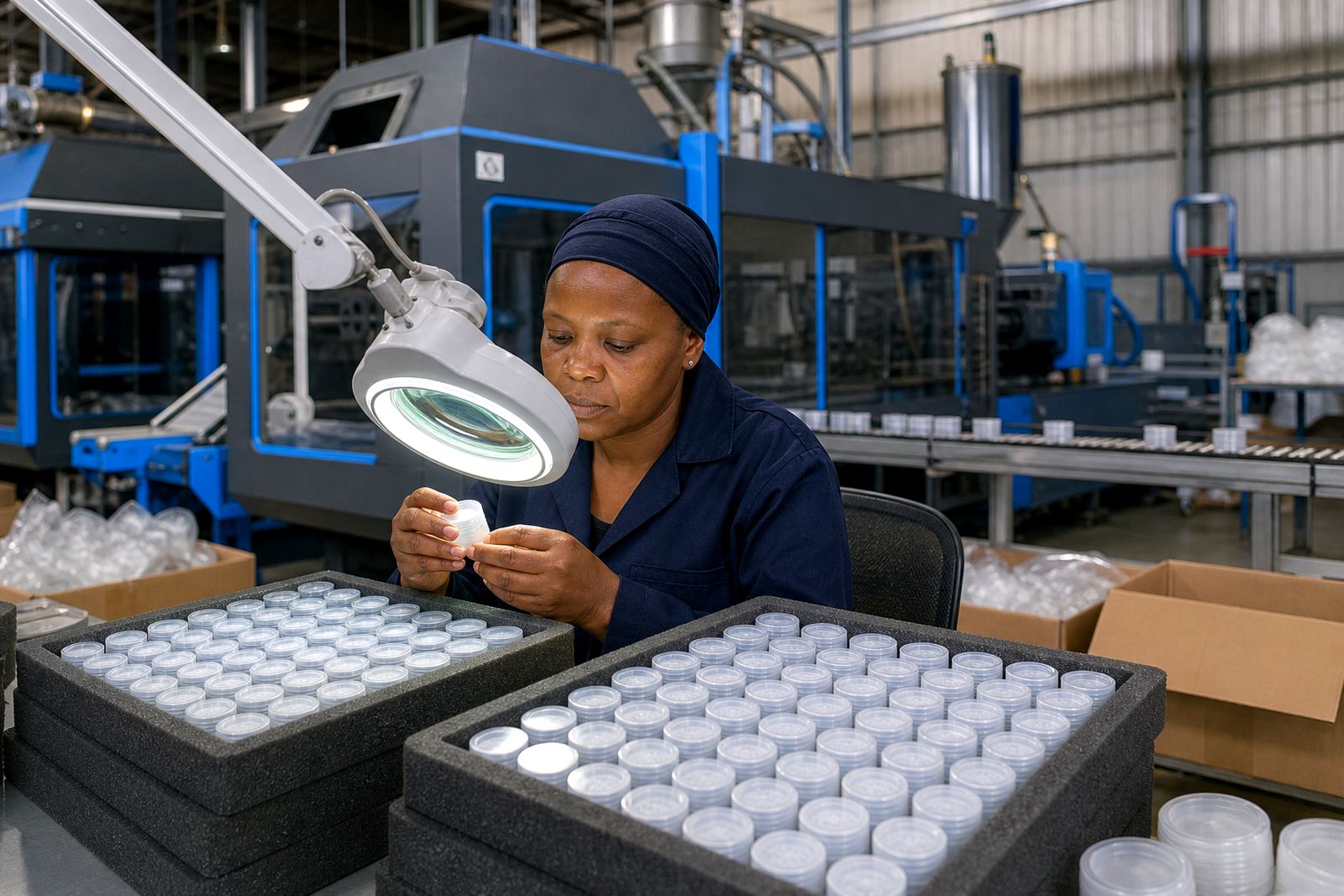
For injection-moulded tubs, consistency matters from one cavity to the next. The mould must hold its dimensions so that lids seal properly and tamper bands sit evenly. That is especially important on Johannesburg and Pretoria packing lines where output can be high and a slight variation shows up quickly in sealing or carton fit. A careful line fit check helps avoid crushed rims, loose lids and awkward stacking in dispatch.
- Check overall diameter and stacking height
- Confirm lid style and tamper seal method
- Match wall thickness to product weight
- Test the pack on the actual filling line
- Allow space for labels, batch marks and codes
Care, storage and day-to-day handling
These tubs should be kept clean, dry and protected from dust before filling. The material surface is intended for regular packing room use, but scraped rims and distorted lids will affect closure quality, so crates and cartons need to be handled with care during internal movement. In warm storage rooms, especially where moisture builds up, open stock should be kept off the floor and away from direct sunlight.
During filling, operators should avoid rough stacking or over-compressing the lids, because that can deform the sealing edge. If the product line uses tamper seals, the seal area must be kept free from powder, oil or loose granules before closing. Label stock should also be matched to the tub finish so it sits flat and remains readable through normal handling.
Ordering details that need to be confirmed
When requesting the oval tub range, the main details to confirm are the product being packed, the target fill weight or volume, the lid style, and whether tamper evidence is needed. Colour, opacity and any artwork area should also be fixed before production starts, because these choices affect mould setup and packing presentation. If the pack is for food contact, the material choice must suit that use and the final application should be described clearly.
Useful information for a quote and mould planning includes the pack size, expected monthly usage, whether the tubs will run on a manual or automated line, and if the same container needs to suit more than one product. Secondary packing details matter too, such as how many tubs go into a carton and whether the cartons are stacked for warehouse storage or retail dispatch.
- Product type and fill texture
- Required capacity or target weight
- Polypropylene or HDPE preference
- Lid, tamper seal and colour choice
- Label space and coding position
- Carton pack count and pallet pattern
Key facts
| Range | Oval Tub Range |
|---|---|
| Material options | Polypropylene or HDPE |
| Closure options | Matching lids and tamper seals |
| Use sectors | Food, pharmaceutical and cosmetic packing |
| Manufacture | Injection-moulded containers and tubs |
| Service area | Alberton, Johannesburg, Durban, Cape Town, Pretoria, Port Elizabeth and other South African delivery routes |