Close Fit That Holds Through Transport
Lid development is not only about covering the top opening. The fit has to stay even around the rim, resist corner lifting after stacking, and match the way your packers close the tub by hand or on a line. We look at wall form, rim thickness, snap action and how much pressure is needed to seat the lid without damaging the container.
For products moving through Johannesburg, Durban, Cape Town, Pretoria and Port Elizabeth, the lid also has to cope with rough handling, changes in temperature and the humid coastal air in some depots. A lid that feels fine on a sample bench can still misbehave when tubs are loaded into cartons, stacked on pallets, or held in storage for a longer period.
How The Development Work Is Carried Out
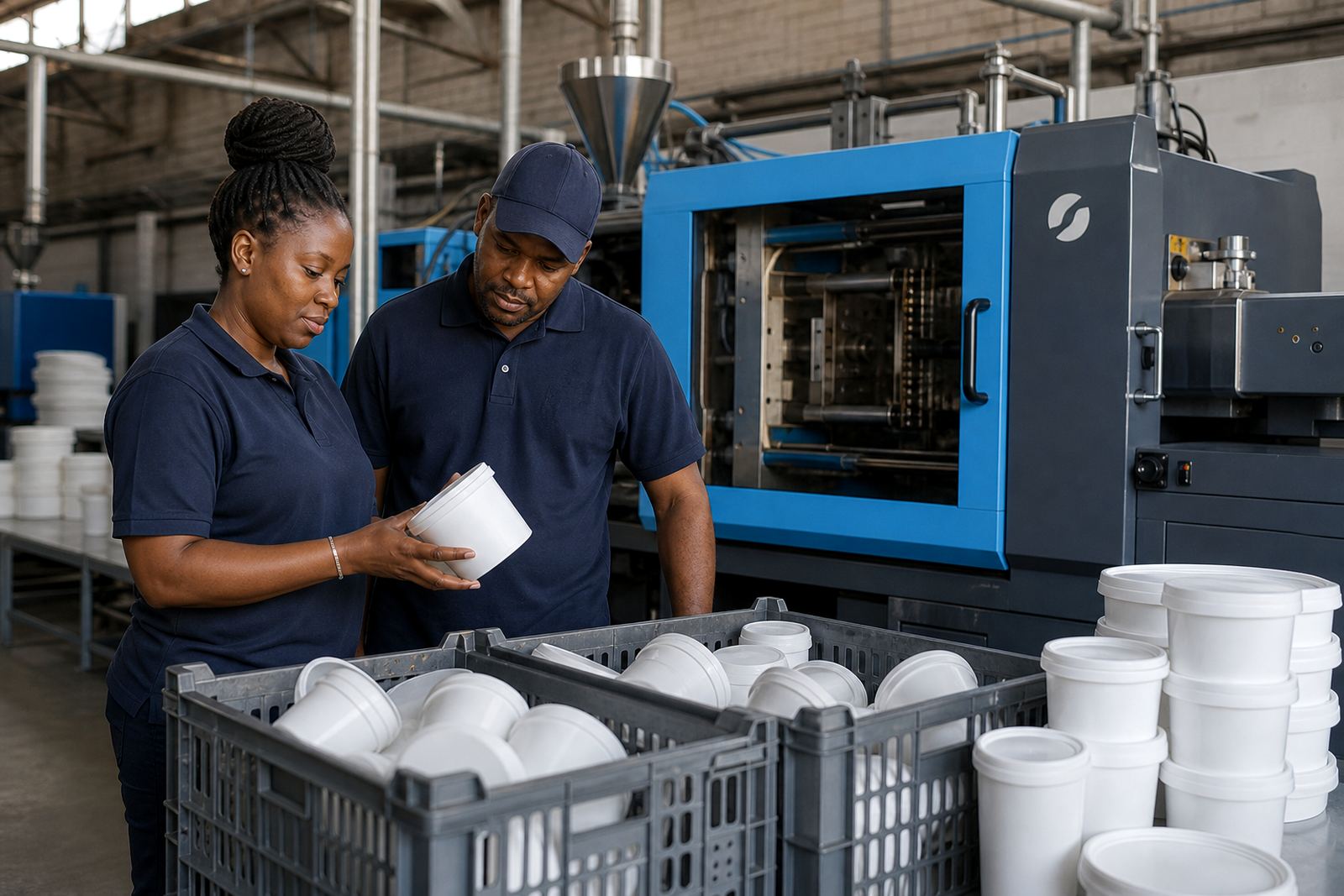
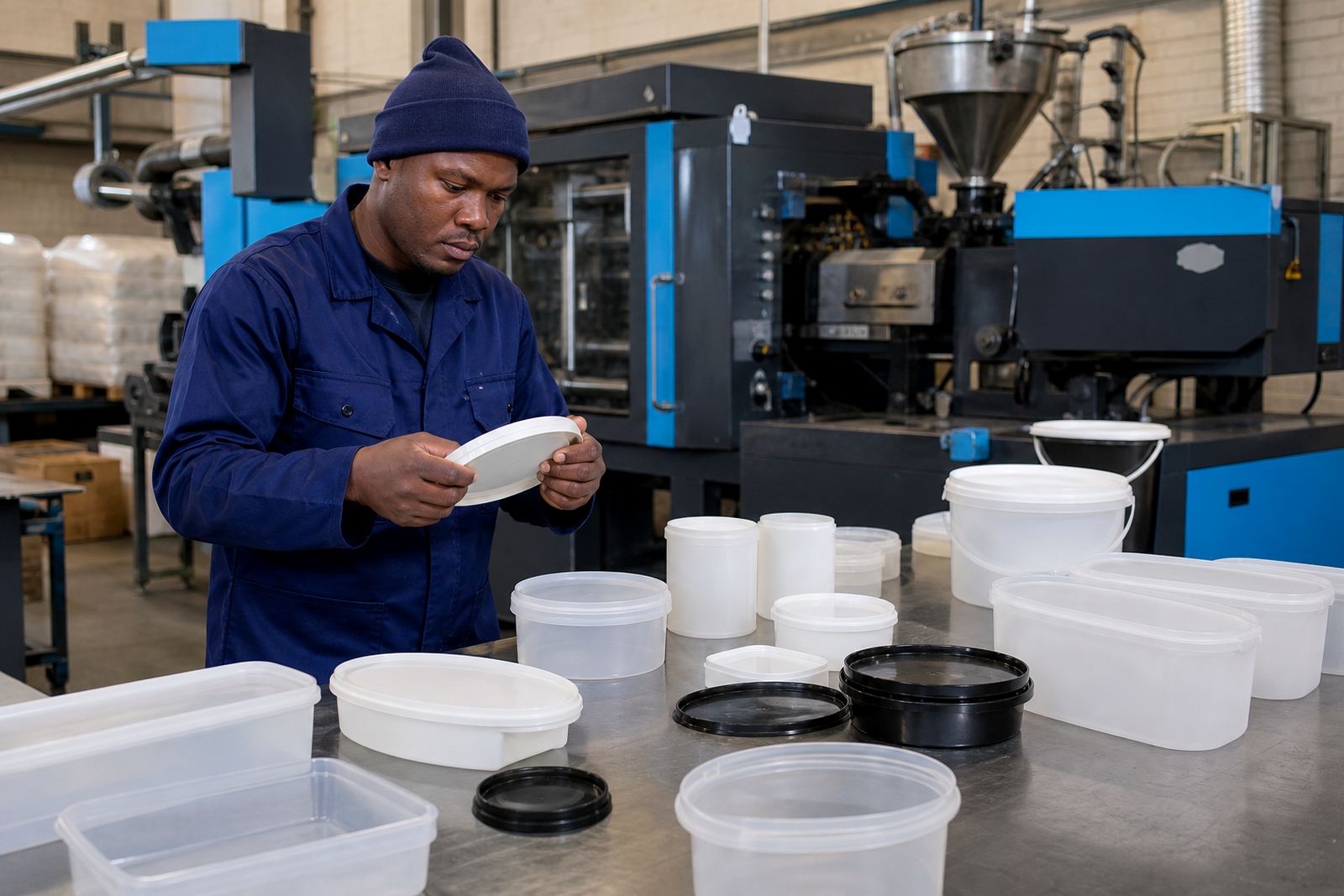
We begin by looking at the container shape, fill level, product type and the way the pack moves through your operation. That includes hand filling, semi-automatic packing lines, induction or tamper seal use where relevant, and the space available for labelling or coding. From there, lid options are tested for fit, stack stability and opening behaviour.
- Review of tub mouth dimensions and sealing surface
- Guidance on lid profile, ribbing and hinge or lift-off form
- Input on tamper evidence features and seal placement
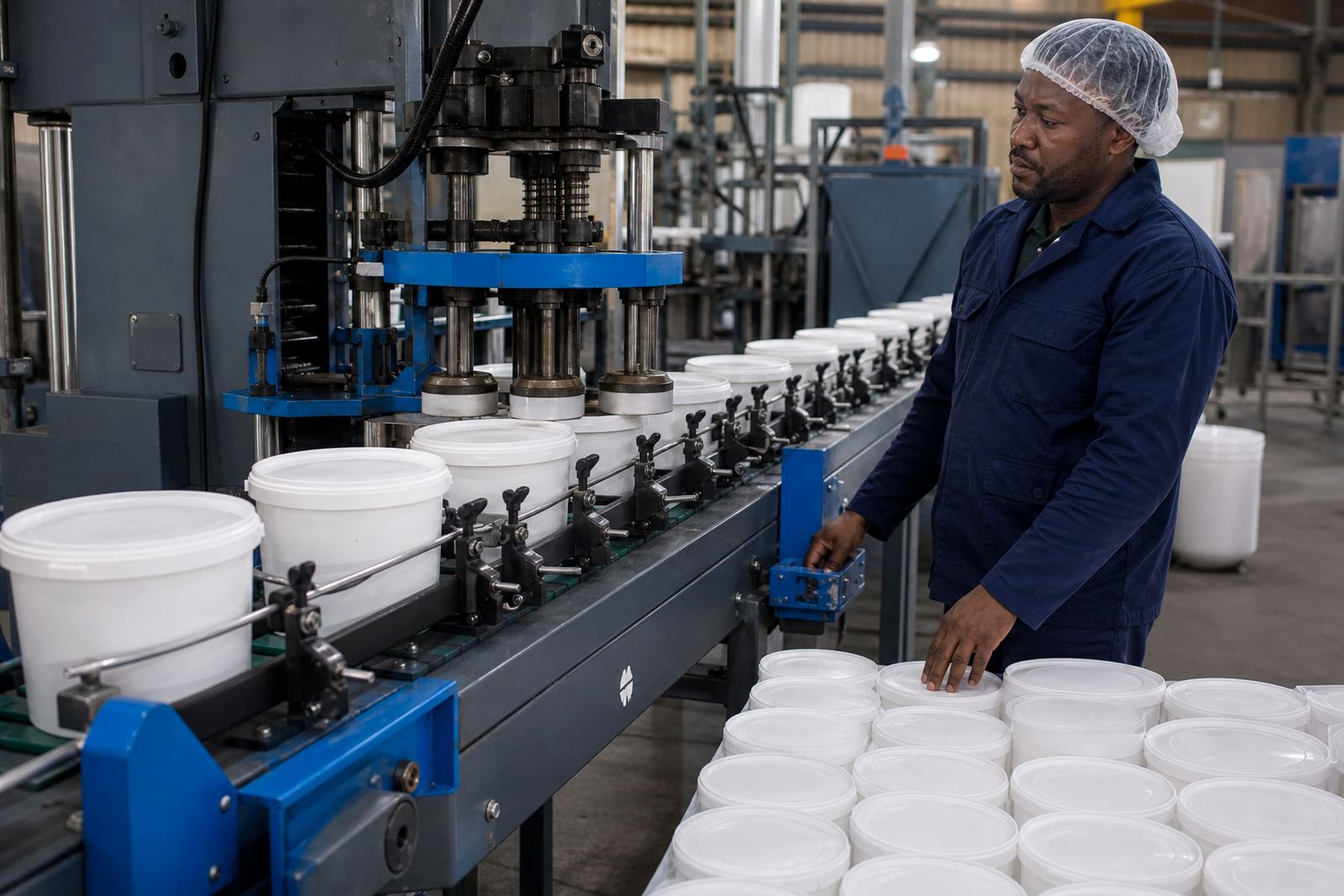
- Trial production runs for practical line checks
- Secondary packing advice where cartons or sleeves need to work around the finished pack
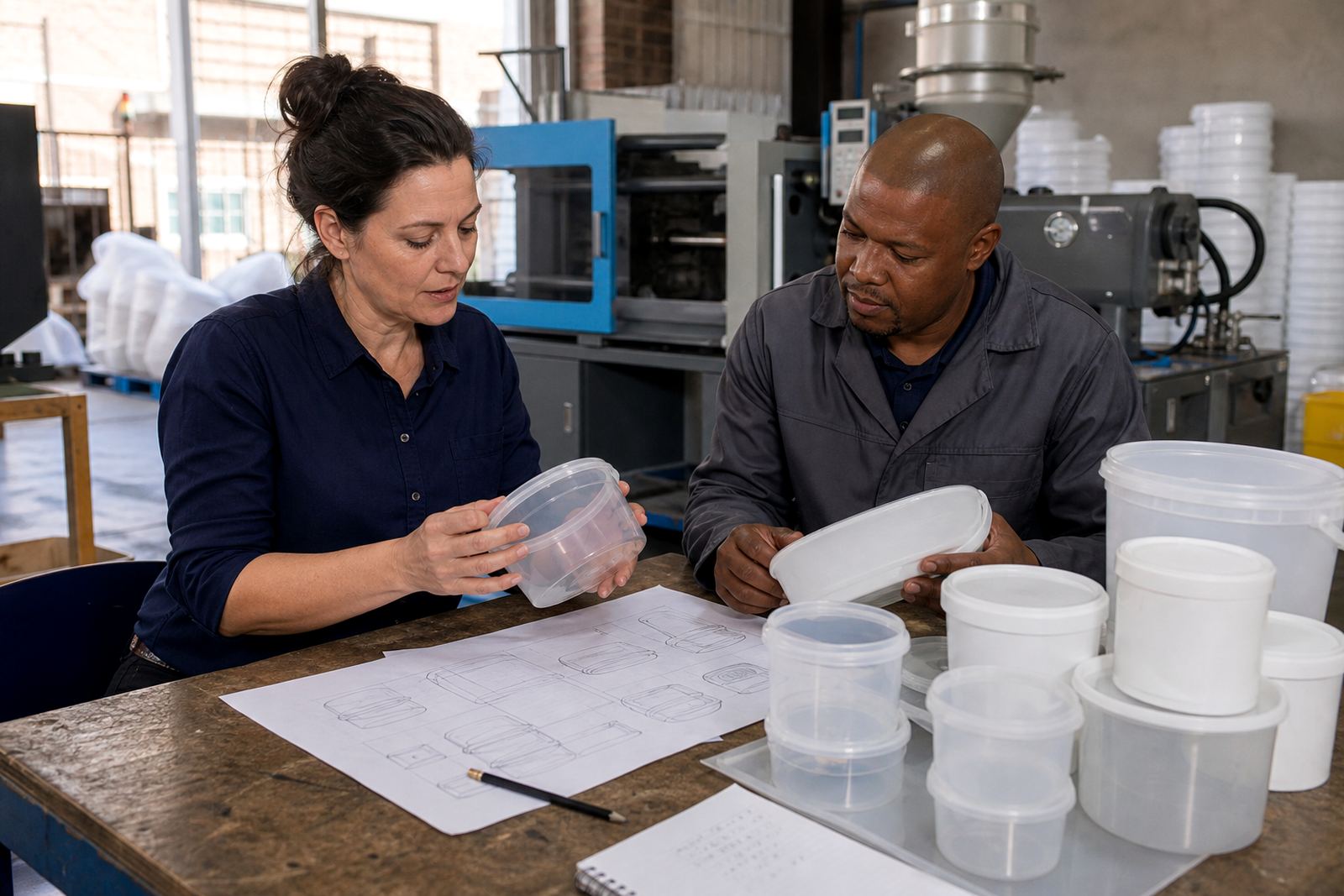
The process is practical and hands-on. We do not stop at a drawing, because a lid must work in real filling conditions and still open cleanly for the end user.
Materials, Thickness And Opening Feel
For lid development, material choice matters as much as shape. Polypropylene is often used where a lighter lid with good flex is needed, while HDPE can suit formats where toughness and resilience are more important. The grade, wall thickness and rib layout change how the lid flexes at the rim and how it behaves after repeated handling.
We also look at the opening feel. Some packs need a firmer snap so the closure stays put during transport, while other packs need easier opening for repeated use by the customer. That balance has to be set carefully, because too much grip can frustrate users and too little can lead to loose closures in the packhouse.
Specs We Work Around In Real Packs
Lid development is guided by measurable details rather than guesswork. The numbers below are the sort of points we work with when setting up a new lid or refining an existing one.
- Typical container sizes: small cosmetic tubs through to larger food pack formats
- Wall and rim control: matched to the tub mouth and closure method
- Material options: polypropylene and HDPE, with food-safe material selection where required
- Closure styles: snap-on, press-fit and tamper-evident combinations
- Colour matching: practical guidance for clear, white or branded colours
- Pack line fit: hand pack, semi-automatic fill, and carton-ready handling
These specs shift with the pack, the product and the way your staff handle each unit. A lid for a dry product is not built the same way as one for a cosmetic cream or a pharmaceutical powder.
Turnaround And Pricing Approach
Turnaround depends on the complexity of the lid, whether a new mould needs to be developed, and how many trial adjustments are needed before sign-off. Simple fit corrections move differently from a full lid redesign that must work with a new tub, new seal and new line setup. Trial production runs and tool changes sit in the same project path, so the programme is set around the actual work needed.
Pricing is shaped by the lid format, mould development requirements, sample quantity, material selection and any special features such as tamper evidence or custom closing action. We price around the job in front of us, not a one-size-fits-all package. That keeps the figures tied to the real tooling and product decisions.
Aftercare On Running Packs And Stock
Once a lid has been signed off, support does not stop at the first batch. We assist with pack size planning, stock run planning and ongoing product updates where the closure needs refining after real use in the market. If a line starts showing scuffing, poor seating or awkward opening, the lid design can be reviewed against the actual pack behaviour.
- Checks on lid fit with existing tub stock
- Advice on packing line changeovers and handling notes
- Support for colour matching if the lid forms part of a visible retail pack
- Review of seal placement where tamper evidence must stay clear and readable
For clients in Alberton, Germiston and Boksburg, as well as wider South African supply, this follow-through helps keep the pack practical after launch and not just on the sample table.
Key facts
| Core materials | Polypropylene and HDPE |
|---|---|
| Closure forms | Snap-on, press-fit and tamper-evident lid options |
| Project inputs | Container shape, fill method, product type and line behaviour |
| Development checks | Fit, stack stability, handling feel and opening action |
| Production support | Trial runs, mould development and line fit checks |
| Coverage | Alrode, Alberton with delivery and supply across South Africa |