Choosing the resin before the mould is cut
Material selection starts with the product itself, not with the mould. A yoghurt tub, a protein powder tub and a cream jar may all look similar on the shelf, yet each one asks different things from the plastic. We look at the fill weight, the shape of the pack, whether the product is oily or acidic, and how the container will behave in cold storage, dry warehouse space or a warm dispensary. That gives a clear path for choosing polypropylene or HDPE, or for adjusting wall thickness and lid fit to suit the job.
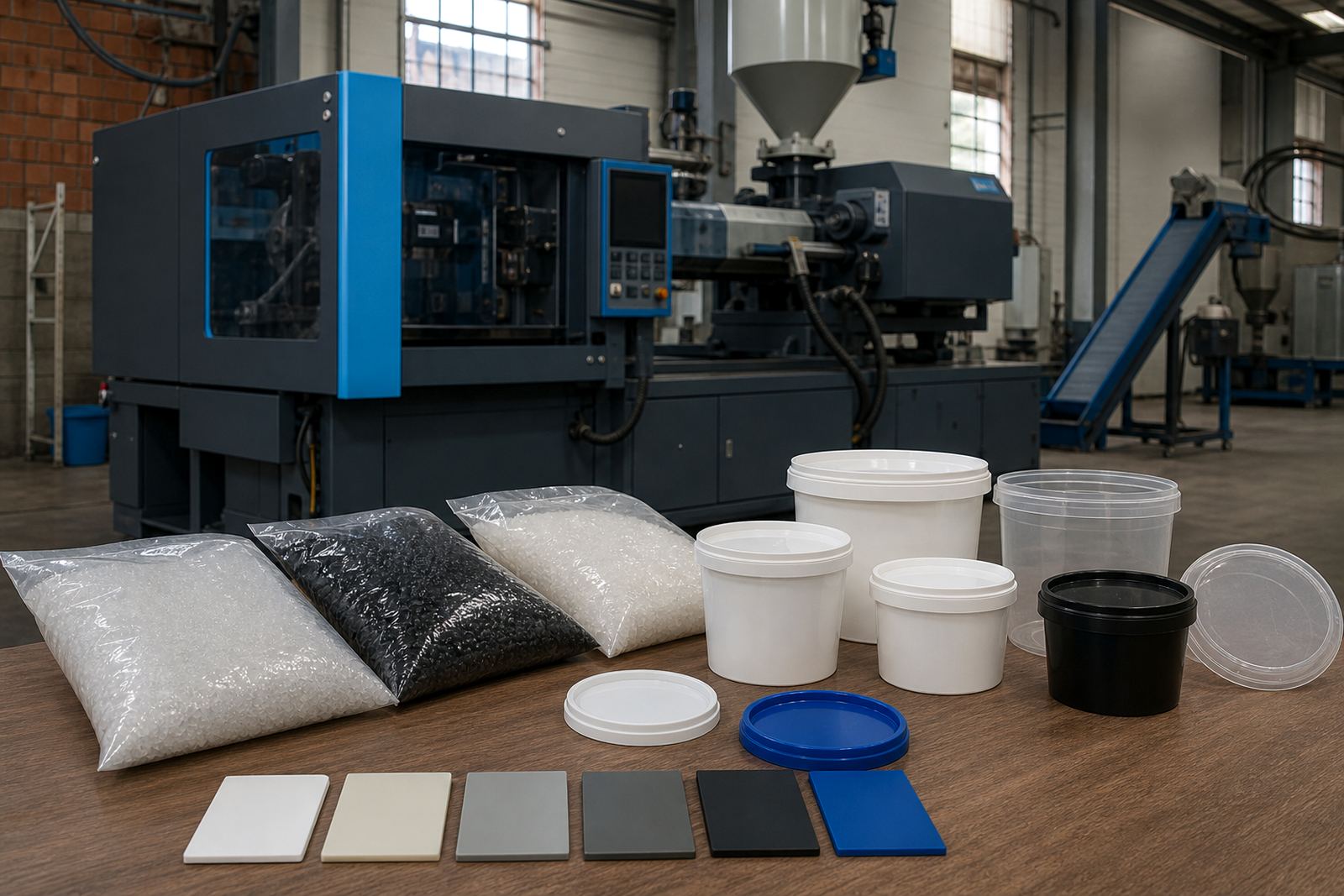
Polypropylene is often used where stiffness, heat tolerance and a clean moulded finish matter. HDPE is often preferred where a container needs a tougher feel, good impact resistance and reliable handling during packing and transport. Both materials can be made food-safe for packaging use, and both can be used with matching lids and tamper seals when the pack format calls for extra closure security.
What we look at during material selection
The right choice comes from a practical review of the pack and the line. We look at the product type, the filling method, the expected stacking load, any exposure to moisture or oils, and whether the container must resist scuffing in transit. In coastal areas, humidity and temperature swings can change how packs behave in storage, so the material needs to suit the real conditions, not just the sample on the table.
- Product compatibility with food, pharmaceutical or cosmetic use
- Required stiffness for stacking, shrink wrapping and pallet movement
- Impact resistance during transport from Alrode to other centres
- Seal performance with lids, tamper bands or induction liners where used
- Colour matching guidance for clear, natural or tinted packs
- Fill temperature and how the pack sits on the line
Where needed, we also look at how the chosen resin handles label adhesion, printed decoration and secondary packing. A container that looks suitable in isolation may behave differently once it is packed in sleeves, cartons or shrink bundles, so the line side details matter.
Polypropylene and HDPE in everyday pack formats
Polypropylene is a common choice for tubs and containers that need a neat finish and dependable rigidity. It suits many dry goods, powders, confectionery items and personal care products where a crisp moulded form helps the pack present properly. For some products, polypropylene also handles moderate heat better than other common plastics, which can be useful during filling or when the product is stored in warmer conditions.
HDPE is widely used where the pack must cope with knocks, pressure and repeated handling. It works well for many wet, viscous and chemical-type contents, and it is often selected for packs that move through busy depots and distribution routes. When the application calls for a more flexible container wall or a very durable feel in hand, HDPE may be the better fit. The final decision is rarely about one material being better overall, it is about how the pack must perform in your own operation.
- Polypropylene for stiffness, heat handling and a clean moulded look
- HDPE for impact resistance, toughness and dependable transport handling
- Both materials available for tubs, jars, pails and matching lids
- Options for clear, natural or colour-tinted supply depending on the brief
Trial runs that show how the pack behaves
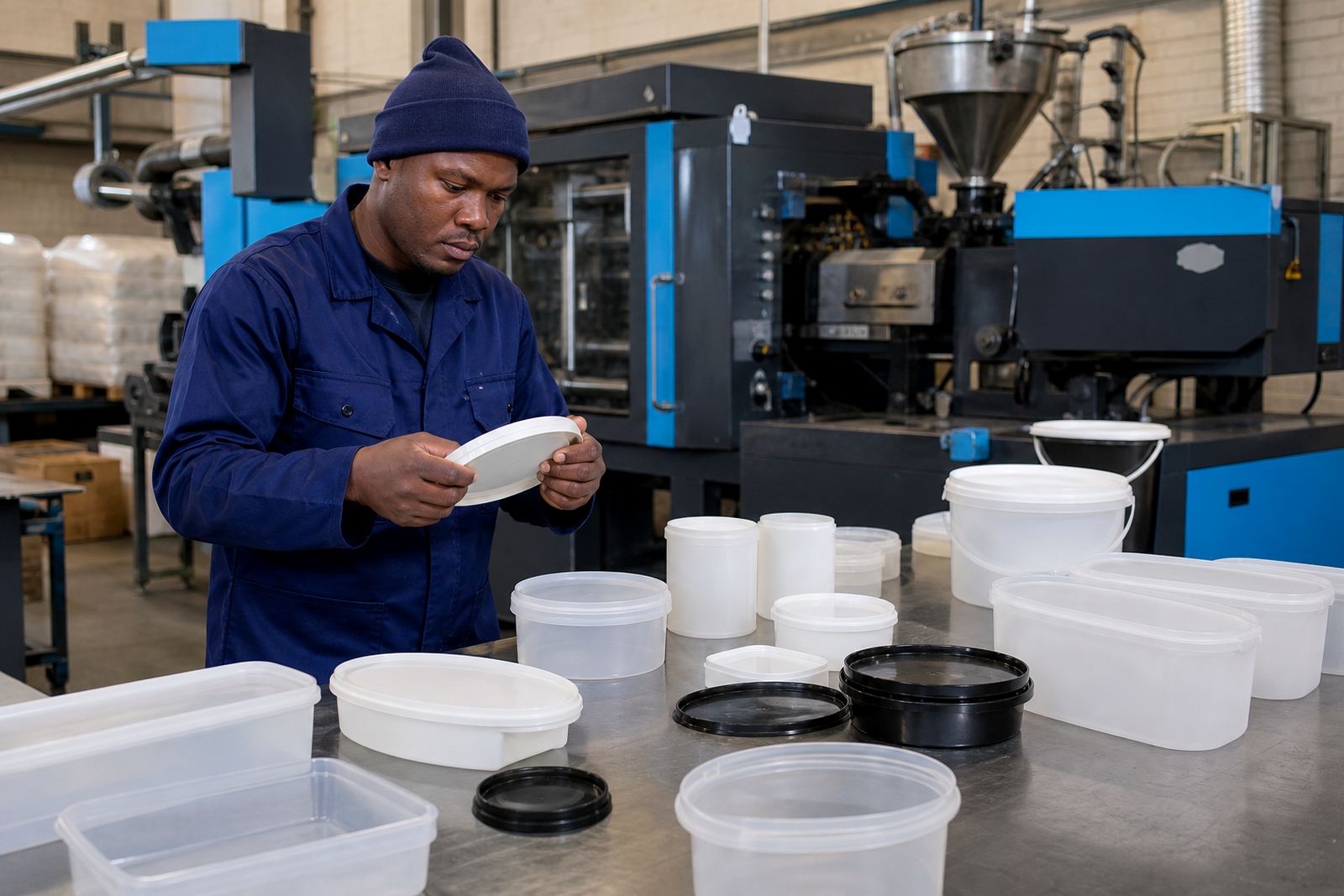
Once the likely resin is identified, we move into trial production runs where the pack is checked under working conditions. This helps confirm wall consistency, lid engagement, tamper seal fit and how the container sits on a filling or packing line. A sample that looks fine on a sample bench may still need adjustment once it meets live production, carton loading or cold storage. That is why trialing matters before volume supply is committed.
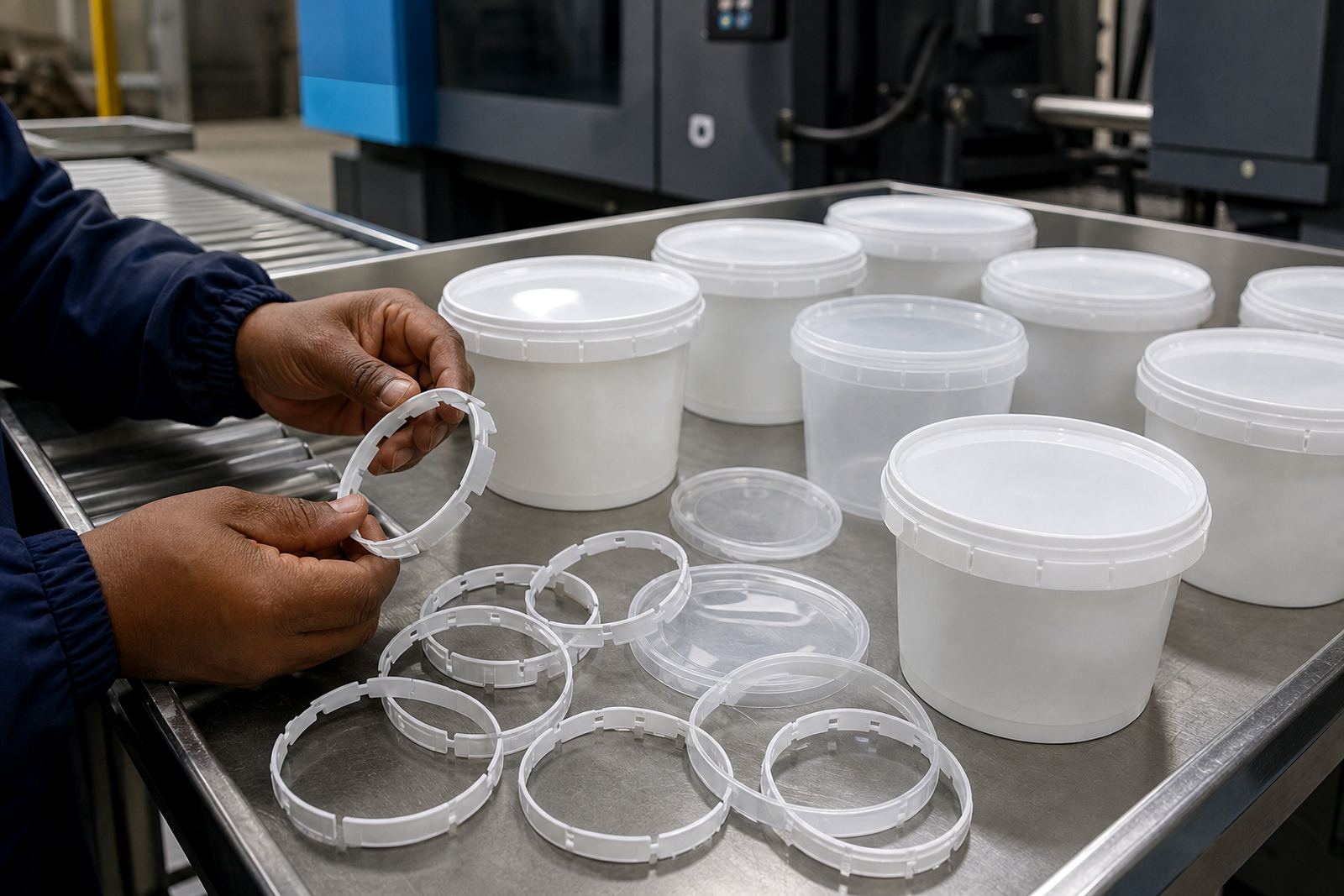
During these checks, we assess whether the tub nests properly, whether the lid closes with the right pressure and whether the seal line stays even around the rim. If the product is sensitive to moisture, aroma loss or contamination risk, we can also review closure tightness and pack size planning so the format supports the product rather than working against it.
How the process is handled at Plastic Factory
Material selection is handled as a structured service, not a quick guess from a catalogue. We start by noting the product use, pack size, fill weight and any special handling in the supply chain. After that, the likely resin family is matched to the job, and then the details around lids, tamper seals and mould development are lined up. If the pack needs a different wall profile or a revised rim for sealing, those points are taken into account early.
The process normally moves through these steps:
- Review of product use and packing conditions
- Resin recommendation between polypropylene and HDPE
- Pack size and lid fit review
- Trial production run and line fit check
- Final adjustments for stock run planning or ongoing updates
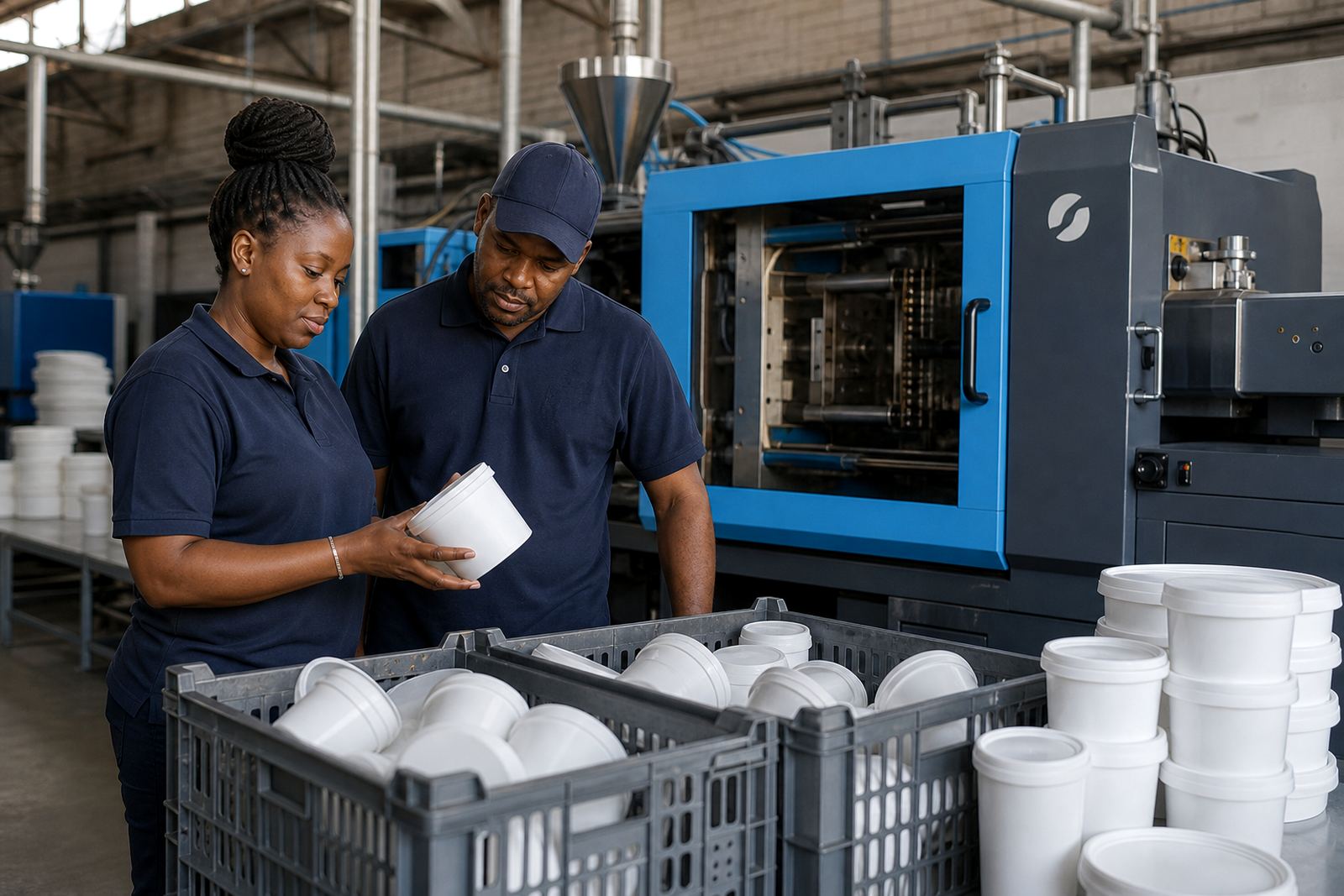
Our team in Alrode handles the practical side of the work with production, quality and dispatch all speaking to one another. That keeps the advice grounded in what can actually be run, packed and supplied across South Africa.
Pricing approach and aftercare on selected materials
Pricing for material selection depends on the technical scope rather than on a fixed menu. A standard resin review is priced differently from a project that needs mould changes, a new lid profile, tamper seal development or repeated trial runs. Colour matching guidance, line fit checks and stock run planning can also affect the scope. The aim is to match the pack format to the product without adding unnecessary cost through avoidable rework or unsuitable material choice.
Aftercare focuses on keeping the chosen pack working as production changes, product recipes shift or volumes move up and down. If a filler changes temperature, the pack weight changes or the secondary packing method is altered, the chosen material may need to be reviewed again. We keep the conversation practical, with notes on what changed, what still fits and where a small adjustment could prevent waste on the line.
Key facts
| Primary materials | Polypropylene and HDPE |
|---|---|
| Pack formats | Tubs, containers, lids and tamper seals |
| Typical use sectors | Food, pharmaceuticals and cosmetics |
| Selection factors | Fill temperature, stack load, moisture, oils and line fit |
| Supply area | Alberton, Johannesburg, Durban, Cape Town, Pretoria and Port Elizabeth |
| Base of operations | Alrode, Alberton |