Seal features that suit the tub, not the other way round
Tamper seal design starts with the container, the lid profile and the way the product moves through the line. A good seal should make opening change visible, stay in place through stacking and transport, and sit neatly on polypropylene or HDPE tubs without distorting the rim. On food, pharma and cosmetic packs, the seal also has to work with the fill level, the closure force and the way staff handle each pack at speed.
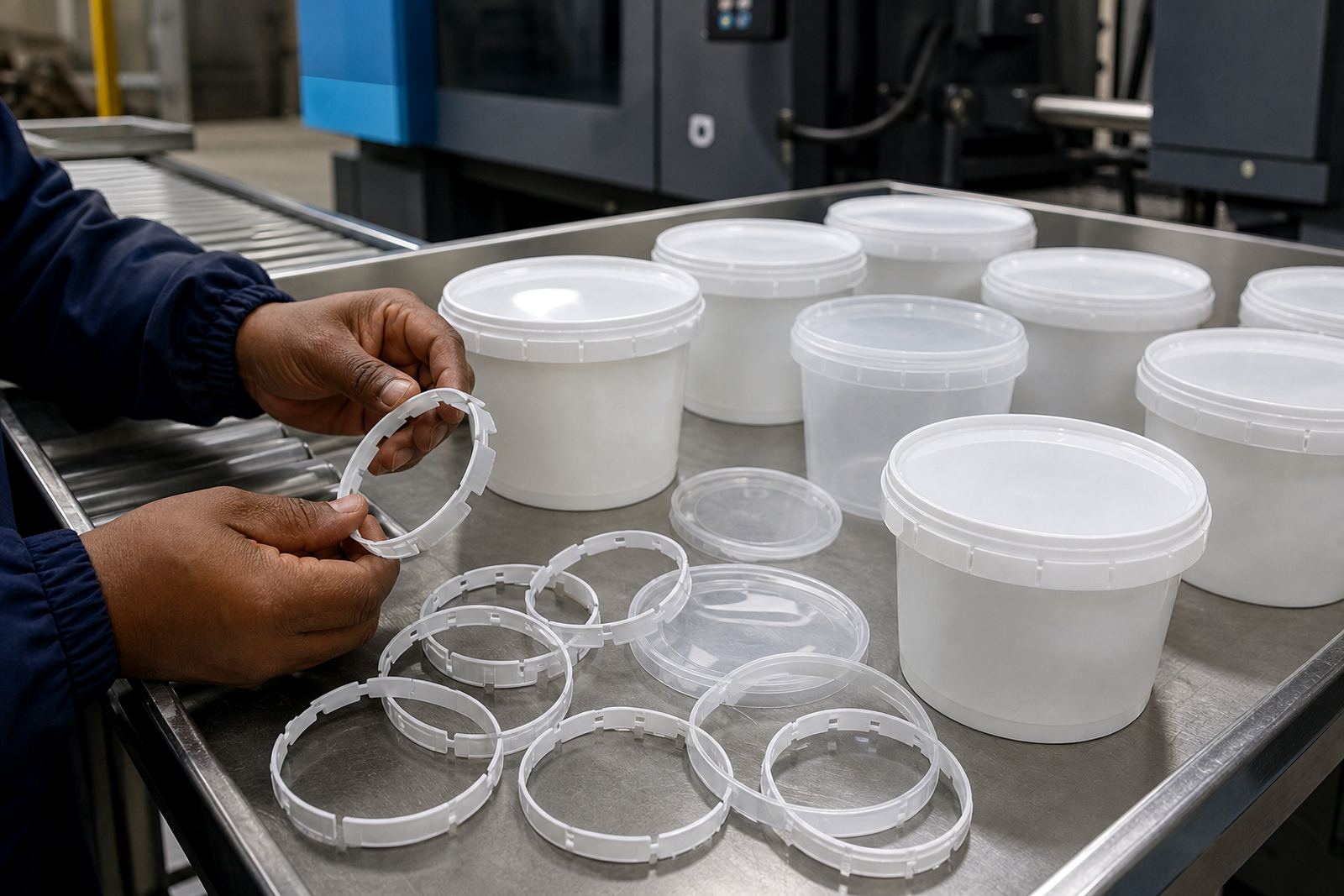
We look at where the seal lands on the container body or lid, how much pull is needed to show opening, and how the feature behaves after repeated handling. Some packs need a break-away band, others use a tear tab or a shrink-fit wrap with a clear opening mark. The detail depends on the tub shape, wall thickness, lid style and whether the pack will be chilled, stored in warm rooms or shipped long distance in hot weather.
- Break-away bands for visible opening control
- Tear tabs sized for gloved or bare-hand use
- Seal placement that matches the moulded rim
- Features suited to stacked cartons and pallet movement
What the design work covers on our side
The service covers the practical design points that make a tamper evident feature work on the floor. We assess the chosen tub size, the lid type, the target pack size and the packing line method. If the product is filled on an automatic or semi-automatic line, the seal must feed cleanly and open in a controlled way. If the pack is hand-filled, the seal needs to be easy to apply without slowing the team down.
We also look at the material choice. Polypropylene is often used where stiffness and heat tolerance matter, while HDPE suits many containers that need good impact resistance and chemical resistance. The seal design must suit the chosen plastic, because a feature that works well on one material can behave differently on another. The result is a seal that fits the pack and the handling pattern, not just the drawing.
- Seal geometry matched to polypropylene or HDPE packs
- Opening force checked against handling needs
- Line fit review for packers using existing equipment
- Artwork area and seal position considered where needed
From first sketch to trial packs
Most seal projects move through a steady series of checks. We begin with the container dimensions, lid style and the product use case, then shape a seal concept that suits the pack and the likely distribution route. After that, the feature is reviewed for moulding, filling and opening behaviour. Where needed, trial production runs are used to confirm that the seal forms correctly and that it suits the packing line in real conditions.
For packs going to Johannesburg, Durban, Cape Town, Pretoria or Port Elizabeth, transport handling matters just as much as the seal itself. A container that looks fine on a sample bench may behave differently after pallet compression, temperature change or vibration on the road. That is why the trial stage pays attention to corners, lid edge lift, seal tear line and the way the feature looks after cartons are opened by the receiver.
- Briefing on pack size, contents and handling conditions
- Seal concept aligned to mould development where needed
- Trial production runs for opening and fit checks
- Final review before stock run planning
Typical details we work to
Tamper seal design is shaped by practical specifications rather than guesswork. Small tubs for creams or capsules need a different opening profile from larger tubs used for powders, tablets or food portions. Seal width, tear line position and band depth all affect how the pack performs. We also allow for the way the lid snaps on, because the seal must not interfere with closure or create a weak point around the rim.
In humid coastal areas, especially where stock moves through Durban or Port Elizabeth, the seal feature must hold its form through storage and transport. In hotter inland conditions, the pack may face more lid movement or softening of labels and printed sleeves, so the seal design should not rely on fragile edges. If the pack is part of a secondary packed carton, we account for carton fit and the pressure applied during stacking.
- Seal width and tear line set to the pack size
- Clear opening point for controlled first access
- Fit checked against lid snap and rim geometry
- Handling review for coastal humidity and inland heat
Pricing approach that follows the work involved
Pricing depends on the amount of design work, the need for mould development, the number of trials and whether the seal must be matched to a new container or an existing range. A straightforward modification for an existing tub normally needs less development than a new seal for a fresh pack size. When multiple colours, lid variants or pack sizes are involved, the scope is reviewed as a set so the work stays practical.
Because tamper seal design can affect mould detail, trial production and packing line setup, the cost is linked to the technical path rather than a flat menu. That gives businesses a clearer picture of where the work sits, whether the project is for a single pilot run or a longer stock run plan. We keep the quotation tied to the actual container and the expected production method.
- Cost follows design scope and trial needs
- Existing pack modifications are assessed separately from new development
- Multiple sizes or variants are costed as a group where relevant
- Stock run planning can shape the final scope
Checking the seal after launch
Aftercare covers the practical review once the pack is in use. If a lid is too tight, the tear point is awkward, or the seal marks the container more than expected, the feature can be reviewed against the live packing process. The aim is to keep the opening method clear for the end user while avoiding waste on the line. This stage often leads to small adjustments on band depth, pull tab shape or seal placement.
We also support ongoing product updates where the container size changes, the contents are reformulated, or the packing line is adjusted. These changes are common in food, pharmaceutical and cosmetic work, and they can affect how tamper evident features behave. A seal that was right for one fill weight may need a small change when pack size or closure pressure shifts.
- Review of opening feel after use on the line
- Adjustments for tab shape, band depth or placement
- Support for pack size changes and line changes
- Ongoing updates when product or container details shift
Key facts
| Material range | Polypropylene and HDPE containers and tubs |
|---|---|
| Seal types | Break-away bands, tear tabs and other tamper evident features |
| Pack sizes | Small cosmetic tubs through larger food and pharma tubs |
| Process checks | Fit, opening control, stacking and transport handling |
| Production support | Trial runs, line fit checks and stock run planning |
| Delivery areas | Alberton, Germiston, Boksburg, Johannesburg, Pretoria, Durban, Cape Town and Port Elizabeth |