Run planning that fits real packing lines
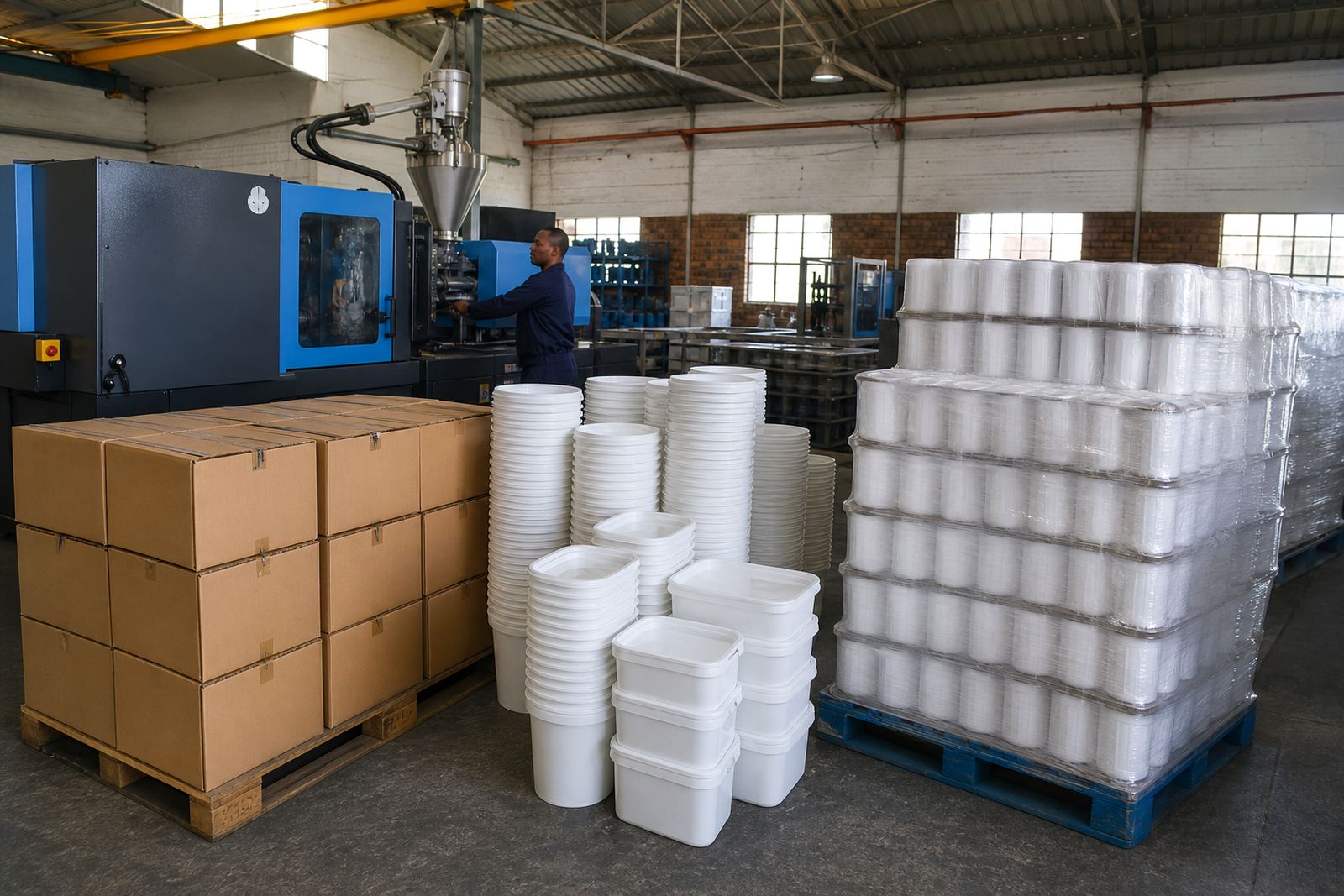
Stock run planning supports steady monthly packing, seasonal peaks and scheduled production. We look at the container style, lid match, tamper seal fit and the quantity pattern that suits your line, then map a practical run so your stock does not sit too long or run too close to empty.
The work covers polypropylene and HDPE containers, tubs, lids and seal components used for dry goods, dairy items, sauces, creams, powders and tablets. We also look at pack size changes, label room, pallet build and whether the item stacks cleanly in storage and on the filling line.
- Repeat runs for standard and custom moulded items
- Pack quantities by carton, sleeve or pallet
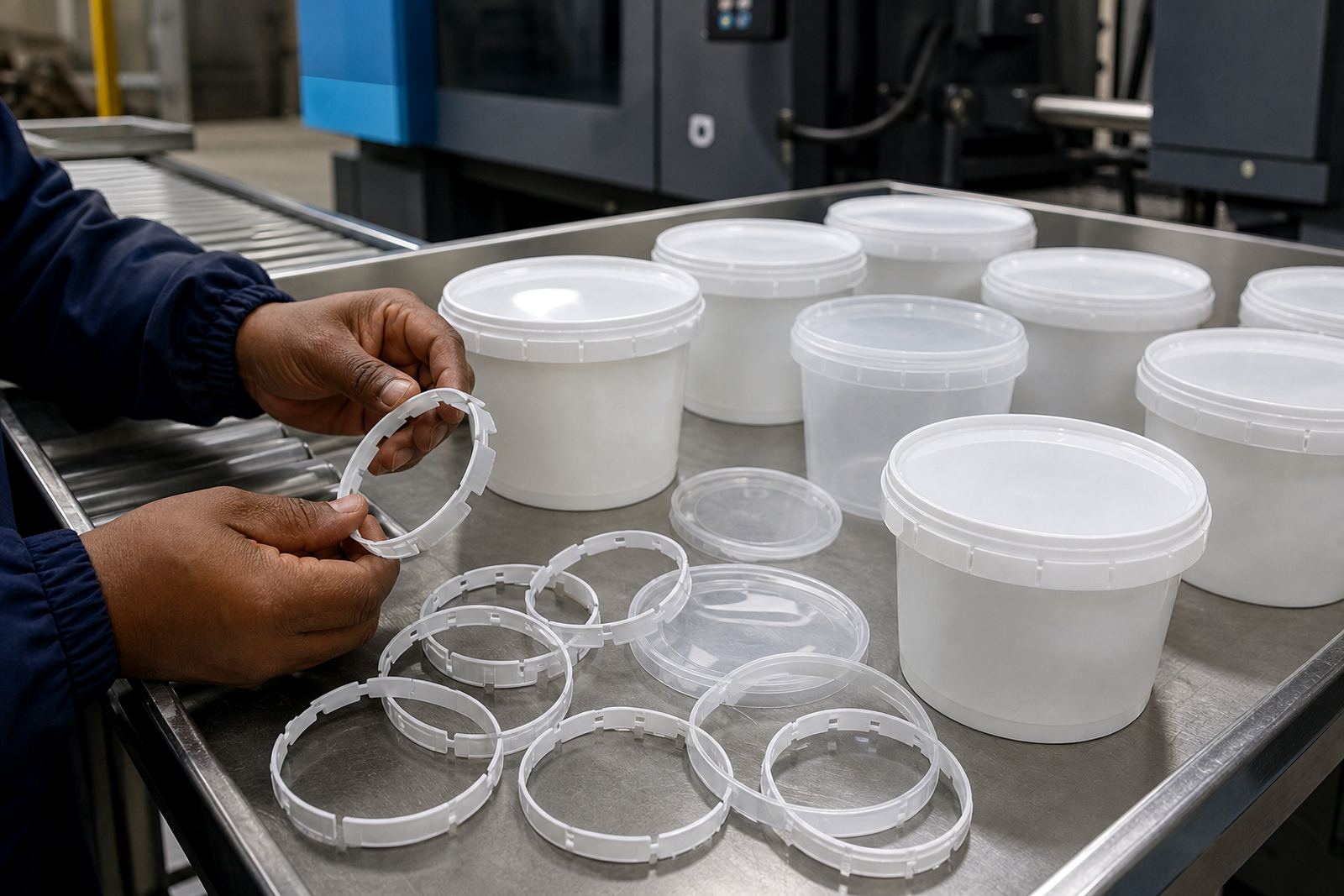
- Matching lids and tamper seals for the same run
- Guidance for light, medium and heavier wall sections
What is included in a stock run plan
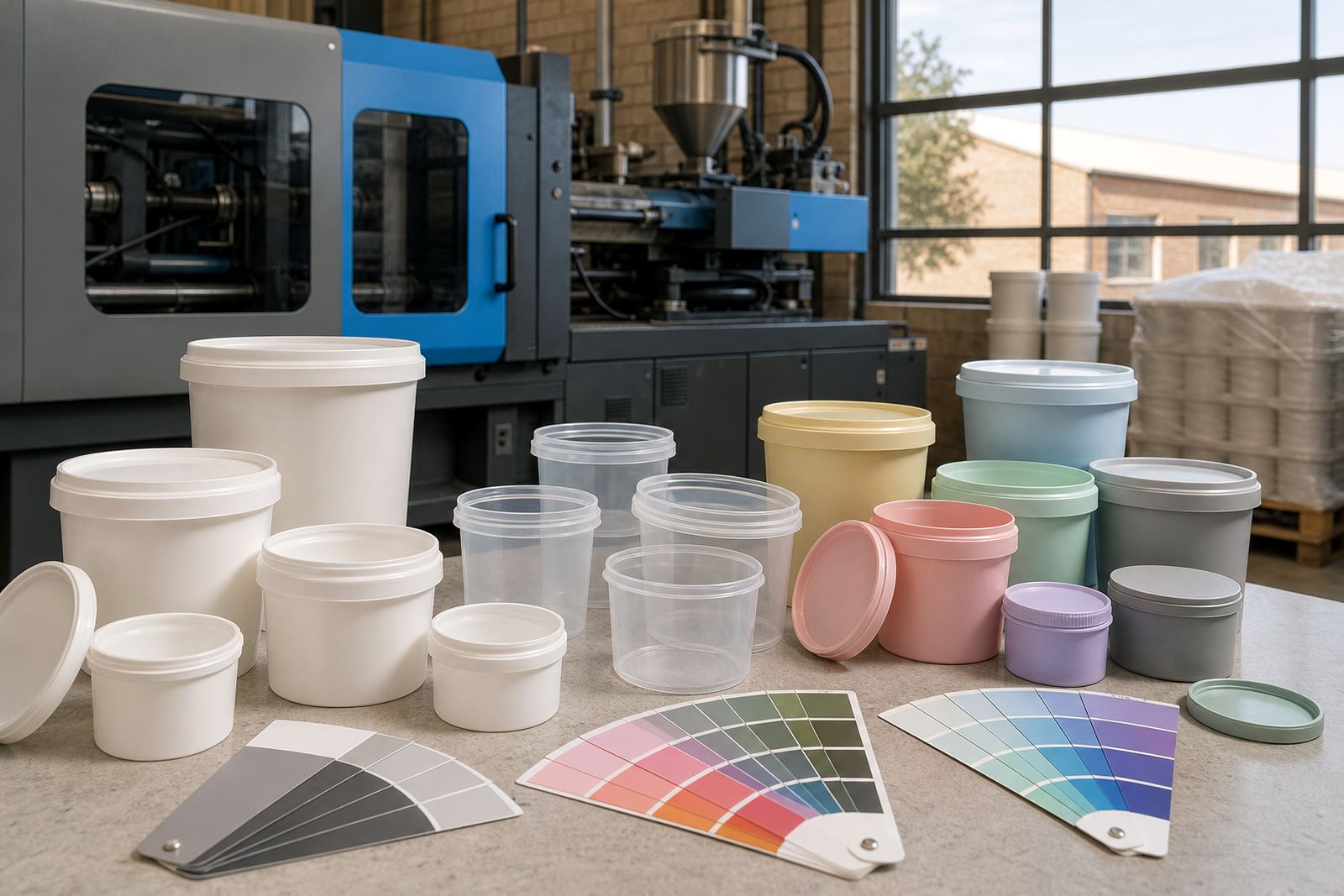
A stock run plan is more than a quantity list. It sets out the item code, material choice, colour if needed, lid style, seal method and the expected packing format. For food packers, that may include food-safe material selection and closures that sit firmly on the rim. For pharmaceutical and cosmetic packers, the focus may be on clean presentation, good closure control and consistent fill-room handling.
We also note container volumes, neck finishes, stacking height and whether a trial run is useful before a larger batch. Where pack changes are likely, the plan can allow for mixed sizes, split cartons or staggered release of stock so the line does not stop while waiting for a single size to finish moulding.
- Container volume and wall thickness guidance
- Lid fit and tamper seal pairing
- Colour matching guidance for brand range control
- Secondary packing advice for cartons and outer packs
From stock history to production plan
We start with your current usage pattern, the size mix on the line and the stock kept on hand at your site or warehouse. Then we work through the expected run quantities, the pack sizes used for dispatch and the practical storage space available in Alberton, Germiston, Boksburg and other delivery points.
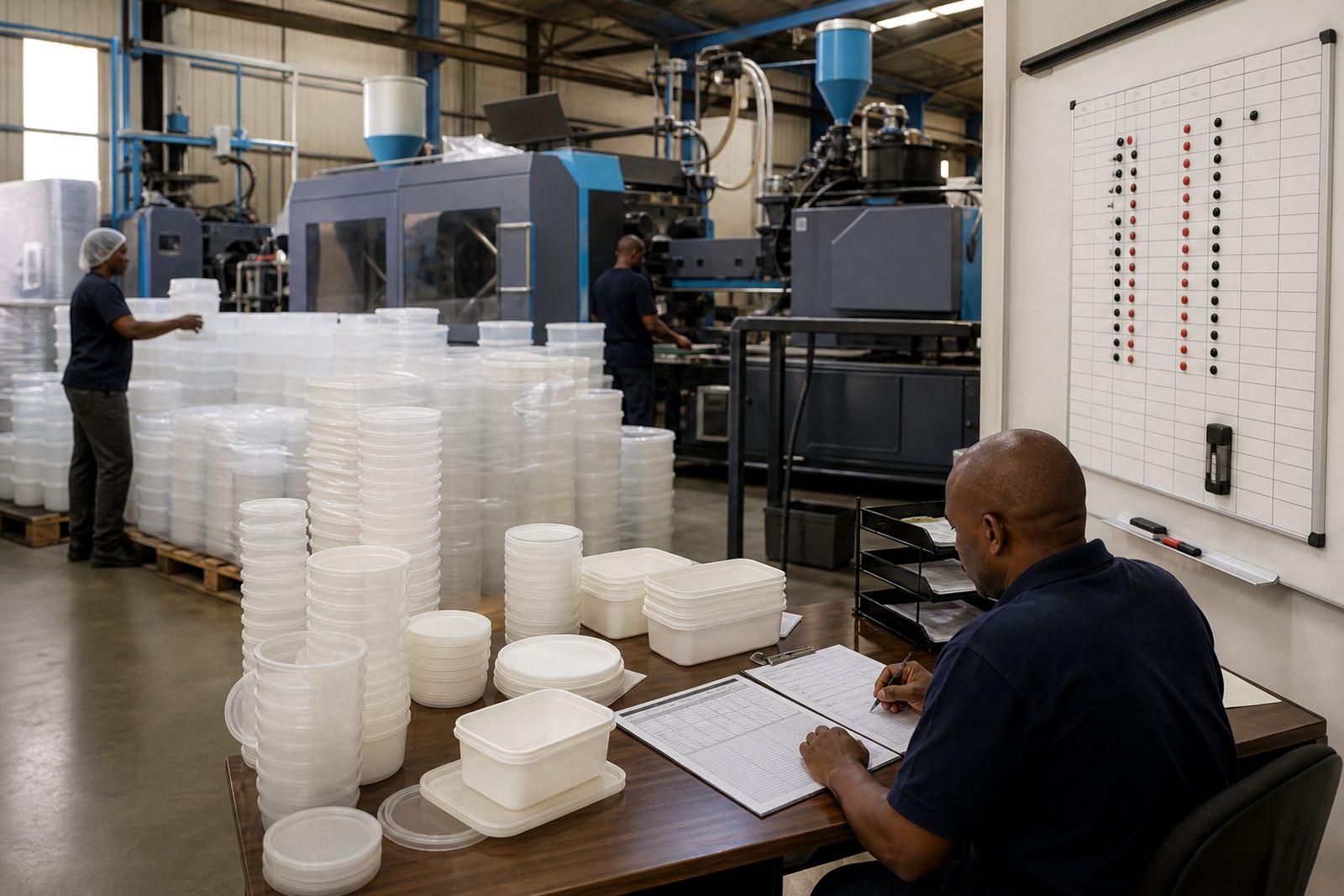
If a product runs on a predictable cycle, the plan can be set around that pattern. If demand changes with season, promotion or export packing, the run can be split into smaller batches. That helps keep inventory moving without crowding the floor with too much stock at once.
- Review of current use and past run volumes
- Line fit checks for filling and capping handling
- Pack size planning for cartons and pallets
- Dispatch staging for Johannesburg, Durban, Cape Town, Pretoria and Port Elizabeth
Practical detail for moulded tubs and containers
Injection moulding gives repeatable shapes, consistent rims and neat stacking for production use. Polypropylene is often used where a lighter container with good stiffness is needed, while HDPE is useful where a tougher feel or different chemical resistance is preferred. The right choice depends on the product, fill temperature, handling and closure style.
For stock run planning, we factor in the mould cavity count, the time needed for a clean production cycle and the way each item packs after moulding. A tub that nests too tightly can slow packing, while one with a loose stack may take more carton space. Small differences matter when a site is running full days and every pallet must travel well.
How the planning process runs
Once the product range is confirmed, we move through a clear sequence. That usually includes the material selection discussion, mould development where needed, trial production runs and then stock run scheduling. If the item already exists, the work is more about matching supply to demand and keeping the line supplied with the right closure and pack count.
The process is handled in plain terms, with no guesswork around item sizes or carton loads. Where a packer needs more than one format, we can separate fast-moving items from slower sellers and set different run frequencies for each one.
- Step 1: review item range and pack format
- Step 2: confirm material, colour and closure pairing
- Step 3: set run size and pallet quantity
- Step 4: release for production and dispatch planning
Pricing approach and aftercare support
Pricing is shaped by the item, the material, the tooling requirement and the run quantity. Smaller repeat batches usually carry different unit economics to larger planned runs, and a custom mould can change the setup picture quite a bit. We keep the pricing discussion tied to the actual production details so the numbers reflect the work needed.
After the first run, support continues around stock movement, pack changes and any shift in lid or seal requirements. If a container needs a different carton count, or a product line changes from one fill format to another, the run plan can be adjusted rather than starting from scratch. That keeps repeat supply practical for busy packers.
- Pricing linked to item type and run volume
- Tooling and set-up considered separately where relevant
- Adjustments for mixed pack sizes or colour changes
- Ongoing support for repeat production cycles
Key facts
| Materials | Polypropylene and HDPE, with food-safe options where the product requires it |
|---|---|
| Container types | Injection-moulded tubs, pails, jars and related pack formats |
| Closure options | Matched lids and tamper seal features for secure packing |
| Run sizes | Small repeat batches through to larger scheduled production runs |
| Packing formats | Cartons, sleeves, pallet loads and mixed pack counts |
| Delivery areas | Alberton, Germiston, Boksburg, Johannesburg, Durban, Cape Town, Pretoria and Port Elizabeth |