Packing Rules That Suit Real Receiving Bays
Secondary packing is the layer between the moulded container and the shelf, pack line or cold room. For food, pharmaceutical and cosmetic packers, that layer must protect shape, keep counts tidy and make handling straightforward at goods receiving. Our advice covers carton dimensions, nested supply, inner wrap, pallet height and label placement so your stock arrives in a form the warehouse can read and move without confusion.
We look at the way your team offloads, stores and issues stock. Some packers need cartons that split neatly into smaller issue quantities, while others need fuller packs that reduce handling in busy stores. In Alrode and across Gauteng, many operations work with tight racking and mixed pallet stock, so a neat outer pack saves time and keeps the line fed with less rework.
- Carton pack counts for tubs, lids and tamper seals
- Nested supply options for compact pallet use
- Unit separation for clean issue to the line
- Outer pack labels for batch, colour and size control
How We Shape the Outer Pack Around Your Range
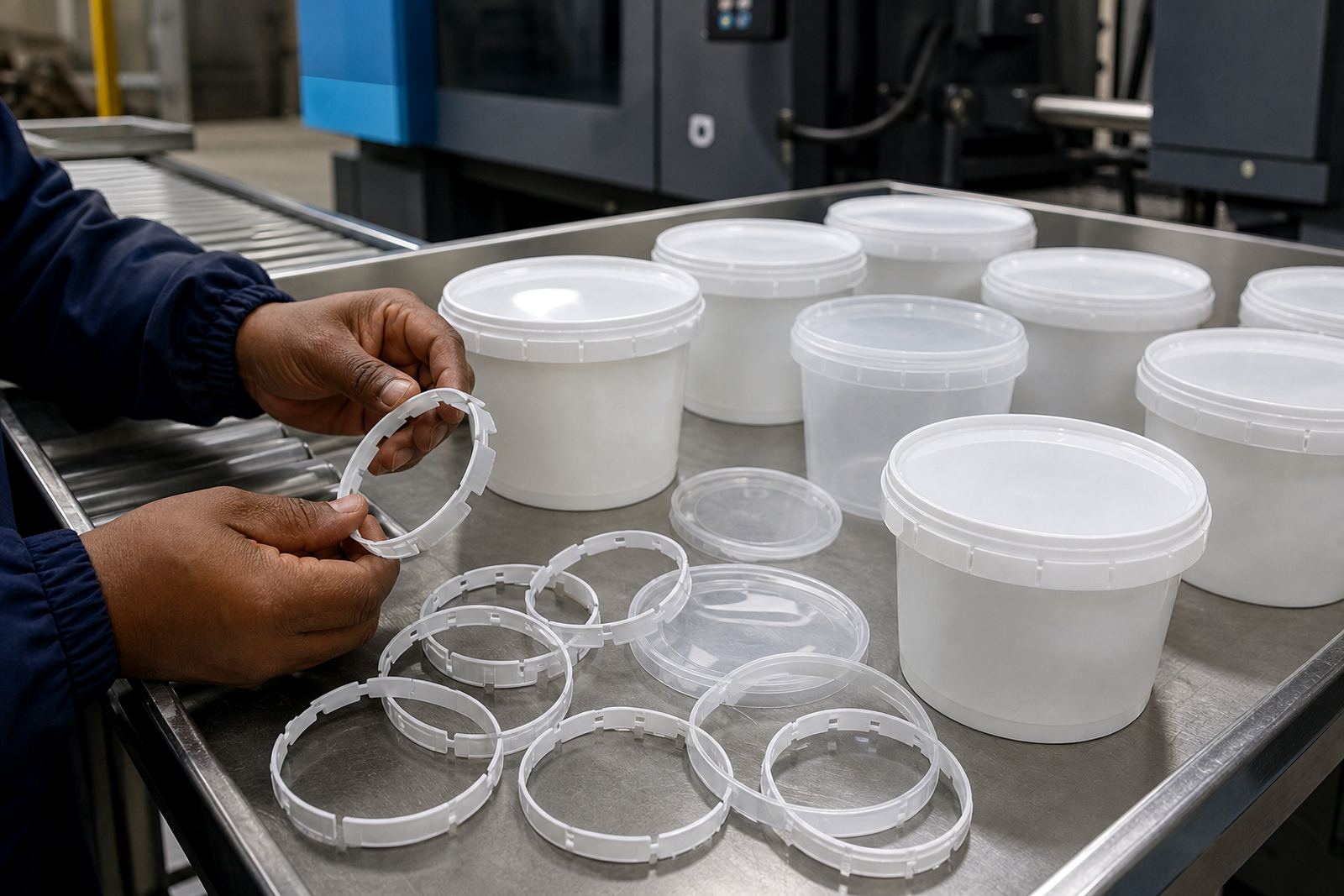
Plastic containers and tubs are usually made from polypropylene or HDPE, and each material behaves a little differently in packing. Some ranges stack firmly, while others nest deeper and need separators or insert orientation to keep the rim and base safe. We match the outer pack to the shape of the moulding, the lid profile and the way your staff open cartons on the floor.
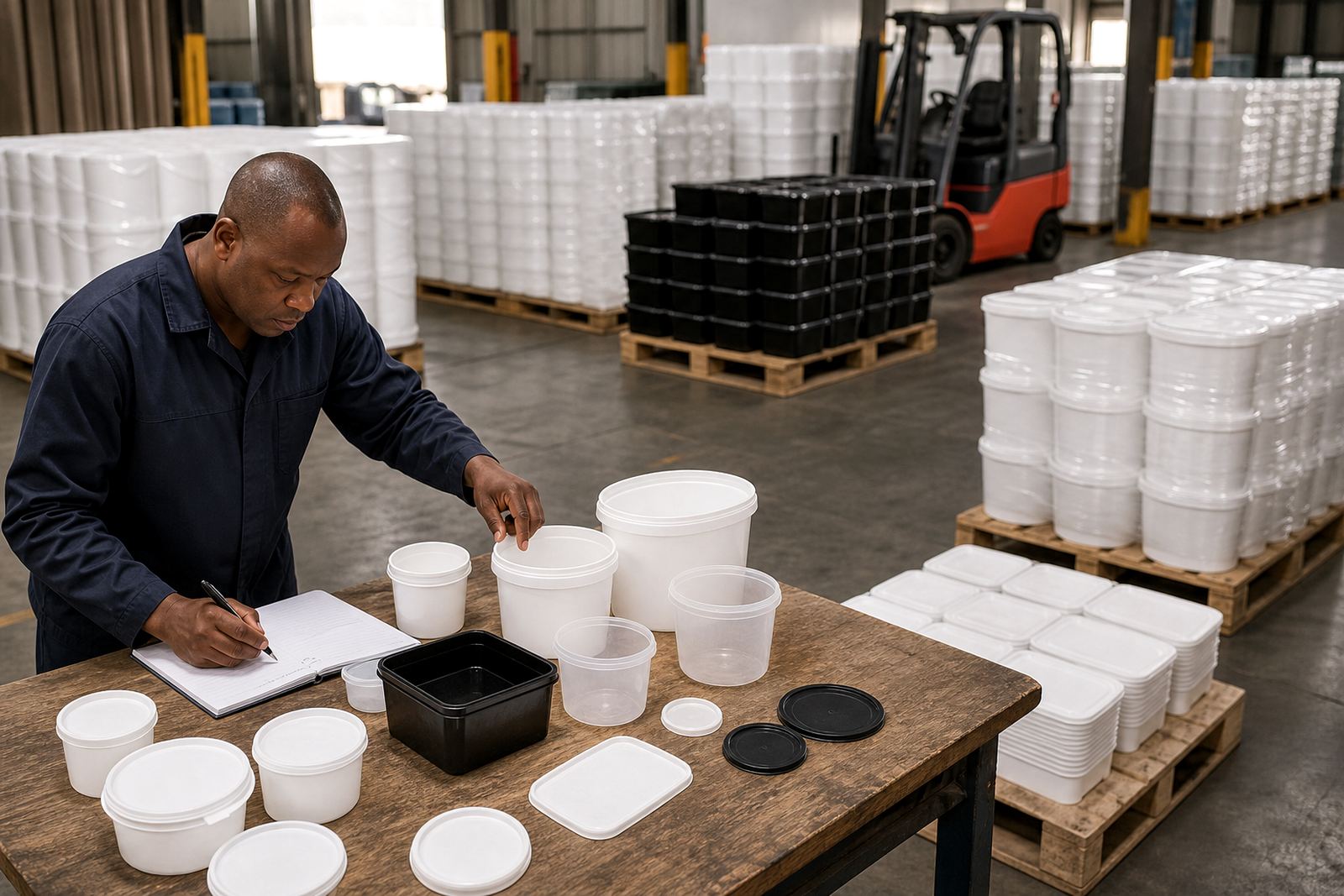
Where lids and tamper seals are packed separately, we set out the carton mix so the contents stay easy to identify. This matters on lines that run more than one size in a shift, or where different closure colours are used for different products. A tidy secondary pack also helps with coastal deliveries into Durban, Cape Town and Port Elizabeth, where cartons can pick up moisture if the outer wrap is too light or the pallet is loaded badly.
- Material-specific nesting for polypropylene and HDPE ranges
- Carton splits for lids, bases and seals
- Protection against rim scuffing and crushed corners
- Pack counts suited to store issue and line feed
Layout Checks Before Full Production Starts
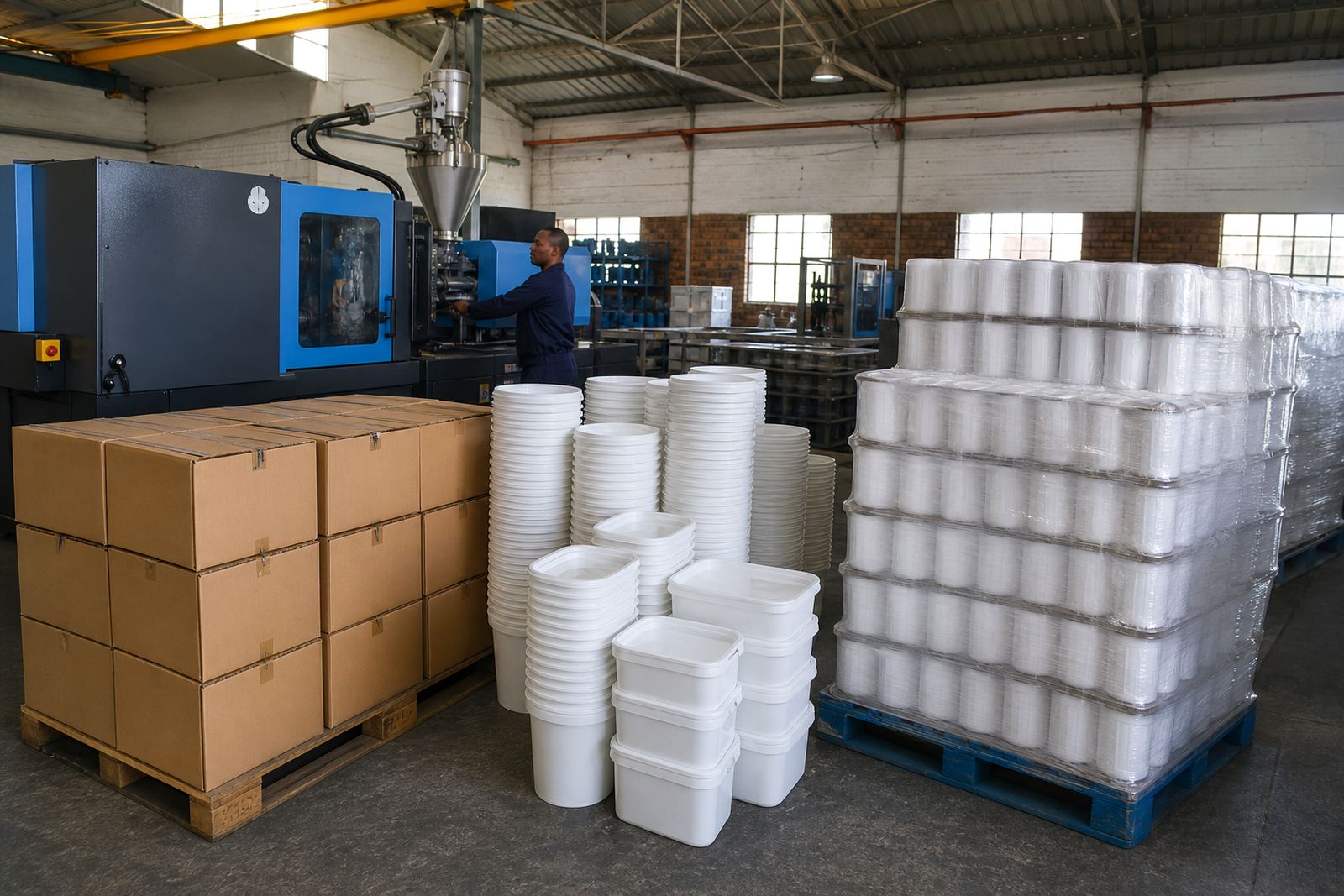
Before a pack format is released, we test the layout against your pallet footprint, carton strength and handling method. The idea is to avoid wasted space, unstable stacks or awkward carton weights that make the load hard to move. If your plant uses forklifts, cage trolleys or manual offload points, the advice changes with each site and we work from those realities rather than from a generic packing note.
Trial packing can include a few carton options, nested depth checks and a pallet sketch that shows how many layers fit safely. We also look at label faces, strap positions and whether the pack needs a top sheet for protection during transport. On busy routes between Alberton, Boksburg and Germiston, neat pallet structure makes receiving easier and reduces damage in storage.
- Trial carton fills with actual product dimensions
- Pallet layer plans and stack height checks
- Label position guidance for fast receiving
- Strap and wrap placement for transport stability
What the Advice Covers in Practical Terms
The service is meant to give your packing line clearer rules, not loose suggestions. We can advise on carton grading, nested cartons for space-saving supply, divider use, pallet overhang control and whether separate closure packs make more sense than mixed cartons. For packers running food or cosmetic goods, clean presentation matters at the goods-in point, especially where stock gets counted in full cases before being issued to production.
We also look at how many units are best packed per case for handling and storage. Smaller cartons can suit frequent issue lines, while larger cases can reduce carton count and pallet movement. The right answer depends on your product size, warehouse layout and the distance stock must travel, whether that is within Johannesburg or out to Pretoria, Durban, Cape Town or Port Elizabeth.
- Carton counts by unit size and case weight
- Nested packing for space-efficient supply
- Separate or combined packing for lids and bases
- Pallet pattern guidance for local and national delivery
Timing, Quoting and the Way Jobs Are Scaled
Secondary packing advice can be handled as part of a new product project or as a review of an existing pack. The time needed depends on how many sizes are involved, whether trial cartons are needed and how much line-fit checking is required. Shorter reviews may only need a packing review from your dimensions and current carton use, while larger ranges call for more detailed layout work.
Pricing is shaped by the scope of the packing review, the number of formats being assessed and whether there are trial runs or redraws of the pallet pattern. A straightforward case review is priced differently to a full range rationalisation with lid, tub and seal packs. We keep the pricing approach clear and linked to the work involved, so there is a sensible fit between the service and the packaging task.
- Single format reviews for one pack size
- Range reviews where several tubs share one pallet plan
- Trial-based work for new carton or pallet layouts
- Project pricing tied to scope, not guesswork
Aftercare When the Pack Meets the Warehouse
Once the secondary pack is in use, we stay available for practical adjustments if the warehouse changes carton handling, the line shifts to a different issue quantity or the pallet pattern needs tightening. That may mean revising the case count, adjusting the label panel or changing the nested depth so receiving stays orderly. Small changes can make a real difference when stock moves through busy depots and multi-site supply chains.
For businesses in Alberton, Johannesburg and the wider South African market, packaging changes often happen in stages rather than all at once. We can help refine the pack as product sizes, dispatch routes or storage space change. The aim is to keep the carton format workable for your team, not just neat on paper.
- Adjustments for changed case counts or pack mix
- Updates where pallet space or line issue changes
- Clearer carton marking for receiving and storage
- Support for phased packing changes across sites
Key facts
| Service type | Secondary packing advice for moulded containers, tubs, lids and tamper seals |
|---|---|
| Materials covered | Polypropylene and HDPE container ranges, plus closure components |
| Packing formats | Cartons, nested supply, pallet layers, wrap and strap layout |
| Typical users | Food, pharmaceutical and cosmetic packers |
| Project basis | Review of dimensions, pack counts, handling method and storage flow |
| Delivery areas | Alberton, Johannesburg, Germiston, Boksburg, Pretoria, Durban, Cape Town and Port Elizabeth |