Pack counts that sit right on the line
Pack size planning starts with the fill volume and the way the product moves through the packing line. A tub that looks right on paper can leave wasted headspace, awkward carton counts or a pallet pattern that leans after a long road trip to Durban or Cape Town. We look at the container size, the lid profile, the tamper seal and the finished pack weight together, so the end result suits the filling bench and the warehouse.
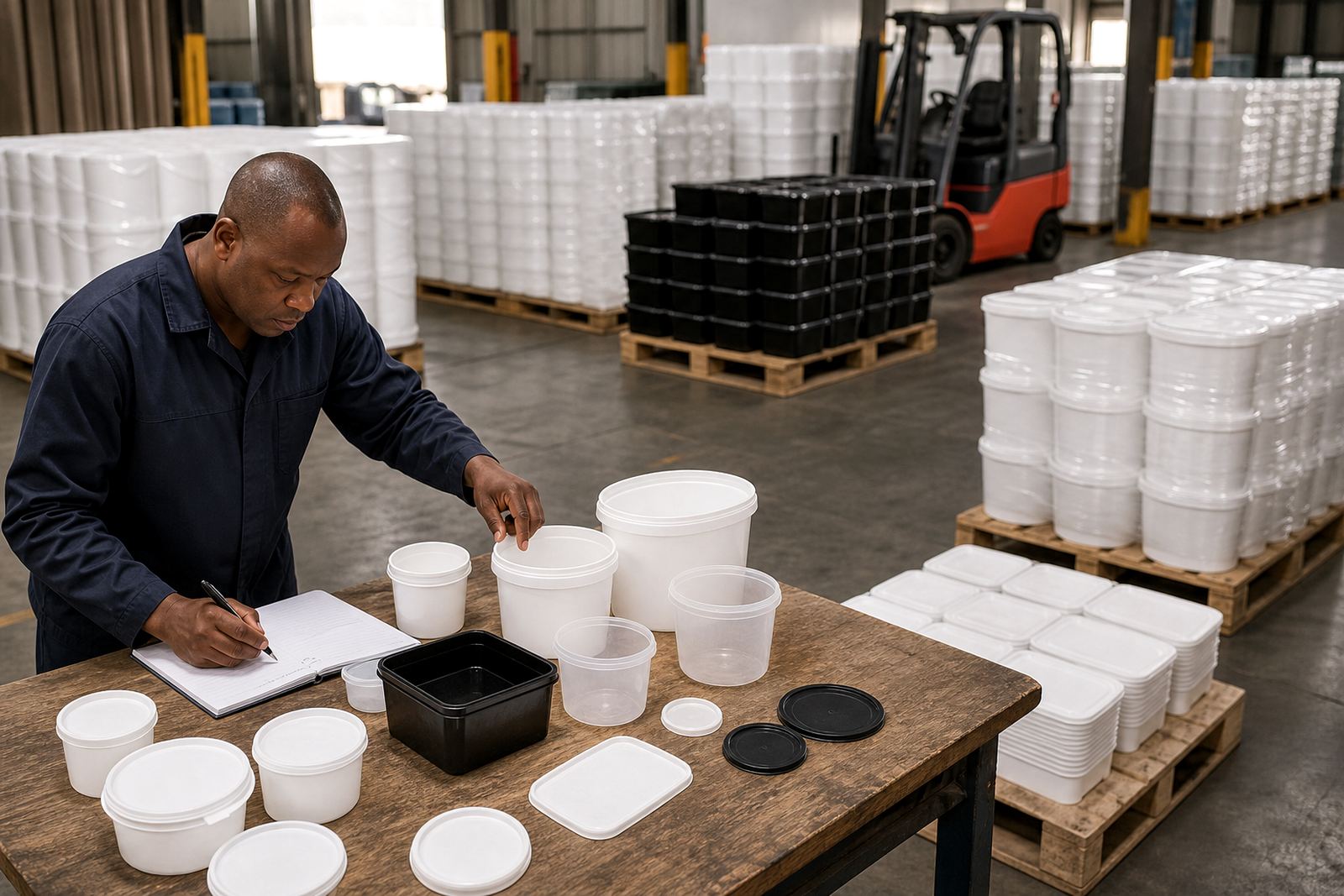
For many customers the question is not only how much the tub holds, but how many fit into a master carton, what stack height stays stable and what carton weight is practical for hand packing. A 250 ml yoghurt-style tub behaves differently to a 500 ml cream tub or a shallow pharmaceutical pot, and those differences matter when a line is running at speed.
- Fill size matched to the product density
- Carton counts that suit manual and semi-automatic packing
- Stacking heights that travel well on pallets
- Allowance for lid profile and tamper seal space
How we shape a practical pack size plan
We begin with the product itself, then work outward to the carton and the transport route. Food packers often want tidy multiples for shelf packing, while pharmaceutical and cosmetic packers may need tighter control over count, presentation and sealing. Polypropylene and HDPE containers behave differently under heat, cold and handling, so the material choice feeds directly into the pack size discussion.
We also look at whether the line uses manual filling, a simple semi-automatic set-up or a faster packing run. Small changes in neck finish, base diameter or lid depth can alter how many units sit neatly in a carton. That is why pack size planning is done with real samples and not only drawing sizes.
- Container diameter, height and usable fill depth
- Lid fit and tamper evidence allowance
- Carton layout for square and round formats
- Transport handling for Gauteng, coastal and inland routes
What is included in the service
The service covers the practical choices that affect packing, stacking and dispatch. We advise on fill sizes for tubs and containers, suggest carton counts that make handling easier and check whether the pack shape will settle cleanly on standard pallet footprints. Where needed, we also look at colour matching guidance, stock run planning and secondary packing advice so the full pack format works as one unit.
When a line is being adjusted for a new product, a trial pack can show whether the chosen size leaves too much air, presses against the lid or causes movement inside the carton. If the product is sensitive, such as a cream, powder or measured pharmaceutical item, that extra check helps reduce rework and damaged stock.
- Pack size guidance for tubs, containers and lids
- Carton count suggestions for dispatch and retail prep
- Trial production runs and line fit checks
- Advice on secondary packing and stock run planning
Specs we work with on pack size planning
Pack size planning is not guesswork. It is built around measurable details that affect the packing line and the warehouse. We work with container diameters, usable fill heights, lid closure depth, tamper seal position and the expected case weight. We also consider how the pack behaves in humid conditions, which matters for coastal routes and storage in places like Durban and Port Elizabeth.
For some products the best answer is a taller tub with fewer units per carton. For others a wider, shallow format gives a better shelf presence and a steadier pallet. The right choice depends on the product, the fill method and the route the goods travel after packing.
- Typical formats: 50 ml to 5 litre tubs and containers
- Materials: polypropylene and HDPE
- Pack features: matching lids, tamper seals and secure closures
- Pack units: single, inner pack or master carton layouts
How the planning process moves from sample to pack
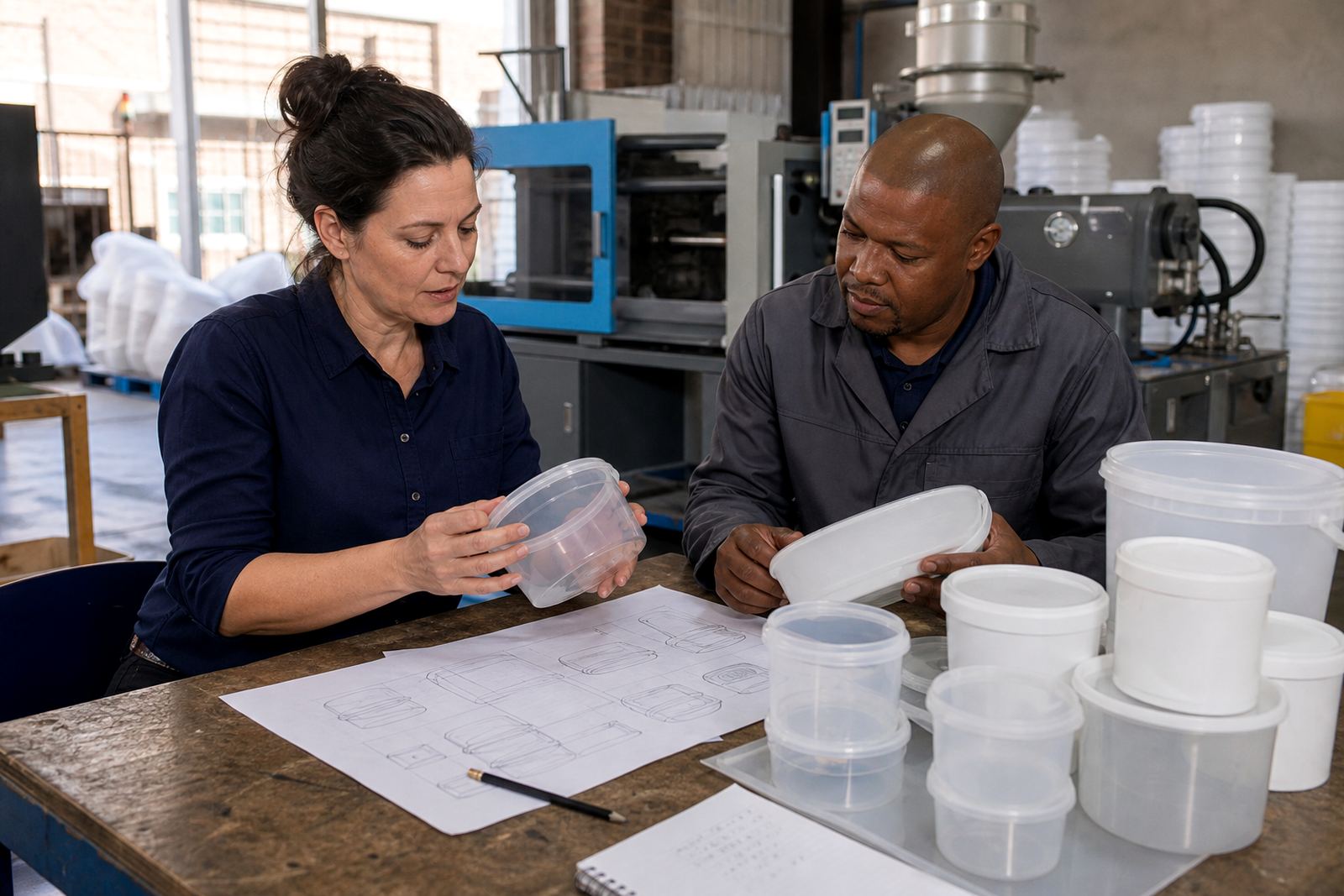
Once the brief is in hand, we review the product type, fill volume and packing method. Then we test the fit of the container and lid against the intended carton count. If a mould change or lid adjustment is needed, that is handled before the run settles into routine production. For some customers the answer is a standard size from the range, while others need a custom tub design or lid development to make the pack stack neatly.
The process is practical and direct: brief, sample review, trial pack, carton check and final pack size sign-off. No part is treated in isolation because a good fill size must work for the machine, the packer and the dispatcher.
- Review of product fill volume and density
- Sample check against carton and pallet layout
- Trial production run if a new size is being set
- Final packing format agreed before stock movement
Pricing approach and aftercare
Pricing depends on the work involved. A standard pack size review using an existing tub or container is priced differently from a new mould development or a lid adjustment with trial runs. Where the order needs ongoing stock run planning, the costing reflects the volume, the number of pack formats involved and the level of technical input needed on the line. We keep the approach clear so customers know what each stage covers.
Aftercare is about keeping the pack size practical once the product is in circulation. If carton counts change, pallet handling shifts or a new fill weight is introduced, we can review the format again and check whether the same tub and lid still suit the line. That matters for packers moving goods through Johannesburg, Pretoria, Alberton and the main coastal routes, where handling conditions can differ quite a bit.
- Quoted according to complexity and pack format
- Existing sizes cost differently to custom development
- Support available when fill weights or cartons change
- Format reviews for new stock runs and line changes
Pack formats that travel well from Alrode
From our base in Alrode, Alberton, we supply pack size planning support for customers in Johannesburg, Germiston, Boksburg, Pretoria, Durban, Cape Town and Port Elizabeth. The right format depends on whether the goods move on local routes or across the country, because transport vibration, stacking pressure and warehouse conditions can affect the final pack. A container that closes well but stacks badly can still cause problems later on.
Pack size planning is often the difference between a tidy warehouse and a line that keeps fighting the carton. With the right container, lid and fill size, the product packs cleaner and travels with less movement. That is useful for food, pharmaceutical and cosmetic packers who need steady output and less handling trouble.
- Support for local and national delivery routes
- Pack counts matched to warehouse handling
- Format checks for stacking and transport stability
- Suitable for food, pharmaceutical and cosmetic lines
Key facts
| Service area | Alrode, Alberton with delivery support across South Africa |
|---|---|
| Main focus | Practical fill sizes for carton counts, stacking and transport |
| Materials covered | Polypropylene and HDPE containers and tubs |
| Closure options | Matching lids and tamper seals |
| Typical pack formats | 50 ml to 5 litre, depending on product and line |
| Project types | Standard pack reviews, trial runs and custom pack planning |