How the mould is planned around your pack format
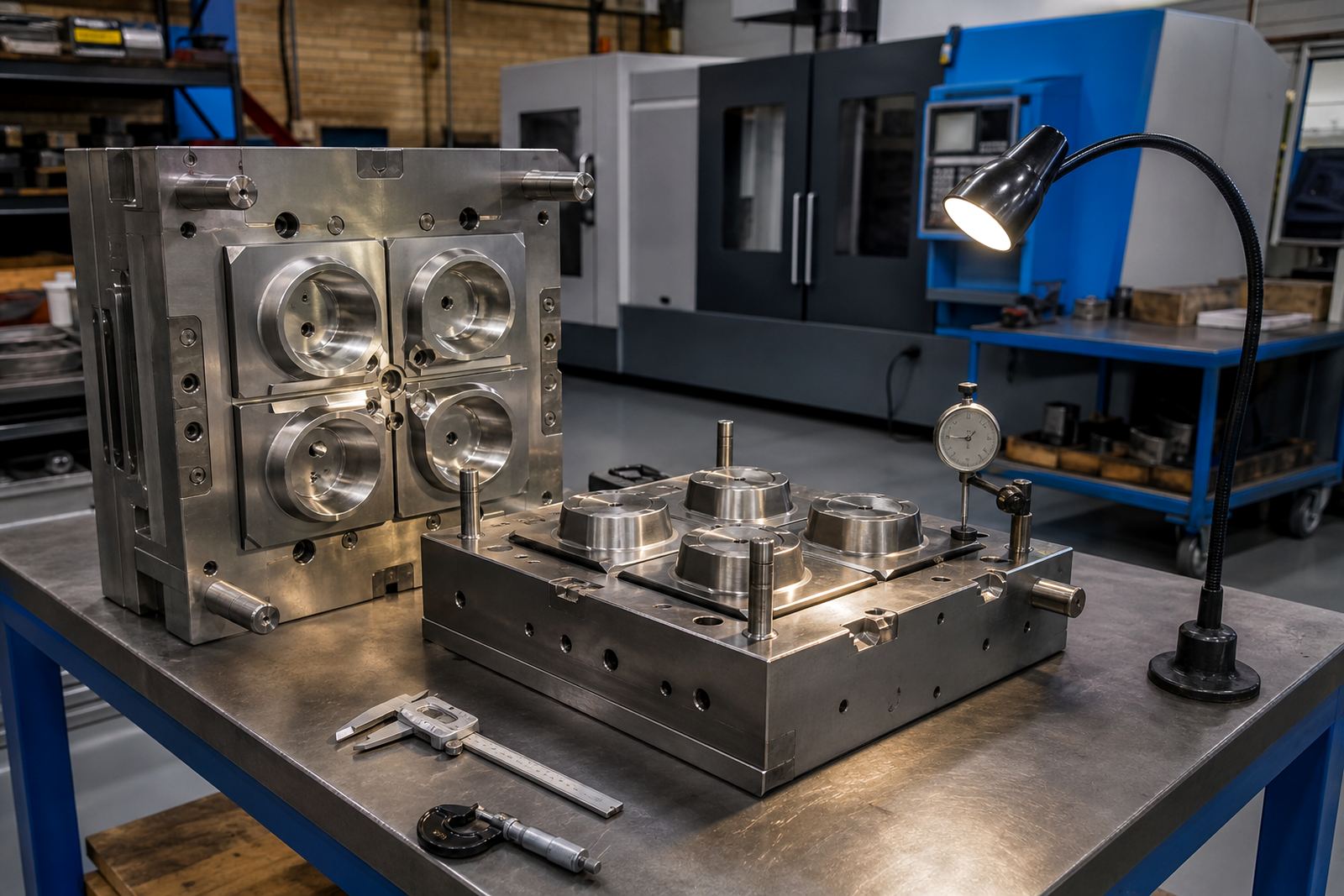
Mould development begins with the container or tub size, the closure style and the way the pack moves through filling, sealing and secondary packing. We work on details such as rim profile, corner strength, base stability and label area so the finished item fits the way your line runs, not only the way a sketch looks.
For food, pharmaceutical and cosmetic packers, the mould has to support repeatable dimensions and a clean finish that suits the product inside. That includes allowance for shrinkage, draft angles for release, and the right balance between rigidity and weight. In practice, a tub that holds its shape on the line is far easier to handle than one that varies from batch to batch.
- Container and tub dimensions planned to suit the fill volume
- Lid interface set for secure closure and consistent engagement
- Rim and base design adjusted for stackability and handling
- Wall thickness planned for strength without unnecessary material use
Materials and construction choices that affect production
Polypropylene and HDPE each behave differently in injection moulding, so the mould design has to match the material rather than force one shape onto every job. Polypropylene is often used where stiffness, clarity of shape and a clean moulded finish matter. HDPE is widely used where impact resistance and a practical feel are more important. The right choice depends on the pack size, the contents and the handling your team expects on the floor.
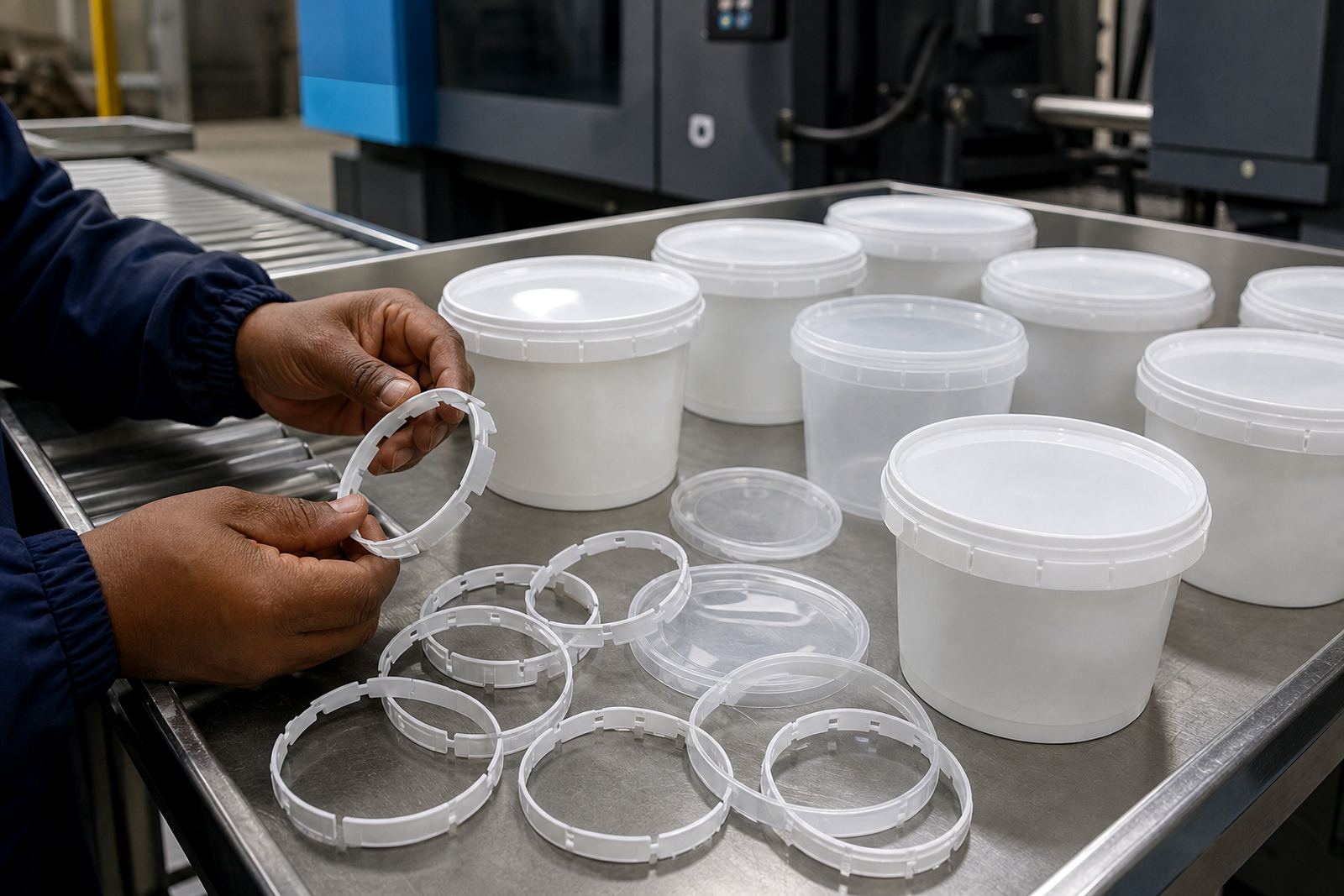
We also consider lids and tamper seal features at the mould stage, because these parts work as a set. A lid that sits well on a bench but lifts awkwardly on a packing line causes waste and frustration. Material selection, gate position and cooling layout all affect whether the part comes off the mould evenly and keeps its shape through packing.
- PP and HDPE considered for the finished use case
- Tamper evidence features designed into the mould where needed
- Cooling and release planned to reduce distortion
- Tool layout set up for repeatable production runs
From sample idea to production-ready tooling
The process is usually built in clear stages. First, we review the pack size, target fill and any line constraints, then the mould concept is drawn up for the agreed container or component. After that comes tool development, trial production runs and practical checking against the intended packing method. If the part needs small changes, those are handled before full production is set in motion.
Trial runs are important because a drawing cannot show every issue. A lid may seal well but sit too tight in a stack, or a tub may pass a visual check yet tip under conveyor pressure. Trial pieces let us test the actual shape and sort out small issues before they become regular production waste.
- Brief review and dimensional planning
- Mould concept and component layout
- Toolmaking and first trial run
- Fit checks, pack tests and adjustment work
- Release for repeatable production once dimensions are stable
What the service includes on a mould project
Mould development at Plastic Factory covers the technical parts that make a pack usable in real production. That includes support with line fit checks, pack size planning and secondary packing advice where the finished goods are grouped, sleeved or boxed after filling. It also includes colour matching guidance when the pack needs a particular look across several batches, and ongoing product updates when a container must be refined for a new use or a revised line setup.
We do not treat the mould as a one-off item and leave it there. Small changes in a product range, a new cap style or a revised carton count can all affect the tool. A practical mould has to stay aligned with the way the business packs, stores and moves stock, otherwise the pack becomes harder to use than it should be.
- Mould development for tubs, lids and related components
- Trial production runs for fit and form checks
- Line fit checks for packing equipment and handling flow
- Pack size planning and secondary packing guidance
Turnaround and pricing shaped by the tool itself
Turnaround depends on the size of the mould, the part detail, the number of cavities and how much adjustment the design needs after testing. A simple tub tool with standard geometry is handled differently from a more detailed closure or tamper seal component. Pricing follows the same pattern. The cost is shaped by steel selection, complexity, cavity count, finishing work and the trial process needed to get the part ready for production.
Rather than quote from a fixed formula, the project is worked out from the actual specification. That keeps the numbers tied to the mould that will be made, the material to be used and the production target for the line. It also helps avoid surprises once the tool moves from concept into trial pieces and production setup.
- Tool complexity affects development cost
- Number of cavities affects output and price
- Part detail and finish affect machining time
- Trial work and adjustments are included in the project scope
Keeping the tool useful after the first run
Aftercare matters because injection-moulded parts live through repeated cycles, not only the first batch. We keep the mould aligned with production needs when a pack size changes, a lid needs a tighter fit or the customer wants a different colour run. If a component starts showing mould marks, release issues or uneven fill, those points are checked against the tool, material and process settings.
For businesses in Johannesburg, Durban, Cape Town, Pretoria, Port Elizabeth and the greater Gauteng area, the value lies in keeping the tool useful for steady packing rather than letting a small fault grow into repeat stoppages. A good mould should hold up under normal production pressure and still be practical to use when the line changes from one product size to another.
- Tool performance reviewed against the packed product
- Adjustment work handled when fit or finish changes are needed
- Product updates supported when ranges expand or shift
- Advice given for storage, handling and repeat use of tooling
Key facts
| Materials | Polypropylene and HDPE |
|---|---|
| Product types | Injection-moulded tubs, lids and related components |
| Typical use | Food, pharmaceutical and cosmetic packing |
| Development stages | Concept, toolmaking, trial runs, fit checks |
| Pack considerations | Wall thickness, rim profile, stackability, seal fit |
| Coverage | Alrode, Alberton and delivery support across South Africa |