Bottle-shaped habits do not suit every tub
On a packing line, the container has to travel well before it ever reaches the shelf. Straight walls, stable bases and a clean stacking profile help tubs move through conveyors, star wheels and manual packing points without snagging. A deep side grip or a narrow shoulder can look neat in store, but if it catches on guides or twists under a gripper, the line slows down.
For food packers in Gauteng, especially where high counts move through the plant each shift, a tub that nests too tightly can cause drag when operators separate stock. At the same time, a tub that rocks on the belt can create spill risk. The shape needs to suit the product, the filler and the pace of the floor.
- Stable base dimensions reduce tipping on fast runs
- Straighter walls usually feed better into automatic equipment
- Wide opening tubs make filling easier for viscous products
- Light nesting can help with storage but should not stick together
Lid design changes the rhythm at the capping point
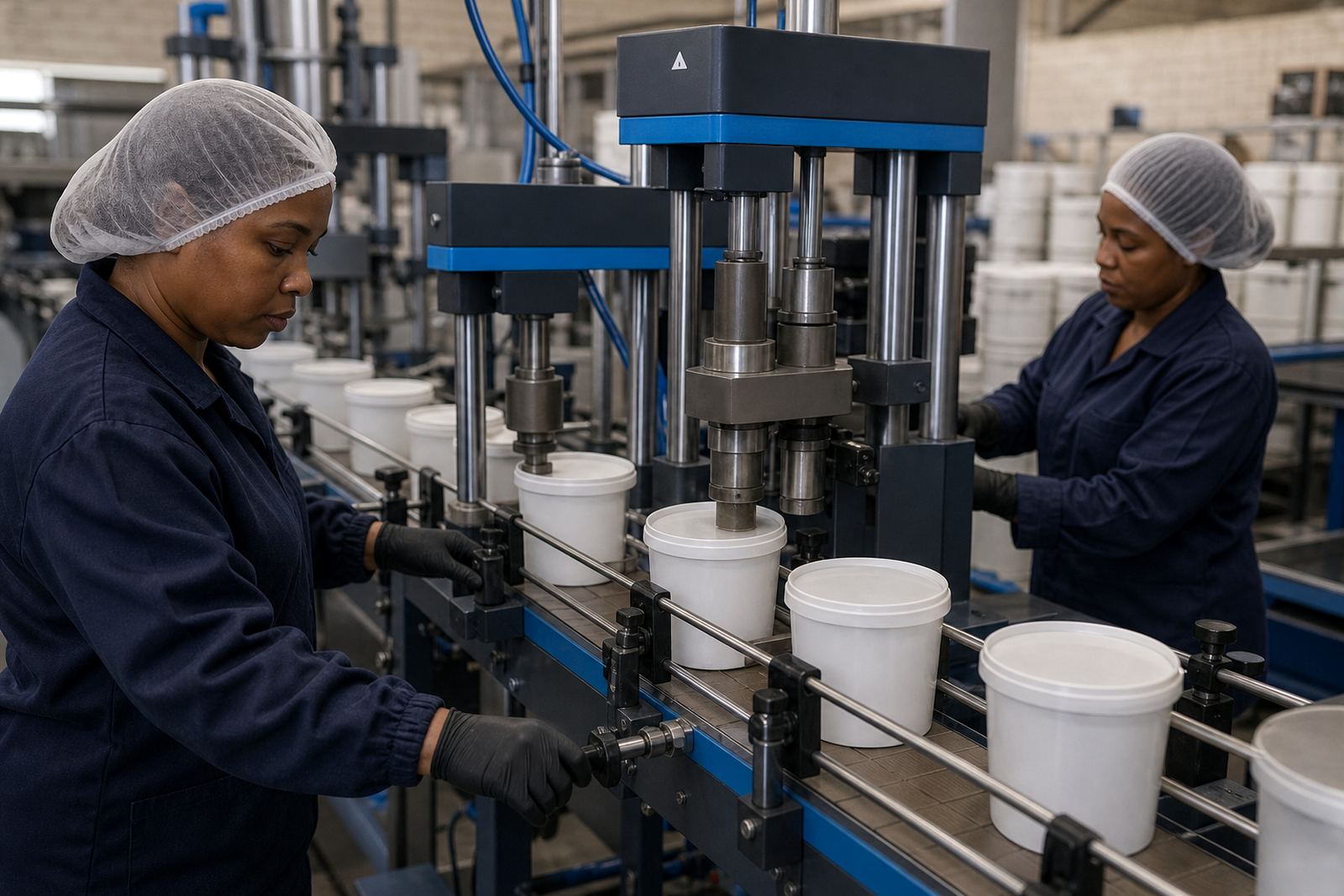
The closure is often where line speed first shows strain. A lid that needs careful alignment, extra pressure or repeated checking can hold up the whole pack line. Snap-on lids, tamper-evident seals and screw closures all behave differently on the machine and in the hand. The right choice depends on how the packer fills, closes and checks each unit.
For cosmetic jars and pharmaceutical tubs, the opening feel and closing sound matter, but so does the force needed to seal them. If the lid bites too early it may cross-thread or distort. If it is too loose, a line supervisor will spend time pulling rejects back for rework. That extra handling cuts pace, and it shows up in labour.
- Consistent thread starts help avoid crooked closure
- Snap fits suit some manual lines better than others
- Tamper seals must break cleanly without tearing the rim
- Closure height must suit the machine head and the label area
Material choice can change friction, flex and handling
Polypropylene and HDPE both have their place, but they behave differently on a busy floor. Polypropylene is often used for tubs and lids where stiffness and a cleaner hinge feel are useful. HDPE is valued for toughness and a bit more give, which can help in handling and transport. The material chosen should suit the product, the fill temperature and the way stock moves from moulding to packing.
In humid coastal areas such as Durban or Port Elizabeth, handling can be affected by warmth and moisture in the packing area. Containers with too much flex may deform slightly under stack pressure, while very stiff parts may crack if dropped or forced through a tight guide. Material selection should be part of line planning, not an afterthought.
- Stiffer containers usually hold shape better on automated systems
- Some materials release from moulds more cleanly, which supports consistency
- Wall thickness affects how the tub behaves under compression
- Colour matching must not interfere with processing or fill visibility
Tamper seals and secondary packing add their own delays
Many packers focus on fill and lid placement, then forget the next steps. Tamper seals, shrink sleeving, carton packing and tray loading can each shave time off a run if the container profile is awkward. A smooth rim helps the seal sit properly. A lid with a poor edge can catch film or make the seal harder to apply in a steady motion.
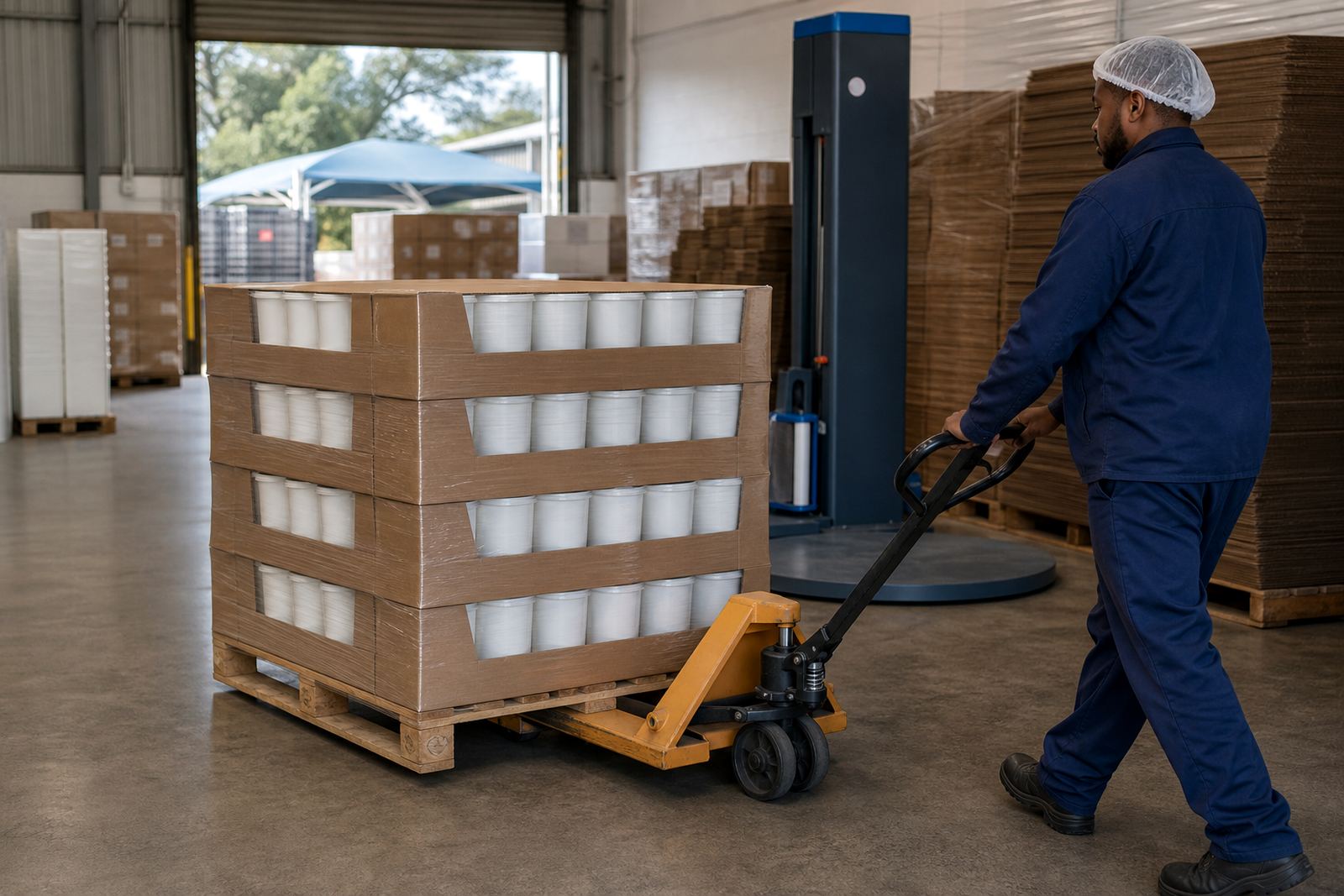
Secondary packing also depends on how the filled pack sits in the hand and in the outer carton. If units tilt, roll or lock awkwardly, operators spend extra effort settling each layer. That is time lost on every case, and in Alberton industrial space or a warehouse in Boksburg, those small delays build quickly across a full shift.
- Rim finish influences how seals apply and stay aligned
- Square or rectangular tubs can pack tightly in cartons
- Round tubs often move faster through certain filling setups
- Outer case layout should be checked alongside the primary pack
Trial runs show where the pace drops
Trial production runs are where the real picture appears. A container can look right on paper and still slow the team once it meets the filler, capper and checkweigher. Trial runs reveal whether the tub catches, whether the lid lands cleanly and whether the filled pack stacks without bulging. That is the point where production managers can make practical changes before stock runs in volume.
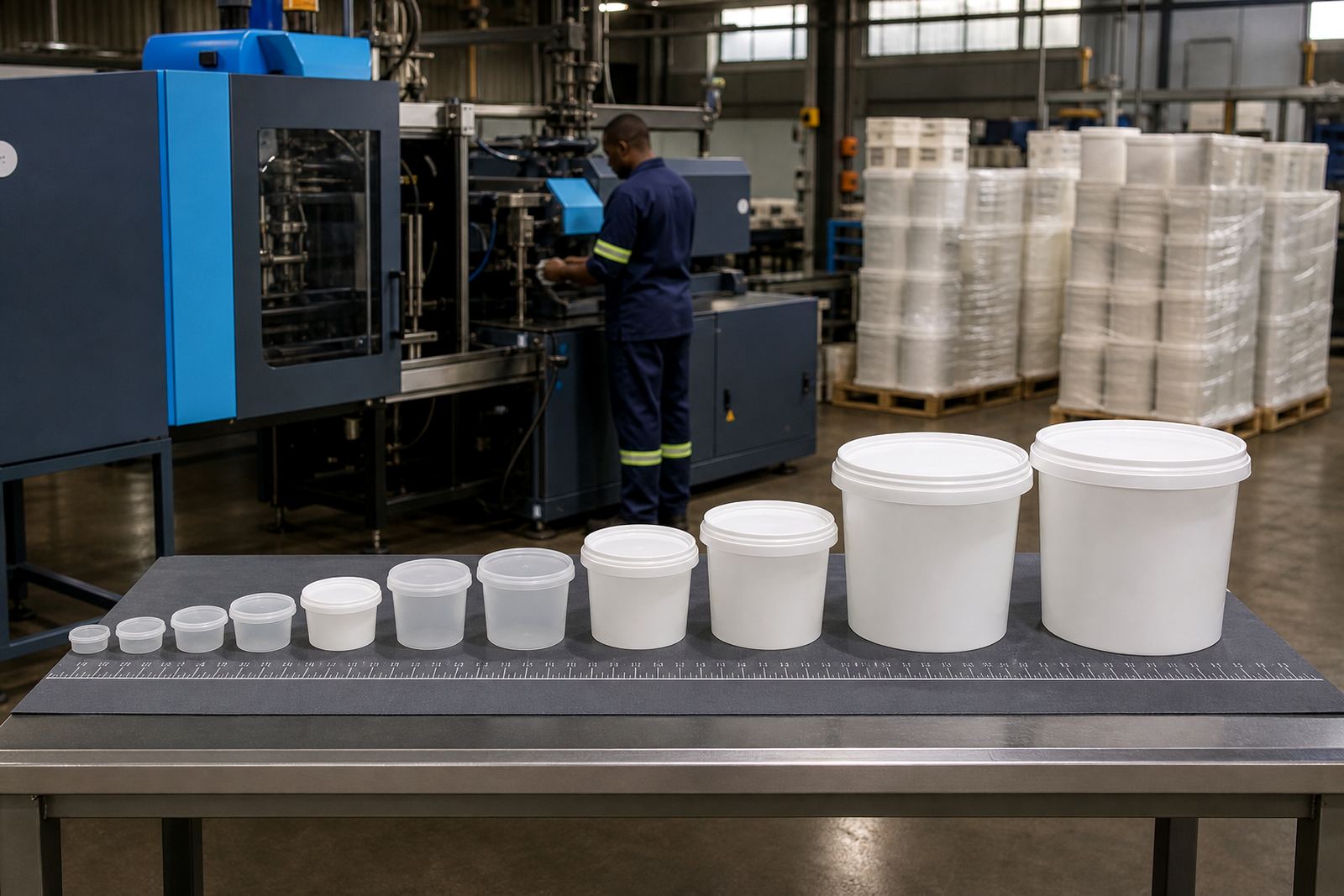
Line fit checks also matter when a business runs more than one product size. A 250 ml tub may behave well, while a 500 ml version needs a wider guide or a different lid profile. Small changes in neck finish or wall depth can alter the whole rhythm. That is why pack size planning should sit beside mould development, not follow it.
- Measure fill weight, closure force and reject rate together
- Watch for hold-ups at guides, corners and catch points
- Check how the empty packs feed from cartons or bags
- Test label placement against the lid height and shoulder shape
A local run in Alrode can still affect a Durban line
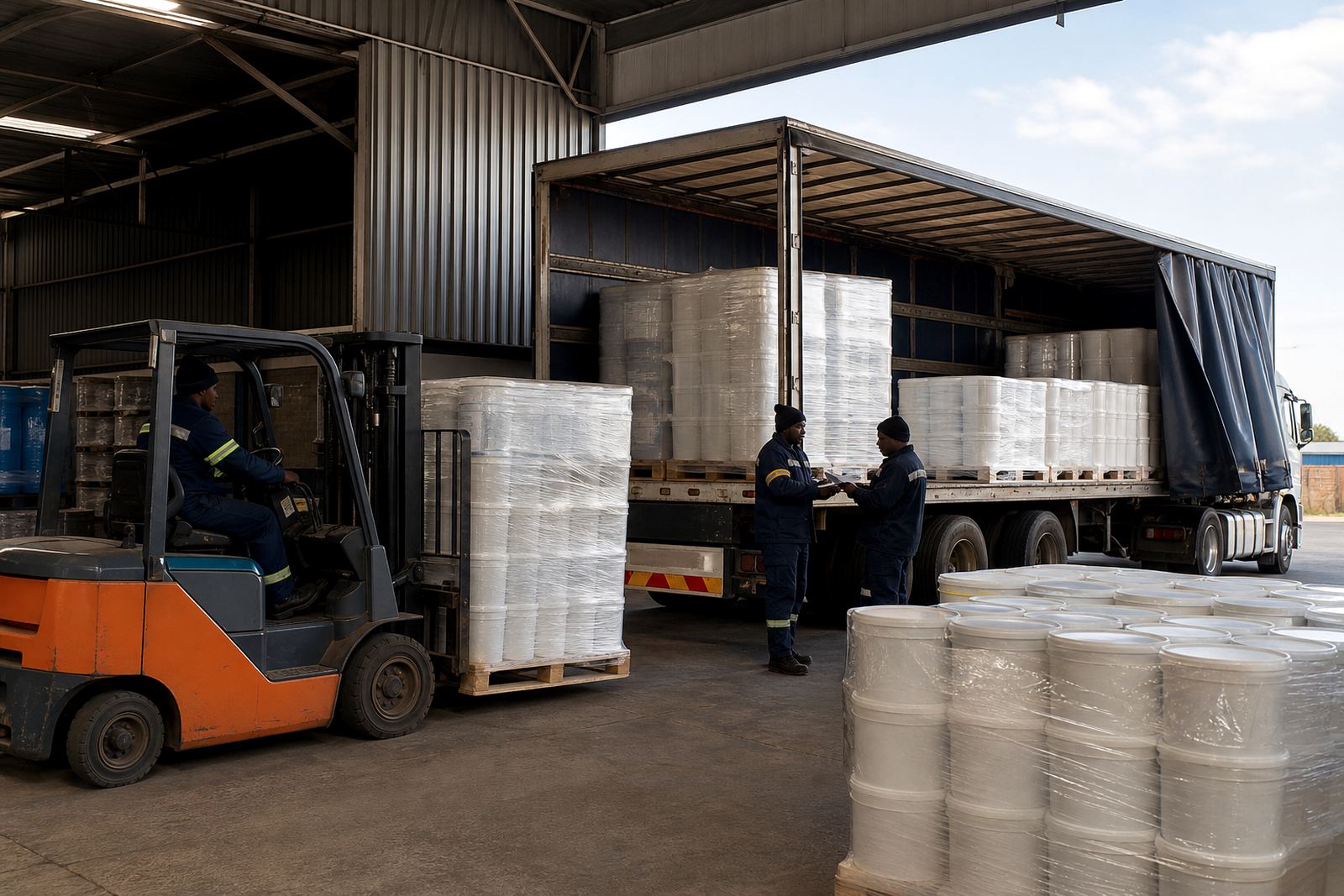
Take a cosmetics packer working from Alrode with stock moving to Durban and Cape Town. A shallow tub with a wide mouth may suit a cream product, but if the lid stack is unstable, the packing crew spends more time sorting closures before fill. Once the same product reaches a faster line in Pretoria, that lid issue becomes a bigger constraint because the pace is higher and mistakes show more quickly.
In that kind of job, the answer is rarely just a stronger box or a bigger batch. It may be a different lid profile, a lighter nesting arrangement or a clearer tamper seal edge. The best line speed is often built through small design choices that help each handoff move without extra handling.
- Match tub shape to the way stock is fed on the floor
- Keep lid styles consistent across pack sizes where possible
- Plan for storage, stacking and dispatch as part of line design
- Review changes when product thickness or fill weight shifts
Packaging that keeps pace without forcing the floor
Good line speed is not about pushing equipment harder. It comes from containers, lids and seals that fit the product and suit the way the pack line actually works. When shape, material and closure style are aligned, operators spend less time correcting, rechecking and clearing small faults. That is where a line starts to feel calm, even when the shift is busy.
For food, pharmaceutical and cosmetic packers across South Africa, the best container is the one that fills neatly, closes cleanly and stacks without drama. The pace follows the packaging, not the other way round.