Stack Pattern Before Straps and Wrap
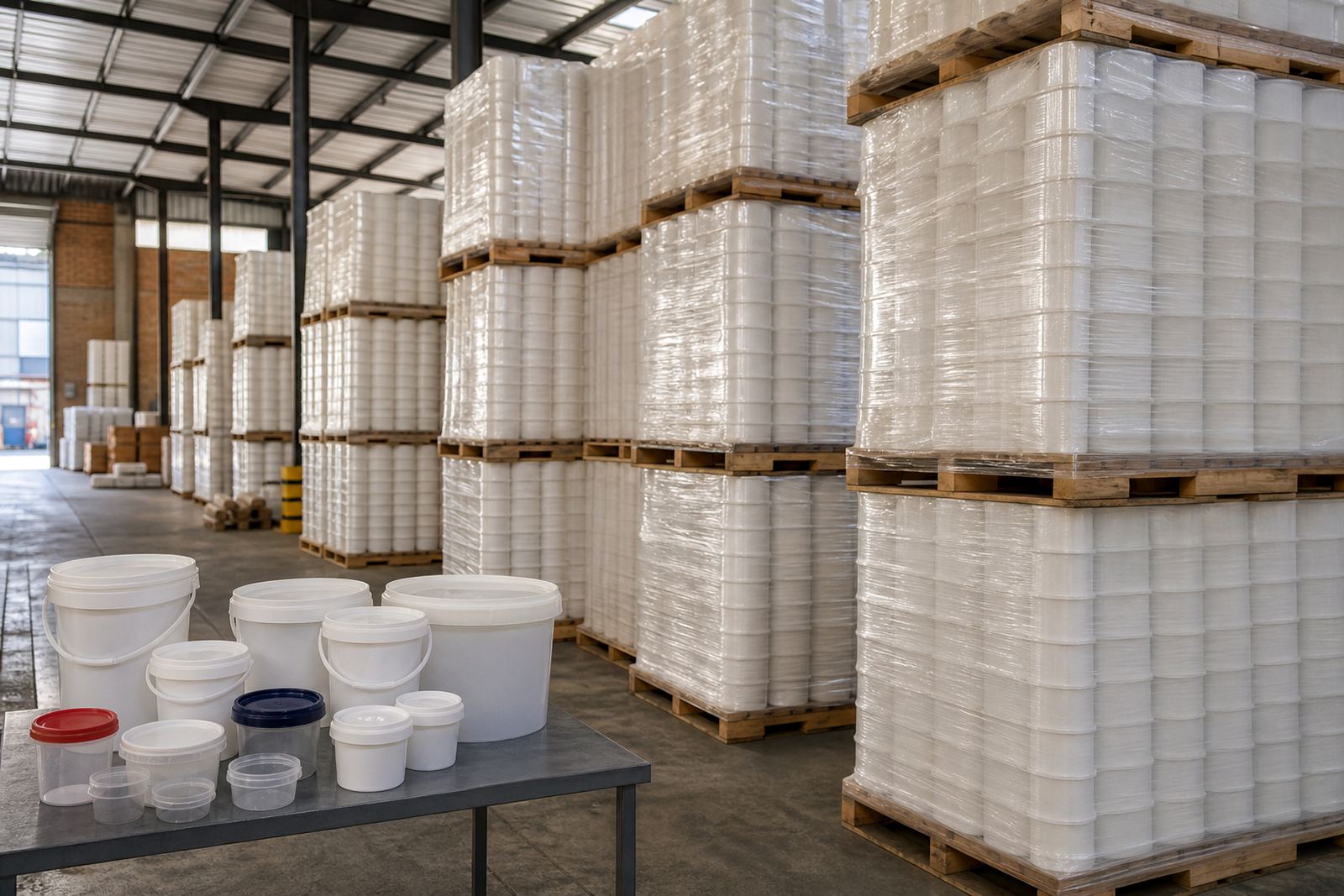
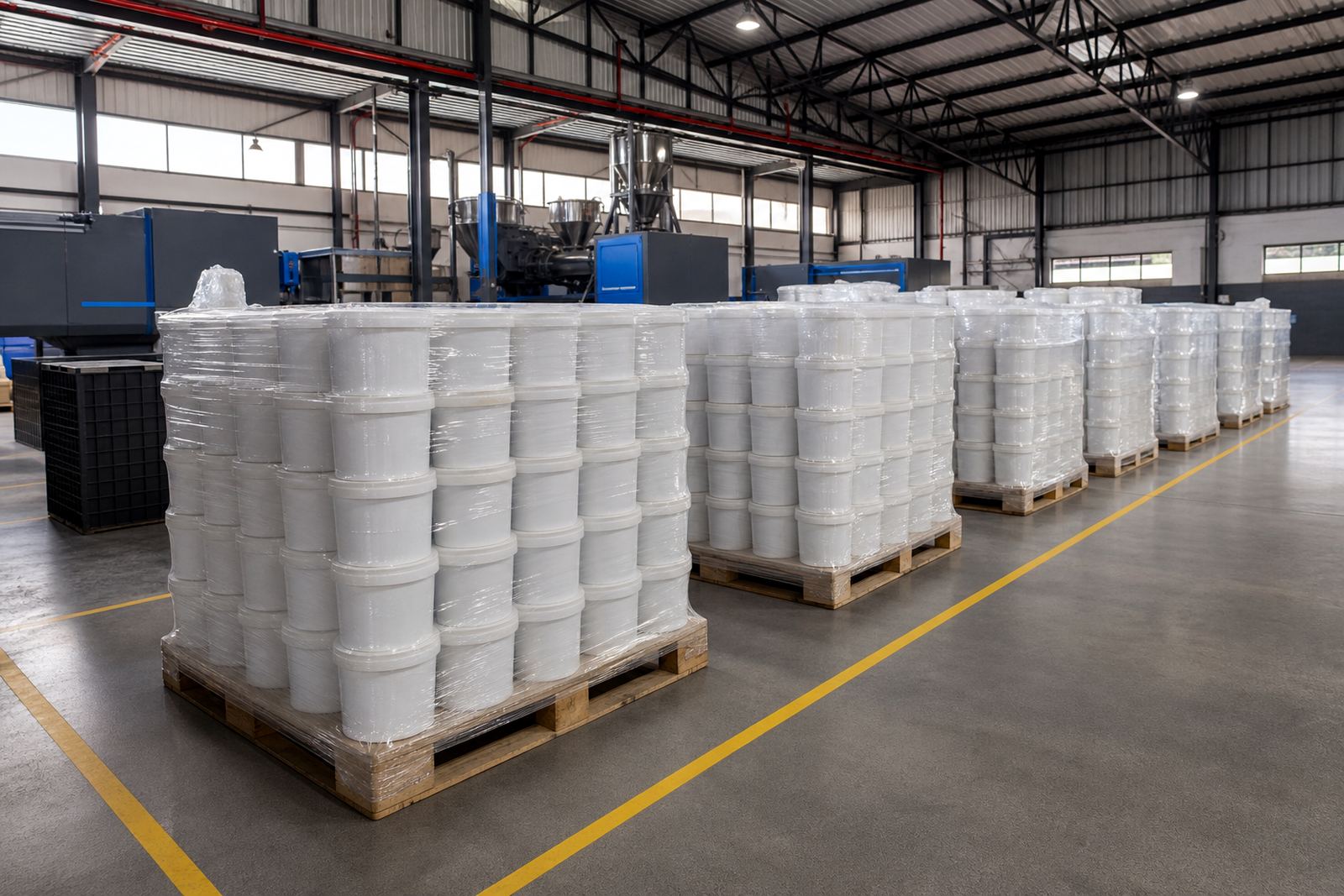
Injection-moulded tubs sit neatly when the pallet pattern is planned around the tub rim, the lid profile, and the carton or bag format used on the packing line. A square footprint is easier to stack than a loose bundle of mixed heights, but the real value is in keeping the load even from the first layer to the last. When the top rows lean or the corners hang over, the pallet starts working against you on the truck and at the receiving bay.
For food, pharmaceutical and cosmetic packers, pallet stability also affects the condition of lids and tamper seals. A crushed rim can slow filling lines, and a distorted lid can create fitting issues after transport. If the order includes mixed sizes, it helps to separate them by SKU and stack each size on its own pallet where possible. That keeps the load tidy and cuts down on rehandling.
- Keep one tub size per pallet where the order allows.
- Match pallet size to the carton or nested tub footprint.
- Use clean, undamaged pallets with level boards.
- Keep the heaviest packs on the bottom layers.
How Tub Shape Changes the Load
Round tubs, pail-style tubs and wider rectangular containers do not behave the same way on a pallet. Round containers often nest tightly, but they can move if the side walls are not held together properly. Wider tubs give a cleaner edge to the pallet, though the load can become top-heavy if the stack is built too high. The lid style matters too, because a taller lid profile changes the overall pack height and the way stretch film grips the load.
Polypropylene tubs are often selected for general packaging, while HDPE tubs are used where extra toughness and moisture resistance are useful. Both materials can travel well when packed with the correct layer count and wrap tension. In humid coastal areas like Durban or Port Elizabeth, condensation can affect outer cartons and labels, so a firm wrap and a clean pallet base are worth planning for.
- Measure the filled pack height, not only the tub height.
- Allow for lid profiles when setting pallet rows.
- Keep mixed materials off the same pallet unless the pack plan is set.
- Use corner protection when the outer carton needs extra support.
Lids, Tamper Seals and the Top Layer
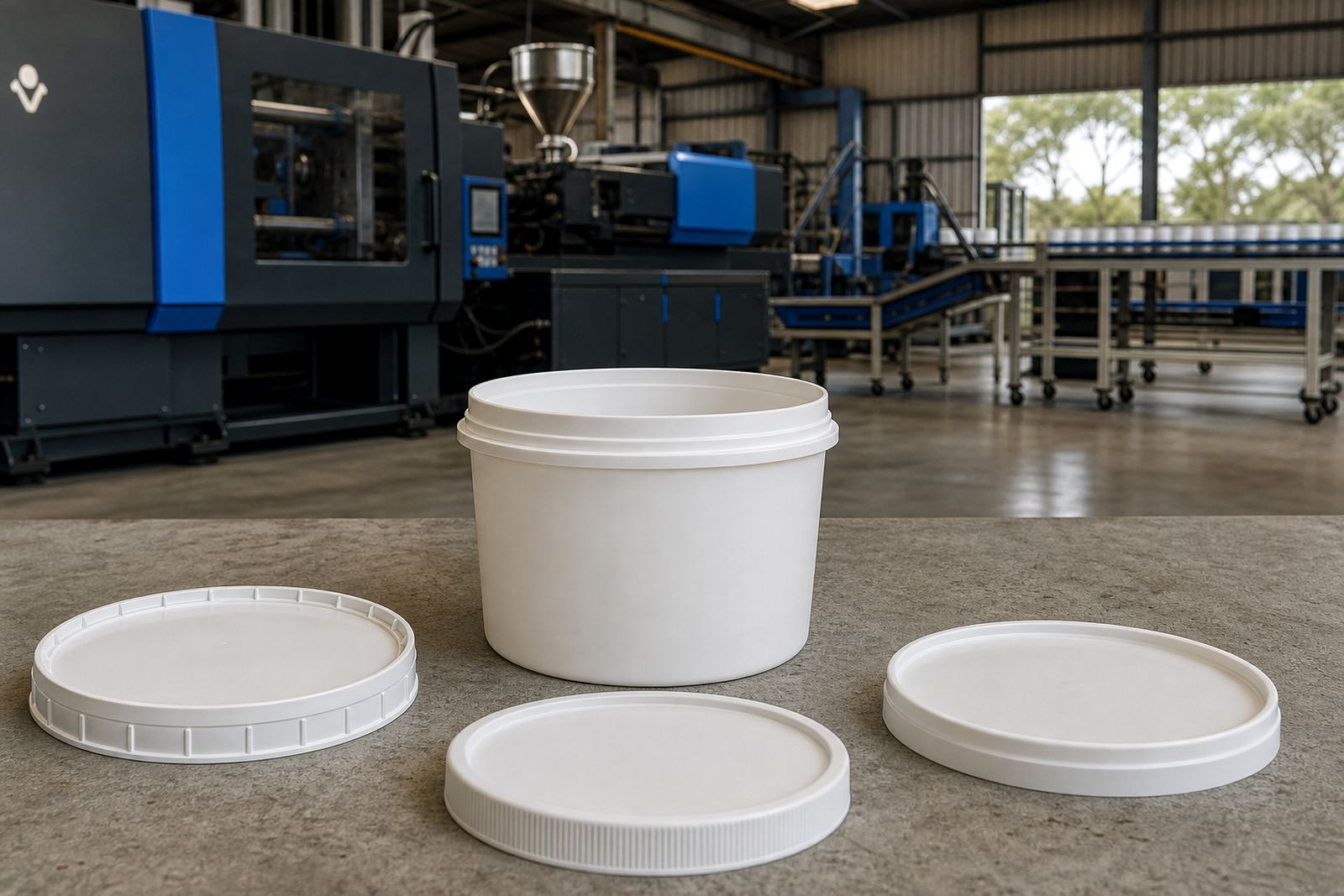
The top layer carries more risk than many receiving teams expect. Lids can lift slightly if the pack is over-compressed, and tamper seals can rub if the film is too tight against the container edge. Where a tamper-evident seal is part of the pack, the pallet plan should protect that seal line from crushing and scuffing. A neat top sheet, set in place before wrapping, can help reduce marks from the film and keep the top row more even.
It also helps to keep sample packs separate from bulk stock. Trial production runs and line-fit checks often produce smaller quantities, and those should not be forced into the same stack pattern as a full stock run. The receiving team should be able to see what they are lifting before the first cut of film comes off. That makes counts easier and reduces the chance of opening the wrong pallet first.
- Place the flattest packs on the top layer.
- Protect tamper seals from direct film pressure.
- Use a top sheet where lids need extra cover.
- Mark trial packs clearly so they are not mixed with stock runs.
Unloading at Gauteng Warehouses and Coastal Sites
In Alrode and the surrounding industrial areas, many tubs move between packers, distributors and warehouse teams in short, busy shifts. A pallet that has been loaded carefully is easier to break down with a fork truck or by hand, and there is less chance of one side collapsing when the first layer is removed. In warehouses around Johannesburg and Pretoria, level yard surfaces help, but the same load can behave differently at a Durban dock where humidity and floor moisture may change how the wrap grips.
A simple receiving note should match the pack plan. If the order contains several sizes, packers benefit from a clear count by pallet and by layer. That is especially useful where stock is sent to multiple branches at once, such as Alberton Supply, Germiston Supply and Boksburg Supply. The team on the floor can then move through the load in order instead of opening every pallet to find one specific size.
When Stock Runs Need Extra Care
Stock run planning is not only about how many tubs are made. It is also about how they leave the factory and how they sit until the next dispatch. If a customer needs a repeated pack size for food or cosmetic filling, the pallet pattern should be kept consistent from run to run. That consistency helps with line fit checks, secondary packing advice and future loading plans, because the receiving team already knows what the load should look like.
Local packers often ask for colour matching guidance as well, especially where the tub body and lid must work together visually. When several colours are on one route, the pallet labels need to stay plain and readable. A mixed colour load can be handled well, but only if each pallet is clearly broken into its own count and the outer wrap is not hiding the identification marks.
- Keep the same pallet layout for repeated stock runs.
- Label colour variants separately.
- Match load height to the handling equipment at site.
- Record the pack count per pallet for easier receiving.
A Durban Example with a Practical Result
A cosmetic packer sending tubs to Durban may need a load that can travel through warm conditions and still arrive neat enough for direct transfer to the filling area. If the pallet is too high, the outer rows can shift in transit. If it is too loose, the receiving team spends time rebuilding it before the tubs are ready for use. A better approach is to build shorter pallets with even layers, firm wrap, and one size per pallet where possible.
That same method works for a pharmaceutical packer in Pretoria or a food line in Cape Town. The detail changes with the pack, but the rule stays steady: keep the centre of gravity low, protect the rim and lid, and make the pallet easy to count at a glance. Plastic Factory works with tub orders, lids, tamper seals and pack-size planning so the order leaves Alrode in a form that suits the warehouse as well as the filling line.