A deli line with tight shelf spacing
The brief came from a Midrand deli packer handling mixed chilled products for supermarket counters and local distribution. The packs had to fit narrow shelf fronts, stack neatly in crates, and keep product visible without making the label area feel crowded.
They were moving salads, savoury spreads and other chilled items in a few pack sizes, so the container shape needed to suit more than one filling line. The packer also wanted a lid that seated firmly, with tamper evidence for retail confidence and less fuss at dispatch.
- Product family: rectangular tubs for deli foods
- Use case: salads, spreads and chilled shelf display
- Packaging need: stackable packs with secure lids
- Distribution: Midrand with supply into Gauteng and other centres
The container shape and material call
We worked through polypropylene and HDPE options, then settled the range around tubs that handled chilled storage, handling on packing lines and day-to-day retail movement. Polypropylene suited the lighter deli packs well, while HDPE remained useful where a stiffer wall and a more rugged feel were wanted.
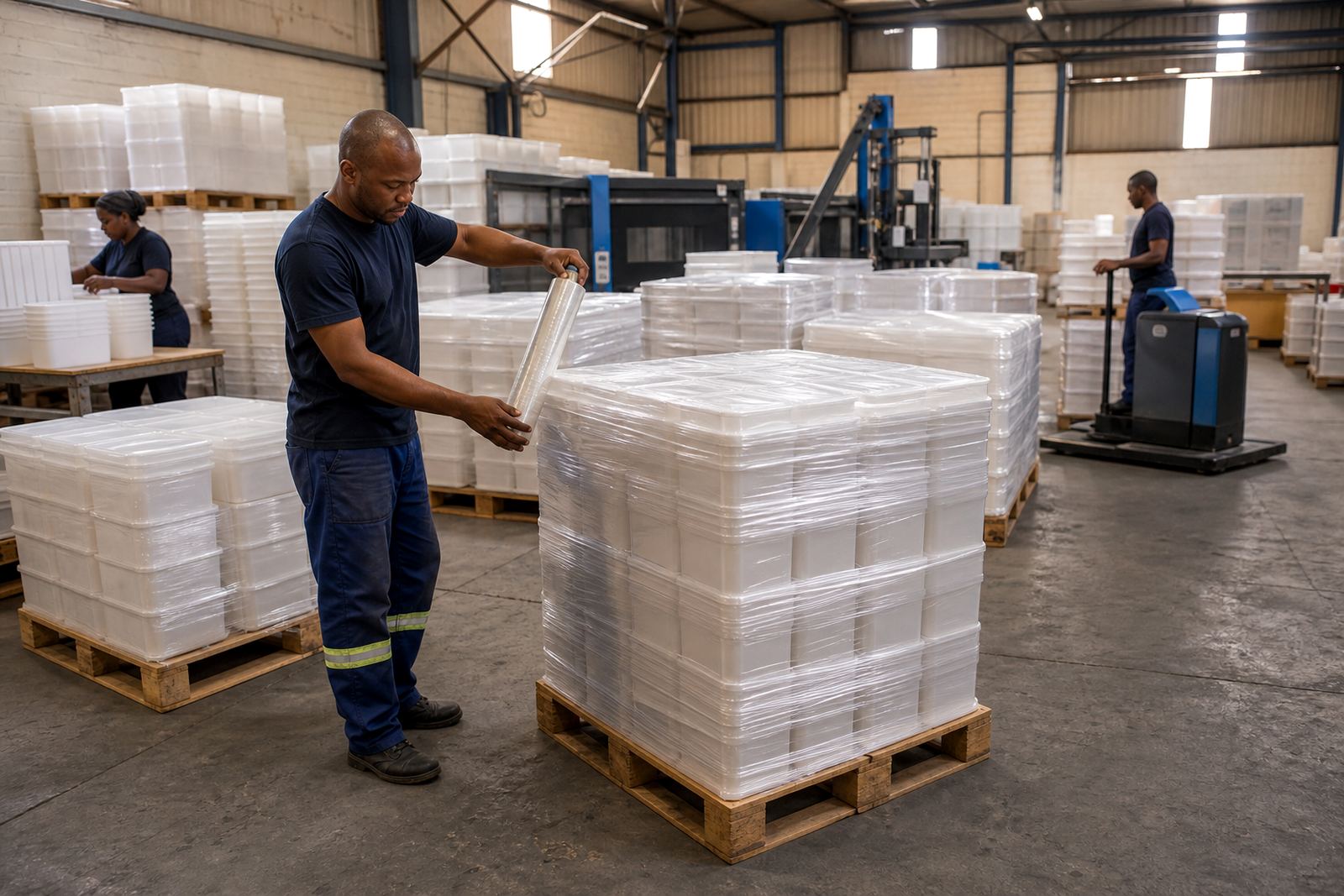
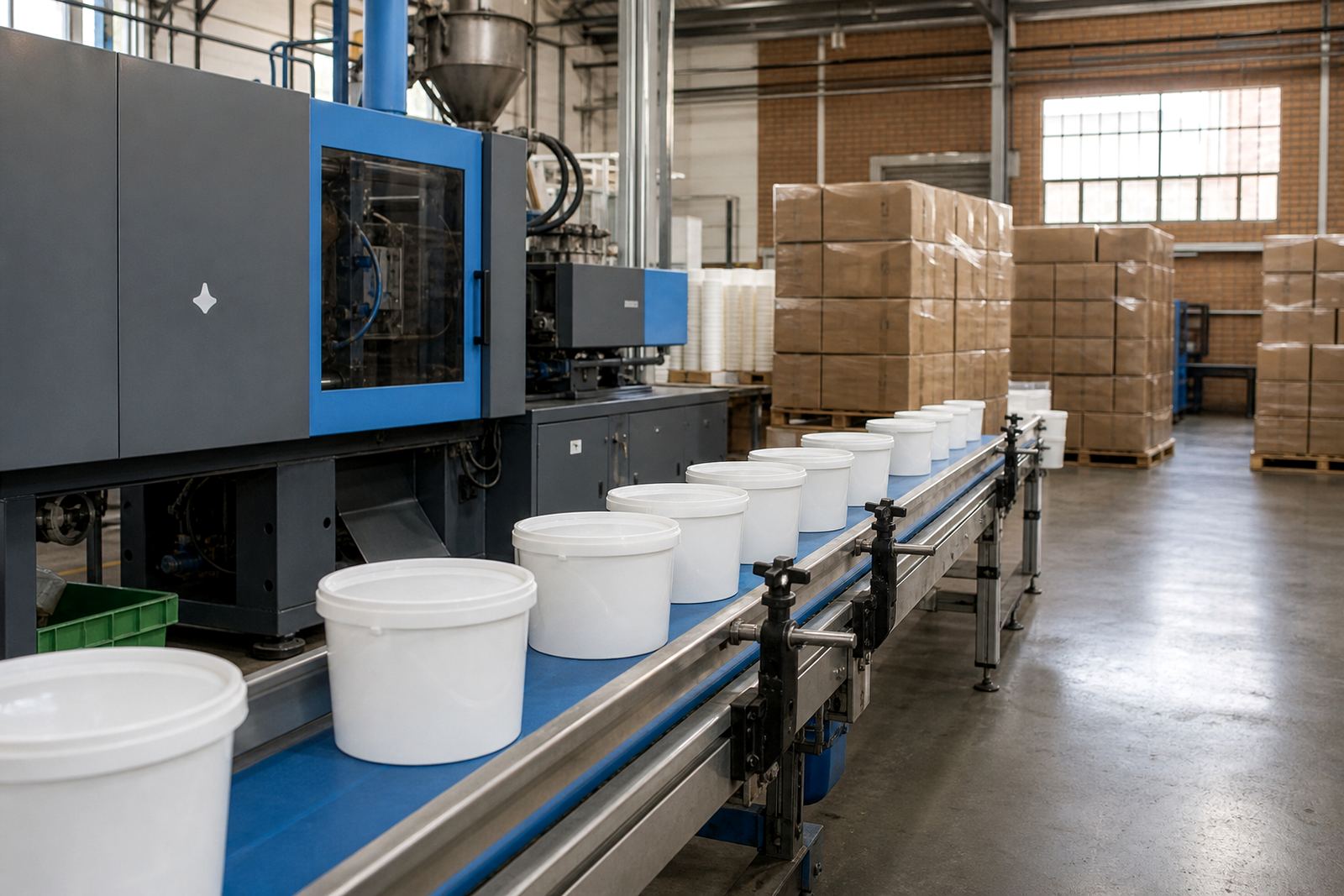
The final range used injection-moulded tubs in rectangular form, with clean corners and a base that stood flat on conveyors and in cold rooms. We kept the wall thickness consistent enough for stable stacking, yet light enough to avoid unnecessary material use.
- Rectangular tub range in multiple pack sizes
- Food-safe material selection for deli packing
- Flat base for better line handling
- Profile shaped for shelf stacking and crate loading
Lid fit and tamper seal details
The lid work needed careful attention, because chilled foods can show up any loose fit very quickly. We supplied lids that snapped on with even pressure, then added tamper seal detail so the outer ring gave a clear first-open point for retail packs.
Colour guidance was kept practical rather than decorative. The deli wanted a clean look that did not fight the printed label, and a few tint options were kept open for future pack family changes. We also checked that the lid profile did not interfere with the sealing step on the packing line, which saves a lot of small aggravation during a run.
- Lid development for a firm, even fit
- Tamper seal detail for retail handling
- Colour matching guidance for label visibility
- Pack size planning across several deli SKUs
Trial runs on the packing line
Trial production runs gave the deli team a proper look at fill behaviour, lid application and stack height on their line. We used the trial to check how the tubs moved through filling, whether the lids seated cleanly under normal handling, and how the packs behaved after cold storage.
One of the main checks was line fit, because a pack that looks good on paper can still slow a machine or leave a hand-filled line awkward to manage. We adjusted the lid bite, made a small mould change to the rim profile, and confirmed the tub sat correctly beside the other pack sizes already in use.
- Trial runs to test filling and lidding
- Line fit checks for manual and semi-automatic packing
- Minor mould adjustment to refine rim engagement
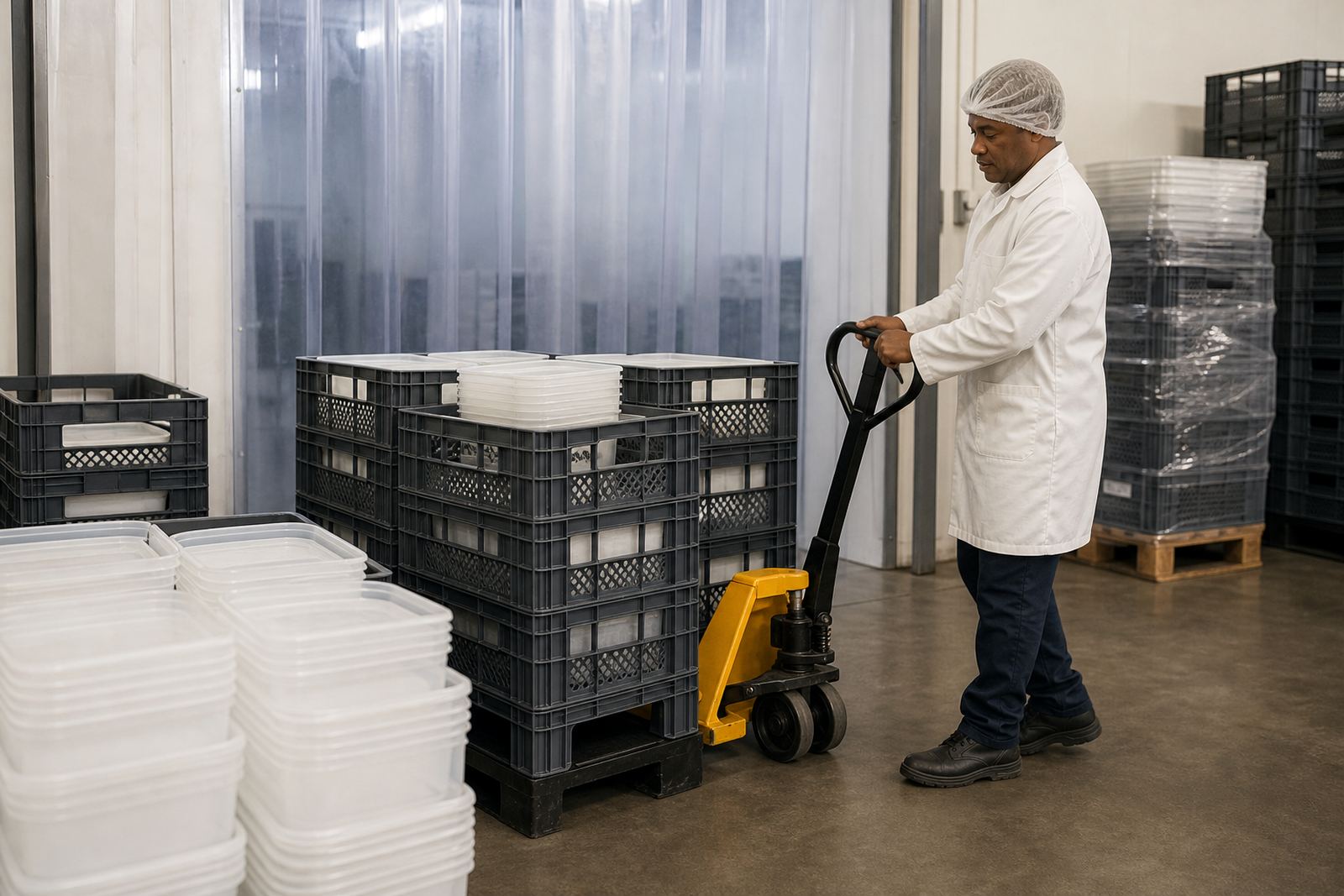
- Cold-room handling checked before full release
How the run settled into dispatch
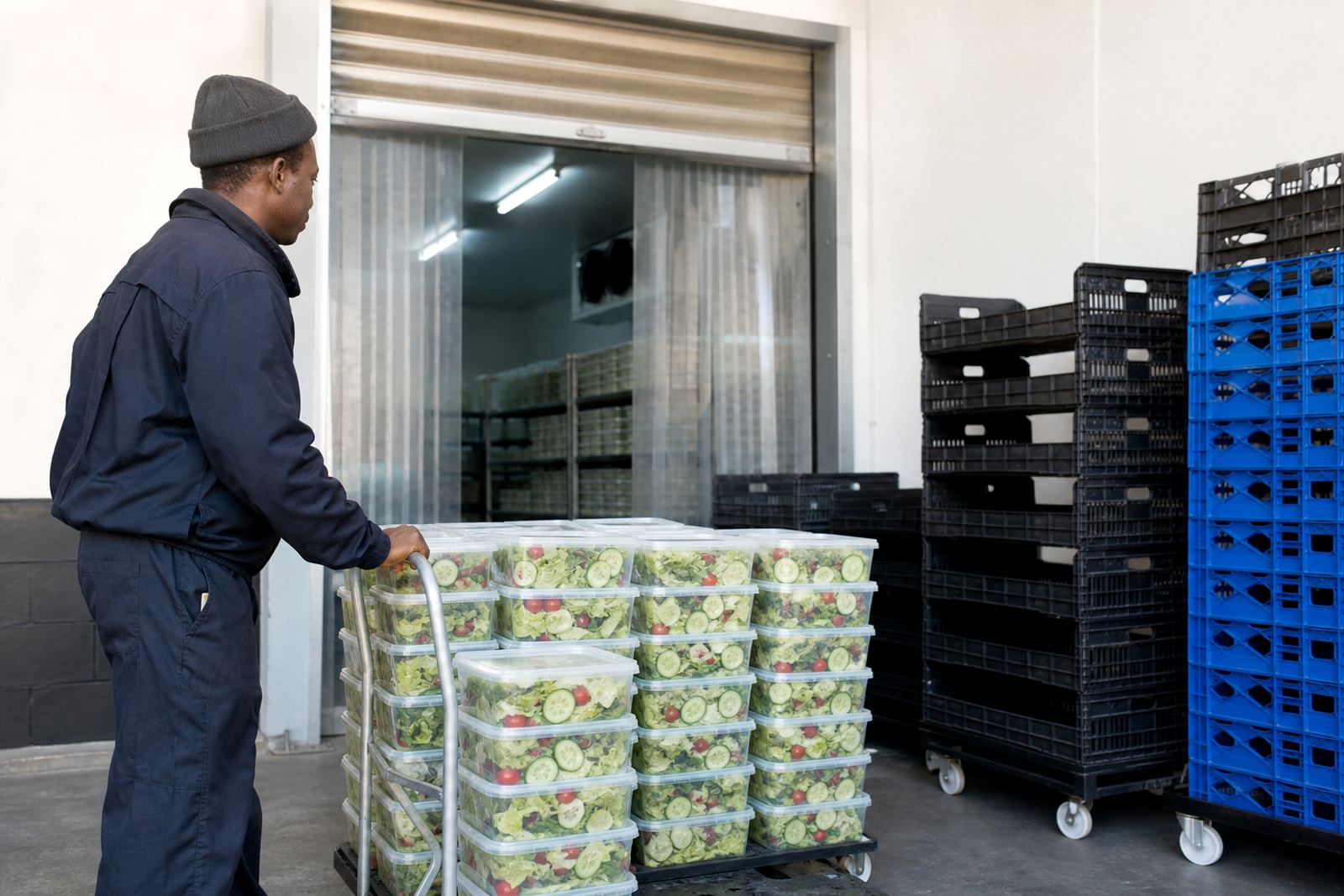
The finished tubs gave the deli packer a neater shelf presentation and cleaner crate loading, which mattered on busy delivery days. The packs stacked more evenly, labels sat straighter on the front face, and the sealing step became more predictable for the operators on shift.
Because the tubs were matched to the product family rather than forced into one catch-all size, the business could split salads, spreads and chilled accompaniments without wrestling with oversized packs. That kept stock run planning a lot calmer and reduced the sorting that usually happens near the end of a busy batch.
For Durban, Cape Town, Pretoria and Port Elizabeth deliveries, the pack format also held up well in transit when crates were handled properly. Midrand remained the main production point for this run, with replenishment planned around store demand and the deli's chilled holding space.
The next deli batch would use the same checks
If we were setting up a similar deli run, we would keep the same order of work: confirm product viscosity, decide the pack count, test the lid seat, and then settle the seal detail before full release. That sequence keeps the line calm and reduces the chance of small packaging issues showing up after launch.
We would also keep a close eye on fill volume, because salads and spreads do not behave the same in the container. A generous headspace can help with closing and handling, but too much space wastes material and makes the pack look underfilled on chilled shelves.
For a Midrand packer serving multiple branches, the useful part is not a flashy format, it is a container that keeps its shape, sits straight and works across the packing day. That is where the right mould, the lid fit and the dispatch planning all need to line up.
Key facts
| Project | Midrand deli foods pack run |
|---|---|
| Container type | Rectangular injection-moulded tubs |
| Materials | Polypropylene and HDPE options |
| Key sizes | Multiple deli pack sizes |
| Closure | Matching lids with tamper seal detail |
| Supply area | Midrand with delivery across South Africa |