When bakery fillings need cleaner handling on the line
Bakery fillers and decorators work with products that can be thick, warm, sticky or chilled, and that mix puts pressure on the packaging. A tub must stack neatly, close firmly and move through filling, sealing and dispatch without buckling at the sides or lifting at the rim.
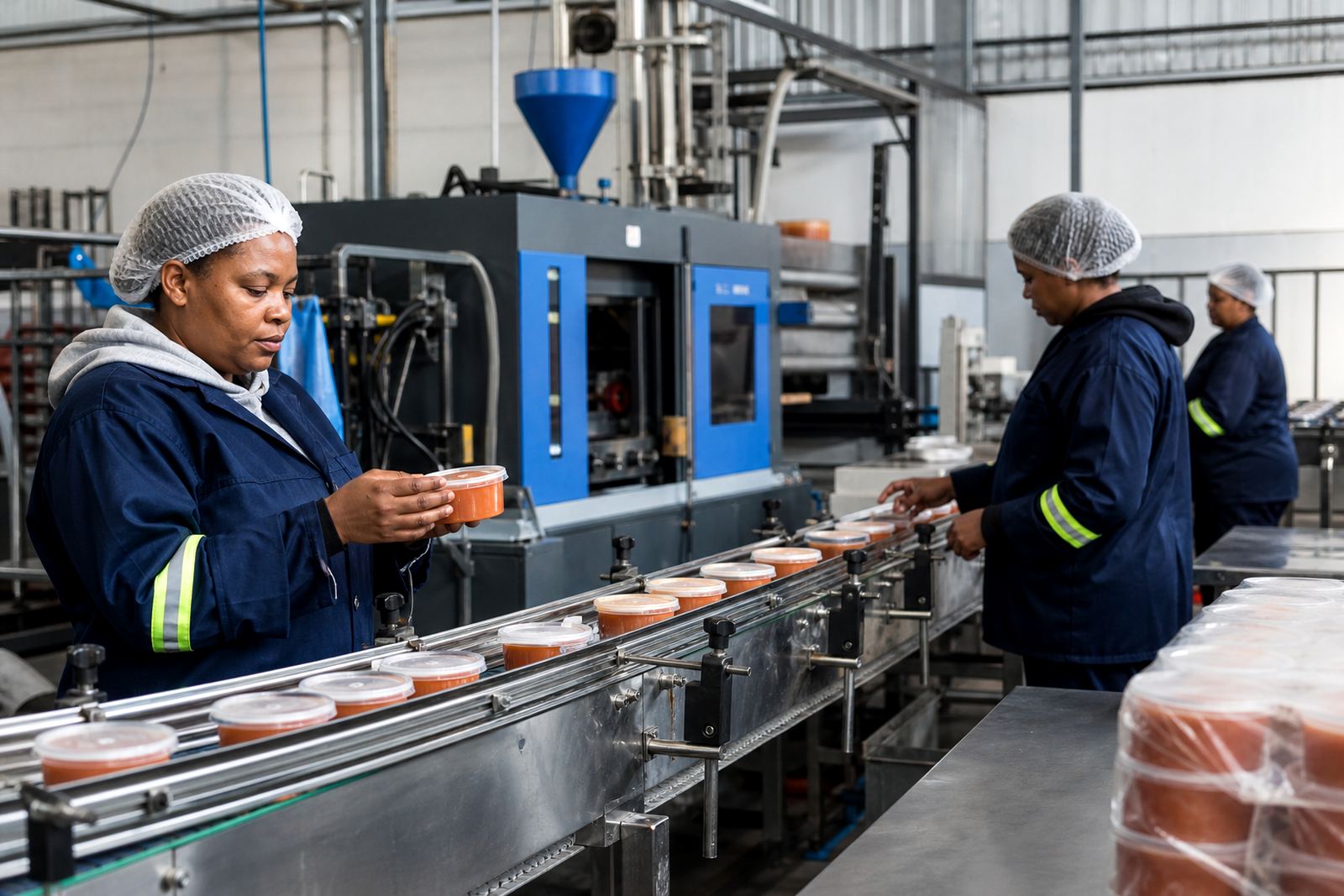
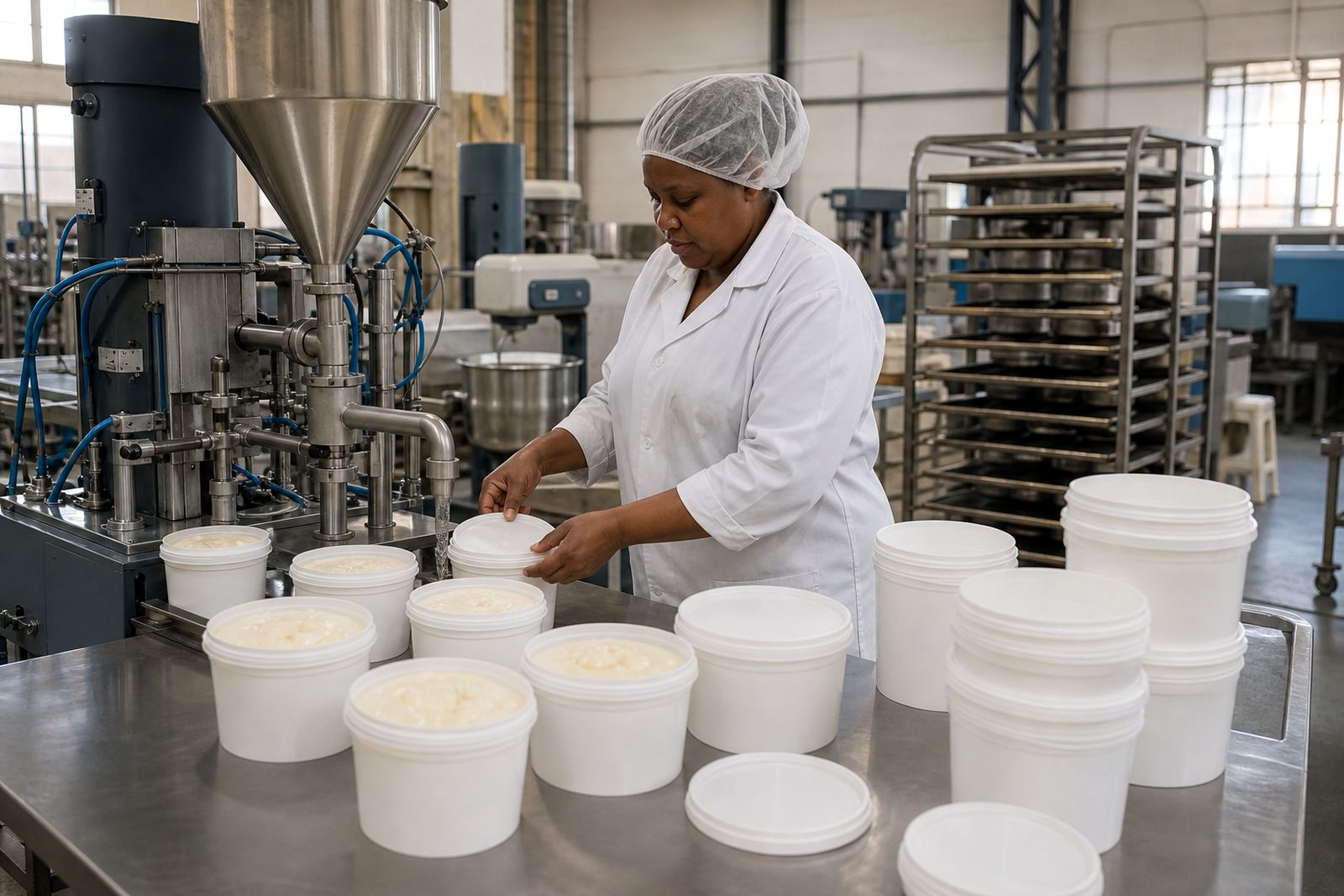
For creams, glazes and dessert fillings, injection-moulded tubs give a consistent wall finish and repeatable fit. That matters when packs are handled in batches, then loaded into cartons or wrapped for store dispatch. In Alberton and the surrounding industrial areas, packers often need containers that hold their shape in cool rooms, during short transfers and while standing on palletised stock.
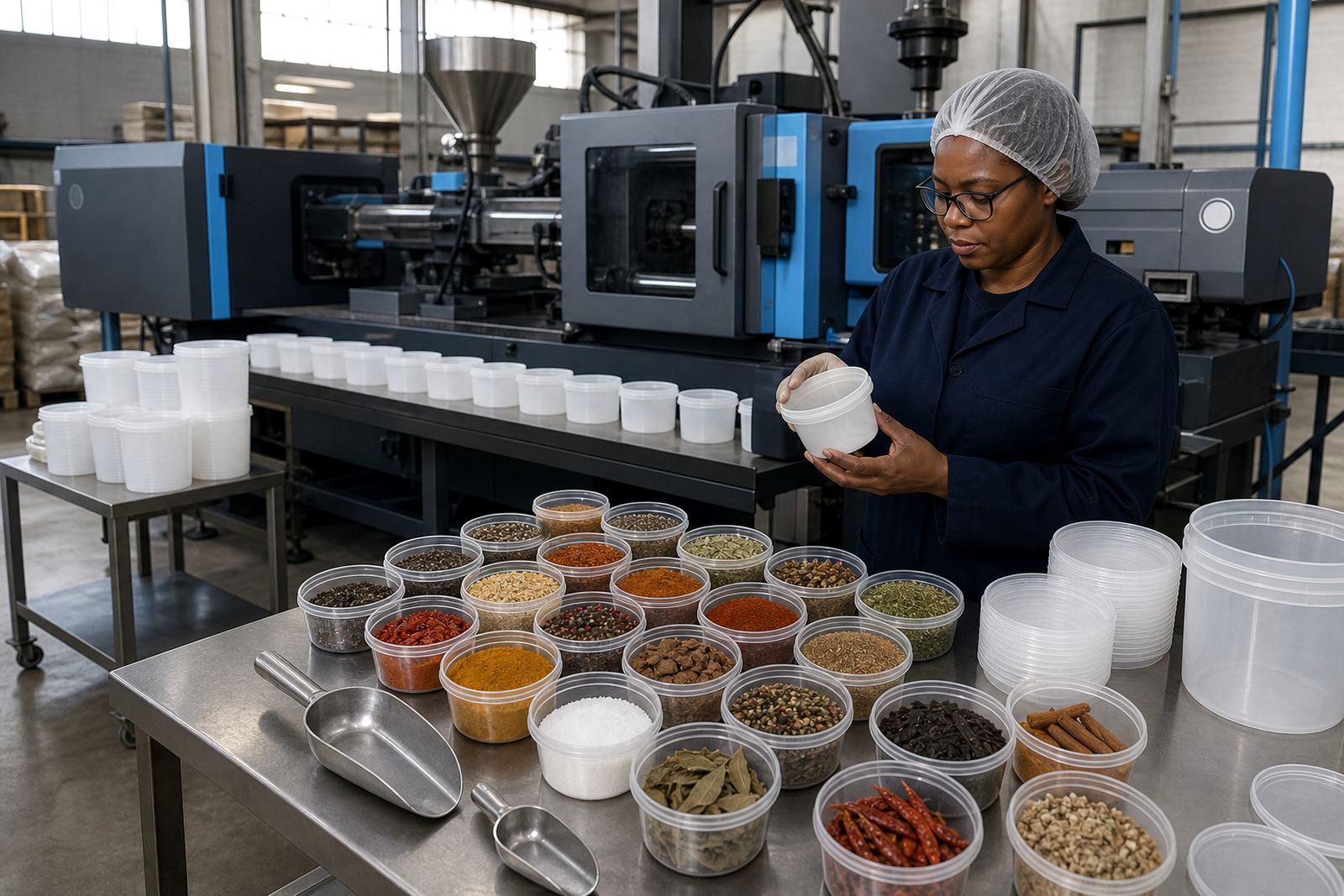
Polypropylene is commonly used for many food packaging jobs because it handles a range of temperatures and stays light in the hand. HDPE is also used where the pack calls for a different wall feel or where the packer wants a tougher, more impact-resistant tub. The right choice depends on the filling, the lid fit and the line speed, not on guesswork.
The tub, lid and seal set that suits bakery packs
A bakery filling pack is usually more than one part. The tub carries the product, the lid closes the pack, and a tamper seal or ring gives the customer a visible sign that the pack has not been opened. For some ranges, a simple snap-on lid is enough. For others, the closure needs a tighter profile so stacked tubs stay steady in transit.
- Injection-moulded tubs for portioned or bulk bakery fillings
- Matching lids sized to suit manual and semi-automatic closing
- Tamper-evident features for retail and trade supply
- Clear or coloured packs for product identification on the line
- Pack sizes matched to single-use, foodservice or bulk bakery use
Where the filling is glossy or warm, the lid shape and rim finish matter more than many packers first expect. A loose fit can cause movement in carton packs, while an over-tight fit can slow packing staff and create handling strain. A proper trial with the actual product gives a better answer than a catalogue assumption.
Planning the pack around your filling room
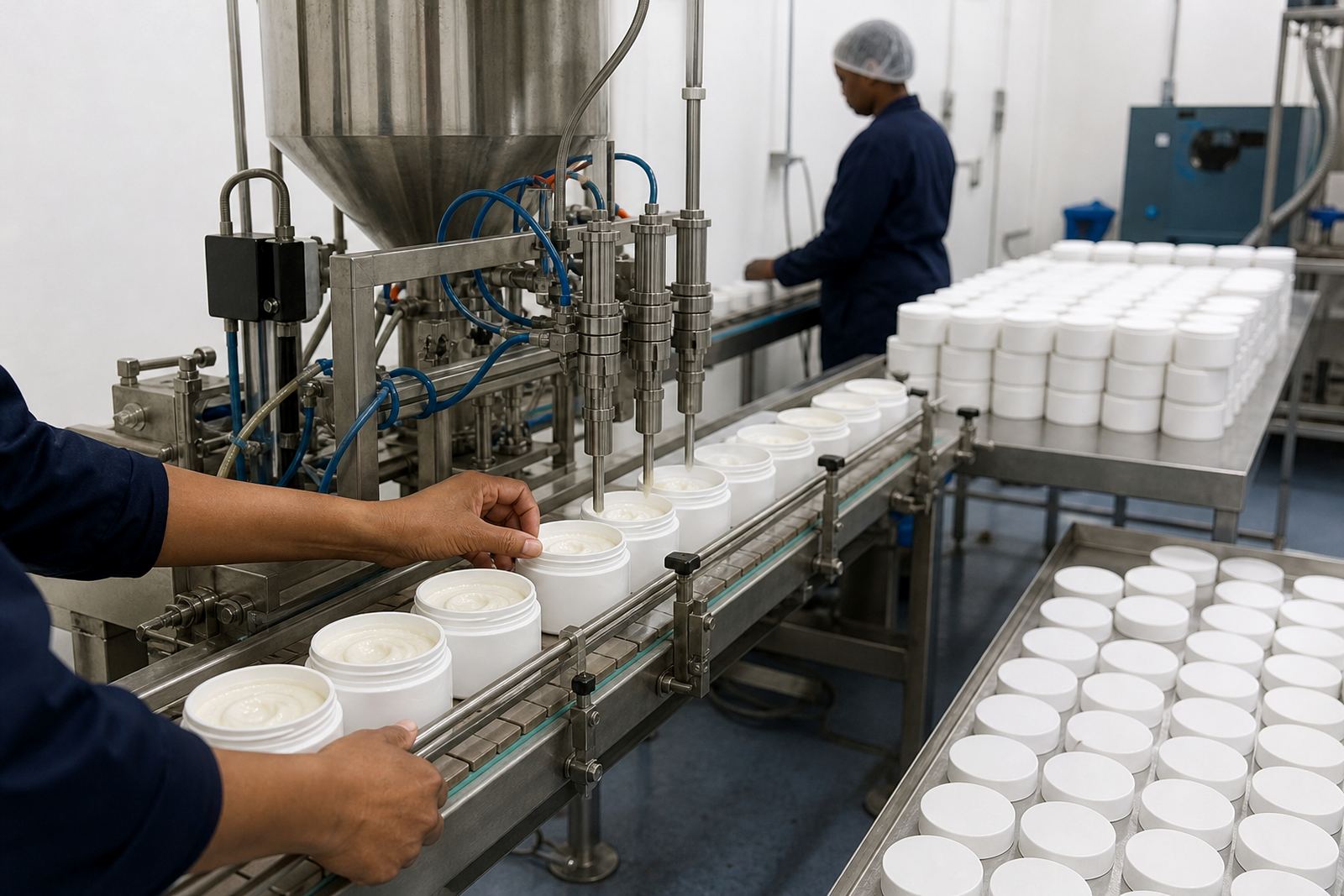
Bakery filling rooms often work with a mix of hand packing, semi-automatic filling and final sealing at a separate point. That means the container needs to suit the full route, not only the filling head. Straight-sided tubs are often easier to fill cleanly, while deeper profiles can help with storage density and pallet count.
Line fit checks are useful where the pack must pass through guides, weigh stations or closing units. Small changes in rim height or base shape can affect how the tub behaves on conveyors and packing tables. It also helps to check whether the product will be filled cold, warm or after cooling, because that changes how much headspace is needed.
For bakery work in Gauteng, coastal cities and inland distribution routes, packers also need to think about transport movement and shelf presentation. A tub that prints well on paper labels but loses shape in a humid store room is not a good fit. Secondary packing advice matters too, especially where cartons are stacked high or where outer packs need to sit through a long distribution run.
Common mistakes with creams, glazes and fillings
Many packing problems start with a container selected only by volume. A 500 ml tub on paper may look suitable, but the actual fill density, product finish and lid clearance can change the result. The wrong wall profile can also make the tub feel flimsy, even when the material is sound.
- Choosing a size without checking the true fill level
- Using a lid that fits the tub but not the seal process
- Ignoring how chilled or warm product behaves at filling
- Skipping a trial run with actual bakery filling texture
- Overlooking the effect of stacking in cartons and on pallets
Colour also needs attention. Bakery ranges often rely on clear product visibility, but some fillings are better protected by opaque or tinted packs. Colour matching guidance can help when a brand needs a consistent look across tubs, lids and tamper seals without making the line harder to run.
Another issue is overcomplicating the pack. If the product is for trade supply rather than shelf display, a simpler tub and lid set may be better for handling and storage. The point is to keep the filling protected and the line practical, not to add parts that slow production.
Budget ranges that make sense in rand
Bakery filling packaging budgets usually depend on size, mould complexity, lid type, seal details and the volume being run. Small trial batches cost more per unit than larger production runs, because the set-up and tooling work is spread over fewer packs. That is normal in injection moulding and worth planning for before the first order moves ahead.
For planning purposes, many bakery clients treat small trial and fit-check runs as a lower-volume exercise in the tens of thousands of Rand, especially when mould development or a special closure is involved. Full production tooling and ongoing supply planning can move into the higher tens of thousands or more, depending on pack size and the mould work needed. The final spend depends on the line fit, artwork approach and whether the container needs a custom profile.
Material selection also changes the budget. Food-grade polypropylene and HDPE are both practical, but the cost profile differs with wall thickness, colour and the shape of the lid. If a bakery range is moving into national distribution, it is usually worth planning stock run volumes early so the supply pattern stays steady for Johannesburg, Durban, Cape Town, Pretoria and Port Elizabeth.
Local supply for packers working across South Africa
Plastic Factory works from Alrode, Alberton and supplies bakery packers in Johannesburg, Germiston, Boksburg and beyond. Delivery also reaches Durban, Cape Town, Pretoria and Port Elizabeth, which helps packers manage stock without splitting their packaging decisions across too many suppliers.
For bakery fillings, the most useful starting point is a clear picture of the product, the fill weight or volume, and the way the pack will be closed. From there, custom tub design, lid development and trial production runs can be planned around the line. Ongoing product updates are useful when a filling changes texture, or when a packer needs to adjust the pack size for a new customer range.
The right container keeps the job tidy through filling, closing, storage and delivery. For a bakery line, that usually means a tub with the right wall strength, a lid that fits without fuss, and a format that sits properly in the pack room from the first batch through to dispatch.